ANZ Macro Daily(Beta Mode)
RBNZ CPI Eyed; AUD, NZD Up on China GDP
Market Snapshot
| Asset | Level | Change |
|---|---|---|
| ASX 200 | 8,816.90 | -0.33% |
| NZX 50 | 13,631.69 | -0.15% |
| AUD/USD | 0.70 | +0.45% |
| NZD/USD | 0.57 | +0.41% |
| AUD/NZD | 1.23 | +0.18% |
| BHP | 59.41 | -1.74% |
| Gold | 4,141.60 | -0.44% |
| Brent Crude | 109.06 | -0.45% |
| Bitcoin | 82,421.83 | +0.69% |
| Australia 2Y Govt Yield | 4.92% | +3 bp |
| Australia 10Y Govt Yield | 5.31% | +2 bp |
Prior Economic Events
| Data | Prior | Cons | Actual |
|---|---|---|---|
| No events available | |||
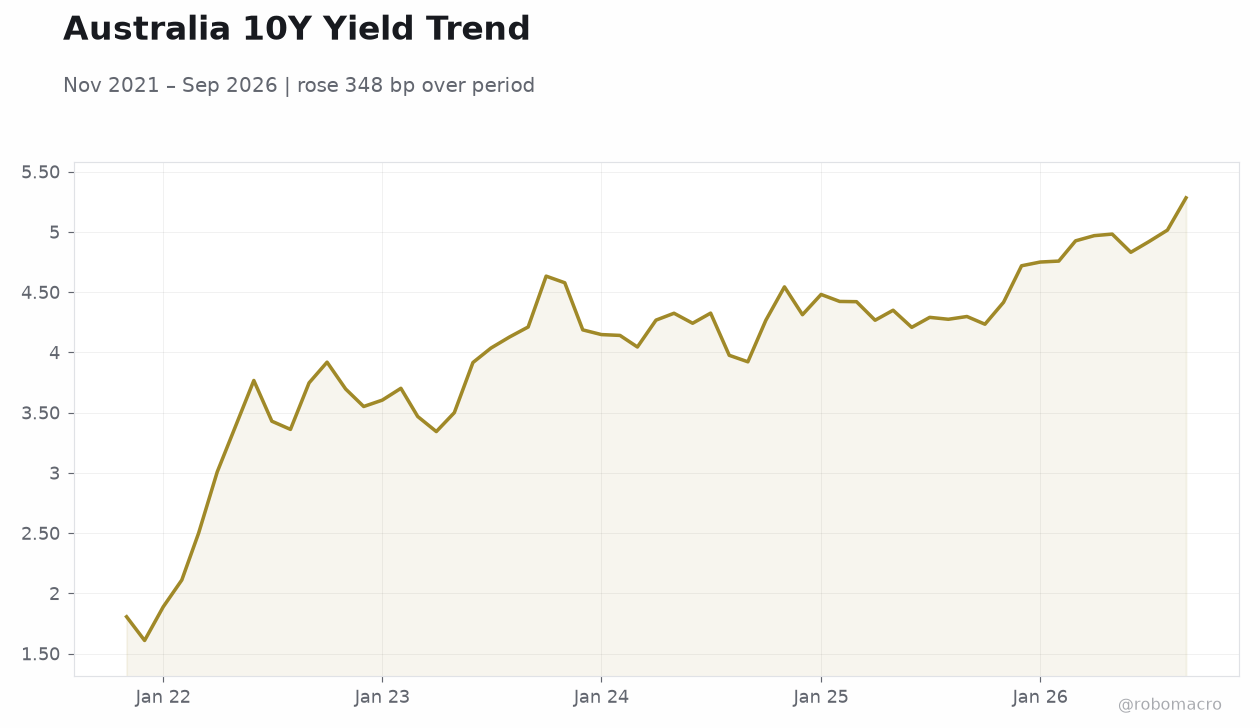 Australia 10Y Yield Trend | Type: macro_line | Australia 10Y Yield: 5.283 (2026-09-01) | Range: 1.609–5.283 | Trend(6pt): 1.806,3.604,4.045,4.35,4.919,5.283
Today's Economic Events
| Data | Prior | Cons | Time |
|---|---|---|---|
| Inflation Rate Quarter-over-Quarter | 1.50 | 0.80 | 17:45 |
| Wednesday (2026-10-21) | |||
| Inflation Rate Quarter-over-Quarter | 1.50 | 0.80 | 17:45 |
- New Zealand Q3 CPI is the week's key ANZ event, with consensus at 0.8% q/q versus 1.5% prior, a sharp deceleration that will shape RBNZ rate expectations.
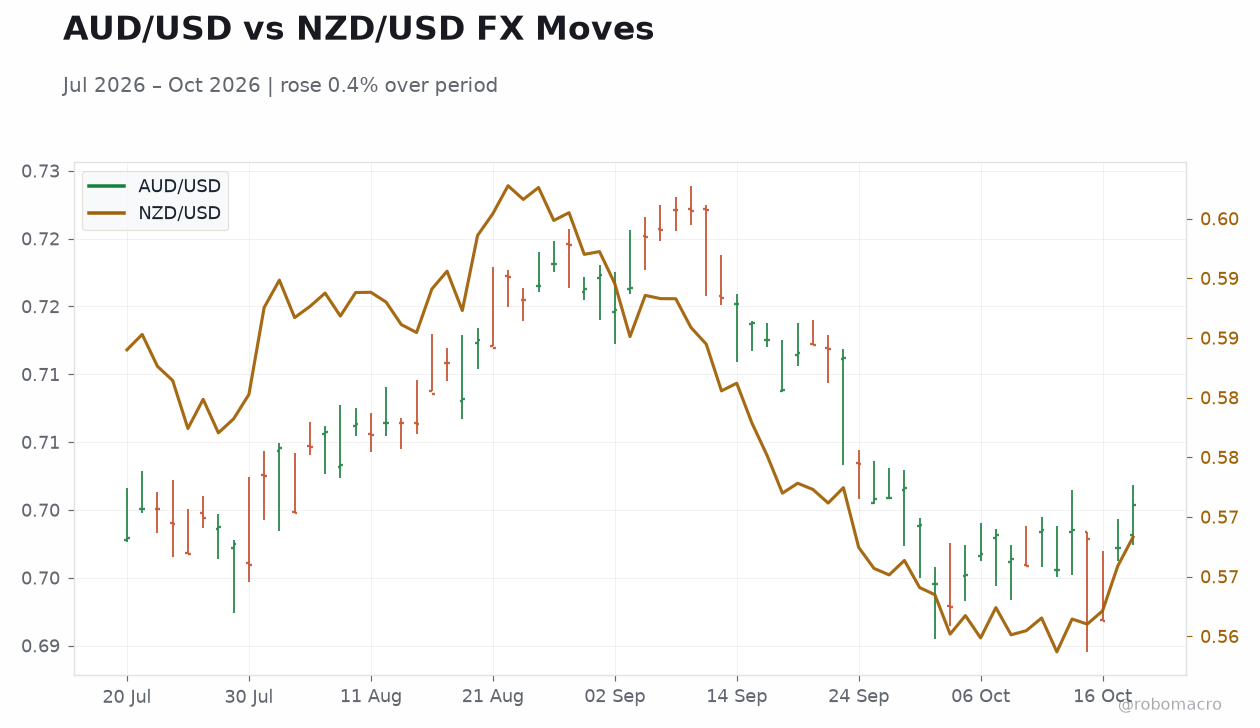
- AUD/USD pushed to 0.70 (+0.45%) and NZD/USD to 0.57 (+0.41%) as hawkish RBA commentary and a China GDP upside surprise lifted both currencies.
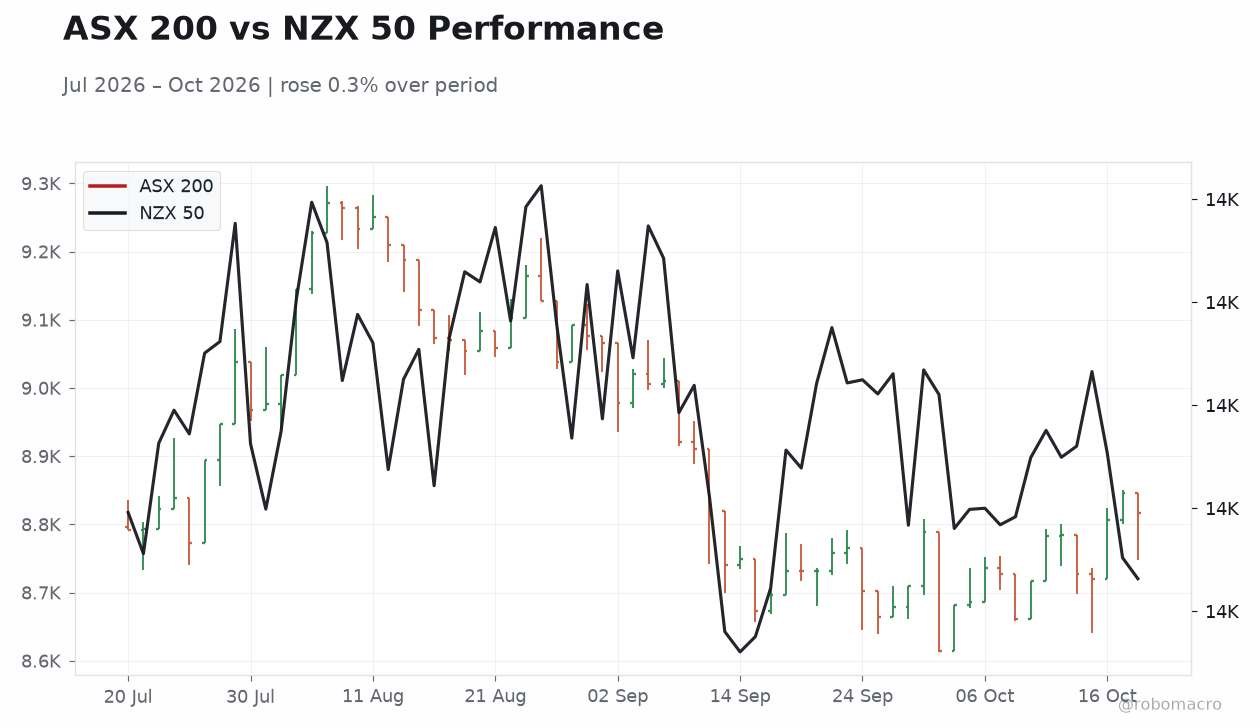
- Australian 2Y and 10Y yields rose 3bp and 2bp to 4.92% and 5.31% respectively, while ASX 200 slipped 0.33% and BHP fell 1.74% on softer commodity sentiment.
Yesterday's Recap
Australian and New Zealand markets traded a constructive risk tone on October 19, though equities diverged from currency strength. The ASX 200 closed down 0.33% at 8,816.90, with BHP falling 1.74% to A$59.41 as iron ore and base metals sentiment softened. The NZX 50 edged 0.15% lower to 13,631.69.
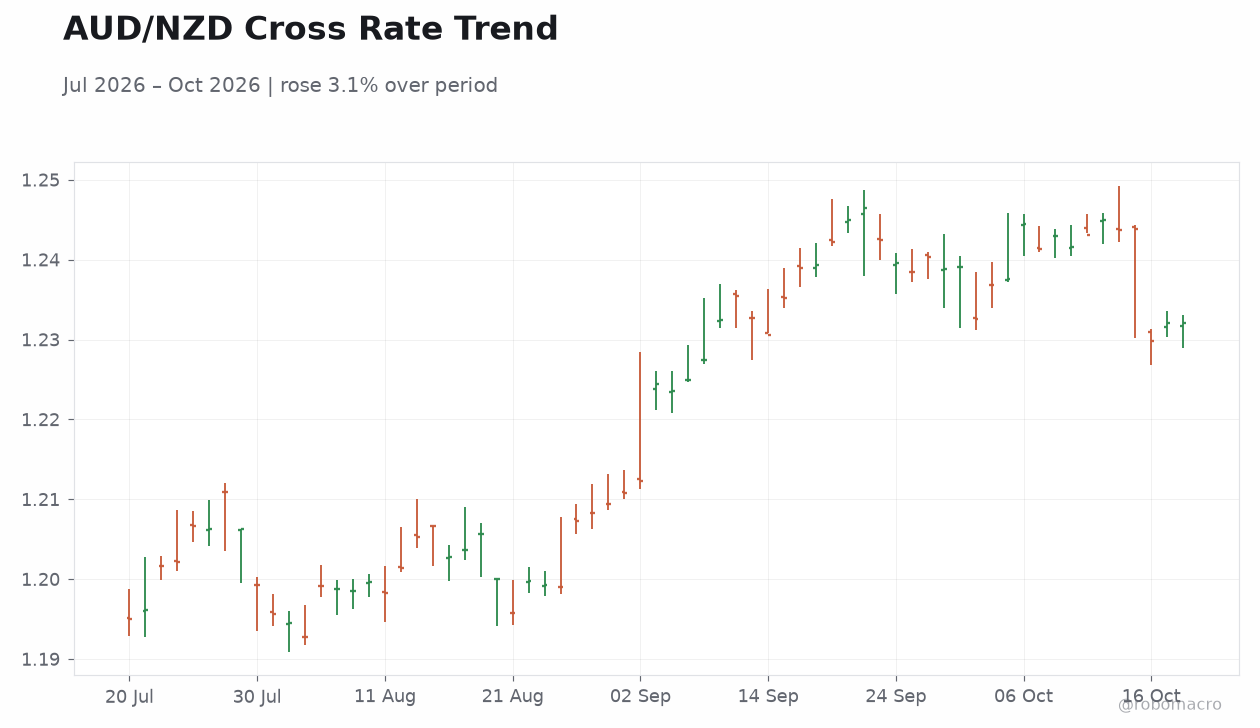
In FX, the Australian dollar rallied 0.45% to 0.70 against the US dollar, extending gains built on hawkish RBA remarks and stronger-than-expected China GDP data, while NZD/USD rose 0.41% to 0.57 and AUD/NZD firmed 0.18% to 1.23. Australian rates moved higher, with the 2-year yield up 3bp to 4.92% and the 10-year up 2bp to 5.31%, reflecting the hawkish repricing. Gold eased 0.44% to US$4,141.60/oz and Brent crude fell 0.45% to US$109.06/bbl, while Bitcoin gained 0.69% to US$82,421.83.
No scheduled ANZ data releases printed yesterday, leaving flows driven by offshore catalysts and RBA communication.
The Day Ahead
The dominant event is New Zealand's Q3 inflation report, due Wednesday at 17:45 ET (Thursday local), with consensus at 0.8% q/q against a 1.5% prior — a material step-down that markets will read as confirmation of disinflation and a signal on the RBNZ's next move. Traders are already pricing future RBNZ hikes per FXStreet coverage, so the print carries asymmetric risk: a downside surprise would challenge the hawkish pricing, while an upside surprise would reinforce it. Australia has no top-tier releases scheduled, so AUD direction will hinge on offshore risk appetite, China data follow-through and RBA commentary.
NZD crosses, particularly AUD/NZD, will be the cleanest expression of relative monetary policy expectations around the release. Liquidity in NZD may thin ahead of the print, raising the risk of outsized moves.
Other Economic Notes
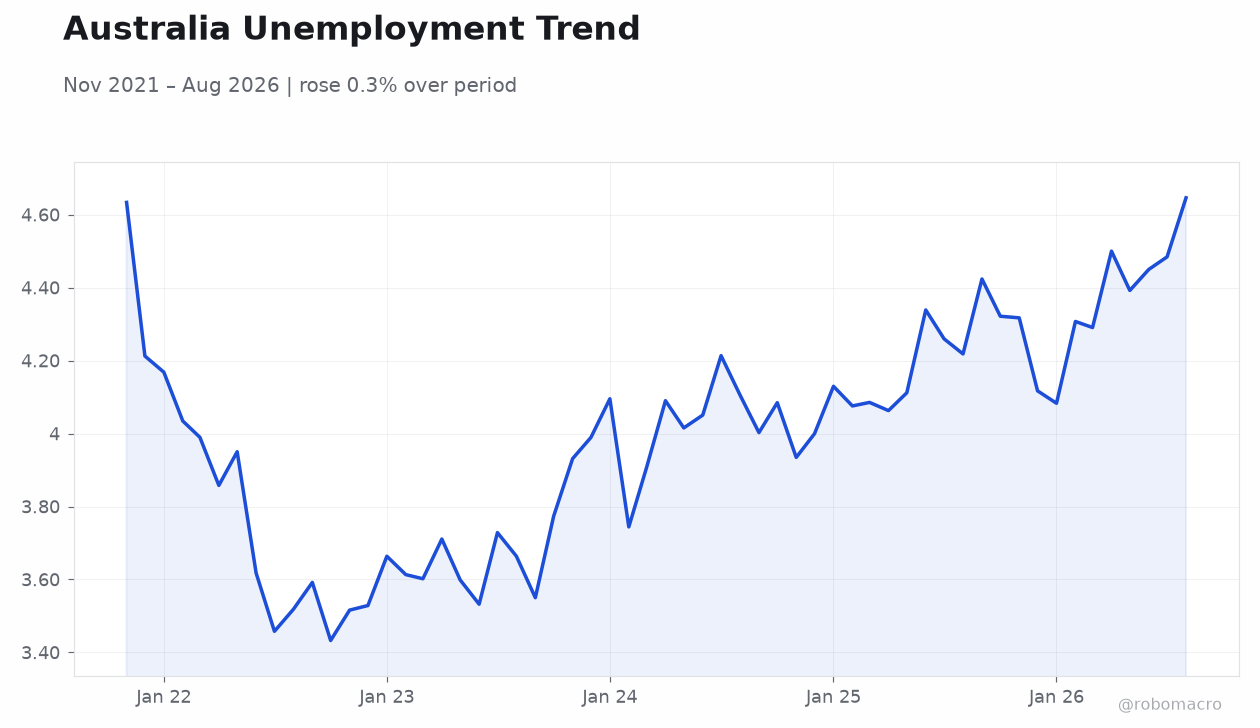
The IMF has cut Australia's growth outlook to 1.6%, citing inflation and debt pressures, a reminder that the RBA's restrictive stance is weighing on activity even as inflation remains elevated at 4.00% y/y. ↓ p.2