ANZ Macro Daily(Beta Mode)
RBA Hike Odds Rise on Inflation Signals
Market Snapshot
| Asset | Level | Change |
|---|---|---|
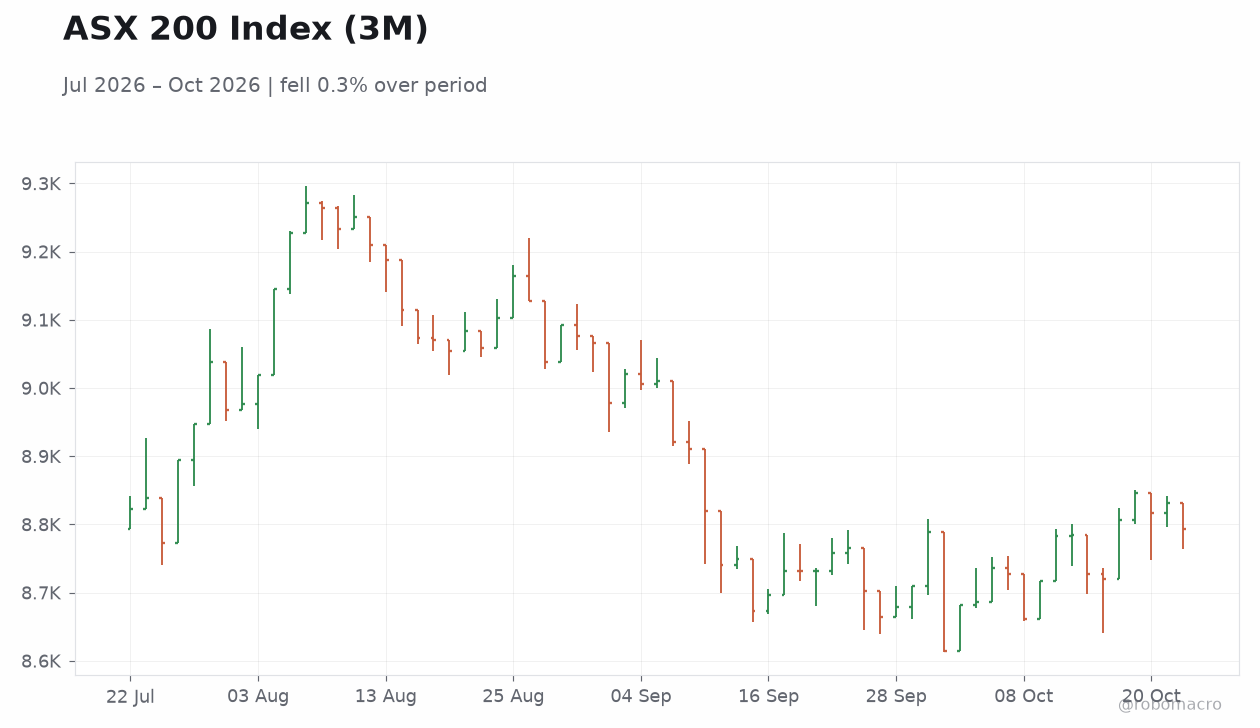
| ASX 200 | 8,793.20 | -0.43% |
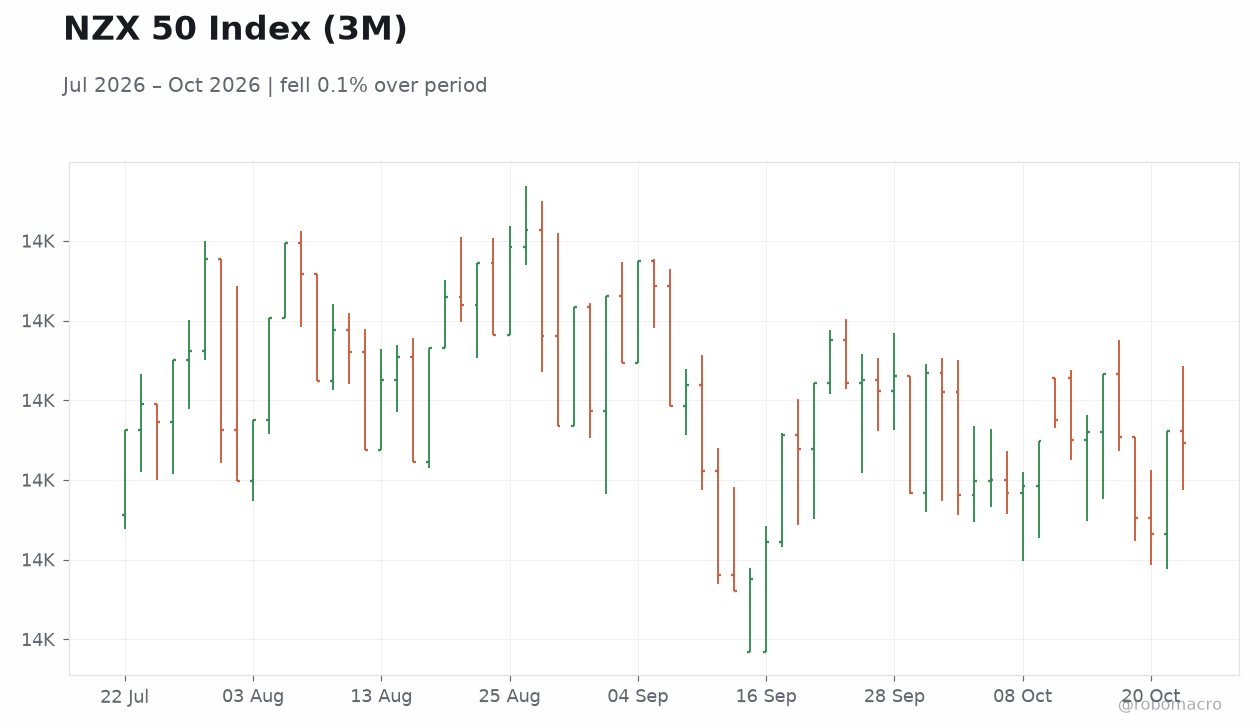
| NZX 50 | 13,746.84 | -0.11% |
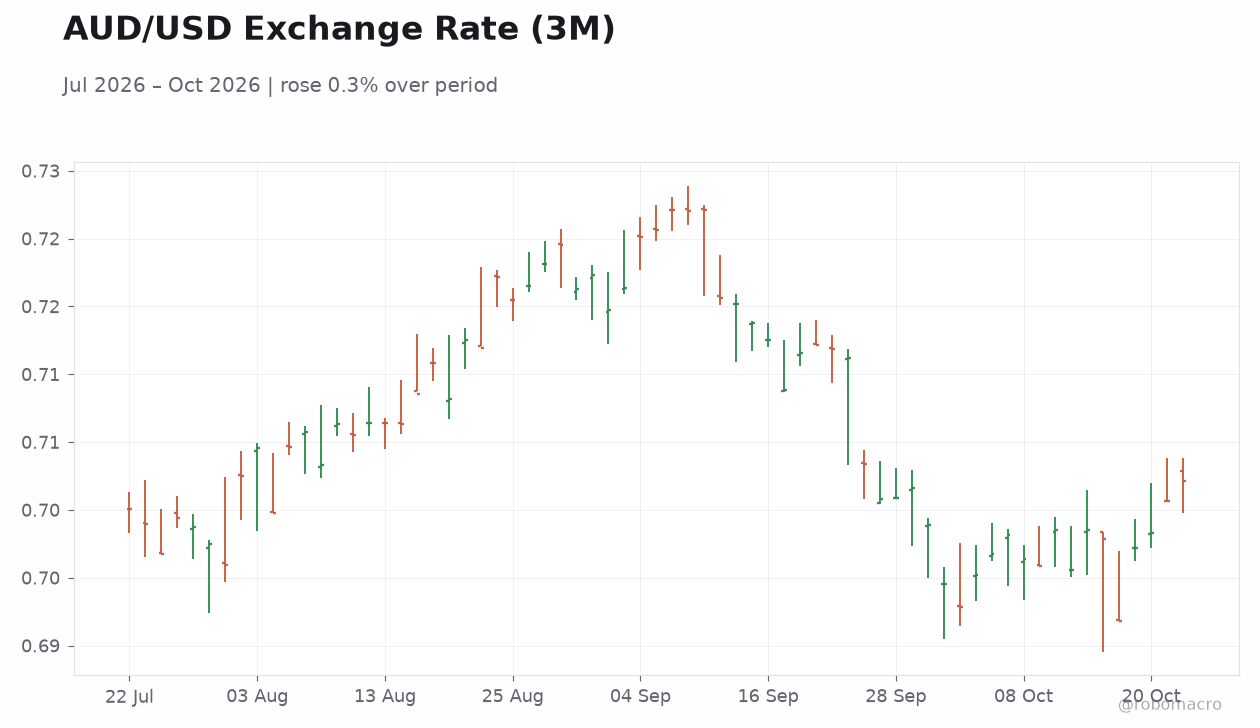
| AUD/USD | 0.70 | +0.22% |
| NZD/USD | 0.57 | +0.15% |
| AUD/NZD | 1.23 | +0.07% |
| BHP | 57.13 | -2.41% |
| Gold | 4,041.60 | -2.61% |
| Brent Crude | 113.10 | +3.93% |
| Bitcoin | 81,362.01 | -3.15% |
| Australia 2Y Govt Yield | 4.92% | +3 bp |
| Australia 10Y Govt Yield | 5.31% | +2 bp |
Prior Economic Events
| Data | Prior | Cons | Actual |
|---|---|---|---|
| Inflation Rate Quarter-over-Quarter | 1.50 | 0.80 | 0.70 |
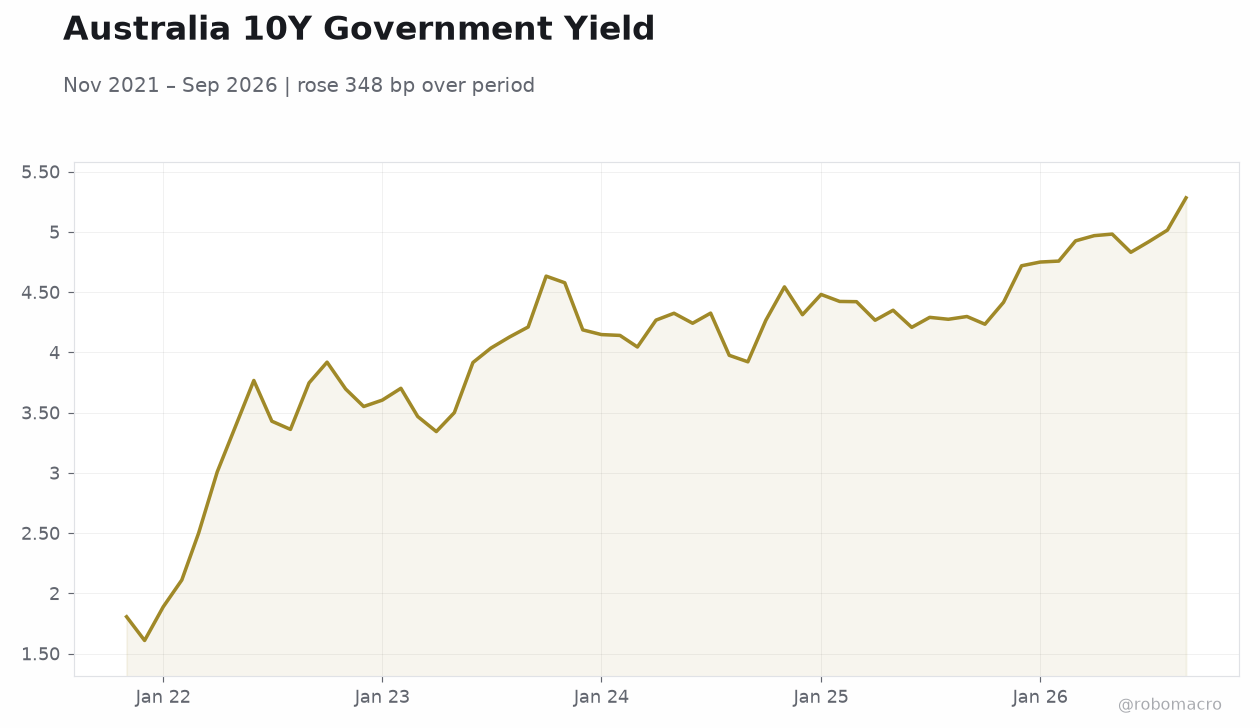 Australia 10Y Government Yield | Type: macro_line | 10Y Yield %: 5.283 (2026-09-01) | Range: 1.609–5.283 | Trend(6pt): 1.806,3.604,4.045,4.35,4.919,5.283
Today's Economic Events
| Data | Prior | Cons | Time |
|---|---|---|---|
| No events available | |||
- New Zealand Q3 inflation cooled to 3.7% YoY but remains above target, keeping RBNZ hike odds elevated.
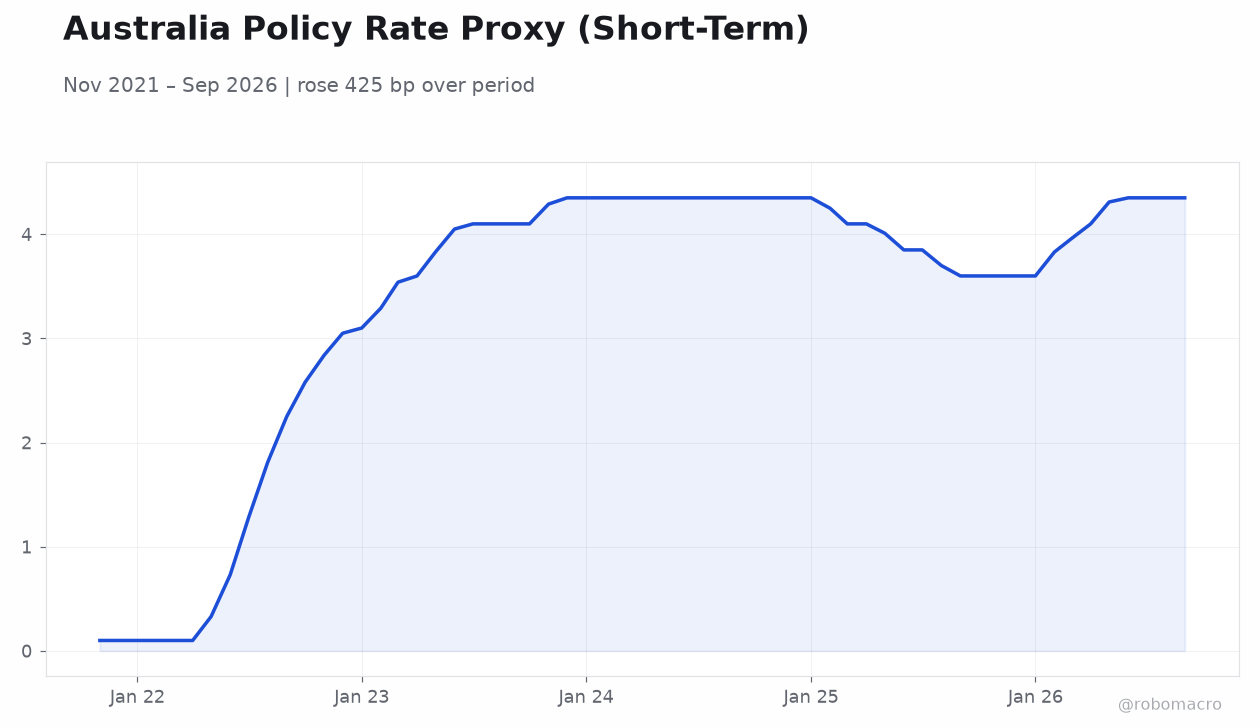
- Australian yields rose with 2-year at 4.92% and 10-year at 5.31% as RBA November hike pricing increased sharply.
- ASX 200 fell 0.43% while AUD/USD climbed to 0.70, shrugging off global risk-off moves in gold and equities.
Yesterday's Recap
New Zealand’s inflation rate quarter-over-quarter printed at 0.7%, below the 0.8% consensus and prior 1.5%, pulling the annual rate to 3.7%. The softer quarterly outcome still left core pressures elevated enough to sustain market expectations for an RBNZ rate increase. In Australia, two- and ten-year government yields climbed three and two basis points to 4.92% and 5.31% respectively, reflecting firmer RBA hike probabilities.
The ASX 200 declined 0.43% to 8,793.20 while BHP fell 2.41% on softer iron-ore sentiment. The NZX 50 eased 0.11%. AUD/USD advanced 0.22% to 0.70 and NZD/USD gained 0.15% to 0.57 despite the inflation miss.
Brent crude rose 3.93% while gold dropped 2.61%, highlighting commodity divergence that continues to support the Australian dollar.
The Day Ahead
With no scheduled Australian or New Zealand data releases, attention turns to RBA and RBNZ speeches that could refine November and December policy signals. Markets will monitor any further comments from RBA Deputy Governor Hauser on the worsening inflation outlook. Global developments in US yields and crude prices may continue to influence AUD and NZD flows.
Housing-market data and credit aggregates due later in the week remain the next domestic focal points. Traders will also watch China-related trade and commodity news given its direct impact on Australian export revenues.
Other Economic Notes
Australia’s inflation outlook has deteriorated materially according to recent RBA commentary, lifting November hike probabilities even as unemployment sits at a five-year high. The central bank’s willingness to tolerate labour-market softening before pausing underscores its focus on returning inflation to target. New Zealand’s economy continues to face persistent services and housing-linked price pressures that keep the RBNZ on a tightening path despite the latest CPI moderation.
Both countries remain sensitive to China’s growth trajectory, which directly affects iron-ore, coal, dairy and tourism revenues. Elevated commodity volatility, including Brent’s sharp daily gain, adds another layer of uncertainty to terms-of-trade forecasts.