ANZ Macro Daily(Beta Mode)
RBA Hikes to 4.85%, NZ Jobs Deteriorate
Market Snapshot
| Asset | Level | Change |
|---|---|---|
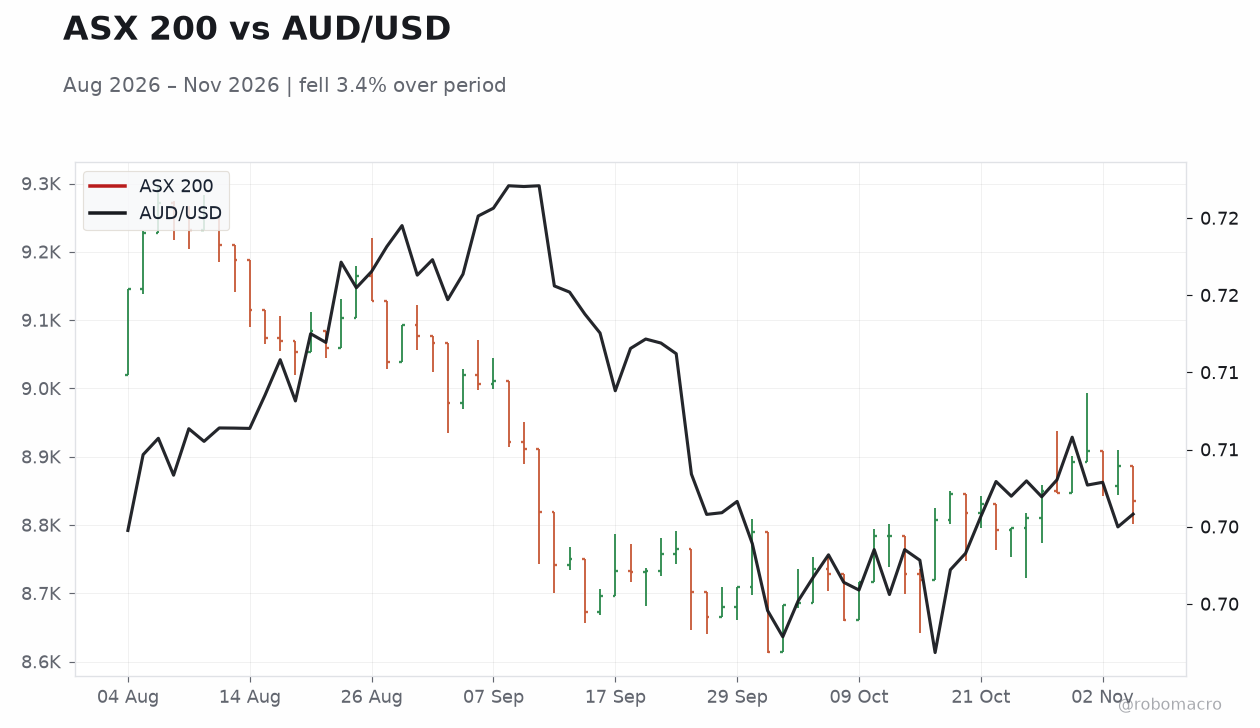
| ASX 200 | 8,834.50 | -0.59% |
| NZX 50 | 13,783.45 | +0.42% |
| AUD/USD | 0.70 | +0.13% |
| NZD/USD | 0.56 | +0.04% |
| AUD/NZD | 1.25 | +0.07% |
| BHP | 55.56 | -1.52% |
| Gold | 4,073.60 | +3.38% |
| Brent Crude | 94.76 | -8.53% |
| Bitcoin | 80,150.95 | +3.63% |
| Australia 2Y Govt Yield | 4.95% | +7 bp |
| Australia 10Y Govt Yield | 5.21% | +6 bp |
Prior Economic Events
| Data | Prior | Cons | Actual |
|---|---|---|---|
| RBA Interest Rate Decision | 4.60 | 4.85 | 4.85 |
| RBA Monetary Policy Statement | - | - | - |
| RBA Rate Statement | - | - | - |
| RBA Press Conference | - | - | - |
| Employment Change Quarter-over-Quarter | 0.50 | 0.40 | -0.10 |
| Headline Unemployment Rate | 5.60 | 5.50 | 5.70 |
| Ai Group Industry Index | -24.20 | - | -19.10 |
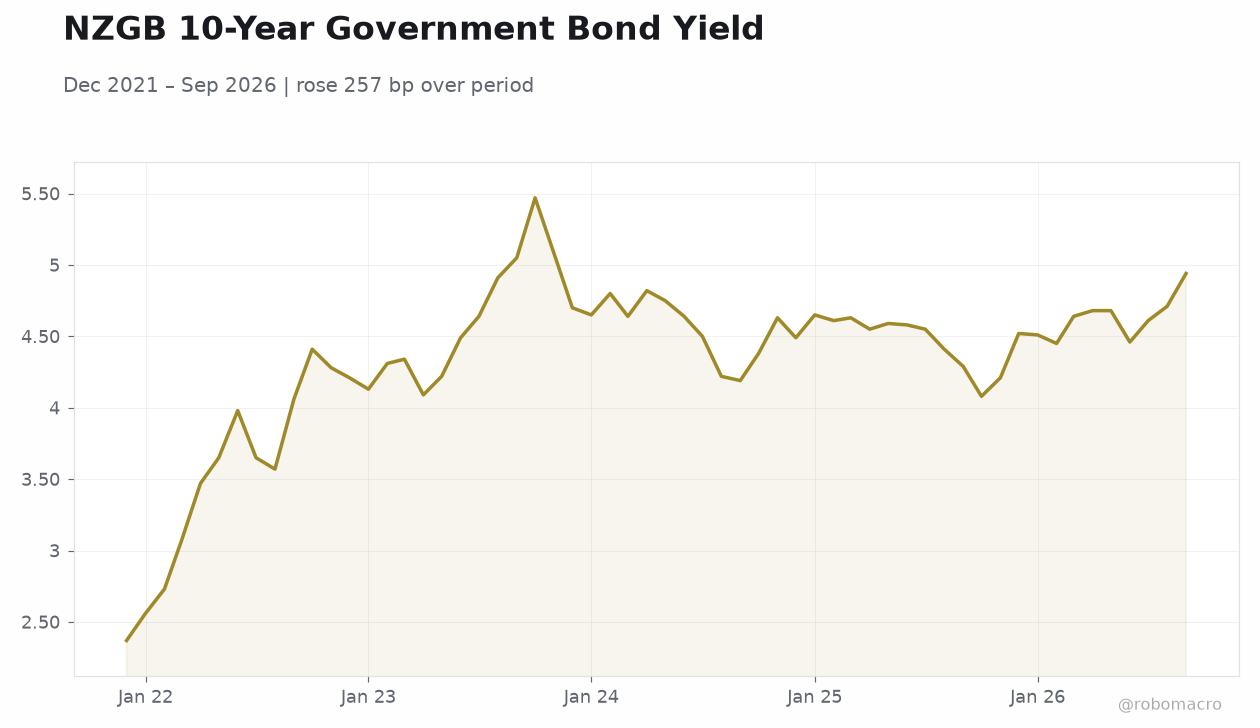 NZGB 10-Year Government Bond Yield | Type: macro_line | NZGB 10-Year Government Bond Yield: 4.94 (2026-09-01) | Range: 2.37–5.47 | Trend(6pt): 2.37,4.31,4.82,4.58,4.71,4.94
Today's Economic Events
| Data | Prior | Cons | Time |
|---|---|---|---|
| Trade Balance | 495m | 1,000m | 19:30 |
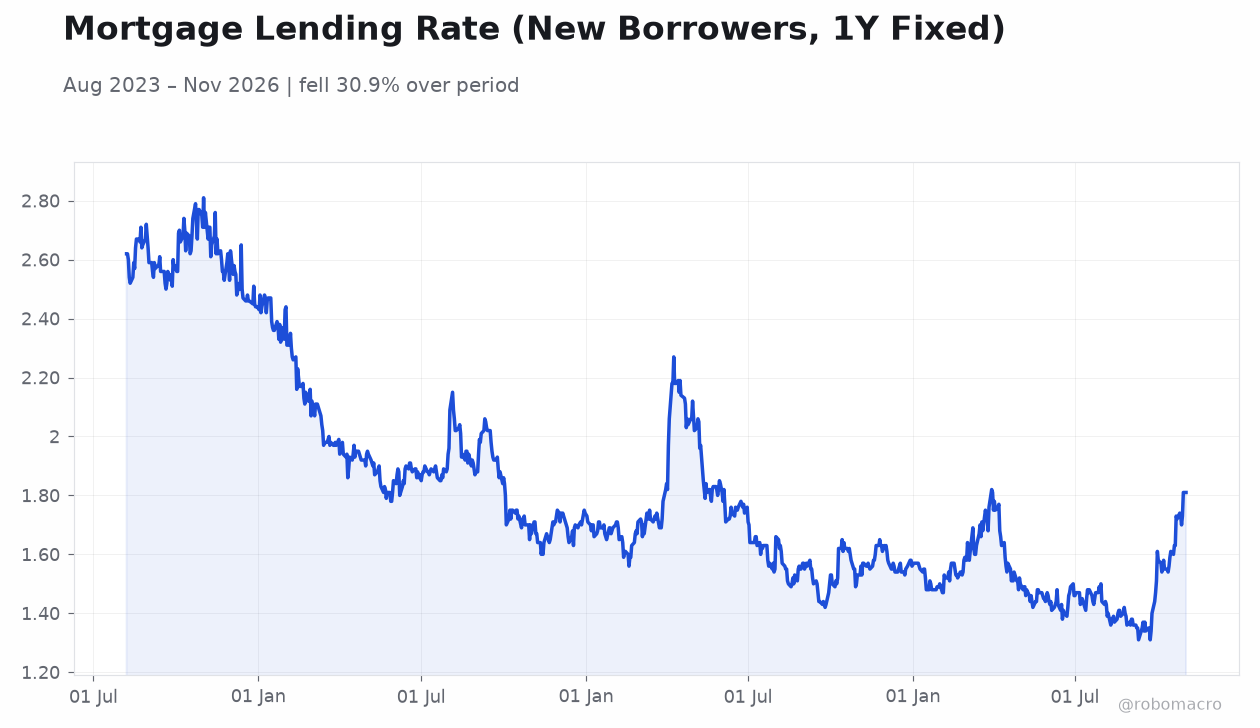
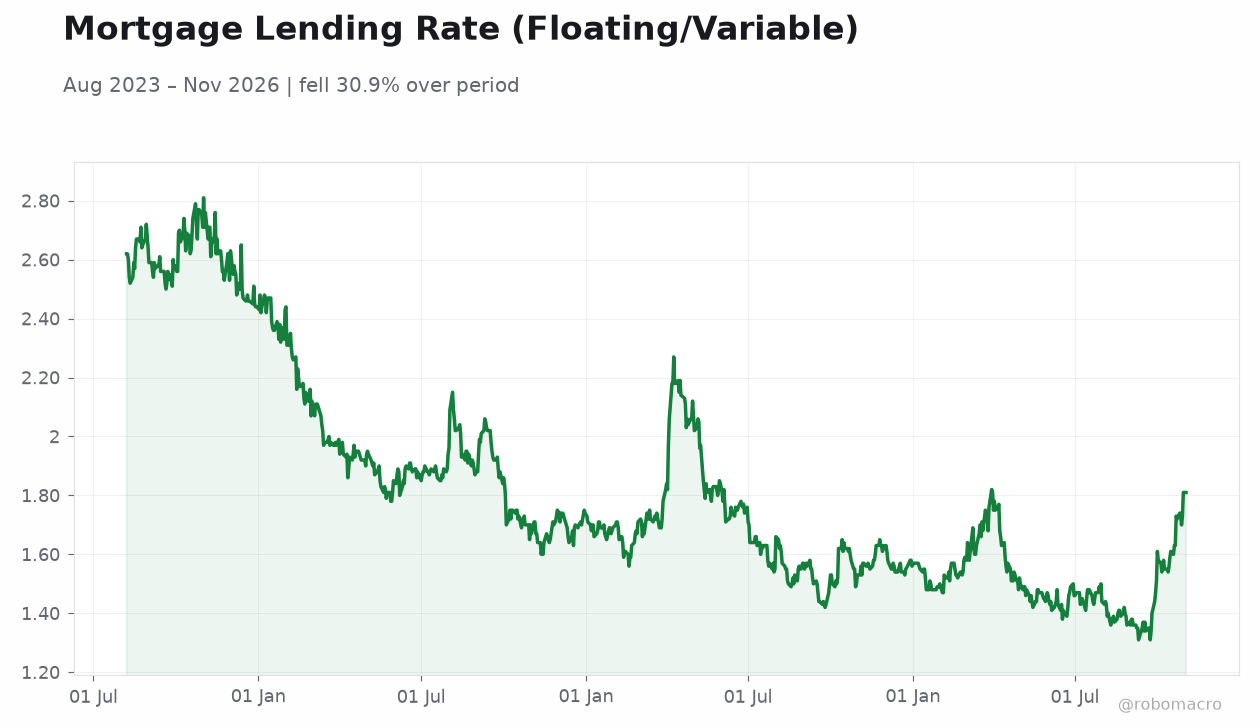
- RBA raised the cash rate to 4.85% at its November 3 decision, a fifth hike in 2026, with the committee split on the risks and banks passing the increase through to mortgage rates.
- New Zealand's labour market weakened sharply: employment fell 0.1% q/q and the unemployment rate rose to 5.7%, an 11-year high, dampening RBNZ hike expectations.
- Australian 2Y and 10Y yields rose 7bp and 6bp respectively, while Brent crude slumped 8.5% and gold jumped 3.4% amid a softer US dollar.
Yesterday's Recap
The Reserve Bank of Australia raised the cash rate to 4.85% at its November 3 decision, up from 4.6%, matching consensus and marking the fifth hike of 2026. The accompanying monetary policy statement and rate statement framed the move around persistent excess demand, and the press conference reinforced a data-dependent stance. Australian banks responded by lifting mortgage rates, deepening the housing slump that the WSJ described as worsening ahead of further expected tightening.
In New Zealand, the Q3 labour data printed weak: employment change came in at -0.1% q/q against 0.4% consensus, and the headline unemployment rate rose to 5.7% from 5.6%, an 11-year high ahead of the election. The Ai Group Industry Index improved to -19.1 from -24.2, still deep in contraction territory. Markets were mixed: the ASX 200 fell 0.59% to 8,834.50 while the NZX 50 rose 0.42% to 13,783.45, and AUD/USD edged up 0.13% to 0.70 despite the hike.
Australian 2Y and 10Y government yields rose 7bp and 6bp to 4.95% and 5.21% respectively, while Brent crude collapsed 8.53% to USD94.76 and gold surged 3.38% to USD4,073.60.
The Day Ahead
Australia's October trade balance is the sole scheduled release, due at 19:30 ET, with consensus at AUD1.0bn versus a previous AUD495m surplus. The print will be watched for signals on export volumes amid the sharp oil price decline and softer iron ore sentiment, with BHP down 1.52% to AUD55.56 as a bellwether. No New Zealand data is scheduled, leaving NZ markets to digest the weak labour print and its implications for the RBNZ's December 9 meeting.
With the RBA now at 4.85% and the next decision set for December 8, markets will also parse post-meeting commentary for guidance on whether further tightening is likely.
Other Economic Notes
Australia's housing market is the key transmission channel for the RBA's tightening cycle, with the WSJ noting the slump is deepening as another rate rise looms and banks lift mortgage rates. ↓ p.2