ASEAN Macro Daily(Beta Mode)
Rupiah Nears 18,000 as BI Holds Rate
Market Snapshot
| Asset | Level | Change |
|---|---|---|
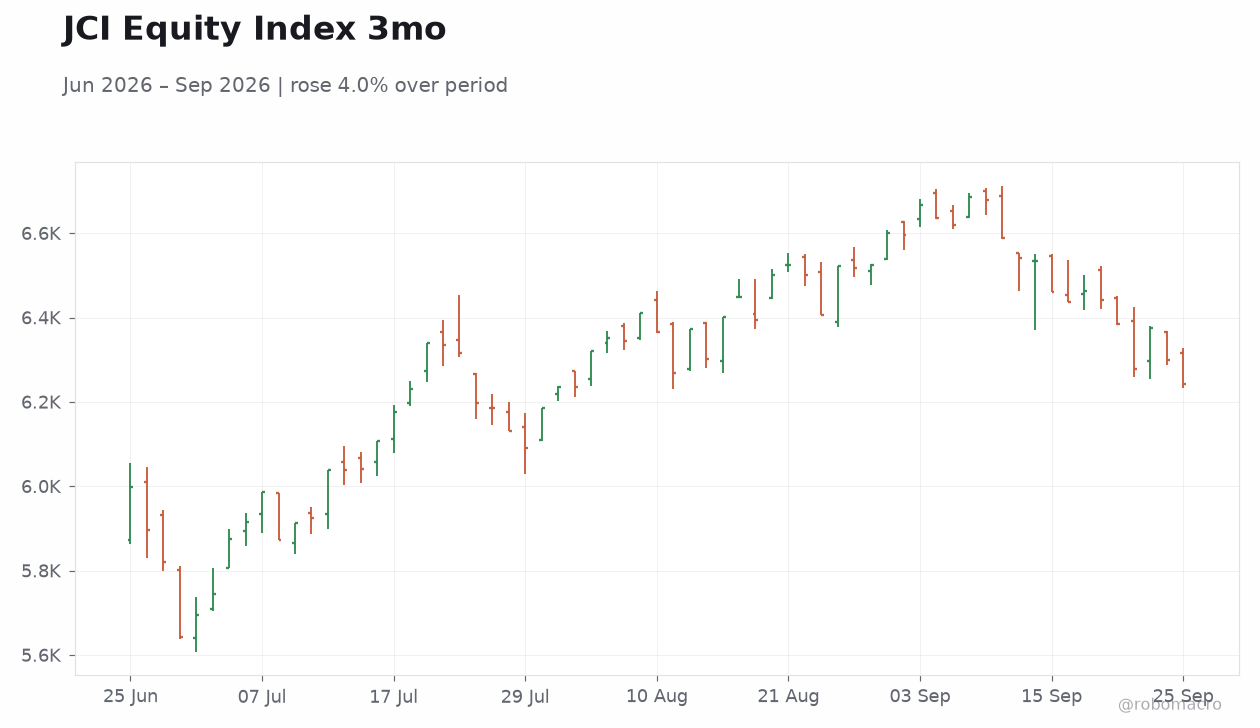
| JCI | 6,241.89 | -0.90% |
| KLCI | 1,671.62 | -0.04% |
| STI | 5,711.12 | +0.49% |
| USD/IDR | 17,912.00 | +2.01% |
| USD/THB | 33.37 | -0.33% |
| USD/MYR | 4.07 | -0.31% |
| USD/PHP | 62.37 | -0.00% |
| USD/SGD | 1.28 | -0.15% |
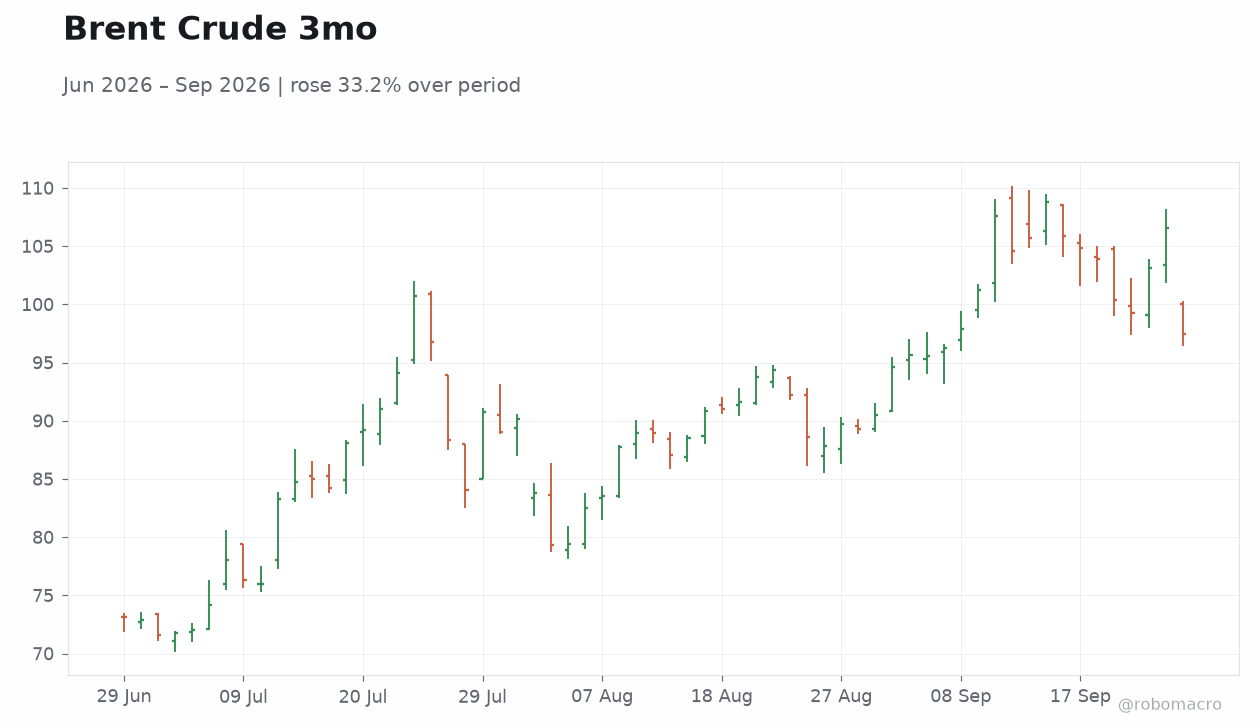
| Brent Crude | 97.44 | -8.59% |
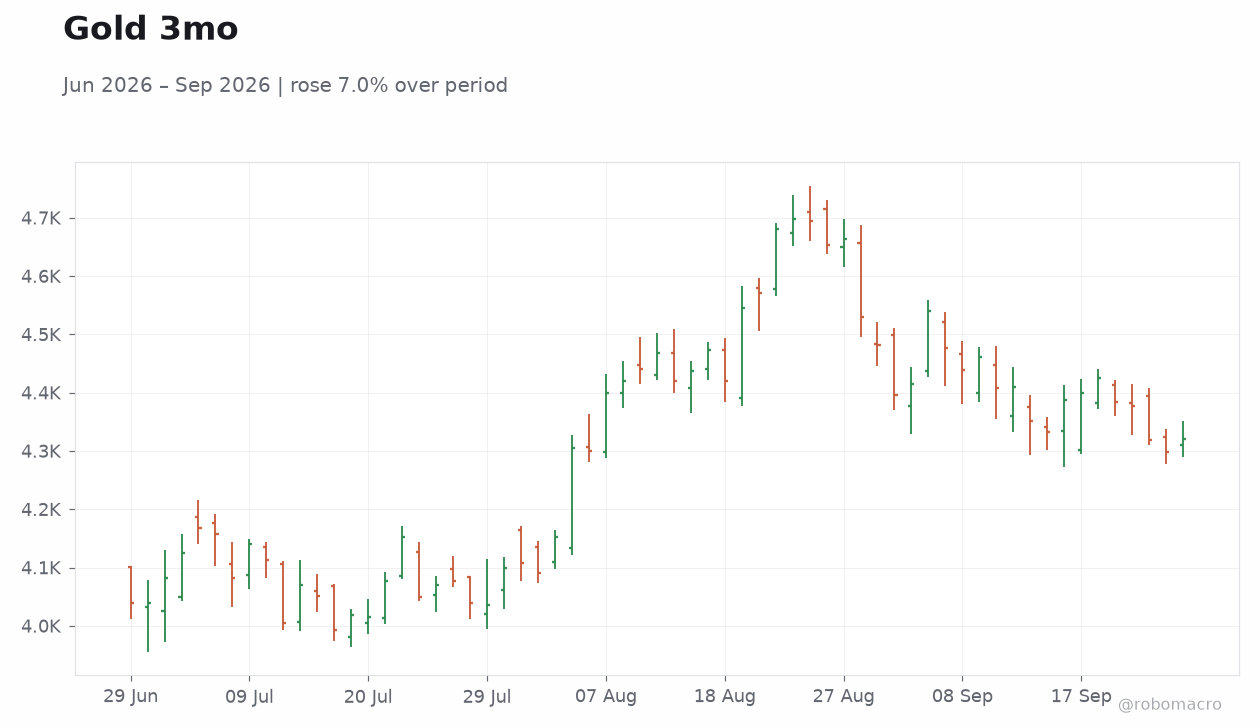
| Gold | 4,321.20 | +0.54% |
| Bitcoin | 84,473.15 | +0.08% |
| Indonesia 10Y Govt Yield | - | - |
| Thailand 10Y Govt Yield | - | - |
Prior Economic Events
| Data | Prior | Cons | Actual |
|---|---|---|---|
| Central Bank Interest Rate Decision | 5.75 | 5.75 | 5.75 |
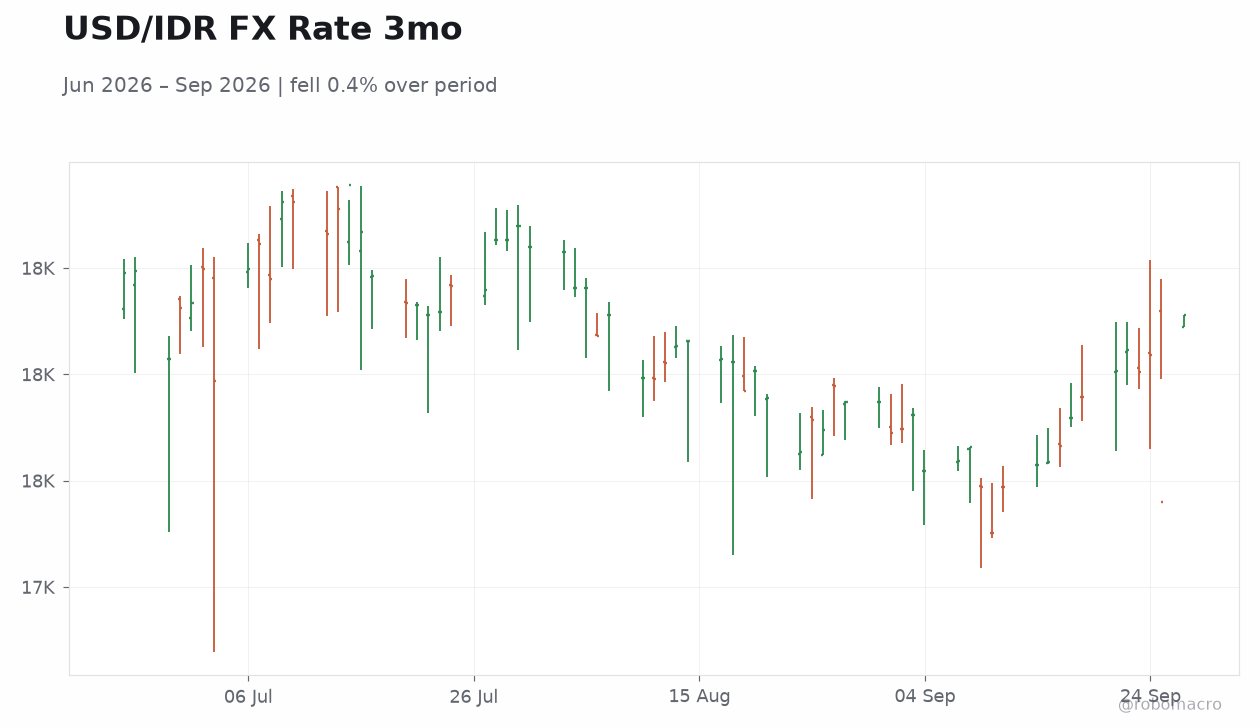 USD/IDR FX Rate 3mo | Type: market_hloc | USD/IDR: 1.791e+04 (2026-09-27) | Range: 1.75e+04–1.816e+04 | Trend(5pt): 1.799e+04,1.793e+04,1.782e+04,1.762e+04,1.791e+04
Today's Economic Events
| Data | Prior | Cons | Time |
|---|---|---|---|
| No events available | |||
- Bank Indonesia kept its policy rate at 5.75% while the rupiah weakened sharply toward 18,000 per dollar.
- Regional equities closed mixed, with Indonesia’s JCI falling 0.90% and Singapore’s STI rising 0.49%.
- Brent crude plunged 8.59% to 97.44 while gold rose 0.54% to 4,321.20.
Yesterday's Recap
Bank Indonesia left its benchmark rate unchanged at 5.75% on 22 September, matching consensus expectations. The decision coincided with accelerating private-sector credit demand and broad money supply reaching Rp10,448 trillion. Indonesia’s JCI fell 0.90% to 6,241.89 as USD/IDR surged 2.01% to 17,912, pushing the rupiah close to the 18,000 level.
Malaysia’s KLCI slipped 0.04% to 1,671.62 while Singapore’s STI gained 0.49% to 5,711.12. USD/THB eased 0.33% to 33.37 and USD/MYR declined 0.31% to 4.07. Brent crude dropped 8.59% to 97.44, and gold rose 0.54% to 4,321.20.
BI and the Finance Ministry outlined five steps to stabilise the economy and channel 140 trillion rupiah of recent inflows into productive sectors. Economists urged stronger FX intervention as the currency approached the key psychological threshold.
The Day Ahead
No major data releases or central-bank meetings are scheduled for Indonesia, Thailand, Malaysia, Philippines, Singapore or Vietnam over the next two days. The calendar remains empty of CPI prints, GDP figures, trade data or policy decisions. Market attention will stay on rupiah movements and any further statements from Bank Indonesia or the Finance Ministry.
Thailand’s ongoing flood impact in Bangkok may draw limited local commentary but carries no immediate macro release. Regional investors will monitor external drivers including US-China trade developments and commodity price swings. The Stock Exchange of Thailand’s new cooperation agreement with the New York Stock Exchange to explore dual listings adds a longer-term market-structure angle.
Other Economic Notes
Indonesia’s money-supply expansion and rising credit demand signal resilient domestic activity despite external pressure on the rupiah. Thailand recorded a widening trade deficit with China over the first eight months of 2026, highlighting persistent supply-chain imbalances. The Stock Exchange of Thailand signed a cooperation agreement with the New York Stock Exchange to explore dual listings and new products.
Authorities in Jakarta continue to urge that recent capital inflows be directed toward productive investment rather than short-term assets. These developments underscore divergent growth drivers across the six ASEAN economies. Flooding in Bangkok has displaced nearly 4,900 people and affected 52,000 households, though the immediate economic impact appears contained.