ASEAN Macro Daily(Beta Mode)
Indonesia Surplus Beats, BI Holds Steady
Market Snapshot
| Asset | Level | Change |
|---|---|---|
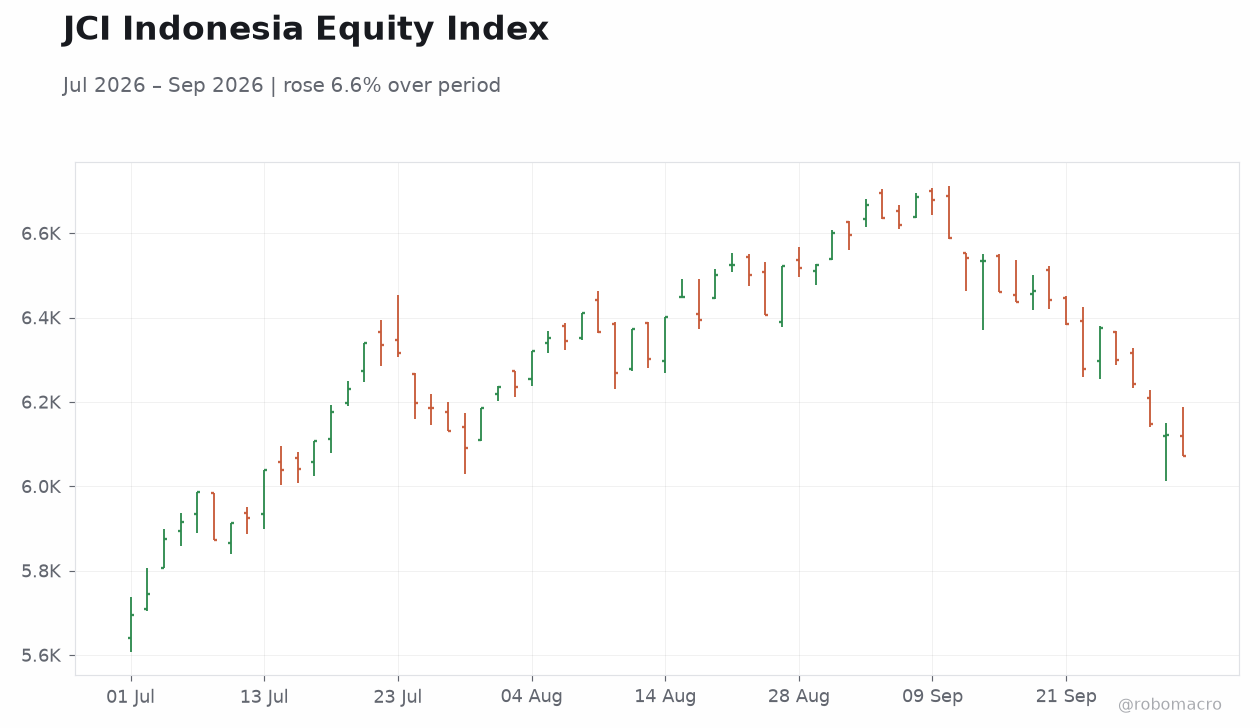
| JCI | 6,071.14 | -0.83% |
| KLCI | 1,651.17 | +0.44% |
| STI | 5,675.88 | -0.68% |
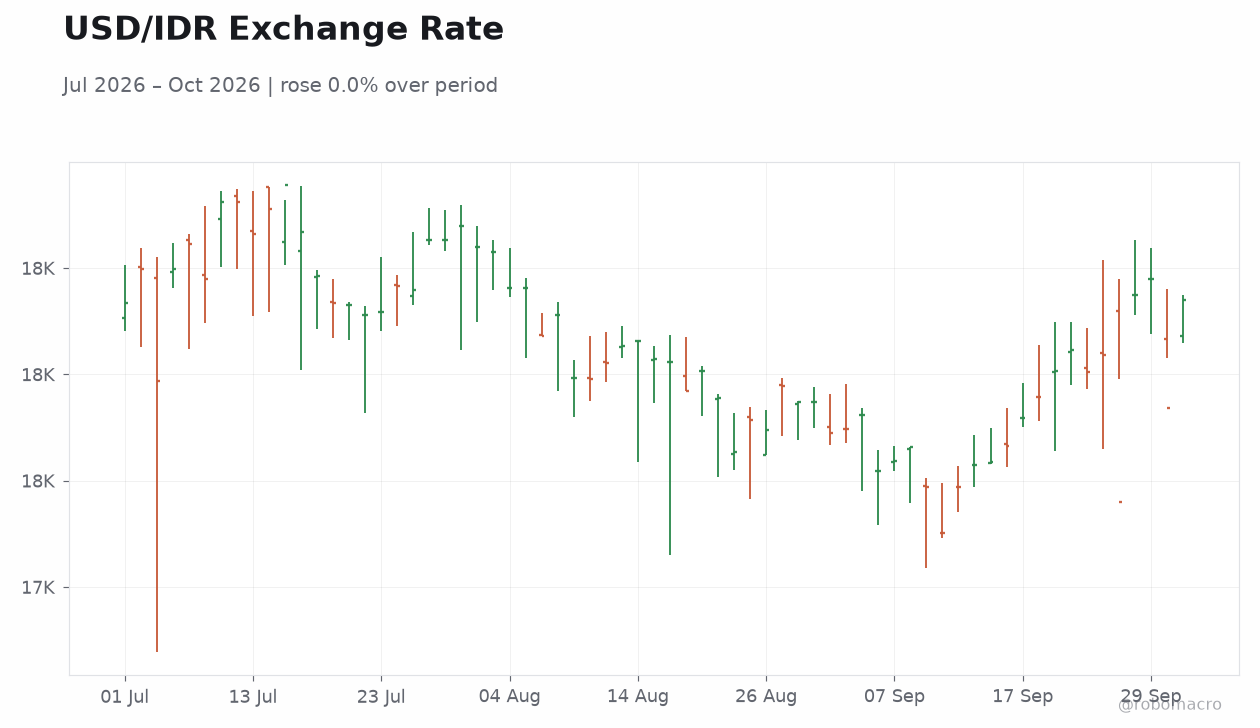
| USD/IDR | 17,940.00 | +1.15% |
| USD/THB | 33.63 | +0.21% |
| USD/MYR | 4.08 | +0.04% |
| USD/PHP | 62.53 | +0.01% |
| USD/SGD | 1.28 | +0.22% |
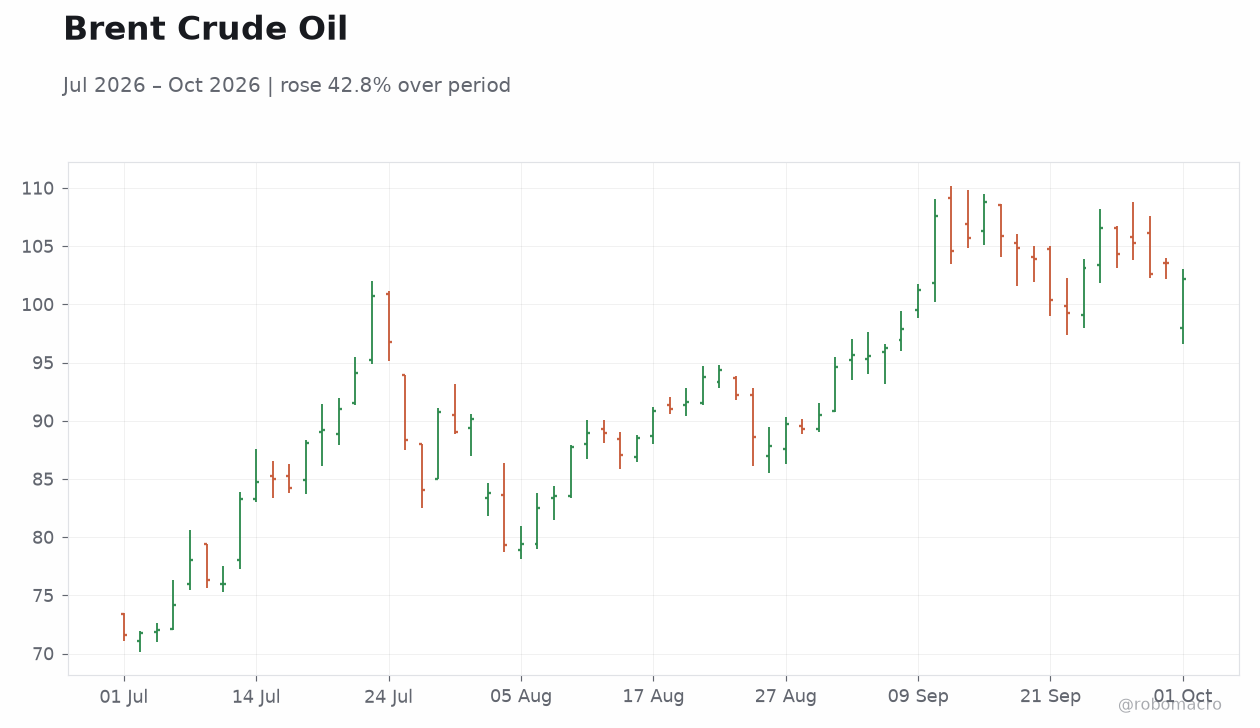
| Brent Crude | 102.21 | -1.27% |
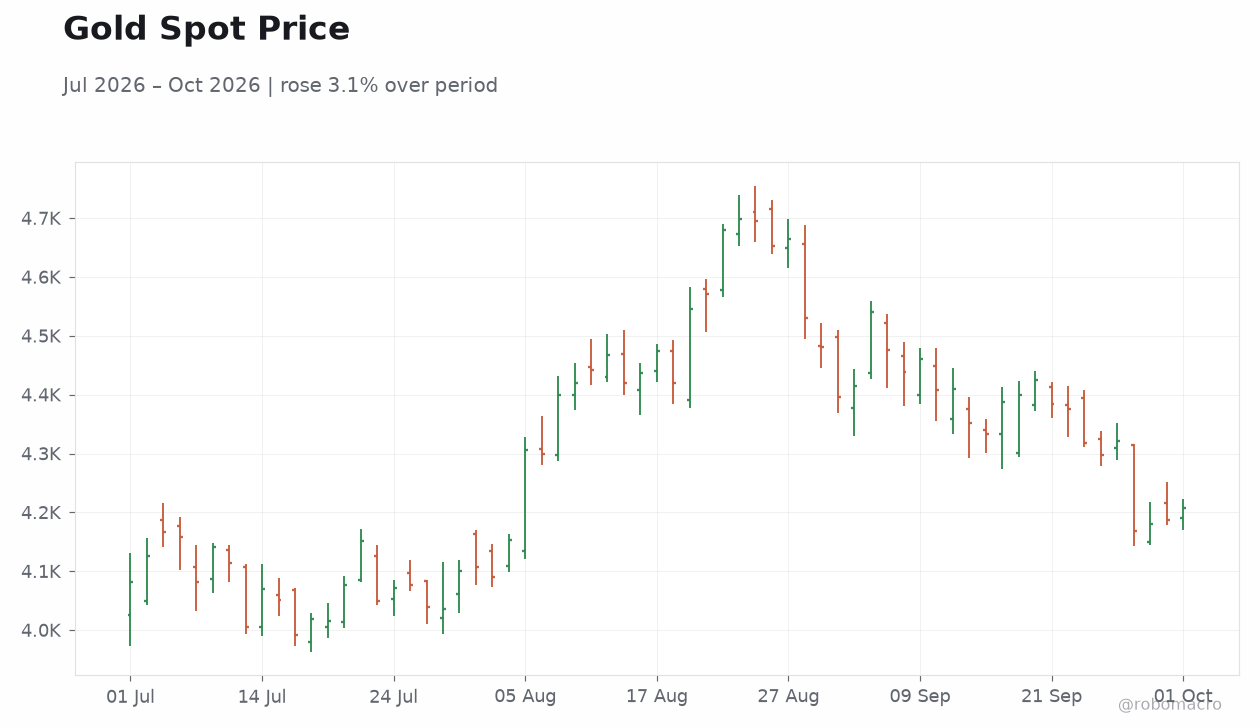
| Gold | 4,207.80 | +0.50% |
| Bitcoin | 84,756.08 | +1.44% |
| Indonesia 10Y Govt Yield | - | - |
| Thailand 10Y Govt Yield | - | - |
Prior Economic Events
| Data | Prior | Cons | Actual |
|---|---|---|---|
| Inflation Rate Year-over-Year | 3.19 | 3.30 | 3.28 |
| Trade Balance | 130m | 600m | 3,550m |
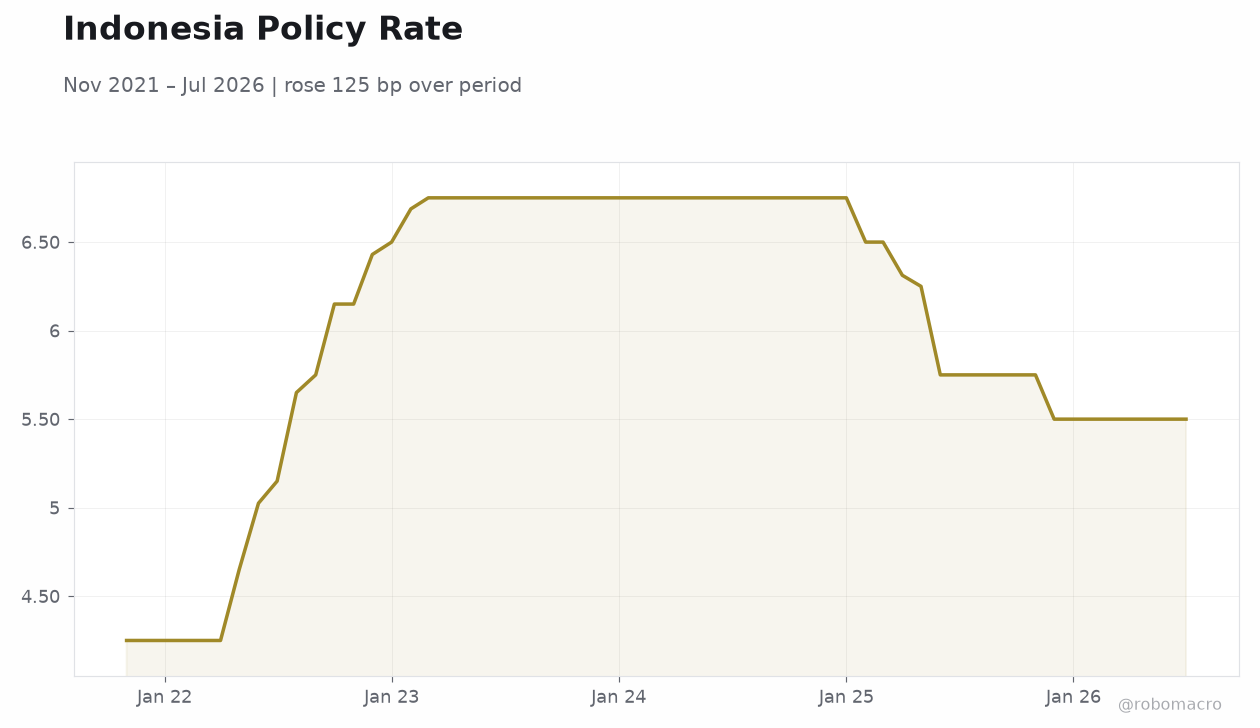 Indonesia Policy Rate | Type: macro_line | Policy Rate %: 5.5 (2026-07-01) | Range: 4.25–6.75 | Trend(5pt): 4.25,6.5,6.75,6.25,5.5
Today's Economic Events
| Data | Prior | Cons | Time |
|---|---|---|---|
| No events available | |||
- Indonesia posts $3.55b August trade surplus, far above $0.6b consensus, while September inflation prints 3.28% YoY.
- Regional equities mixed with JCI down 0.83% and KLCI up 0.44%; USD/IDR rises 1.15% to 17,940.
- Bank Indonesia maintains policy rate and steps up bond purchases amid rupiah pressure.
Yesterday's Recap
Indonesia released stronger-than-expected August trade data showing a $3.55 billion surplus driven by commodity exports, well above the $0.6 billion consensus and prior $0.13 billion print. September inflation came in at 3.28% year-over-year, slightly softer than the 3.3% consensus but above the previous 3.19% reading. Equity markets closed mixed across ASEAN: Indonesia’s JCI fell 0.83% to 6,071.14 while Malaysia’s KLCI gained 0.44% to 1,651.17 and Singapore’s STI declined 0.68% to 5,675.88.
Currencies broadly softened against the dollar, with USD/IDR jumping 1.15% to 17,940, USD/THB rising 0.21% to 33.63 and USD/SGD advancing 0.22% to 1.28. Bank Indonesia increased bond purchases in September and kept its policy stance unchanged, citing the need to monitor rupiah stability amid higher US Treasury yields. No macro releases emerged from Thailand, Malaysia, Philippines, Singapore or Vietnam.
The Day Ahead
The ASEAN calendar remains empty for October 1–2 with no central-bank meetings, bond auctions or data prints scheduled across the six economies. Traders will monitor external drivers including US Treasury yields and any follow-through from China’s recent PMI strength. Bank Indonesia’s ongoing bond-buying program and spot FX intervention remain the main domestic focus.
Regional investors will also watch for any comments from Malaysian or Thai officials ahead of the IMF-World Bank meetings. Absent local catalysts, currency and equity moves are likely to track global risk sentiment.
Other Economic Notes
Indonesia’s robust trade surplus reinforces its role as a key commodity supplier in global supply-chain shifts, particularly for nickel and palm oil. Regional manufacturing economies such as Thailand and Malaysia continue to benefit from FDI relocation trends away from China, though no fresh data emerged yesterday. Singapore’s financial-centre status keeps USD/SGD sensitive to US rate expectations and Treasury yield movements.
Broader ASEAN capital-flow dynamics remain supported by contained inflation prints, yet external shocks from US yields and China demand continue to dominate sentiment.