ASEAN Macro Daily(Beta Mode)
Rupiah Strengthens as BI Prioritises Stability
Market Snapshot
| Asset | Level | Change |
|---|---|---|
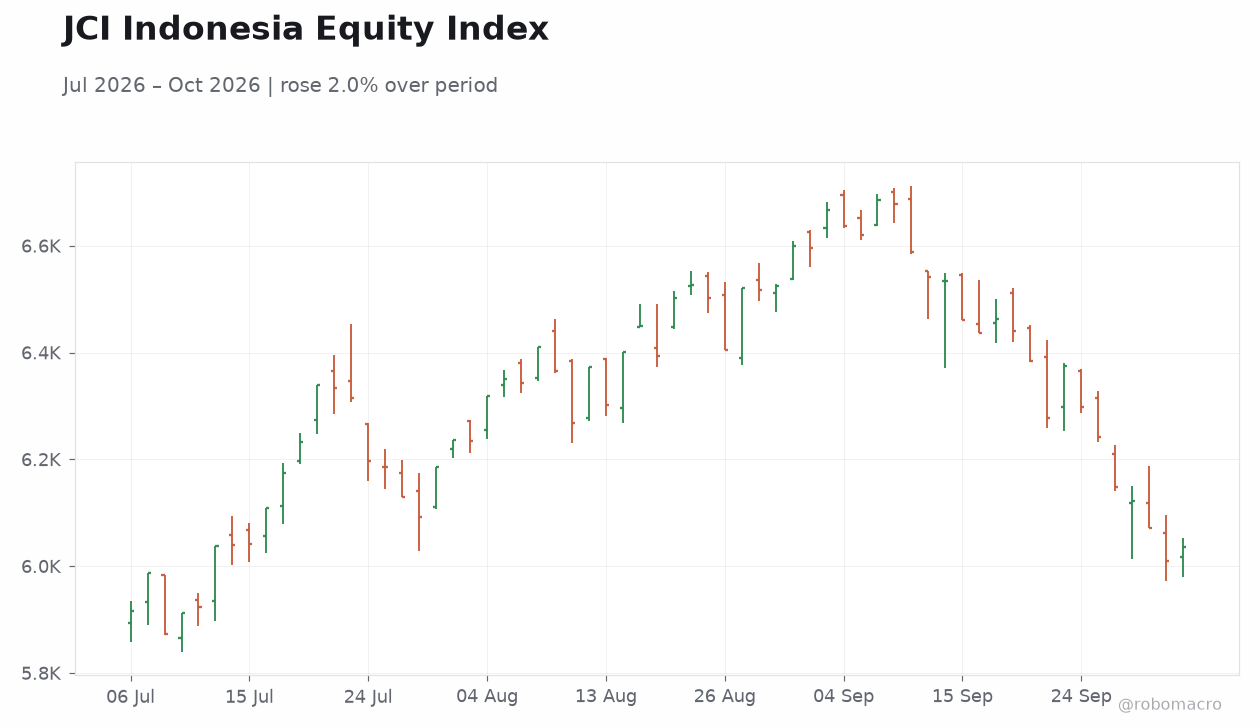
| JCI | 6,036.89 | +0.46% |
| KLCI | 1,630.87 | +0.03% |
| STI | 5,634.82 | -0.58% |
| USD/IDR | 17,912.00 | -0.06% |
| USD/THB | 33.65 | +0.02% |
| USD/MYR | 4.09 | +0.04% |
| USD/PHP | 62.58 | -0.15% |
| USD/SGD | 1.28 | -0.10% |
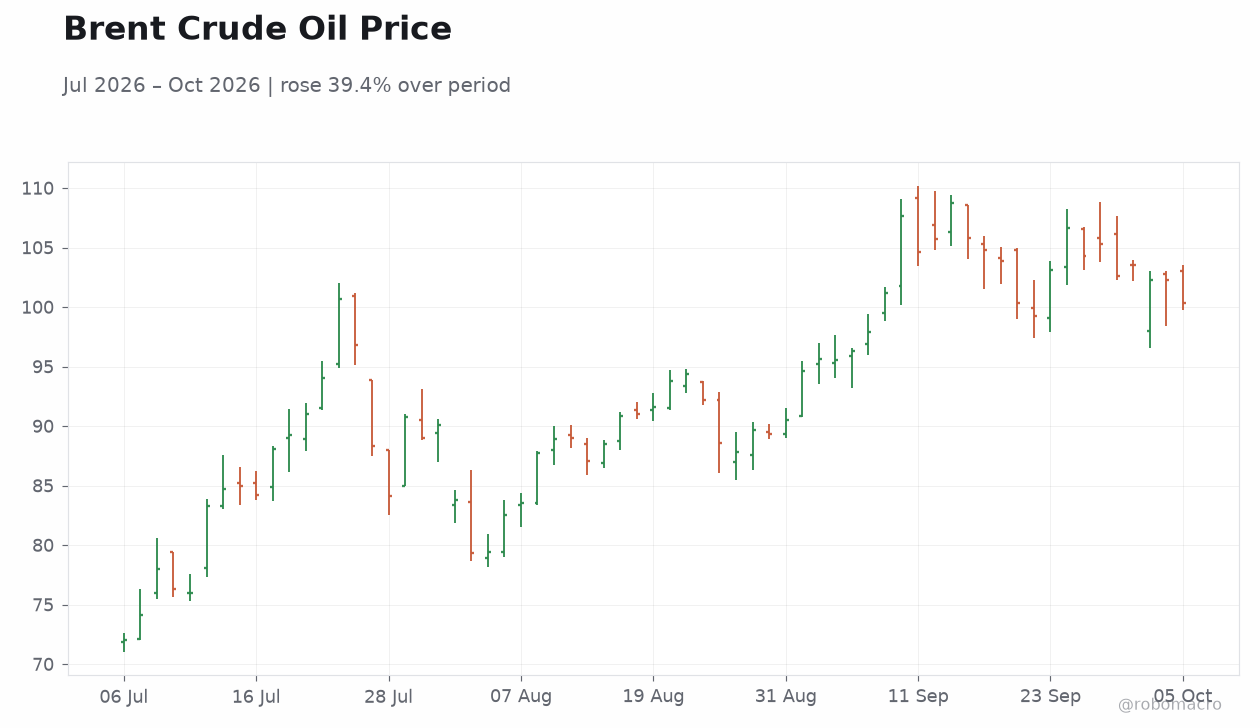
| Brent Crude | 100.32 | -1.89% |
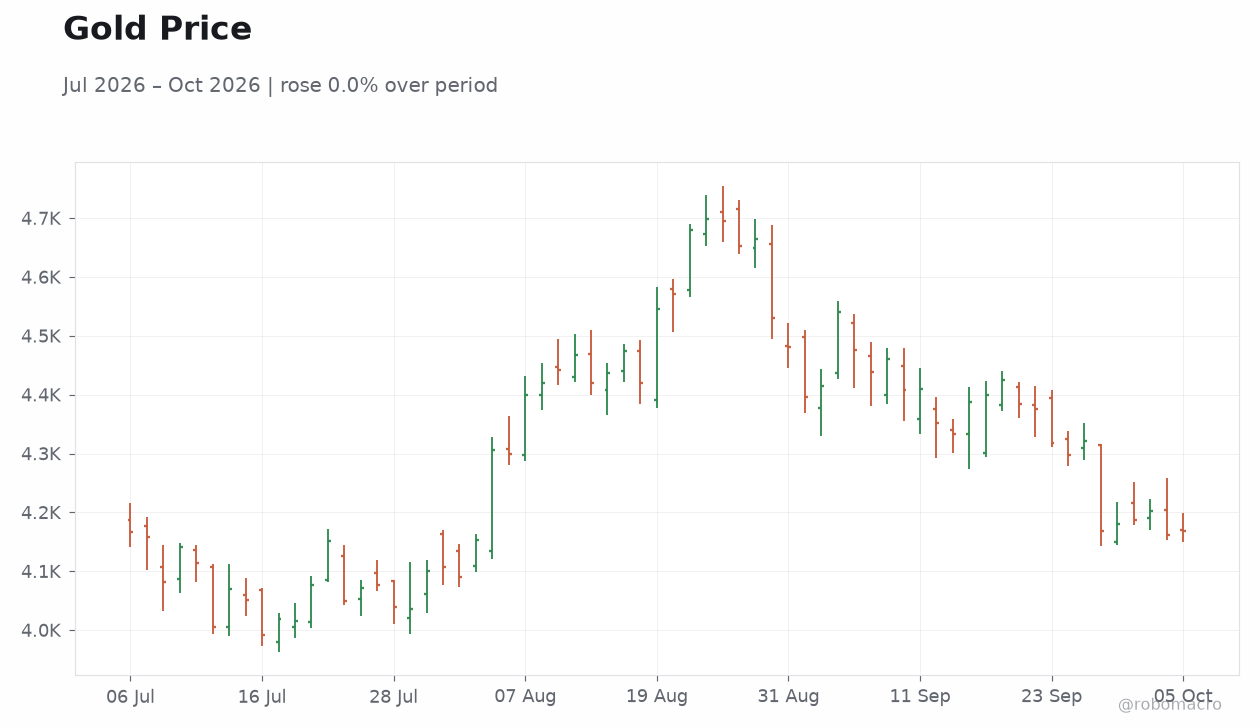
| Gold | 4,167.60 | +0.13% |
| Bitcoin | 85,919.76 | -0.65% |
| Indonesia 10Y Govt Yield | - | - |
| Thailand 10Y Govt Yield | - | - |
Prior Economic Events
| Data | Prior | Cons | Actual |
|---|---|---|---|
| No events available | |||
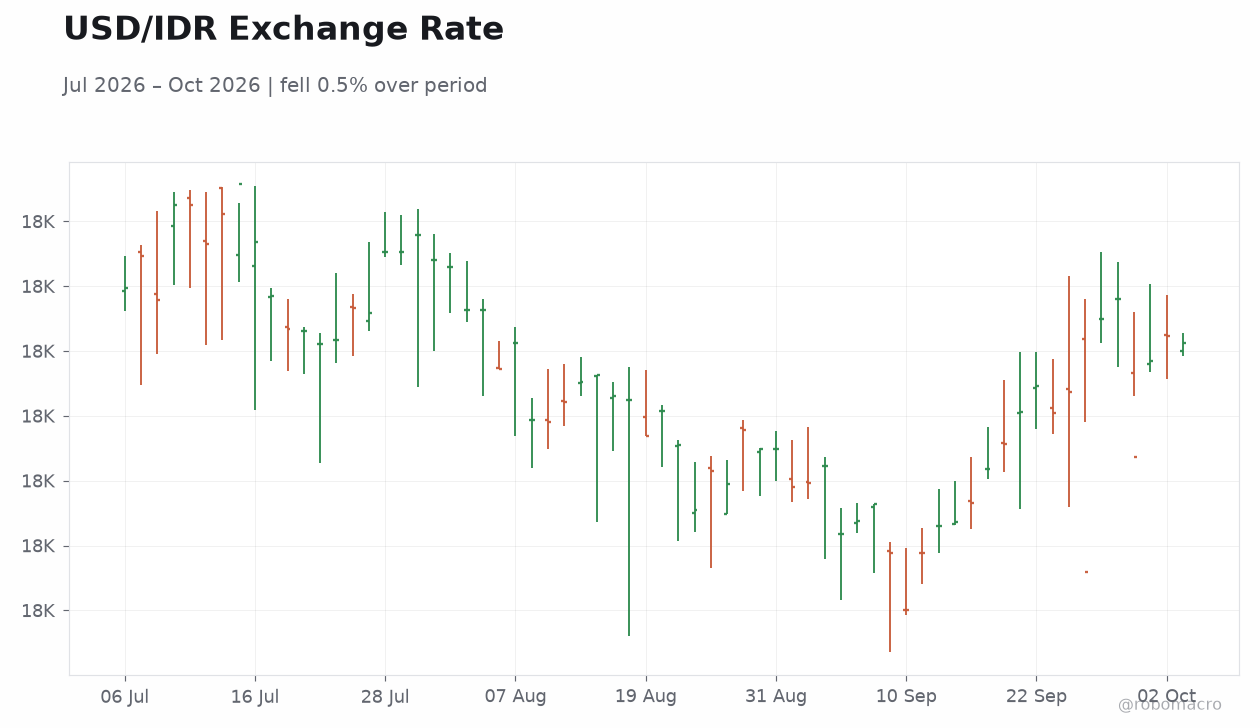 USD/IDR Exchange Rate | Type: market_hloc | IDR per USD: 1.791e+04 (2026-10-05) | Range: 1.75e+04–1.816e+04 | Trend(6pt): 1.8e+04,1.805e+04,1.777e+04,1.75e+04,1.792e+04,1.791e+04
Today's Economic Events
| Data | Prior | Cons | Time |
|---|---|---|---|
| No events available | |||
- Indonesian rupiah strengthens on softer Fed hike bets while JCI gains 0.46%
- Bank Indonesia prioritises stability over rate hikes amid elevated inflation
- Thailand faces ongoing shocks and NPL pressures; Malaysia flags manageable risks from Middle East conflict
Yesterday's Recap
Indonesian markets led ASEAN moves on 4 October as the rupiah firmed 0.06% to 17,912 against the dollar on reduced expectations for further Fed tightening. The JCI index rose 0.46% to close at 6,036.89 while the ringgit edged 0.04% weaker to 4.09 versus the dollar and the KLCI finished marginally higher at 1,630.87. Singapore’s STI fell 0.58% to 5,634.82 amid thin regional flows.
News flow centred on Indonesia’s digital-rupiah initiative, which authorities say will deepen the payment ecosystem and support financial inclusion. Bank Rakyat Indonesia was named best global bank for agriculture and rural SMEs. Thailand’s central bank warned that repeated economic shocks are eroding resilience and that bank NPLs remain a persistent drag.
Malaysia’s BNM stated that West Asia conflict poses downside risks yet the financial system stays resilient. Brent crude fell 1.89% to 100.32, easing energy costs for net importers, while gold rose 0.13% to 4,167.60 on safe-haven demand. Bitcoin declined 0.65% to 85,919.76 with limited regional spill-over.
Vietnam’s 9% growth continues to serve as a reference point for Indonesian manufacturing strategy.
The Day Ahead
No macroeconomic releases or central-bank meetings are scheduled for 5–6 October across the six ASEAN economies. Markets will therefore track external drivers including any fresh Fed communications and global commodity prices. Brent crude’s 1.89% decline to 100.32 may ease imported inflation pressures for net importers.
Regional equity and FX desks are likely to remain sensitive to US data surprises and China-related supply-chain updates. MAS will continue to manage the Singapore dollar NEER band without an interest-rate lever. Singapore-listed DFI Retail plans to open 250 new Starbucks outlets over the next three years, concentrated in Thailand and Vietnam, signalling continued foreign direct investment in ASEAN consumer services.
Other Economic Notes
Vietnam’s reported 9% growth is being studied by Indonesian policymakers as a benchmark for manufacturing and export strategy. Indonesia’s push for a digital rupiah aims to accelerate financial inclusion while Bank Indonesia maintains a dual mandate that increasingly emphasises rupiah stability. ↓ p.2