ASEAN Macro Daily(Beta Mode)
BI Faces Scrutiny as Rupiah Holds Near 17,900
Market Snapshot
| Asset | Level | Change |
|---|---|---|
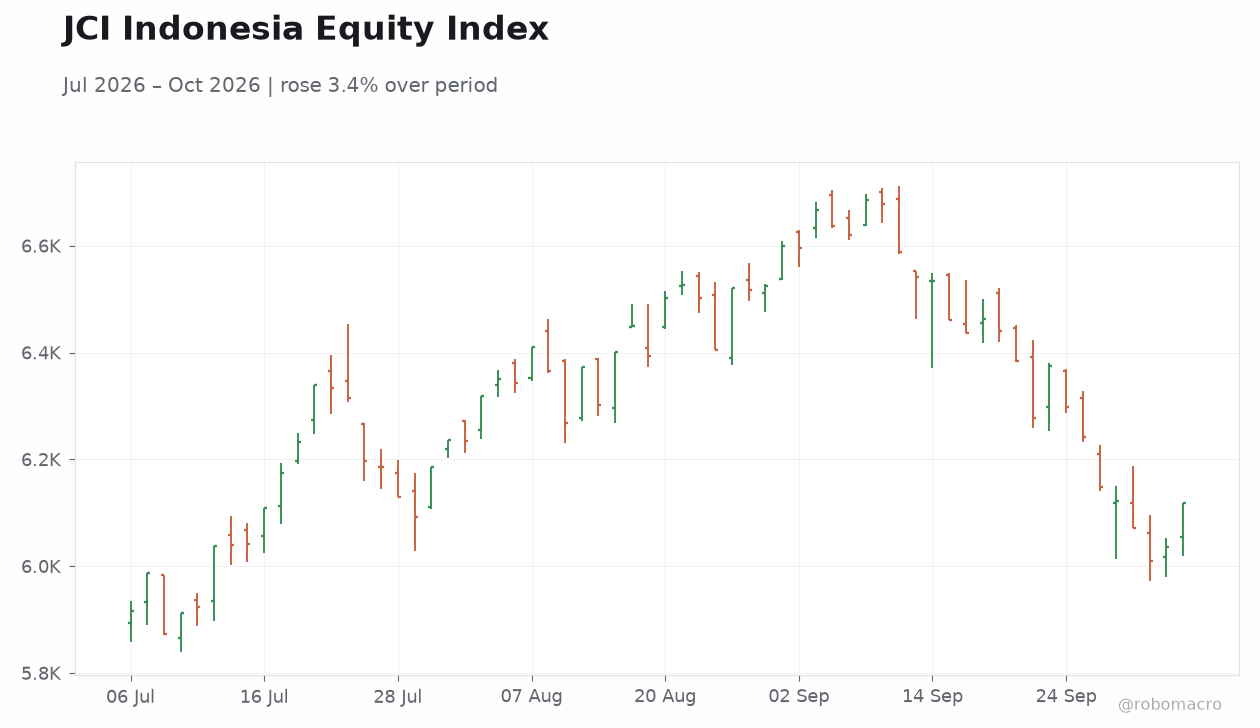
| JCI | 6,118.86 | +1.36% |
| KLCI | 1,631.75 | +0.05% |
| STI | 5,664.33 | +0.52% |
| USD/IDR | 17,905.00 | -0.02% |
| USD/THB | 33.55 | +0.06% |
| USD/MYR | 4.08 | -0.01% |
| USD/PHP | 62.58 | +0.07% |
| USD/SGD | 1.28 | -0.17% |
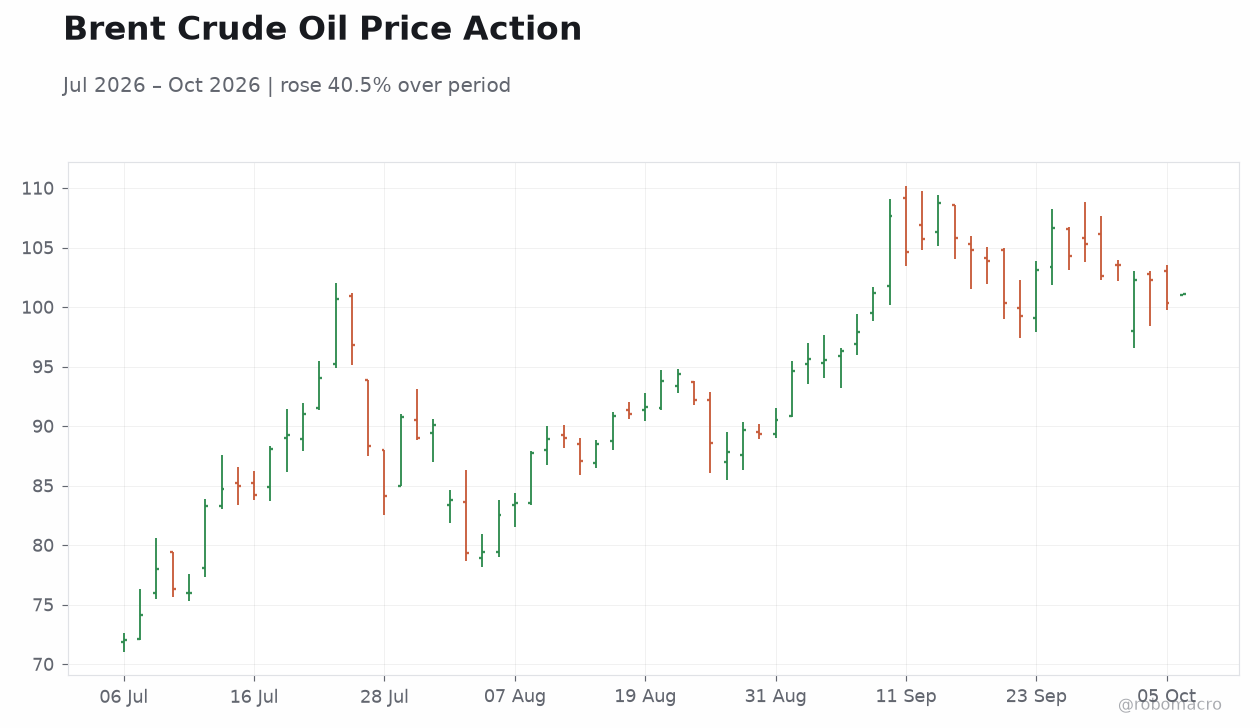
| Brent Crude | 101.15 | +0.83% |
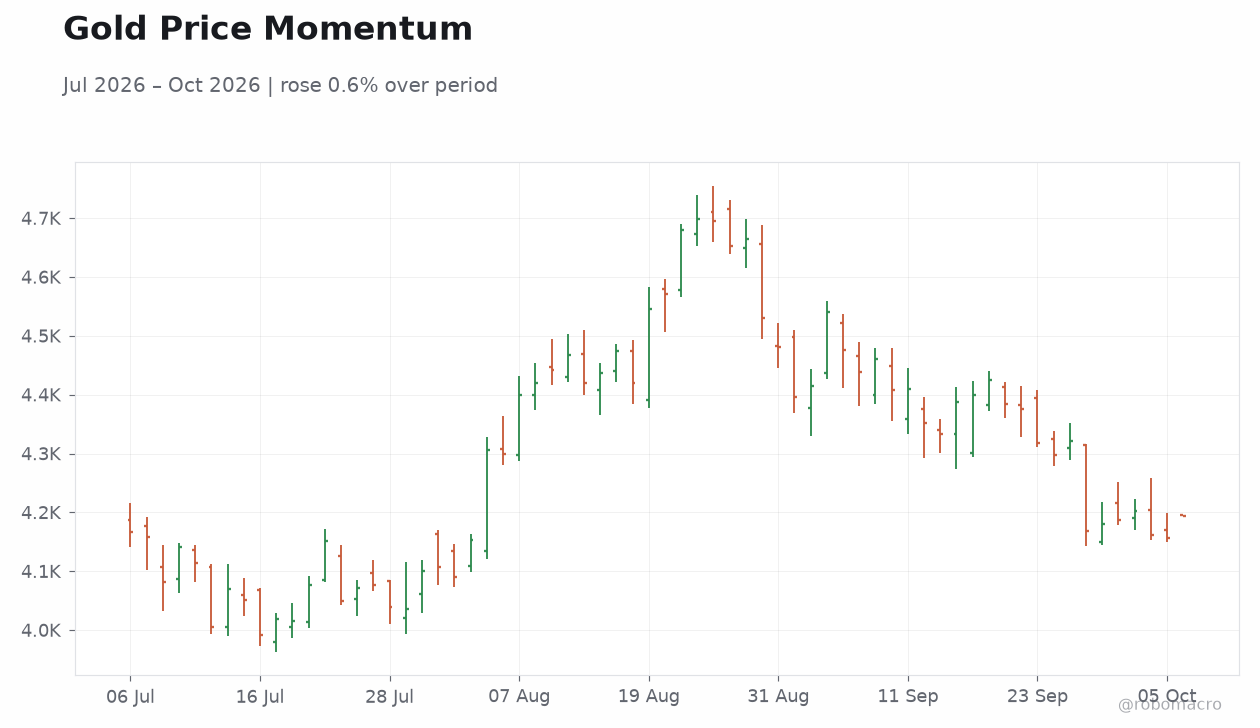
| Gold | 4,192.70 | +0.86% |
| Bitcoin | 85,622.84 | -0.19% |
| Indonesia 10Y Govt Yield | - | - |
| Thailand 10Y Govt Yield | - | - |
Prior Economic Events
| Data | Prior | Cons | Actual |
|---|---|---|---|
| No events available | |||
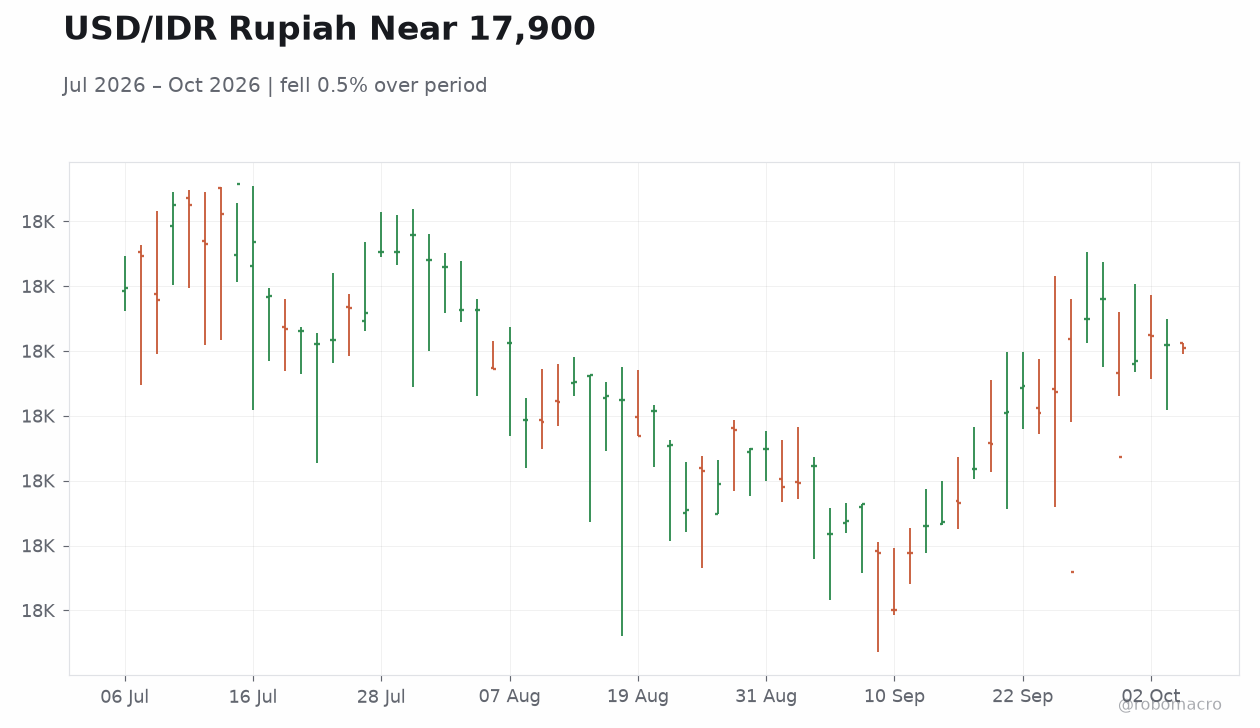 USD/IDR Rupiah Near 17,900 | Type: market_hloc | USD/IDR: 1.79e+04 (2026-10-06) | Range: 1.75e+04–1.816e+04 | Trend(6pt): 1.8e+04,1.805e+04,1.777e+04,1.75e+04,1.792e+04,1.79e+04
Today's Economic Events
| Data | Prior | Cons | Time |
|---|---|---|---|
| No events available | |||
- JCI leads ASEAN equities higher, up 1.36% to 6,118.86, while the rupiah holds near 17,905/USD on World Bank upgrade
- Bank Indonesia's dual mandate under scrutiny as AMRO flags elevated Indonesian inflation and El Niño risks
- BNM deems West Asia conflict a manageable risk to Malaysia's financial stability; Thai NPL overhang persists
Yesterday's Recap
Indonesian equities outperformed the region on Monday, with the JCI rallying 1.36% to 6,118.86, while the KLCI was essentially flat at 1,631.75 and Singapore's STI added 0.52% to 5,664.33. The rupiah was the focal point of FX markets, trading at 17,905/USD, marginally firmer on the day but well below levels that would ease pressure on Bank Indonesia. The World Bank's upgrade to Indonesia's 2026 growth outlook provided a modest sentiment tailwind for the currency.
Malaysia's ringgit ended higher against most ASEAN currencies but eased slightly against the dollar, reflecting the mixed tone in regional FX. In Thailand, attention stayed on the banking sector after commentary that Thai banks' bad loans remain a chronic, unresolved drag — a reminder that credit quality, not just growth, is the binding constraint on the recovery. Vietnam's growth story continued to draw regional comparisons, with commentary highlighting its 9% expansion as a benchmark for Indonesia's reform agenda.
Commodity markets were firm, with Brent crude up 0.83% to 101.15 and gold gaining 0.86% to 4,192.70/oz, both supportive of the commodity-linked rupiah and ringgit. USD/IDR closed at 17,905.00, USD/THB at 33.55, USD/MYR at 4.08, USD/PHP at 62.58 and USD/SGD at 1.28.
The Day Ahead
The calendar is light on tier-one ASEAN data releases for Tuesday, leaving markets to trade on central bank commentary and global cues. Attention will stay on Bank Indonesia's FX operations after a week of heavy intervention scrutiny, with the rupiah's ability to hold below 18,000/USD the key technical level. In Malaysia, follow-through from BNM's financial stability assessment will be watched for any incremental colour on the ringgit outlook.
Thai policymakers' new economic framework — Stabilise, Transition, Invest — will be parsed for fiscal-monetary coordination signals. Regional equity desks will track whether the JCI's momentum can extend given the commodity tailwind. Globally, the focus remains on US rate expectations following softer payrolls, which should anchor ASEAN FX direction into the week.
Other Economic Notes
The World Bank's assessment that AI is reshaping ASEAN's growth hierarchy is a structural theme worth monitoring — Malaysia and Vietnam are positioned to capture outsized gains from the technology capex cycle, while Indonesia risks missing the wave without deeper digital infrastructure investment. ↓ p.2