ASEAN Macro Daily(Beta Mode)
Rupiah Gains, JCI Rallies 1% on Growth Optimism
Market Snapshot
| Asset | Level | Change |
|---|---|---|
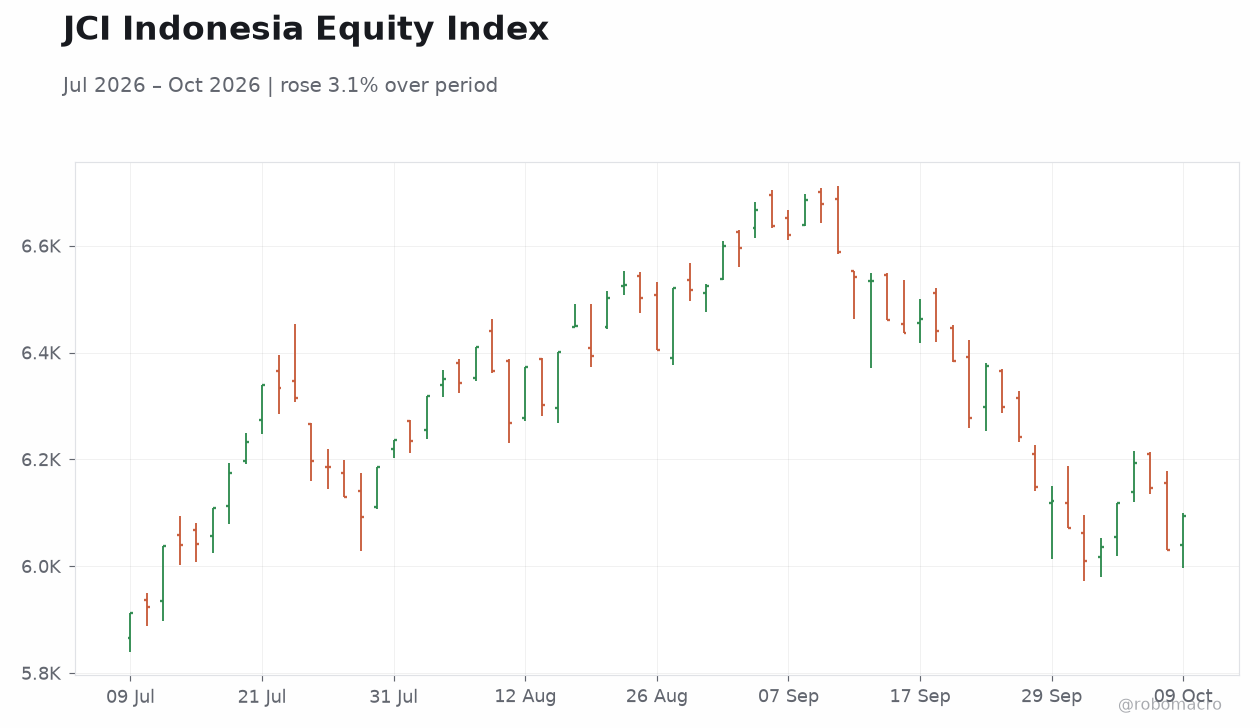
| JCI | 6,093.76 | +1.04% |
| KLCI | 1,608.45 | +0.46% |
| STI | 5,401.89 | -0.20% |
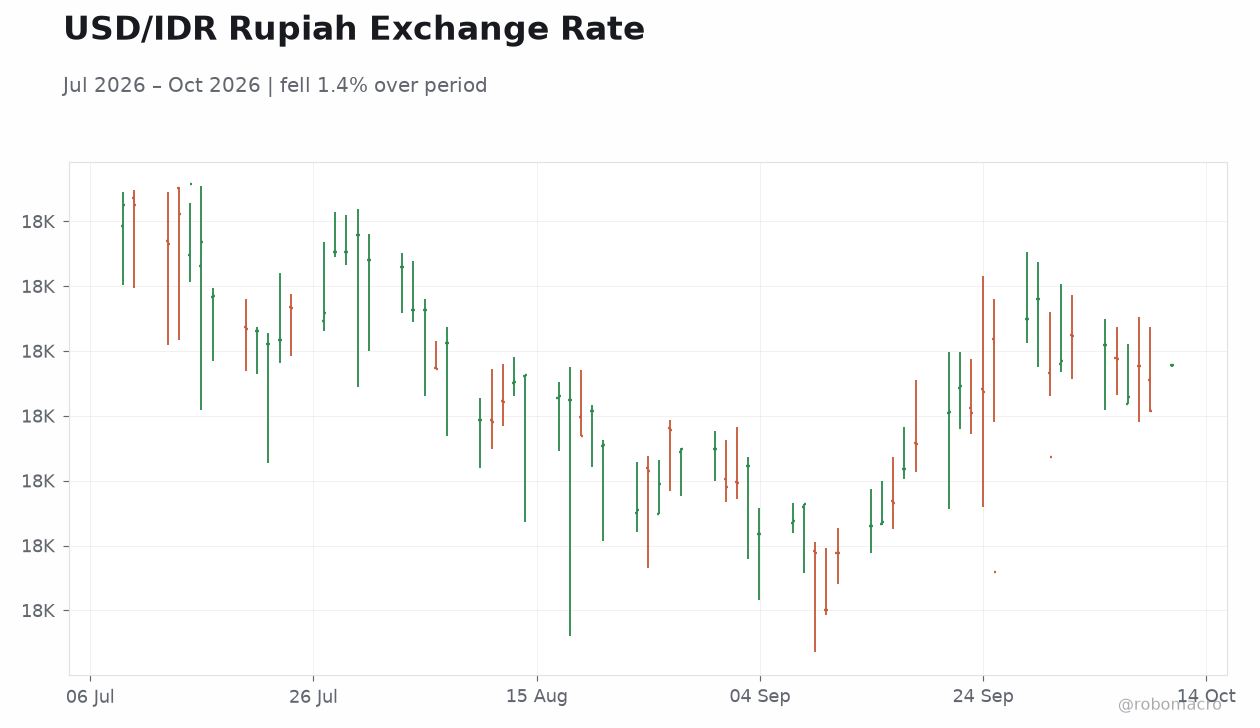
| USD/IDR | 17,879.00 | +0.40% |
| USD/THB | 33.48 | -0.37% |
| USD/MYR | 4.08 | -0.13% |
| USD/PHP | 62.72 | -0.24% |
| USD/SGD | 1.28 | +0.03% |
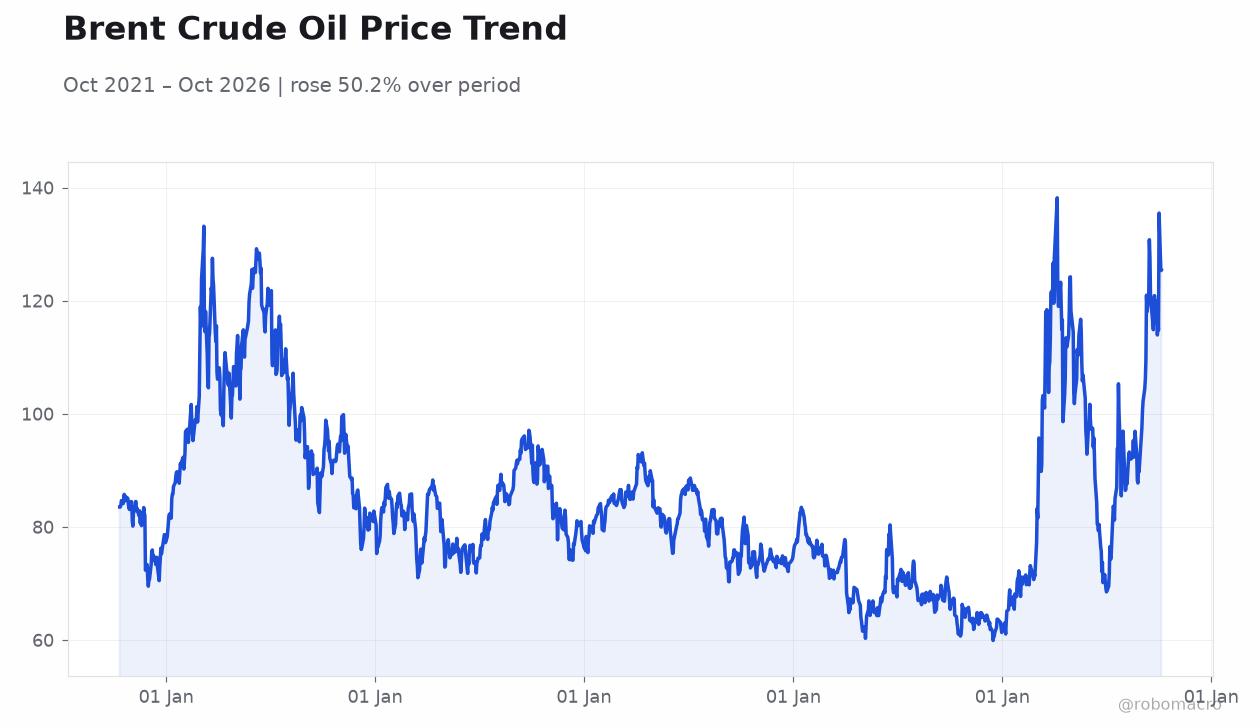
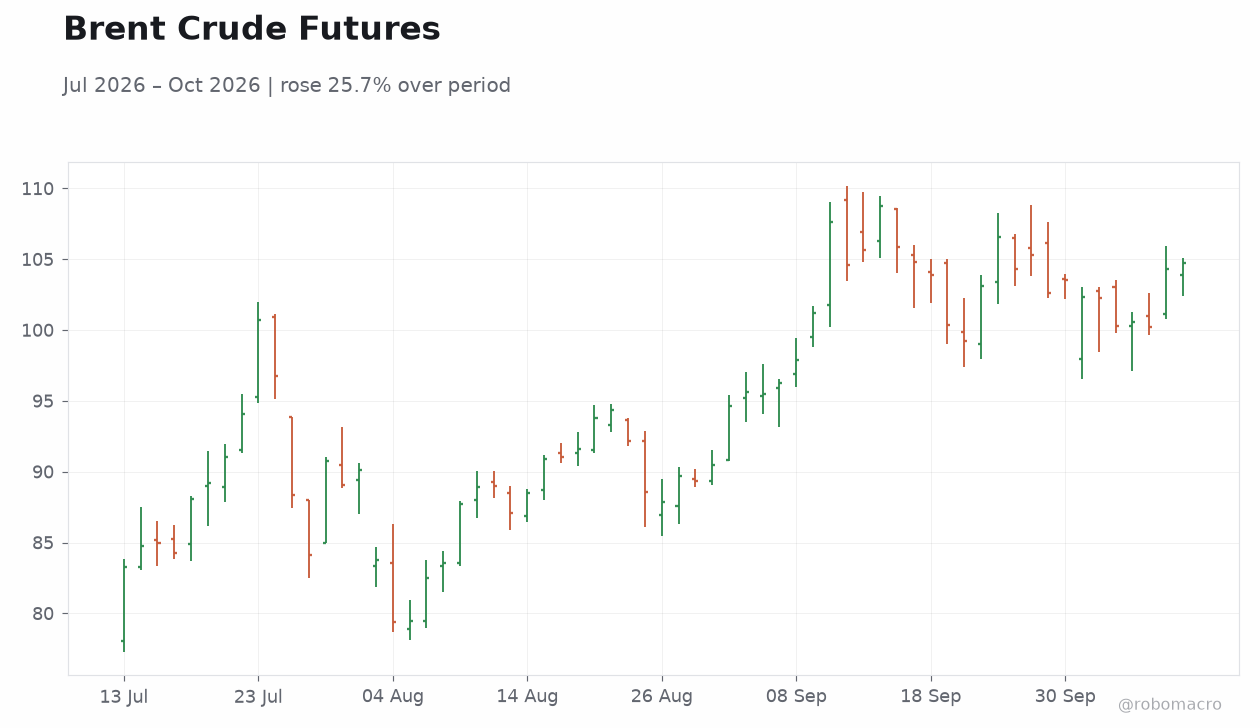
| Brent Crude | 104.72 | +0.42% |
| Gold | 4,216.30 | +1.43% |
| Bitcoin | 83,470.65 | +0.67% |
| Indonesia 10Y Govt Yield | - | - |
| Thailand 10Y Govt Yield | - | - |
Prior Economic Events
| Data | Prior | Cons | Actual |
|---|---|---|---|
| No events available | |||
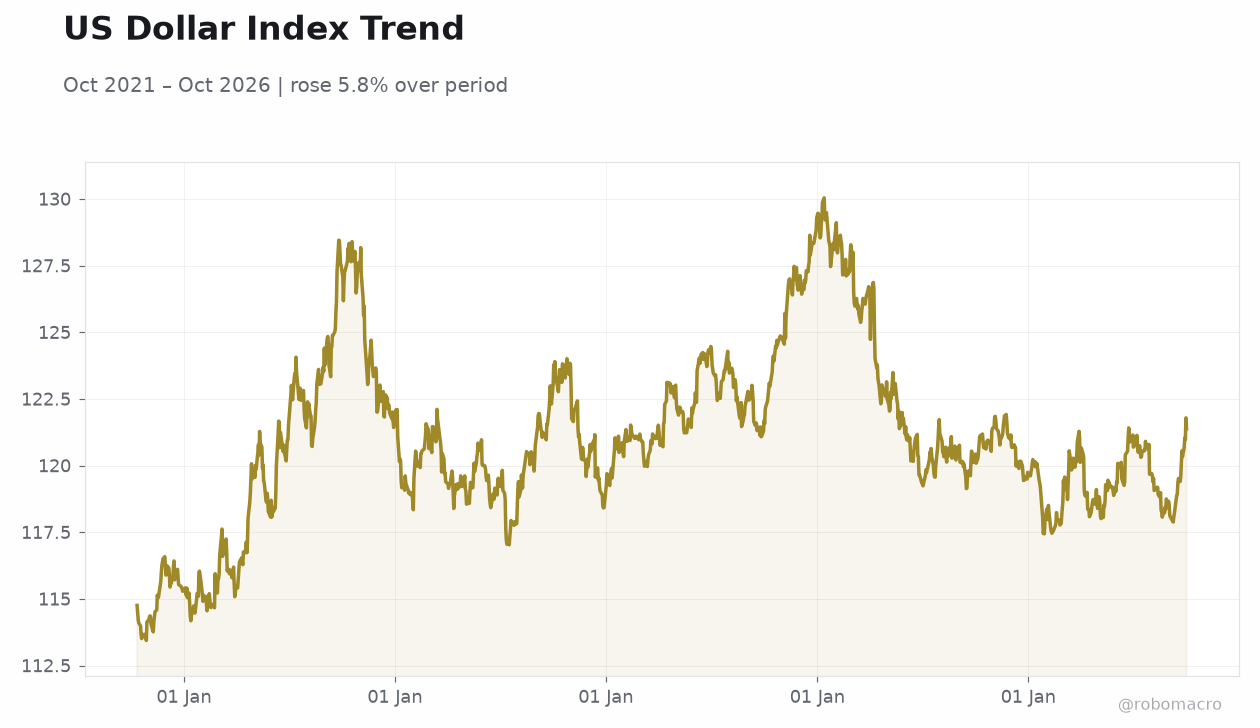 US Dollar Index Trend | Type: macro_line | Broad USD Index: 121.4 (2026-10-02) | Range: 113.4–130 | Trend(5pt): 114.8,120.2,120.7,119.8,121.4
Today's Economic Events
| Data | Prior | Cons | Time |
|---|---|---|---|
| No events available | |||
- JCI climbs 1.04% to 6,093.76 as Indonesian equities shrug off global jitters; rupiah firms to 17,879/USD despite fiscal deficit concerns.
- Thailand's central bank warns repeated shocks are eroding resilience while tightening scrutiny of FX inflows and gold transactions.
- Ringgit strengthens on strong GDP data as Budget 2027 outlook comes into focus; Brent crude rises 0.42% to $104.72.
Yesterday's Recap
Indonesian equities led the region higher on Friday, with the JCI advancing 1.04% to 6,093.76 despite global market jitters, while the rupiah strengthened to 17,879 per dollar even as fiscal deficit concerns lingered. Jakarta Globe reported the currency's resilience despite a widening budget gap, with the government trimming travel spending as elevated energy costs pressure the fiscal position. The World Bank's 5.2% growth forecast for Indonesia drew cautious commentary from officials, with the projection seen hinging on execution rather than market size alone.
Malaysia's KLCI added 0.46% to 1,608.45, with the ringgit closing mostly higher against major currencies on the back of strong GDP data and opening marginally firmer as Budget 2027 fiscal assumptions come into focus. Singapore's STI slipped 0.20% to 5,401.89, the regional laggard. The baht appreciated 0.37% to 33.48/USD, while the peso gained 0.24% to 62.72 and the ringgit firmed 0.13% to 4.08.
In commodities, Brent crude rose 0.42% to $104.72 and gold surged 1.43% to $4,216.30, while Bitcoin added 0.67% to $83,470.65.
The Day Ahead
The regional calendar is quiet through Monday, October 12, with no scheduled data releases across the six ASEAN economies. Attention turns to Malaysia's Budget 2027 details, where the government has signalled higher cash aid and a minimum wage increase to address cost-of-living pressures — a mix with implications for the fiscal deficit and BNM's policy calculus. Indonesia's stablecoin regulatory framework, targeted by OJK for early 2027, will be watched by digital-asset market participants.
Thailand's hosting of the IMF-World Bank Annual Meetings in Bangkok keeps the spotlight on structural reform narratives, with the UAE among participants confirmed. Indonesian officials' response to the World Bank growth forecast may colour sentiment toward the 2026 fiscal stance. With thin scheduled catalysts, FX and equity moves will likely track global risk appetite and commodity prices into the new week.
Other Economic Notes
Indonesia's digital-rupiah ecosystem buildout is accelerating, with OJK targeting stablecoin regulations by early 2027 — a step toward formalising the crypto payment layer alongside the central bank's digital currency ambitions. ↓ p.2