ASEAN Macro Daily(Beta Mode)
MAS Holds as SG GDP Slips; Rupiah Defended
Market Snapshot
| Asset | Level | Change |
|---|---|---|
| JCI | 5,925.98 | -0.17% |
| KLCI | 1,623.35 | +0.33% |
| STI | 5,430.50 | +0.28% |
| USD/IDR | 17,893.00 | -0.11% |
| USD/THB | 33.59 | -0.05% |
| USD/MYR | 4.08 | -0.02% |
| USD/PHP | 62.73 | +0.06% |
| USD/SGD | 1.28 | +0.32% |
| Brent Crude | 106.06 | +0.35% |
| Gold | 4,127.30 | -1.20% |
| Bitcoin | 81,644.18 | -1.75% |
| Indonesia 10Y Govt Yield | - | - |
| Thailand 10Y Govt Yield | - | - |
Prior Economic Events
| Data | Prior | Cons | Actual |
|---|---|---|---|
| GDP Growth Quarter-over-Quarter Advance Estimate | 1.40 | 1.20 | 1.10 |
| Monetary Policy Statement | - | - | - |
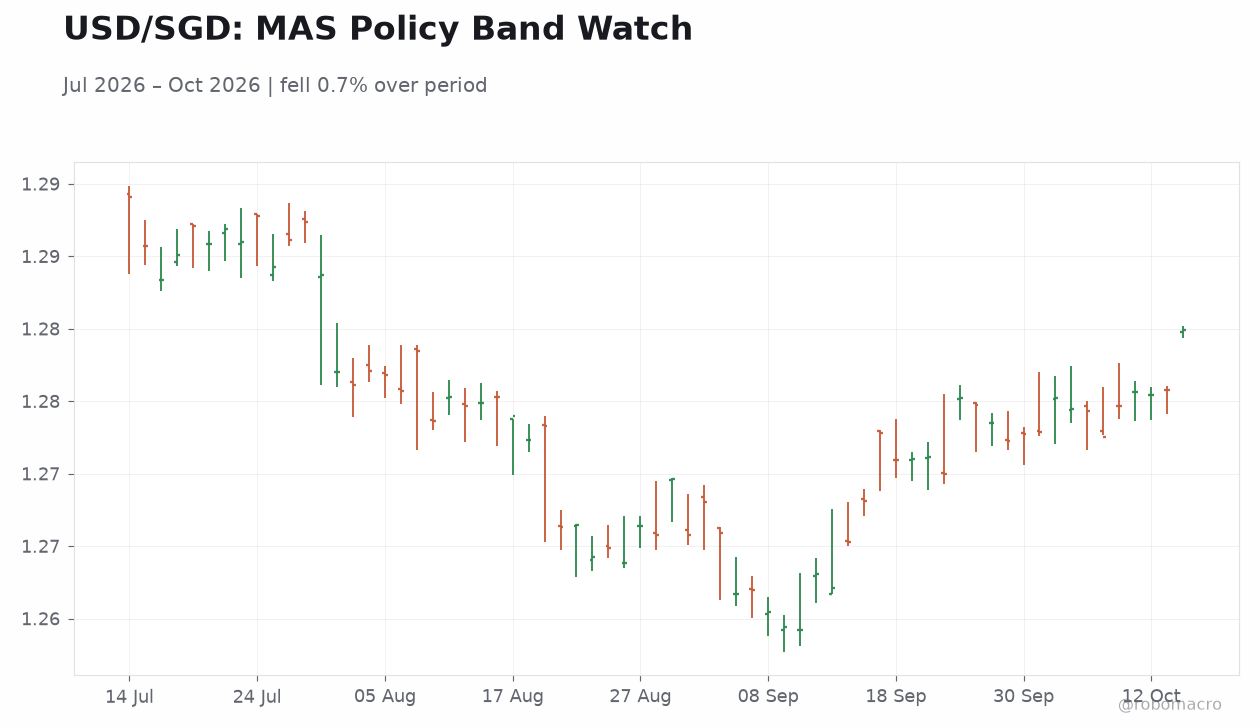 USD/SGD: MAS Policy Band Watch | Type: market_hloc | USD/SGD: 1.285 (2026-10-14) | Range: 1.264–1.294 | Trend(6pt): 1.294,1.282,1.271,1.276,1.28,1.285
Today's Economic Events
| Data | Prior | Cons | Time |
|---|---|---|---|
| No events available | |||
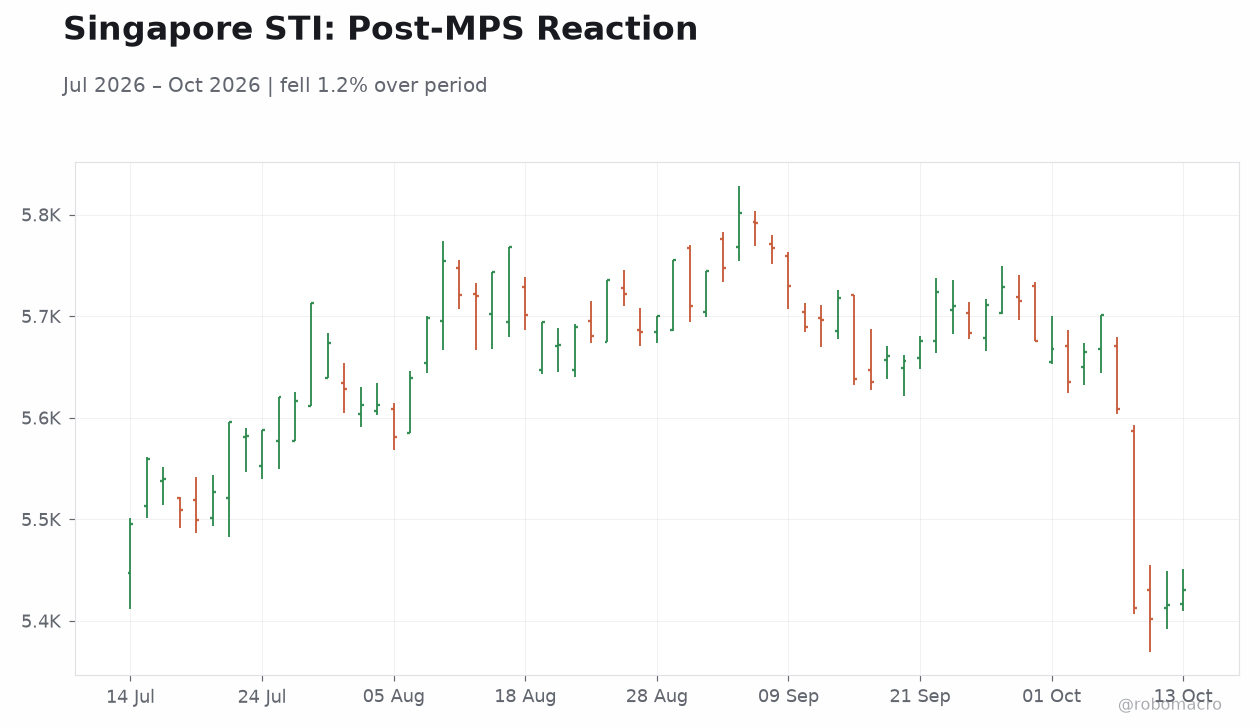
- Singapore's advance Q3 GDP printed 1.1% q/q, below the 1.2% consensus and prior 1.4%, as the MAS delivered its Monetary Policy Statement alongside the release.
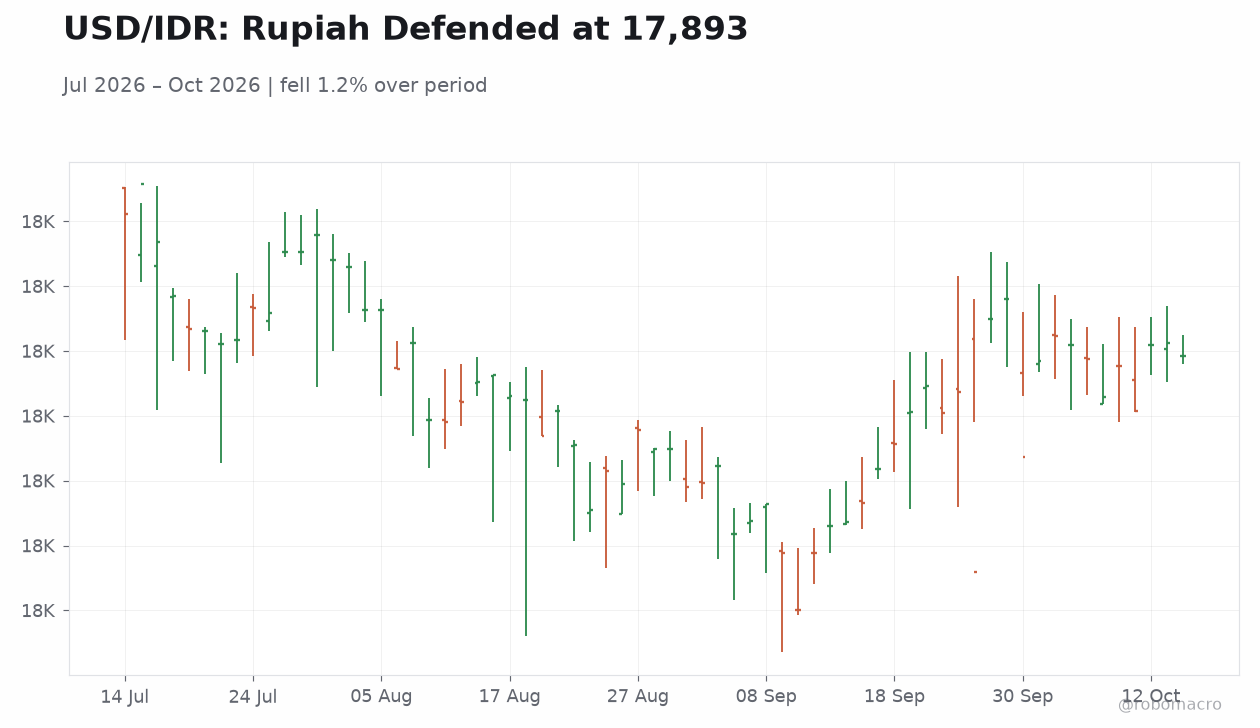
- Bank Indonesia defended the rupiah near 17,893/USD, with Governor Destry reaffirming the central bank's rate-setting independence.
- Ringgit outperformed, closing higher on strong GDP data and optimism around Malaysia's Budget 2027.
Yesterday's Recap
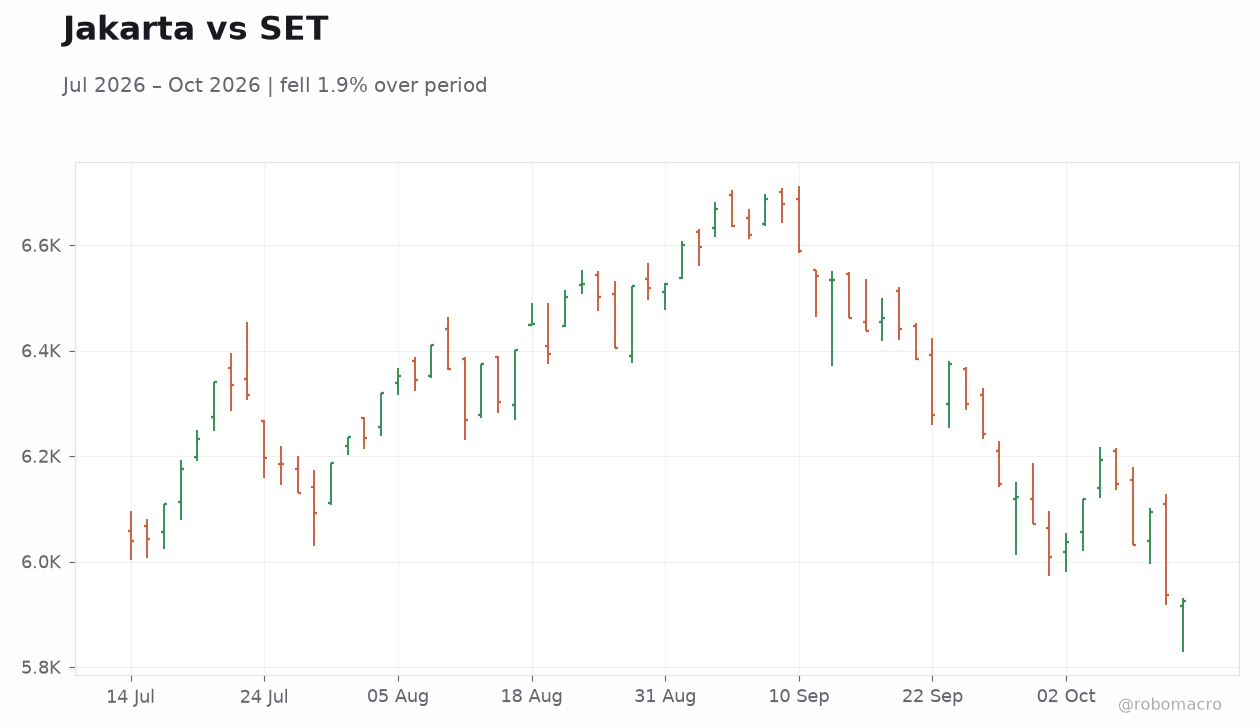
Singapore dominated the regional data calendar, with advance estimates showing GDP growth of 1.1% quarter-on-quarter, a touch softer than the 1.2% consensus and down from the prior 1.4% print. The slowdown arrived alongside the Monetary Policy Statement, keeping attention fixed on how the MAS characterises the growth-inflation balance heading into year-end. Equity markets diverged: the STI added 0.28% to 5,430.50, while the JCI slipped 0.17% to 5,925.98 and the KLCI gained 0.33% to 1,623.35.
In FX, the rupiah was the focal point, with USD/IDR easing 0.11% to 17,893 as Bank Indonesia's intervention efforts capped upside pressure — press reports flagged spot trades testing the 17,900 level intraday before settling back. The ringgit was the region's standout, supported by strong GDP data and positive sentiment around Budget 2027, with USD/MYR essentially flat at 4.08. USD/SGD rose 0.32% to 1.28, reflecting the softer growth print and broad dollar demand, while USD/THB slipped 0.05% to 33.59 and USD/PHP edged up 0.06% to 62.73.
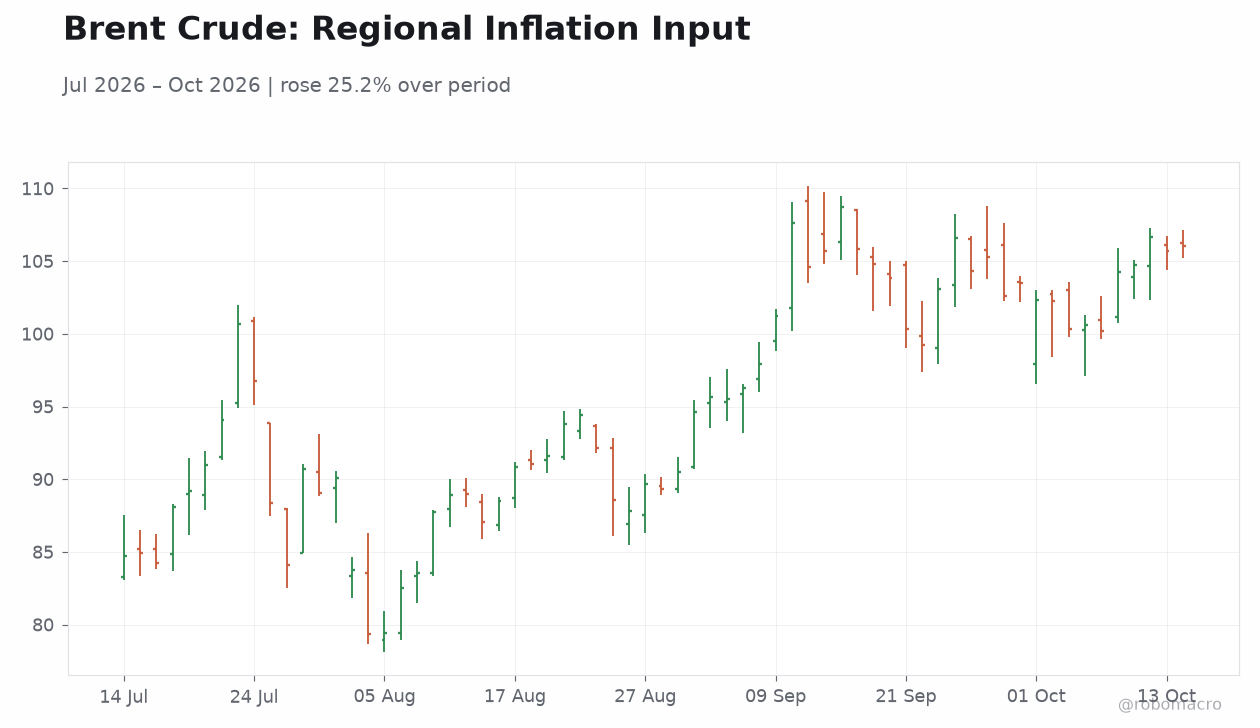
In commodities, Brent crude climbed 0.35% to 106.06 — a headwind for regional oil importers — while gold fell 1.20% to 4,127.30 and bitcoin dropped 1.75% to 81,644.
The Day Ahead
The regional calendar is quiet today, with no scheduled data releases across the six ASEAN economies, leaving markets to digest yesterday's Singapore growth and policy signals. Attention shifts to how the MAS frames its assessment following the softer advance GDP estimate, with any nuance on the slope and width of the policy band closely parsed. In Indonesia, focus remains on the rupiah's trading range, with dealers looking for the 17,850–17,950 band to hold amid continued BI presence in the market.
Malaysia's post-Budget 2027 momentum will be tested as investors assess fiscal consolidation details against the growth backdrop. Thai markets will watch for follow-through on IMF recommendations to rebuild buffers and deepen regional trade ties. With no hard data due, regional equities and FX will take their cue from global risk sentiment and the dollar's trajectory.
Other Economic Notes
Thailand's structural challenges are mounting, with the IMF urging Bangkok to strengthen economic fundamentals and deepen regional trade integration amid persistent softness. ↓ p.2