China Trade Surges, CPI Stays Soft; TAIEX Slides
0.90 Inflation Rate0.20 Inflation Rate5 Producer Price Index36.30 Exports Year-over-Year31 Imports Year-over-Year
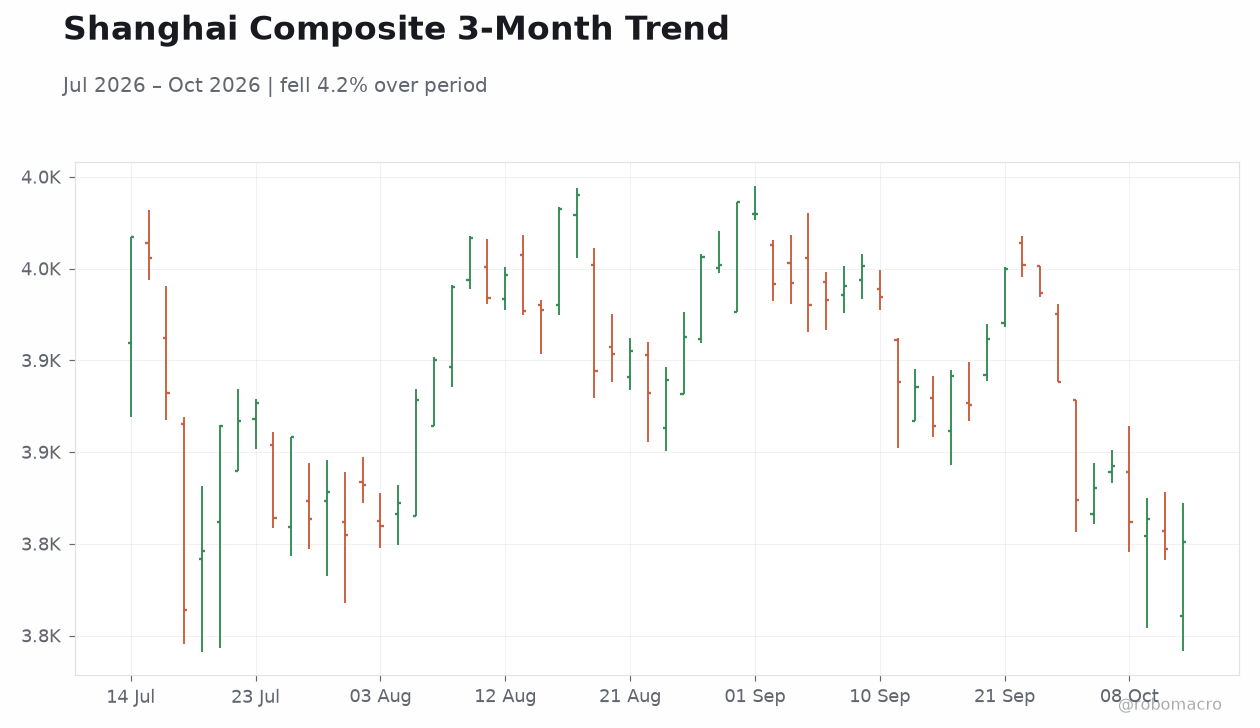
Shanghai Composite3,767.23-0.89%
CSI 3004,217.68-1.36%
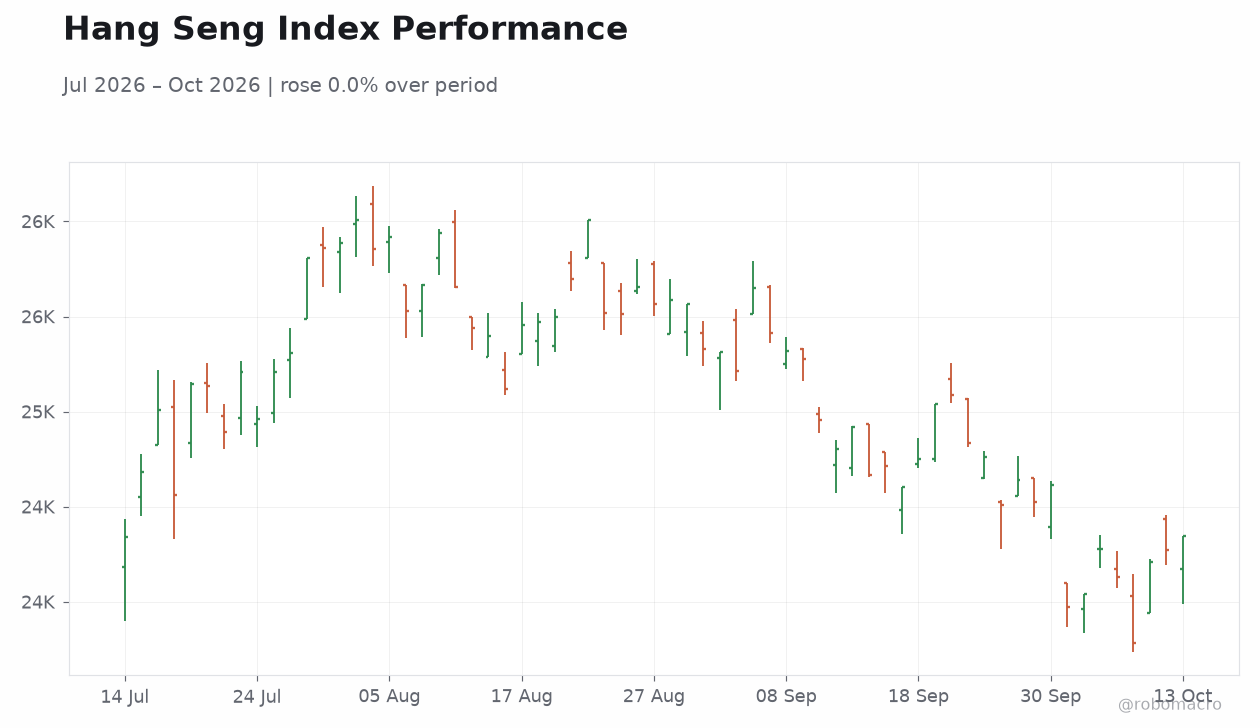
Hang Seng24,345.22+0.30%
TAIEX48,341.31-1.95%
Market Snapshot
| Asset | Level | Change |
|---|
| Shanghai Composite | 3,767.23 | -0.89% |
| CSI 300 | 4,217.68 | -1.36% |
| Hang Seng | 24,345.22 | +0.30% |
| TAIEX | 48,341.31 | -1.95% |
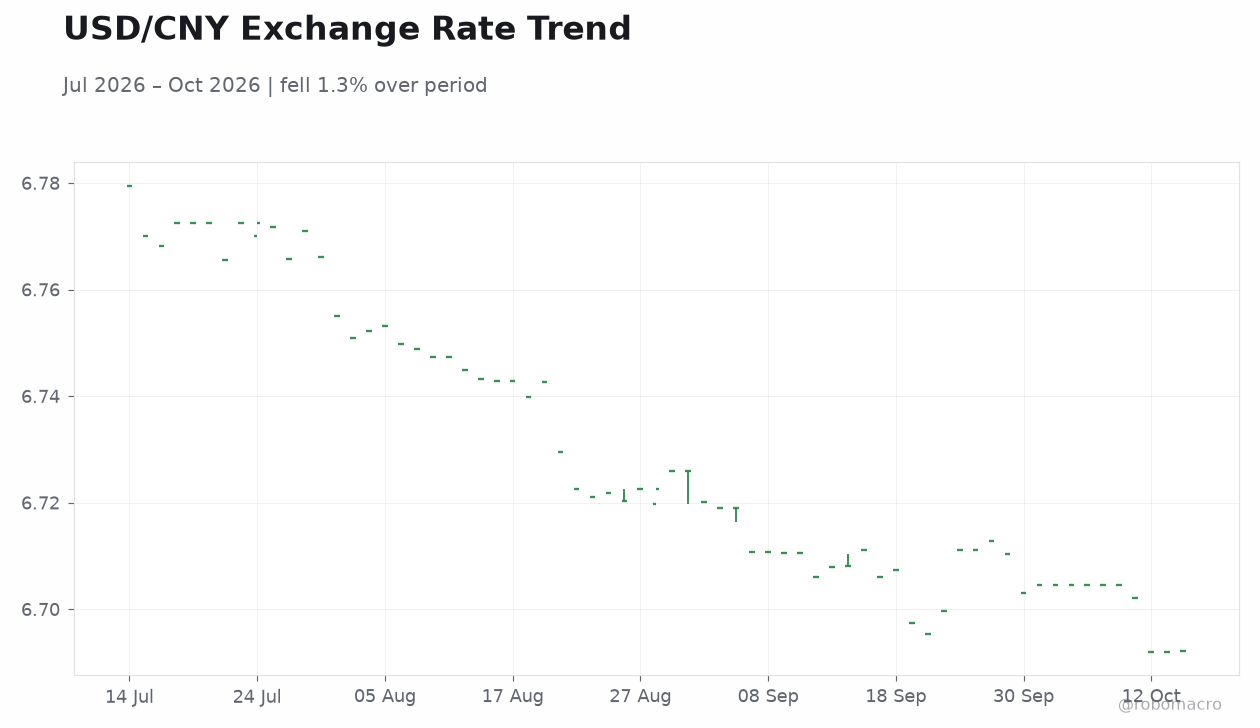
| USD/CNY | 6.69 | +0.00% |
| USD/HKD | 7.85 | +0.00% |
| Copper | 6.61 | -0.94% |
| Brent Crude | 106.06 | +0.35% |
| Gold | 4,127.30 | -1.20% |
| Bitcoin | 81,662.18 | -1.72% |
| China 2Y Govt Yield | - | - |
| China 10Y Govt Yield | - | - |
Prior Economic Events
| Data |
Prior |
Cons |
Actual |
| Inflation Rate Year-over-Year | 0.80 | 1 | 0.90 |
| Inflation Rate Month-over-Month | 0.40 | 0.30 | 0.20 |
| Producer Price Index Year-over-Year | 3.80 | 4.50 | 5 |
| Exports Year-over-Year | 25 | 25.50 | 36.30 |
| Imports Year-over-Year | 28.20 | 24.50 | 31 |
| Trade Balance | 119,090m | 118,100m | 133,530m |
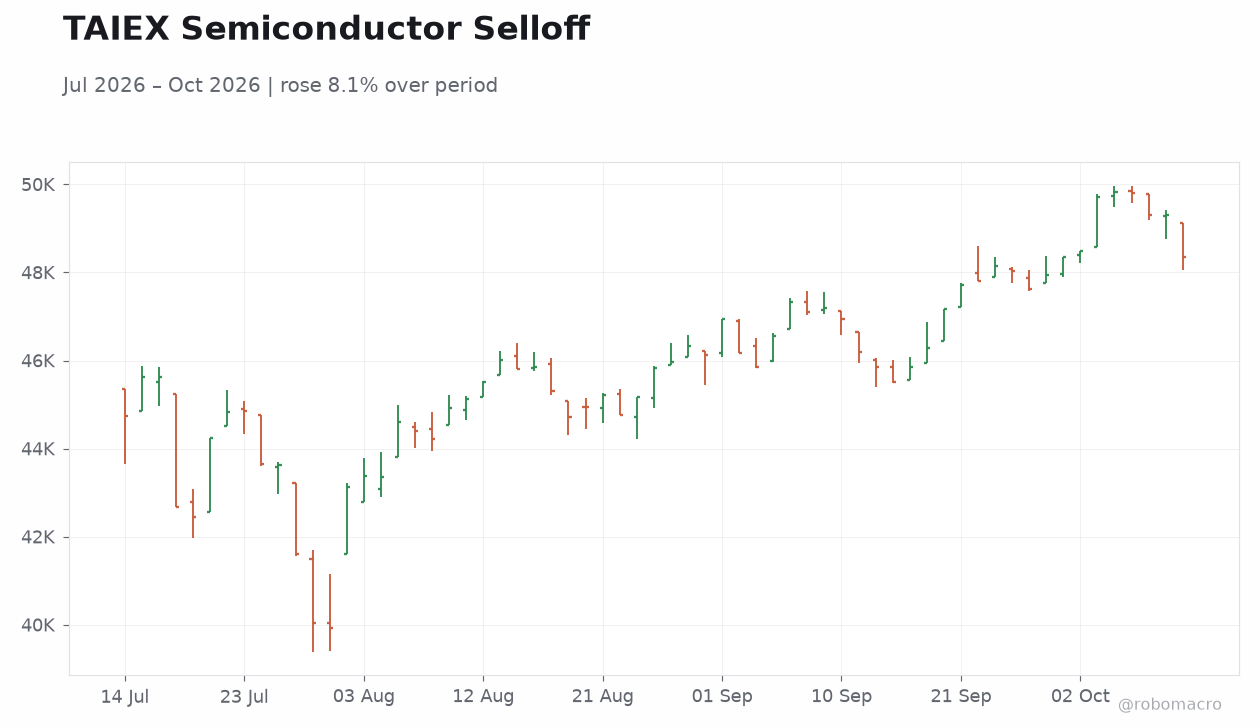 TAIEX Semiconductor Selloff | Type: market_hloc | Index Level: 4.834e+04 (2026-10-13) | Range: 3.993e+04–4.982e+04 | Trend(6pt): 4.474e+04,4.336e+04,4.517e+04,4.551e+04,4.931e+04,4.834e+04
Today's Economic Events
| Data |
Prior |
Cons |
Time |
| No events available |
- Mainland China's September exports surged 36.3% YoY, far above the 25.5% consensus, driving the trade surplus to $133.53B as imports rose 31.0%.
- Inflation remained muted: CPI rose just 0.9% YoY with a 0.2% MoM gain, while PPI accelerated to 5.0% YoY, signaling margin pressure downstream.
- Equities diverged: Shanghai Composite fell 0.89% and CSI 300 dropped 1.36%, while Hang Seng gained 0.30%; TAIEX slid 1.95% amid a regional semiconductor sell-off.
Yesterday's Recap
Mainland China delivered a heavy data slate on Tuesday, October 13, with trade figures stealing the show. Exports grew 36.3% year-over-year, crushing the 25.5% consensus and accelerating from the prior 25.0% pace, while imports climbed 31.0% against a 24.5% forecast. The resulting trade surplus swelled to $133.53 billion, edging past the $118.1 billion expected and keeping the full-year surplus on track to approach $1 trillion.
Inflation prints were far less exuberant: headline CPI rose just 0.9% year-over-year, missing the 1.0% consensus, and the monthly gain of 0.2% undershot the 0.3% estimate, underscoring persistent domestic demand softness. Producer prices, however, jumped 5.0% year-over-year, well above the 4.5% consensus, hinting at cost pressures building upstream even as consumer pricing power stays weak. Equities reflected the mixed picture: the Shanghai Composite slipped 0.89% to 3,767.23 and the CSI 300 lost 1.36% to 4,217.68, while Hong Kong's Hang Seng bucked the trend, adding 0.30% to 24,345.22.
Taiwan's TAIEX fell 1.95% to 48,341.31, caught in the global semiconductor pullback. The yuan was steady, with USD/CNY holding at 6.69, and the Hong Kong dollar unchanged at 7.85, near the weak side of its trading band.
The Day Ahead
The calendar is quiet on the mainland today, with no scheduled releases, leaving markets to digest Tuesday's trade and inflation surprises. Attention shifts to the PBoC's daily liquidity operations and the fixing, where the reference rate is expected near 6.6981 per Reuters estimates. Hong Kong's focus turns to money-market dynamics as the HKMA weighs intervention with the local dollar hugging the weak end of its convertibility-zone band.
Across the strait, Taiwan's TSMC earnings later this week loom large for the semiconductor complex after regional chip names sold off sharply. Thursday and Friday may bring updates on credit and money supply, though nothing is formally scheduled. Positioning into the weekend is likely to be cautious given the absence of fresh domestic catalysts.
Page 1
Never miss an issue
Subscribe to Greater China Macro Daily and get each new issue delivered to your inbox.
Already a member? Visit robomacro.com
to log in and manage subscriptions, or use Forgot Password to set a password.