ASEAN Macro Daily(Beta Mode)
Rupiah Breaks 18,000 as BI Intervenes; MSCI Weighs
Market Snapshot
| Asset | Level | Change |
|---|---|---|
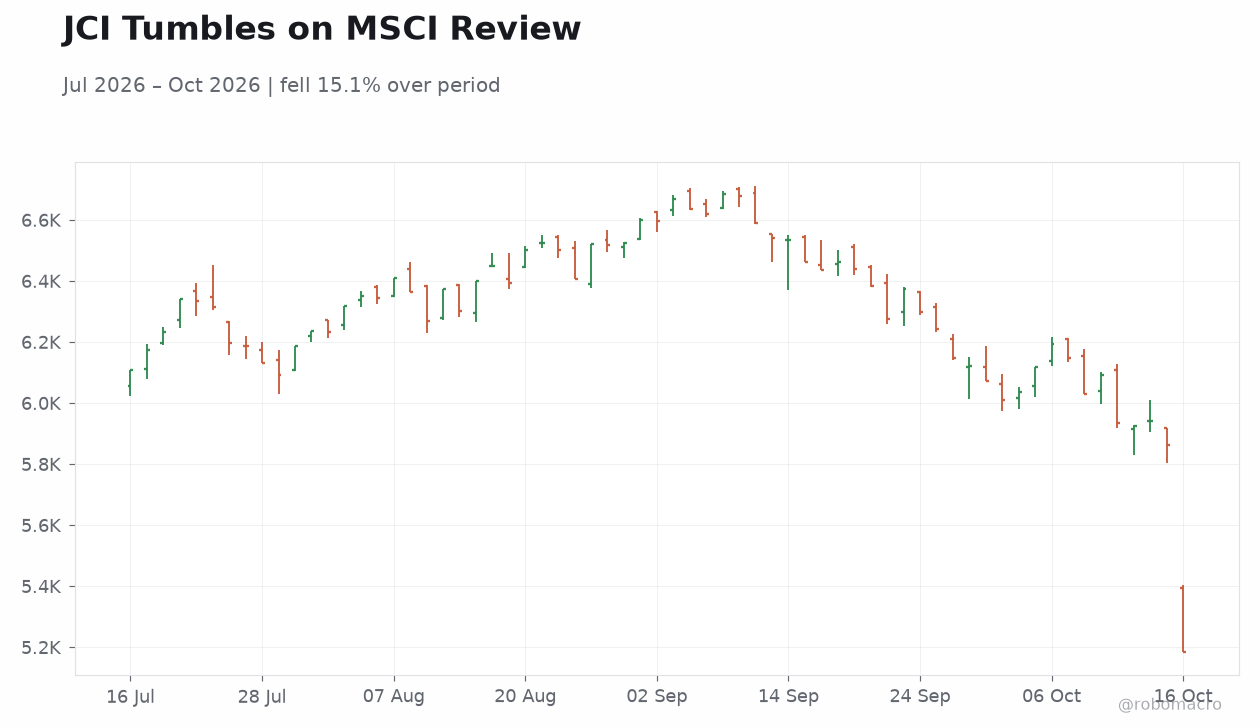
| JCI | 5,185.10 | -11.57% |
| KLCI | 1,607.76 | -0.98% |
| STI | 5,415.53 | +0.22% |
| USD/IDR | 17,943.00 | -0.43% |
| USD/THB | 33.42 | -0.14% |
| USD/MYR | 4.08 | -0.02% |
| USD/PHP | 62.95 | +0.03% |
| USD/SGD | 1.28 | -0.11% |
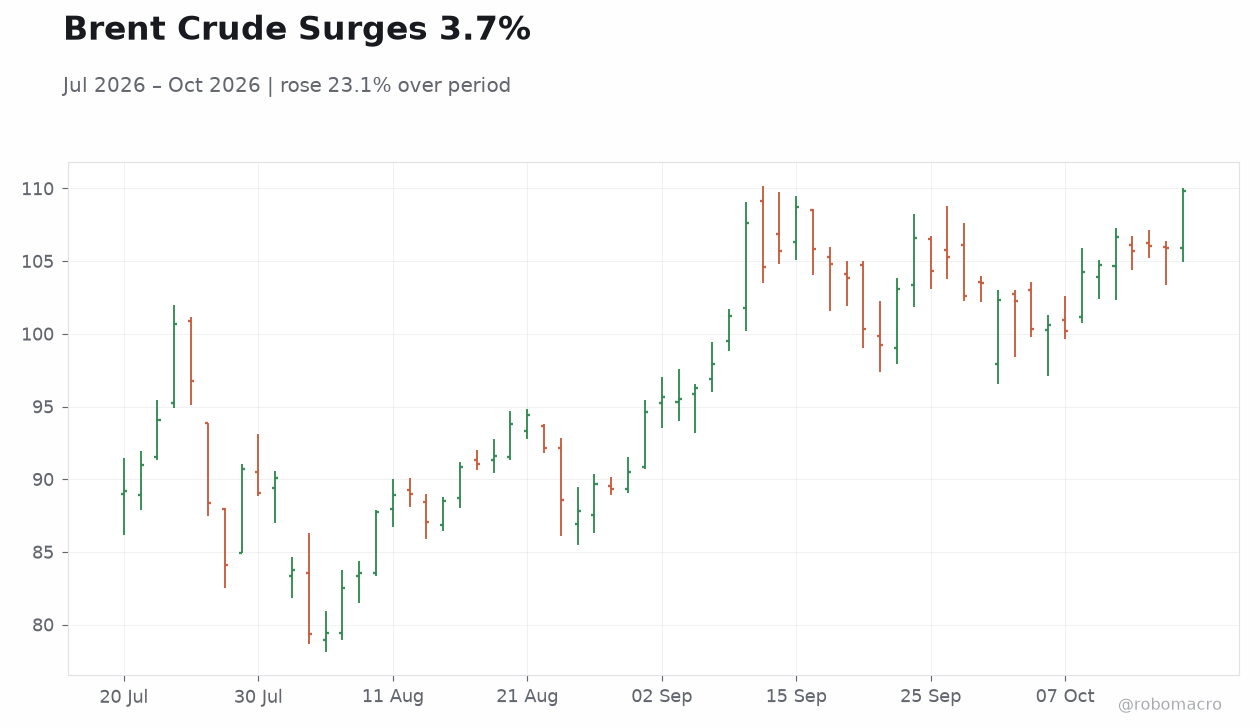
| Brent Crude | 109.86 | +3.72% |
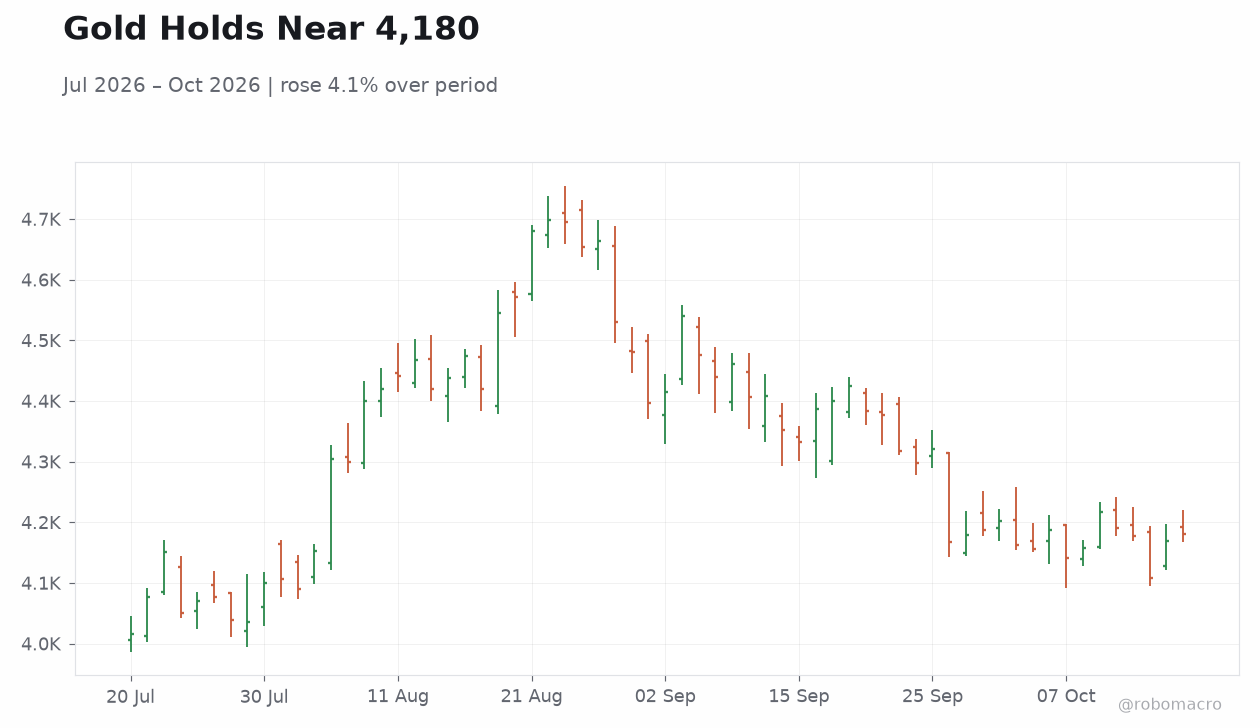
| Gold | 4,181.10 | +0.26% |
| Bitcoin | 81,488.24 | +0.13% |
| Indonesia 10Y Govt Yield | - | - |
| Thailand 10Y Govt Yield | - | - |
Prior Economic Events
| Data | Prior | Cons | Actual |
|---|---|---|---|
| GDP Growth Quarter-over-Quarter Advance Estimate | 1.40 | 1.20 | 1.10 |
| Monetary Policy Statement | - | - | - |
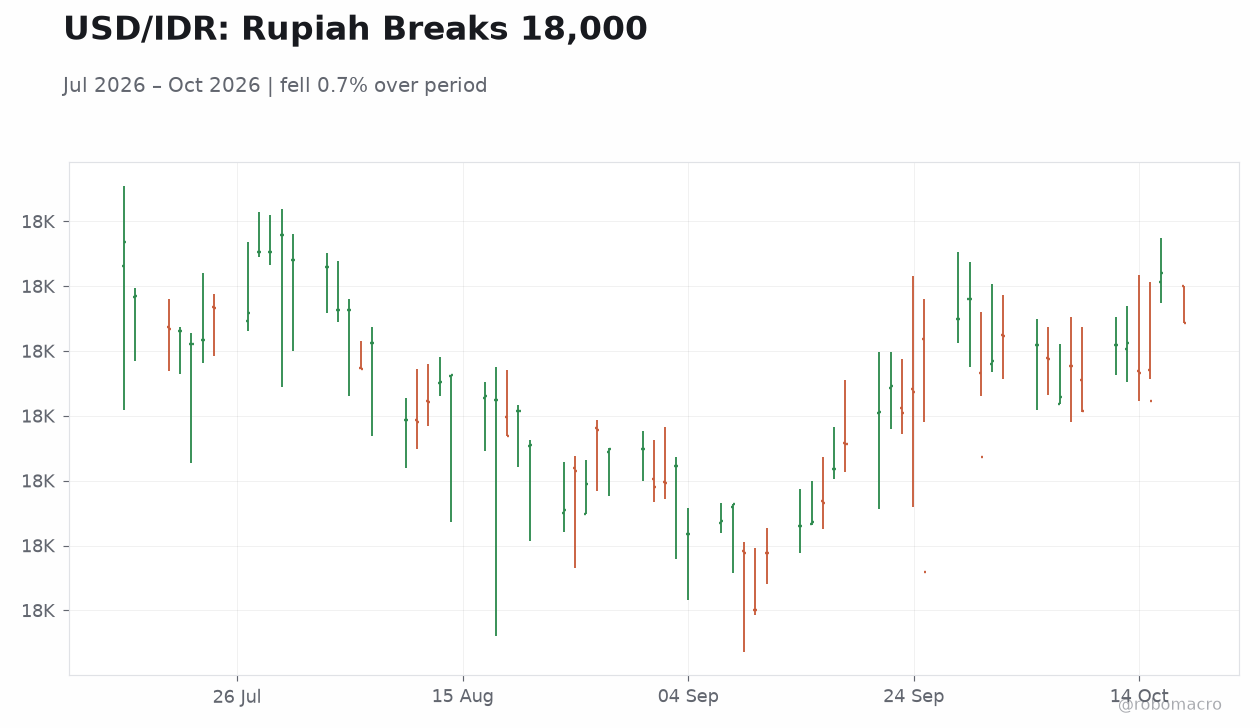 USD/IDR: Rupiah Breaks 18,000 | Type: market_hloc | USD/IDR: 1.794e+04 (2026-10-18) | Range: 1.75e+04–1.808e+04 | Trend(5pt): 1.807e+04,1.779e+04,1.77e+04,1.756e+04,1.794e+04
Today's Economic Events
| Data | Prior | Cons | Time |
|---|---|---|---|
| No events available | |||
- USD/IDR slid 0.43% to 17,943, breaching the 18,000 level intraday, prompting Bank Indonesia to intervene in spot and NDF markets
- MSCI's review weighing a downgrade of Indonesian equities amplified pressure on the JCI, which tumbled 11.57% to 5,185.10
- Singapore's advance GDP printed 1.1% q/q, below the 1.2% consensus and prior 1.4%, as MAS held settings
Yesterday's Recap
Indonesia dominated the regional tape as the rupiah slid to a fresh low, breaking through Rp18,000 per dollar intraday before settling at 17,943, down 0.43% on the day. Bank Indonesia confirmed intervention to smooth volatility, with officials flagging continued foreign capital outflows as global sentiment sours. The pressure was compounded by MSCI's review of a potential downgrade of Indonesian equities, a threat that sent the JCI tumbling 11.57% to 5,185.10 and dragged the currency lower in tandem.
Kompas reported the benchmark rate could rise again to defend the currency, while the South China Morning Post noted investors want proof of BI's independence amid government pressure. Elsewhere, Singapore's advance estimate for third-quarter GDP showed quarter-on-quarter growth of 1.1%, missing the 1.2% consensus and down from the prior 1.4% print. The Monetary Authority of Singapore delivered its policy statement alongside the data, maintaining settings.
The STI bucked the regional weakness, edging up 0.22% to 5,415.53, while Malaysia's KLCI shed 0.98% to 1,607.76.
The Day Ahead
The calendar is quiet on Sunday with no scheduled releases across the six ASEAN economies. Attention shifts to the week ahead, where Malaysia's September trade and inflation data will take centre stage alongside regional central bank communications. Indonesia remains the focal point as markets test BI's resolve on the rupiah and watch for any formal announcement of further intervention or a policy rate adjustment.
Vietnam's SBV is expected to continue pressing commercial banks on deposit rate reductions, with compliance monitoring ongoing. Thai policymakers stay in focus as the Bank of Thailand governor's comments on global financial guardrails circulate. Regional equity reopenings on Monday will be the first test of whether the MSCI downgrade threat continues to weigh on Indonesian assets.
Other Economic Notes
Malaysia's ringgit strengthened against the dollar following a robust third-quarter GDP estimate, with dealers citing the 4.09 range as the near-term band amid uncertainty over the US rate path. The currency's resilience contrasts with the region's weakest performer, the rupiah, underscoring a widening divergence in investor confidence across ASEAN. ↓ p.2