ASEAN Macro Daily(Beta Mode)
Rupiah Holds as Thai Rate Decision Nears
Market Snapshot
| Asset | Level | Change |
|---|---|---|
| JCI | 5,439.26 | +0.95% |
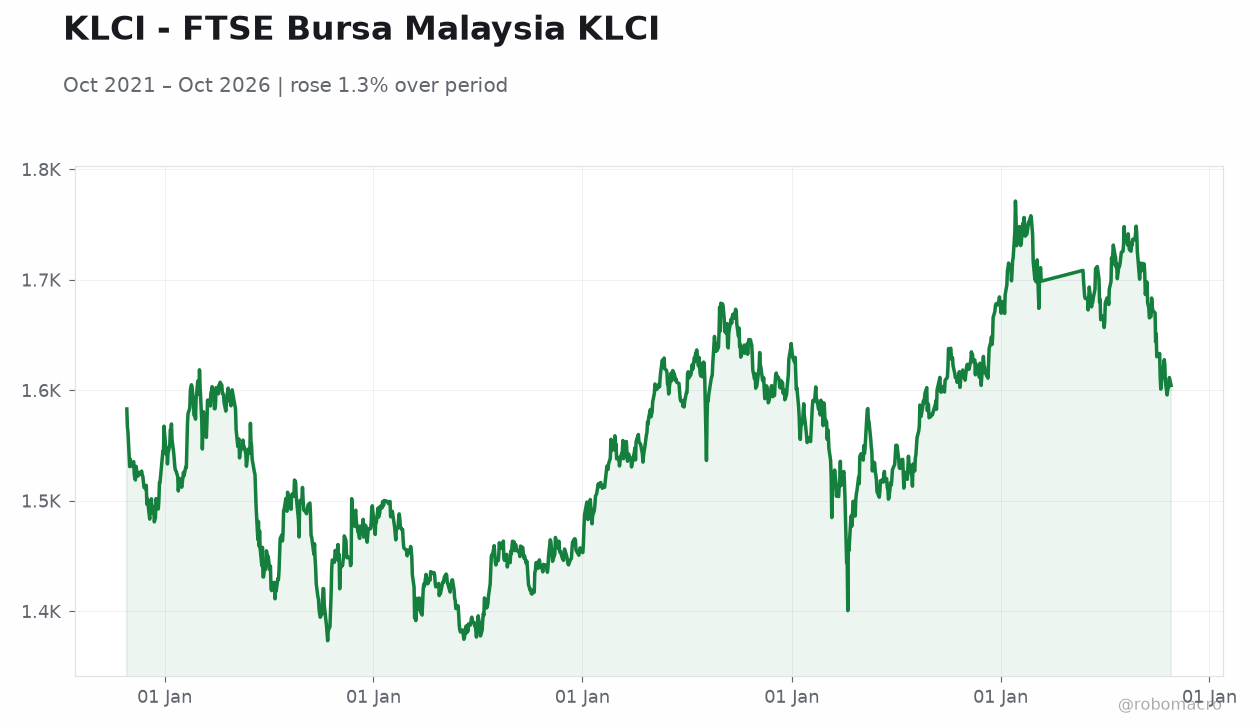
| KLCI | 1,611.56 | +0.21% |
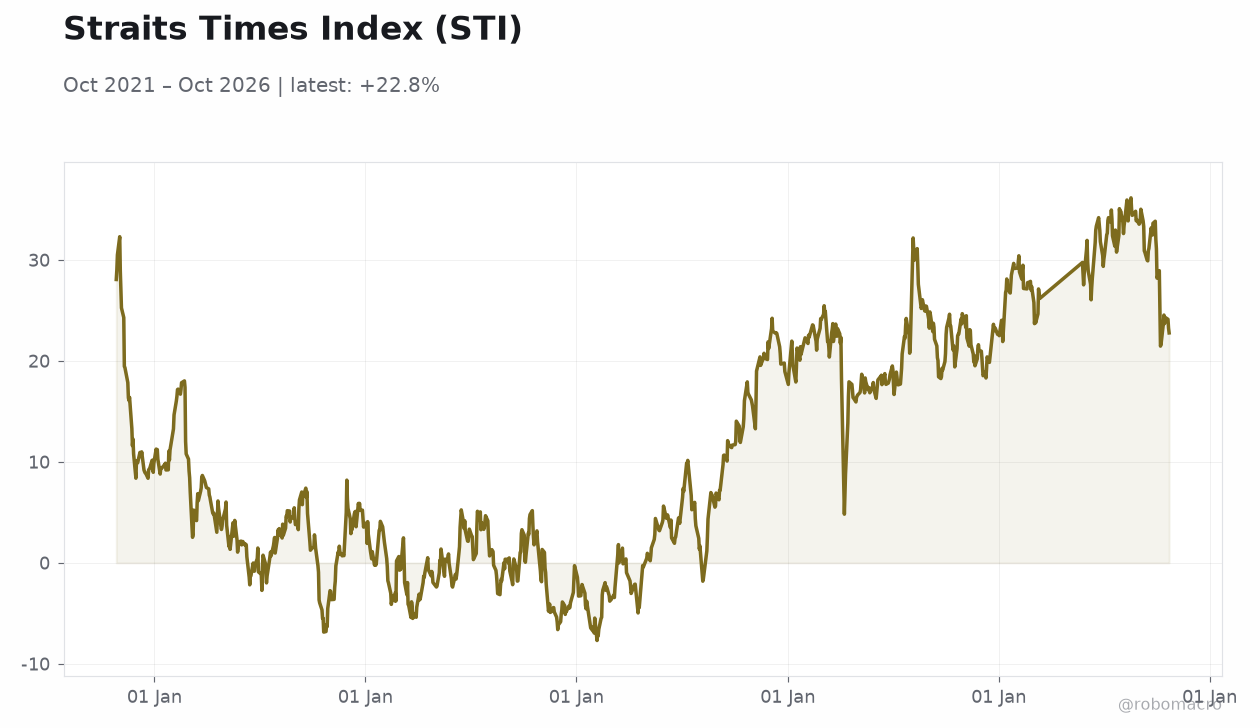
| STI | 5,422.16 | +0.13% |
| USD/IDR | 18,110.00 | +0.32% |
| USD/THB | 33.75 | +0.10% |
| USD/MYR | 4.09 | +0.12% |
| USD/PHP | 63.87 | +0.72% |
| USD/SGD | 1.28 | +0.35% |
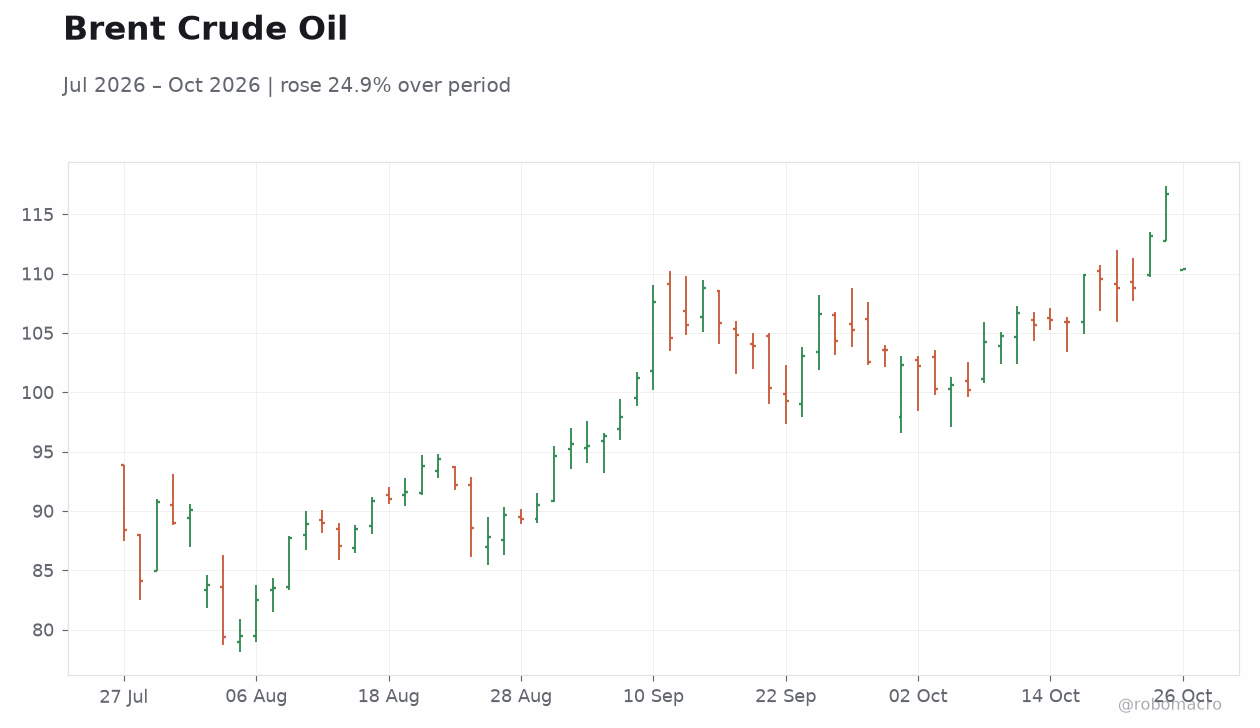
| Brent Crude | 110.37 | -5.44% |
| Gold | 4,030.40 | +0.56% |
| Bitcoin | 79,861.60 | -0.20% |
| Indonesia 10Y Govt Yield | - | - |
| Thailand 10Y Govt Yield | - | - |
Prior Economic Events
| Data | Prior | Cons | Actual |
|---|---|---|---|
| No events available | |||
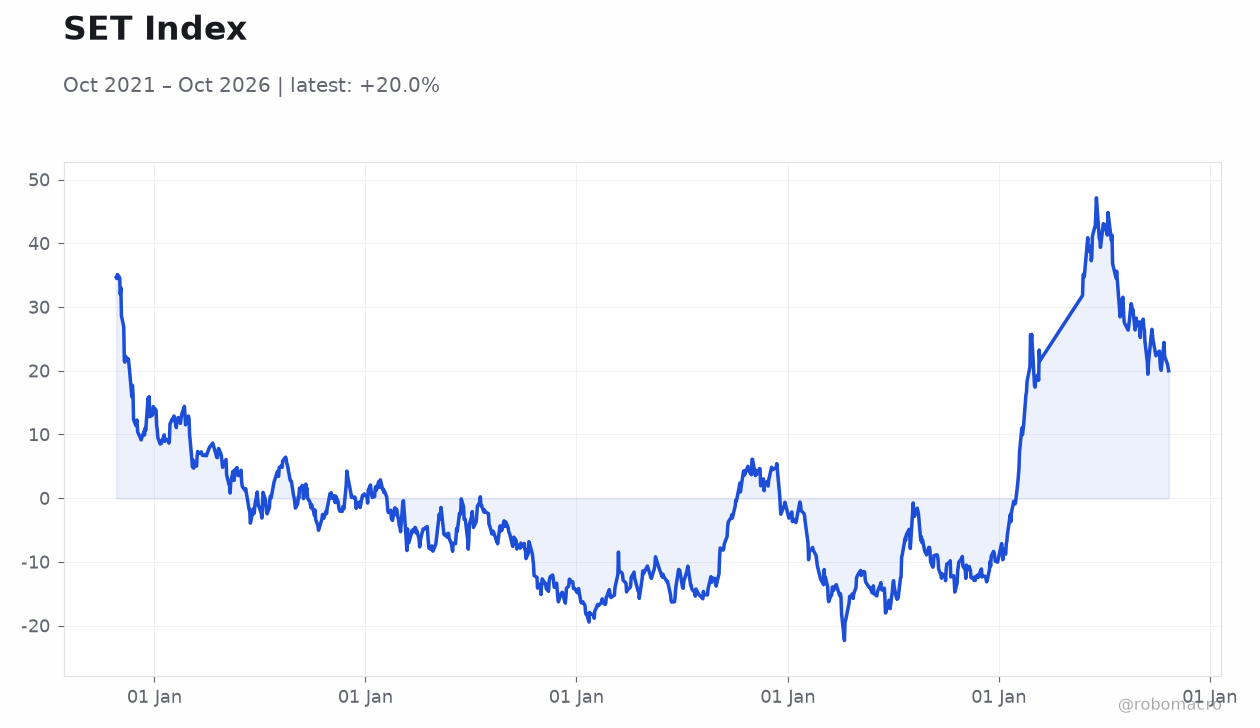
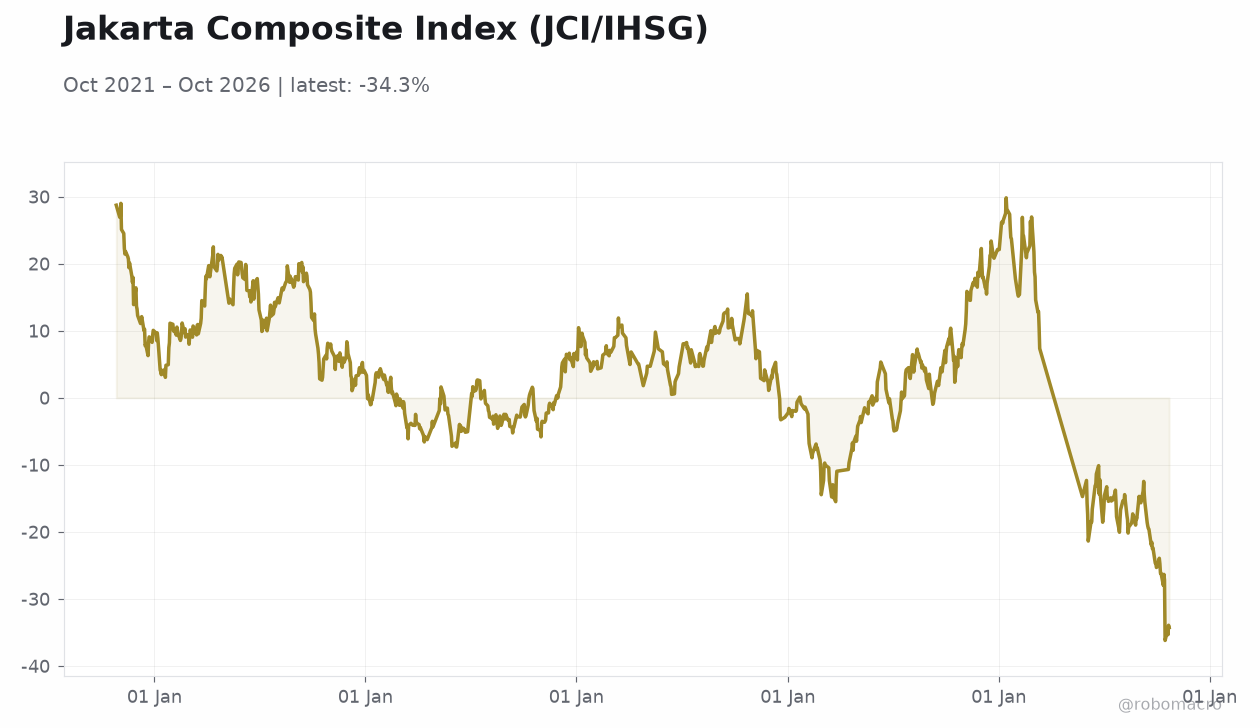 Jakarta Composite Index (JCI/IHSG) | Type: macro_line | Jakarta Composite Index (JCI/IHSG): -34.26 (2026-10-23) | Range: -36.18–29.84 | Trend(5pt): 28.74,5.276,5.975,-1.901,-34.26
Today's Economic Events
| Data | Prior | Cons | Time |
|---|---|---|---|
| Central Bank Interest Rate Decision | 1 | - | 03:00 |
- Indonesian rupiah steadies near record lows despite fiscal concerns and shifting safe-haven flows.
- Regional equities post modest gains with JCI leading at +0.95% while Brent crude drops 5.44%.
- Malaysia and Thailand central banks join MAS cross-border digital settlement initiative.
Yesterday's Recap
Indonesian markets dominated ASEAN moves as the rupiah hovered near record lows amid ongoing fiscal concerns and Bank Indonesia policy trade-offs. News flow highlighted BI statements that the currency remains manageable after recent MSCI-related shocks, while safe-haven demand shifts provided intermittent support. The rupiah posted a net 0.32% weakening against the dollar to 18,110.
Equity markets recorded gains, with the JCI rising 0.95% to 5,439.26, the KLCI adding 0.21% to 1,611.56, and the STI up 0.13% to 5,422.16. Brent crude fell sharply by 5.44% to 110.37, weighing on commodity-linked sentiment across Indonesia and Malaysia. Malaysia’s ringgit showed resilience supported by trade surplus data, advancing 0.12% to 4.09 against the dollar, while Thailand’s baht remained near three-month lows ahead of the upcoming policy meeting.
No major data releases printed across the six ASEAN economies. Broader regional currencies posted modest losses, with USD/PHP rising 0.72% and USD/SGD up 0.35%, reflecting selective external pressures rather than uniform dollar strength.
The Day Ahead
Attention centers on the Bank of Thailand’s policy meeting scheduled for 28 October. Markets expect the BoT to hold the policy rate at 1.00% given contained inflation at 2.53% year-on-year. No other high-impact releases are scheduled for the immediate horizon across Indonesia, Malaysia, Philippines, Singapore or Vietnam.
Regional traders will monitor any updates on cross-border digital payment initiatives involving BNM, BoT and MAS. Broader focus remains on external drivers including US policy signals and China demand indicators that influence ASEAN capital flows. Gold’s advance to 4,030.40 offers a barometer for hedging demand that could spill into regional assets if uncertainty rises further.
Other Economic Notes
Indonesia’s creative economy push continues to gain international visibility, with authorities linking sector growth to cross-sector cooperation. Thailand is advancing digital finance frameworks through regulatory sandboxes and tighter oversight of high-value cash transactions. Malaysia and Thailand’s participation in Singapore’s digital money settlement project signals deeper regional integration in payments infrastructure.
↓ p.2