ASEAN Macro Daily(Beta Mode)
Rupiah Defense in Focus as BoT Looms
Market Snapshot
| Asset | Level | Change |
|---|---|---|
| JCI | 5,373.09 | -1.22% |
| KLCI | 1,604.36 | -0.45% |
| STI | 5,415.91 | -0.12% |
| USD/IDR | 18,025.00 | -0.31% |
| USD/THB | 33.74 | -0.01% |
| USD/MYR | 4.09 | +0.10% |
| USD/PHP | 63.99 | +0.79% |
| USD/SGD | 1.28 | +0.27% |
| Brent Crude | 109.50 | -5.45% |
| Gold | 4,074.90 | +0.90% |
| Bitcoin | 80,814.81 | +1.01% |
| Indonesia 10Y Govt Yield | - | - |
| Thailand 10Y Govt Yield | - | - |
Prior Economic Events
| Data | Prior | Cons | Actual |
|---|---|---|---|
| No events available | |||
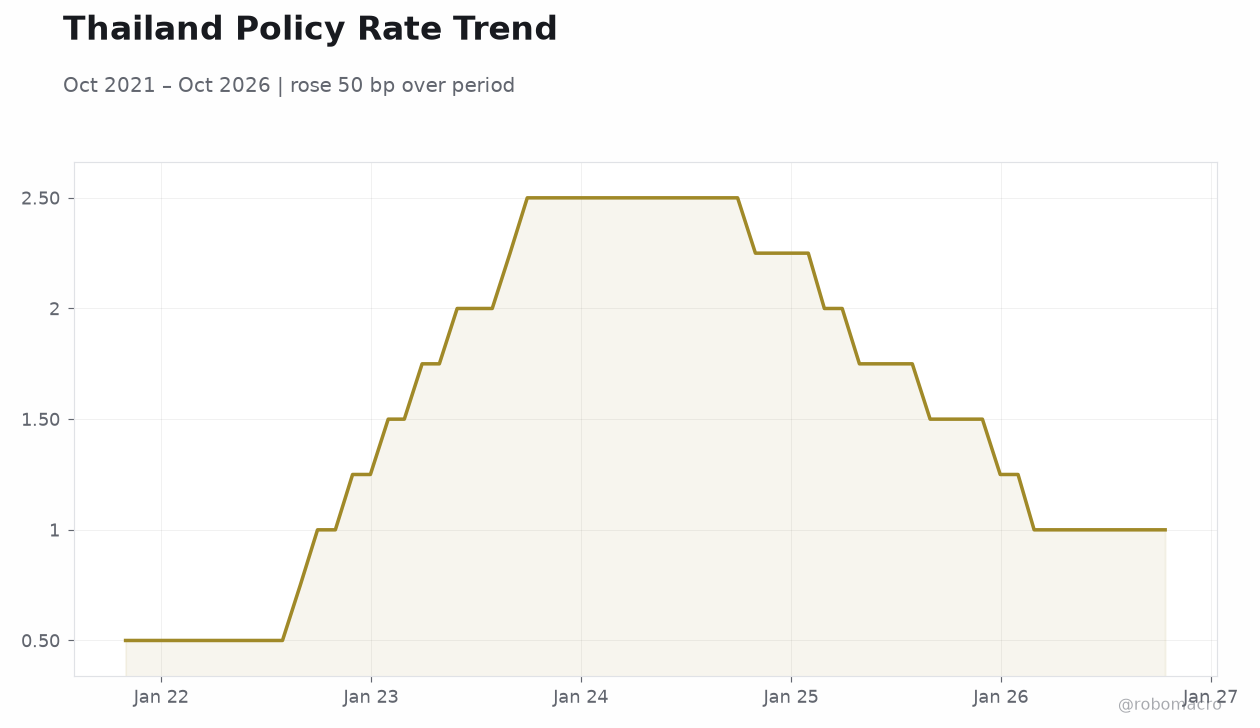 Thailand Policy Rate Trend | Type: macro_line | BoT policy rate (%): 1 (2026-10-14) | Range: 0.5–2.5 | Trend(5pt): 0.5,1.5,2.5,1.75,1
Today's Economic Events
| Data | Prior | Cons | Time |
|---|---|---|---|
| Central Bank Interest Rate Decision | 1 | - | 03:00 |
| Wednesday (2026-10-28) | |||
| Central Bank Interest Rate Decision | 1 | - | 03:00 |
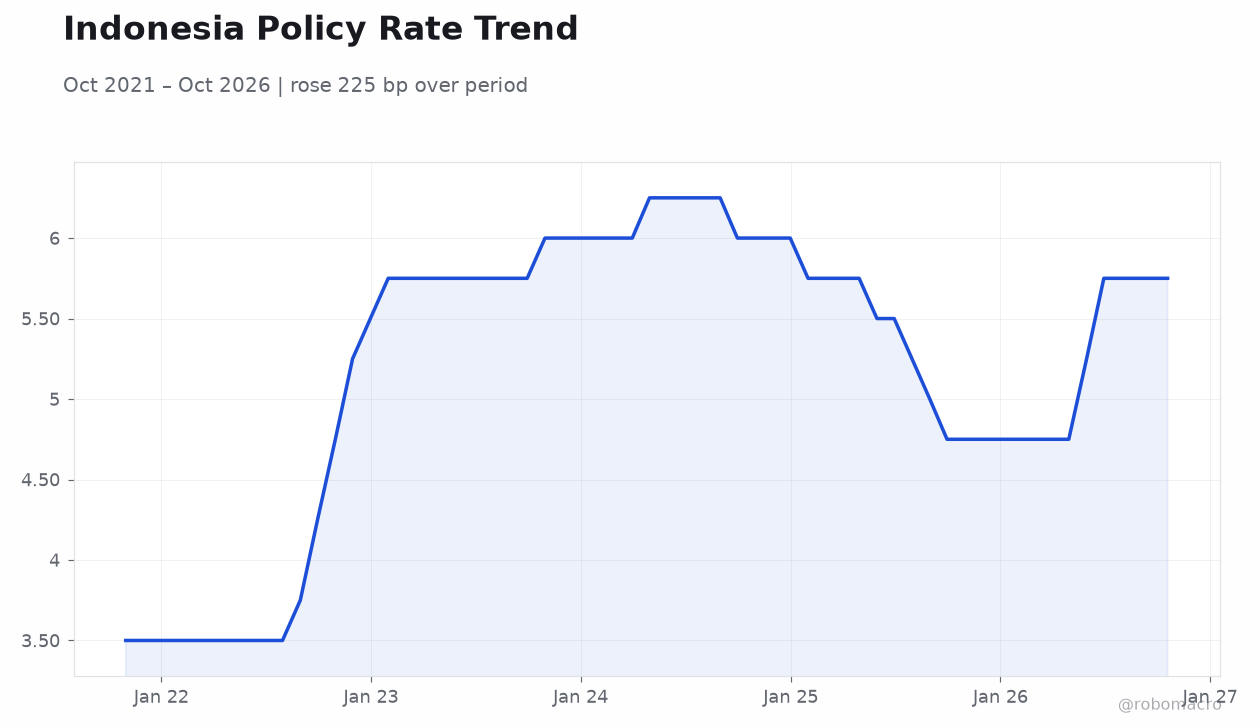
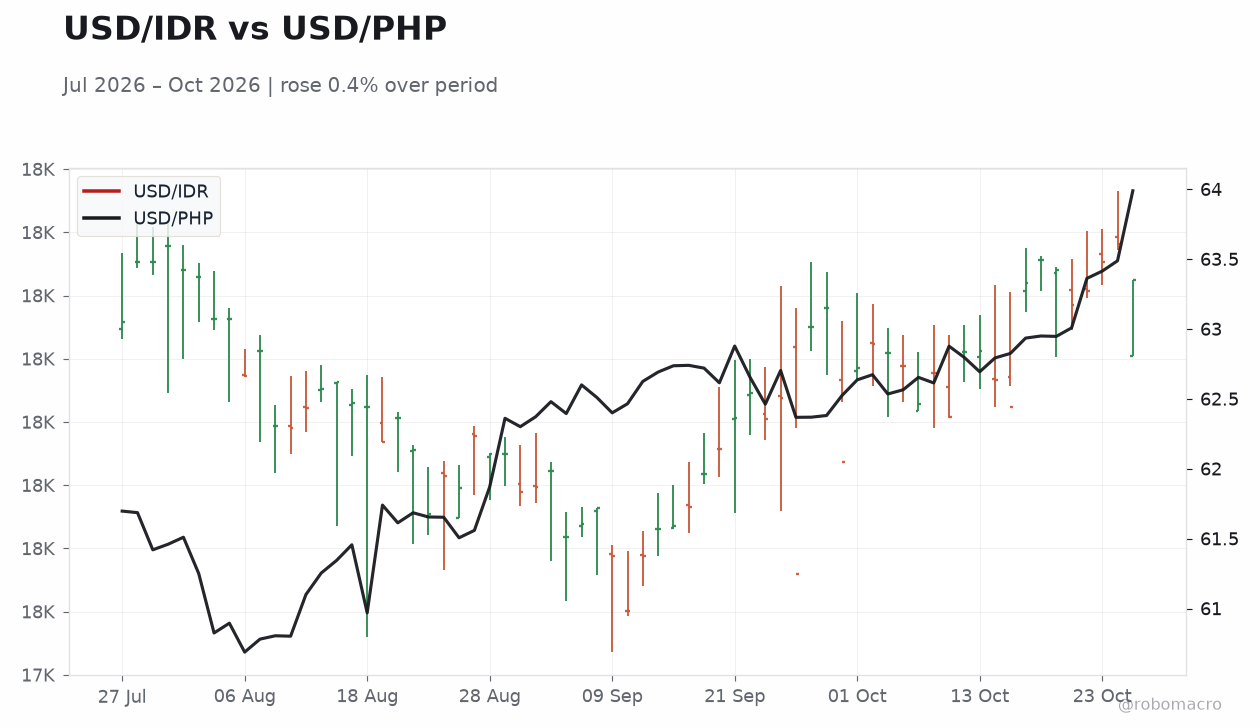
- Indonesian rupiah remains the region's pressure point, with USD/IDR near 18,025 and markets debating whether Bank Indonesia needs to tighten further to defend the currency.
- Thai baht sits at 33.74 ahead of the Bank of Thailand's 28 October rate decision, with the policy rate at 1.00% and a hold widely expected.
- Regional equities softened — Jakarta's JCI fell 1.22% and Kuala Lumpur's KLCI lost 0.45% — while Brent crude's 5.45% slide and gold's push to $4,074.90 frame a risk-off, commodity-heavy backdrop.
Yesterday's Recap
Indonesian assets dominated the session as the rupiah hovered near record lows, with USD/IDR at 18,025.00 — still down 0.31% on the day but close to its weakest levels on record. Jakarta's JCI bore the brunt of the risk aversion, sliding 1.22% to 5,373.09 as fiscal concerns, regional tensions and a firmer dollar weighed on sentiment; a survey noting only 32% of Indonesian businesses plan capex underscored how high rates and currency weakness are crimping investment. Malaysia's KLCI eased 0.45% to 1,604.36, with the ringgit opening firmer against the dollar ahead of BNM's policy meeting even as USD/MYR edged up 0.10% to 4.09.
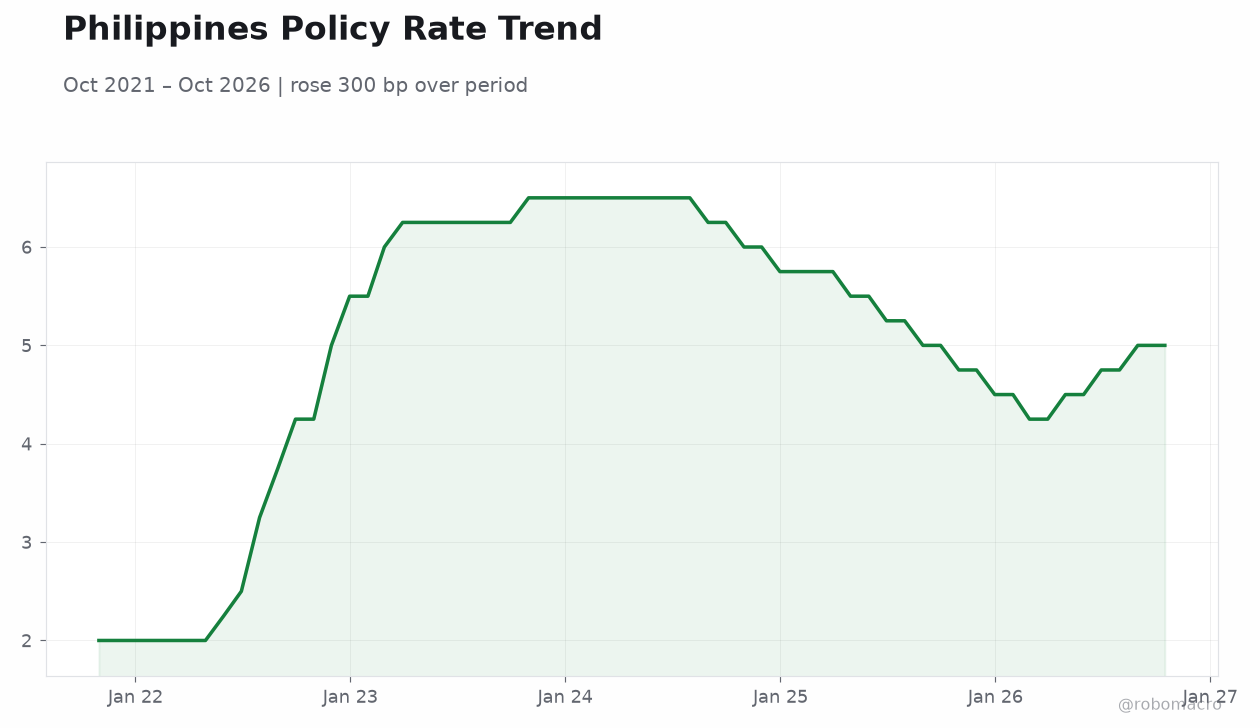
Singapore's STI slipped just 0.12% to 5,415.91, while the Philippine peso was the region's weakest performer, with USD/PHP up 0.79% to 63.99. Thailand's baht held at 33.74 ahead of the BoT decision, and regional bond markets were quiet with no 10-year yield prints available.
The Day Ahead
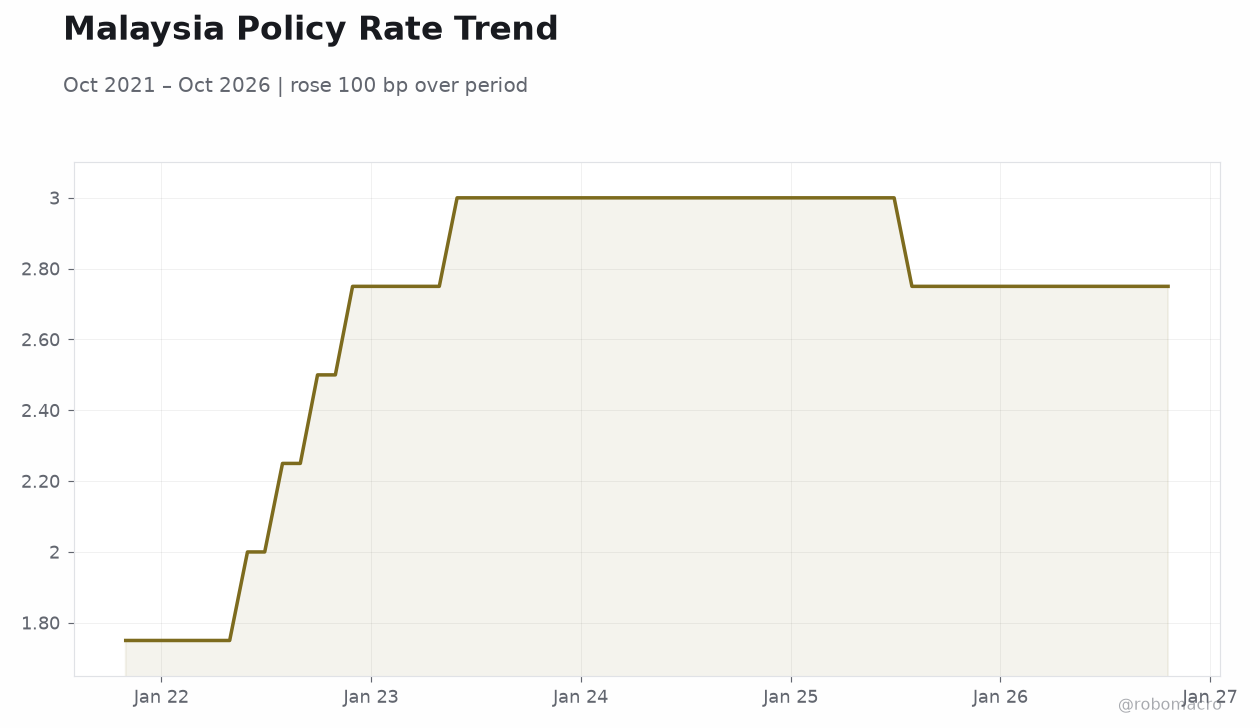
The Bank of Thailand's interest rate decision on 28 October at 03:00 ET is the week's key ASEAN event, with the policy rate at 1.00% following the August hold and consensus pointing to another steady outcome. Markets will parse the statement for signals on baht management — OCBC flags a double-top risk in USD/THB — and any shift in the BoT's growth assessment amid calls for greater political stability to support the economy and sovereign rating. Malaysia's BNM policy meeting is also in focus, with the ringgit's firmer open reflecting positioning around the 2.75% policy rate.
Elsewhere, Thai digital-finance developments — including the SEC and BoT's joint push and the Tourist DigiPay sandbox — bear watching for payments and capital-flow implications. No major Indonesian or Philippine data releases are scheduled, leaving FX and BI rhetoric as the main drivers.
Other Economic Notes
Indonesia's decision to trim natural gas exports to Singapore to prioritise domestic demand highlights a broader resource-nationalism theme that could tighten regional energy supply and complicate Singapore's power-cost outlook. ↓ p.2