ASEAN Macro Daily(Beta Mode)
BI Defends Rupiah as BoT Holds, JCI Slides
Market Snapshot
| Asset | Level | Change |
|---|---|---|
| JCI | 5,266.13 | -1.99% |
| KLCI | 1,611.85 | +0.47% |
| STI | 5,397.03 | -0.35% |
| USD/IDR | 18,183.00 | +0.21% |
| USD/THB | 33.71 | -0.15% |
| USD/MYR | 4.07 | -0.24% |
| USD/PHP | 63.96 | +0.16% |
| USD/SGD | 1.28 | +0.02% |
| Brent Crude | 110.36 | -3.09% |
| Gold | 4,078.30 | +0.09% |
| Bitcoin | 81,178.11 | +0.46% |
| Indonesia 10Y Govt Yield | - | - |
| Thailand 10Y Govt Yield | - | - |
Prior Economic Events
| Data | Prior | Cons | Actual |
|---|---|---|---|
| Central Bank Interest Rate Decision | 1 | 1 | 1 |
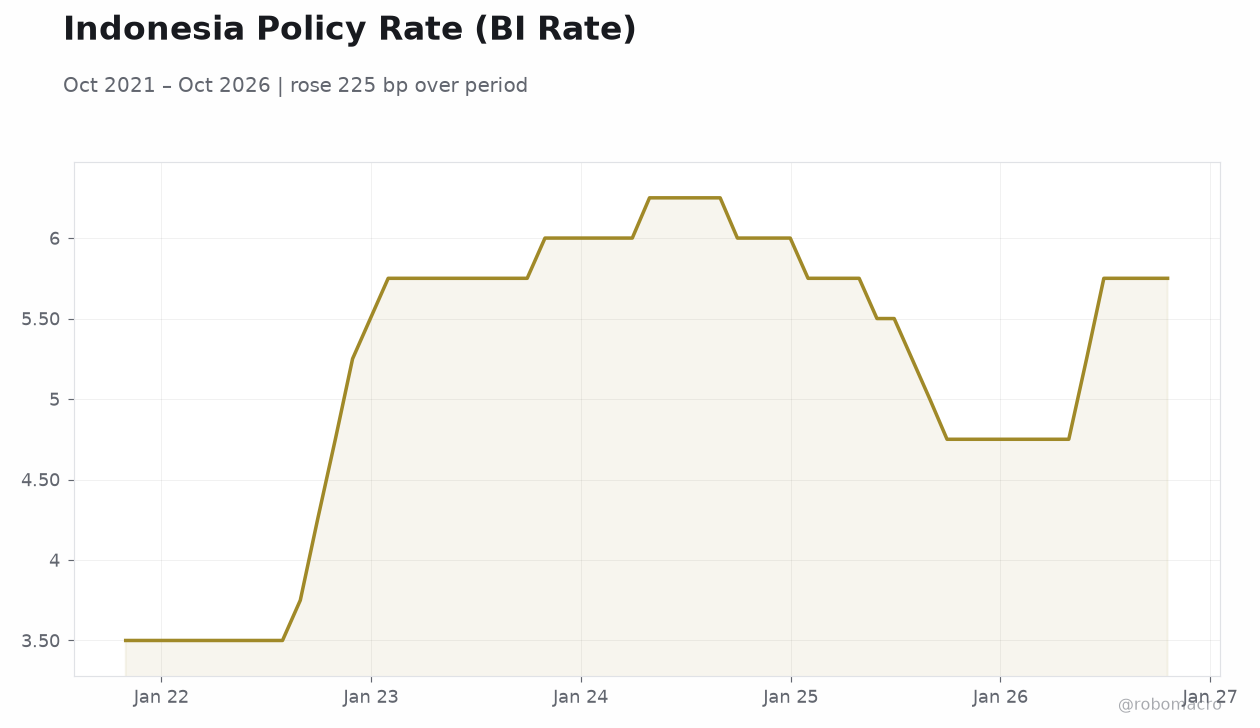 Indonesia Policy Rate (BI Rate) | Type: macro_line | BI policy rate (%): 5.75 (2026-10-19) | Range: 3.5–6.25 | Trend(5pt): 3.5,5.75,6.25,5.25,5.75
Today's Economic Events
| Data | Prior | Cons | Time |
|---|---|---|---|
| No events available | |||
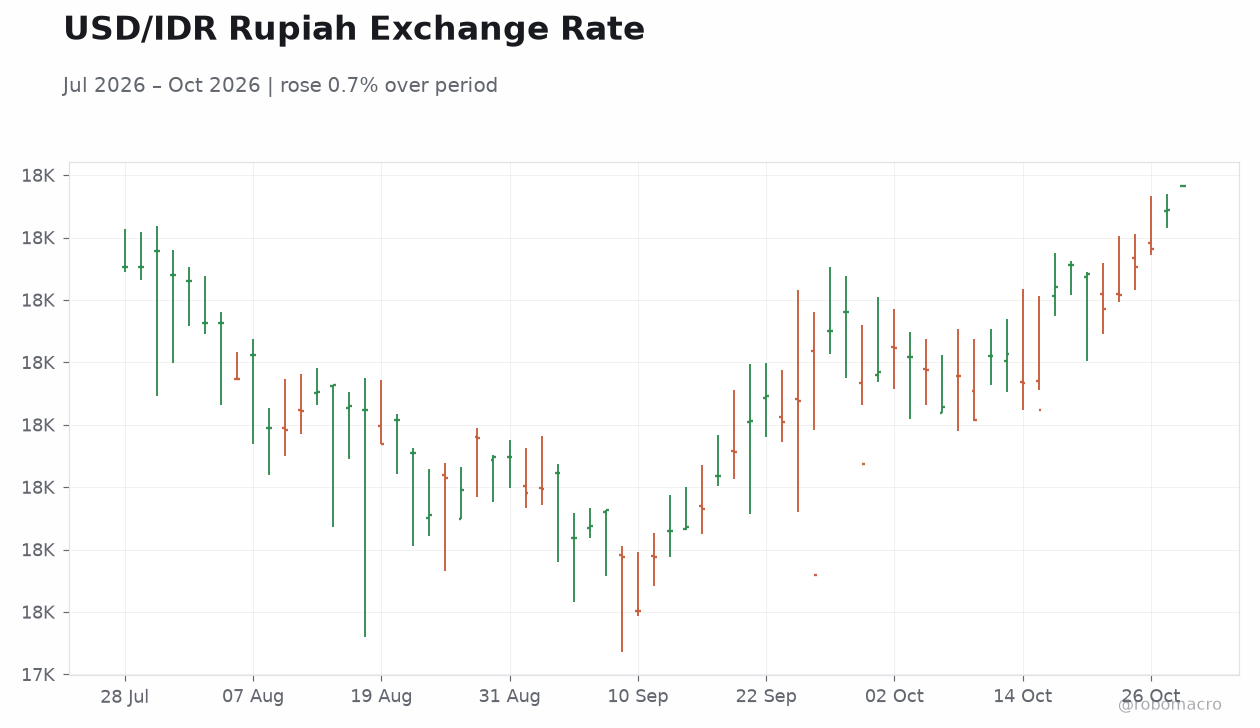
- Bank Indonesia held policy steady and expanded hedging incentives as the rupiah tested Rp18,183/USD amid MSCI downgrade risk and Middle East tensions.
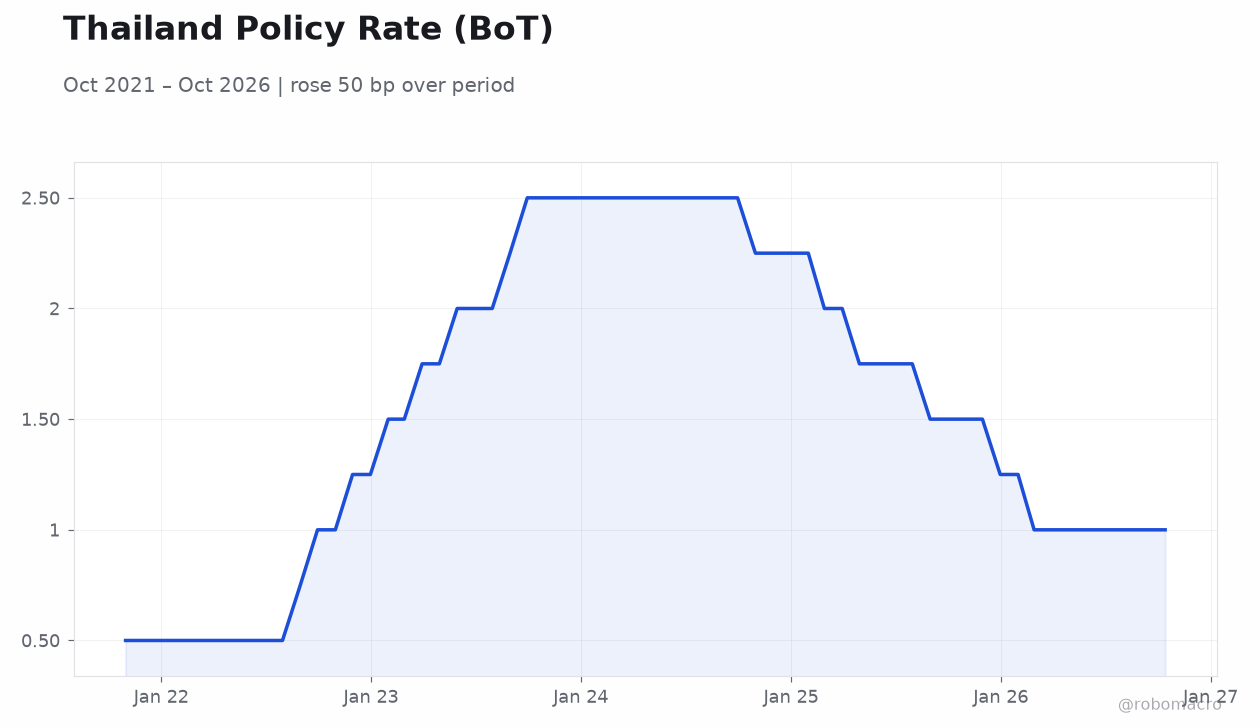
- The Bank of Thailand kept its policy rate at 1.00% for a fourth straight meeting, lifting its growth outlook on AI-related exports.
- Regional markets diverged: Jakarta's JCI fell 1.99% while Kuala Lumpur's KLCI gained 0.47%; Brent crude dropped 3.09% to $110.36.
Yesterday's Recap
The Bank of Thailand held its policy rate at 1.00% on Wednesday, matching consensus and marking a fourth consecutive hold, while lifting its growth outlook on AI-related exports. The baht firmed modestly, with USD/THB down 0.15% to 33.71, though MUFG flagged trade-deficit-driven weakness and OCBC noted double-top risk against the dollar. In Indonesia, the rupiah opened weaker at Rp18,140 and closed around Rp18,183, a 0.21% decline, as Bank Indonesia held rates under a "policy mix" stance to support FX and growth.
Jakarta's JCI slumped 1.99% to 5,266.13, with conglomerate Prajogo Pangestu among the world's biggest wealth losers as the stock market dived. Malaysia's ringgit strengthened 0.24% to 4.07 against the dollar on confidence in economic fundamentals, and the KLCI added 0.47% to 1,611.85. Singapore's STI slipped 0.35% to 5,397.03, and the peso weakened 0.16% to 63.96.
The Day Ahead
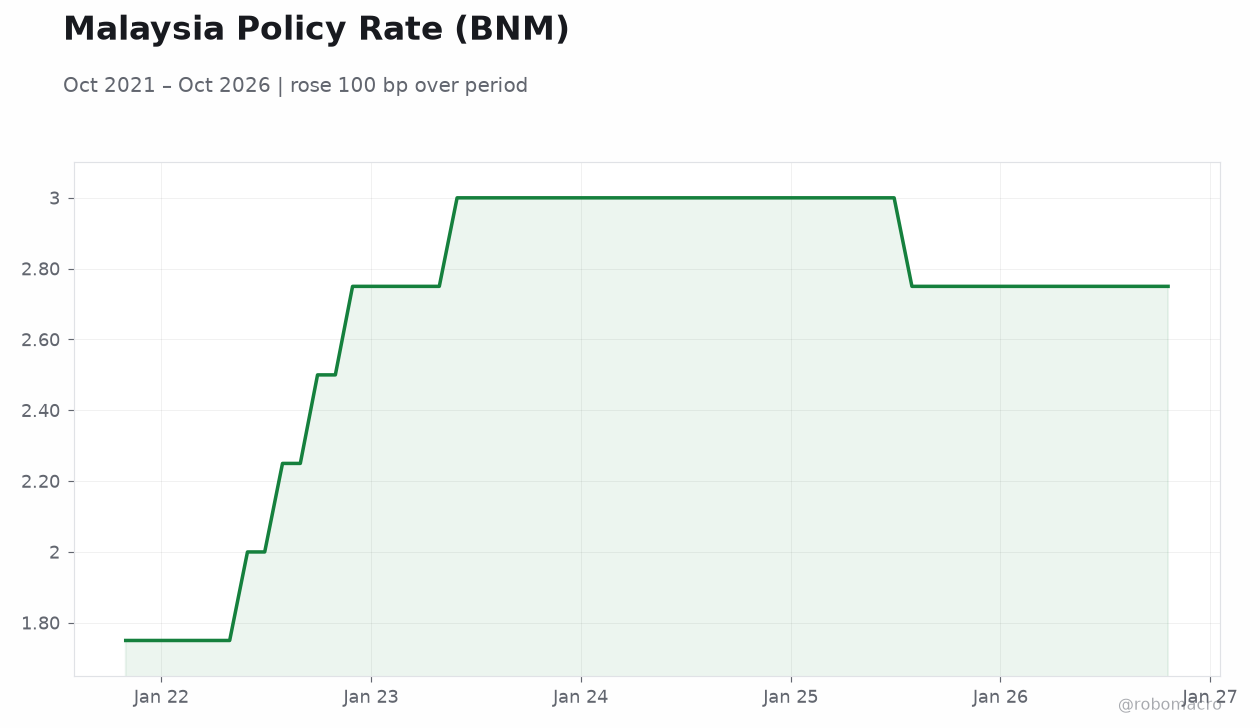
No ASEAN central bank decisions or major statistical releases are scheduled for Thursday, leaving markets to digest Wednesday's BoT hold and BI's FX defense. Malaysia's BNM policy meeting remains in focus, with the ringgit opening higher ahead of the decision and the policy rate currently at 2.75%. Indonesia's bond market will be watched closely after the equity selloff, with the 10-year yield data pending.
Thailand's baht will trade against the double-top technical risk flagged by OCBC, with the next BoT meeting not until 23 December. Singapore and Philippine markets face a quiet data calendar, leaving external drivers — Brent crude and US rates — to set the tone.
Other Economic Notes
Indonesia's government is targeting a US$24 billion credit expansion to boost the grassroots economy, a fiscal push that could support domestic demand as the rupiah weighs on imported costs. Bank Indonesia is accelerating its 2030 money market blueprint to deepen liquidity and is exploring QRIS payment data for small-business credit scoring, part of a broader financial-inclusion agenda. Malaysia and Bangladesh began formal negotiations toward a free trade agreement targeting 2027, signaling expanding intra-Asian trade linkages.
Thailand's upgraded growth outlook on AI exports underscores the region's growing role in the global technology supply chain. Singapore's financial hub status keeps it attuned to global risk sentiment, with the STI's modest decline reflecting caution.