ASEAN Macro Daily(Beta Mode)
BoT Holds at 1%, Flags Cheap-Money Costs
Market Snapshot
| Asset | Level | Change |
|---|---|---|
| JCI | 5,282.31 | +0.31% |
| KLCI | 1,613.87 | +0.13% |
| STI | 5,397.91 | +0.02% |
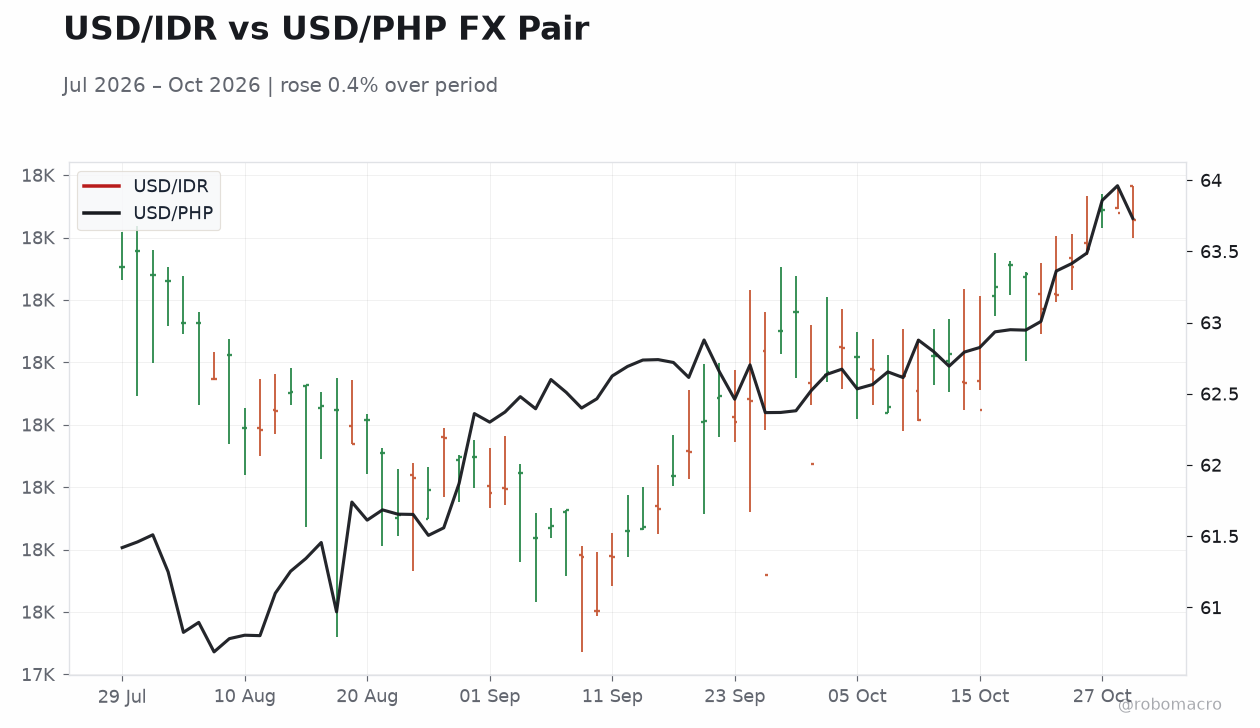
| USD/IDR | 18,128.00 | -0.06% |
| USD/THB | 33.69 | -0.24% |
| USD/MYR | 4.06 | -0.72% |
| USD/PHP | 63.73 | -0.36% |
| USD/SGD | 1.28 | -0.13% |
| Brent Crude | 111.40 | -3.40% |
| Gold | 4,033.40 | -0.45% |
| Bitcoin | 78,939.41 | -2.86% |
| Indonesia 10Y Govt Yield | - | - |
| Thailand 10Y Govt Yield | - | - |
Prior Economic Events
| Data | Prior | Cons | Actual |
|---|---|---|---|
| Central Bank Interest Rate Decision | 1 | 1 | 1 |
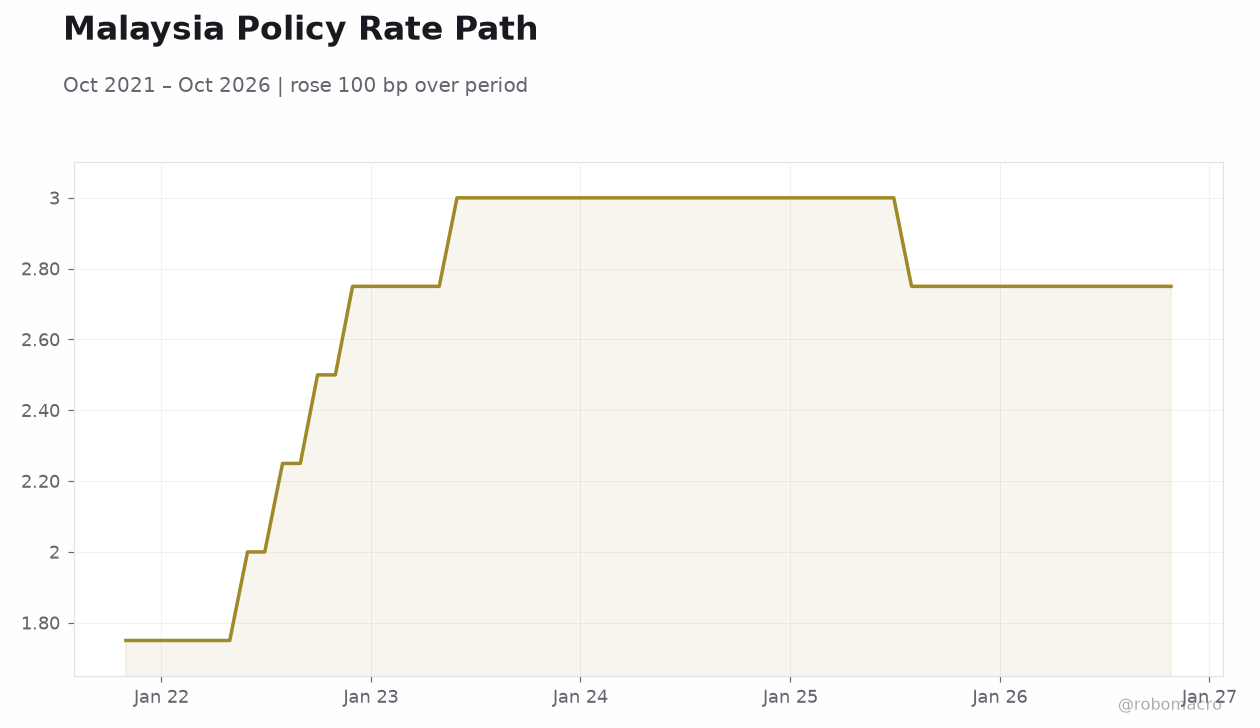 Malaysia Policy Rate Path | Type: macro_line | BNM overnight policy rate (%): 2.75 (2026-10-26) | Range: 1.75–3 | Trend(5pt): 1.75,2.75,3,2.75,2.75
Today's Economic Events
| Data | Prior | Cons | Time |
|---|---|---|---|
| No events available | |||
- Bank of Thailand held its key rate for a fourth straight meeting, upgrading 2026 GDP on AI-related exports while warning of cheap-money distortions.
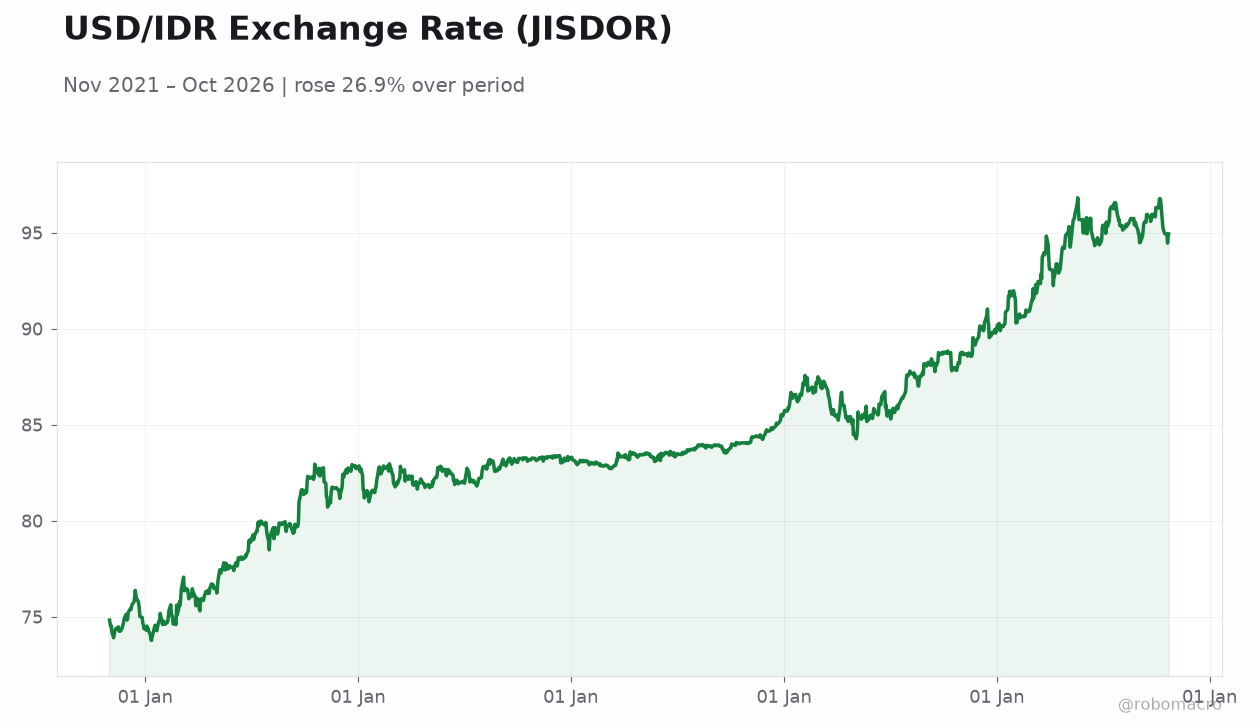
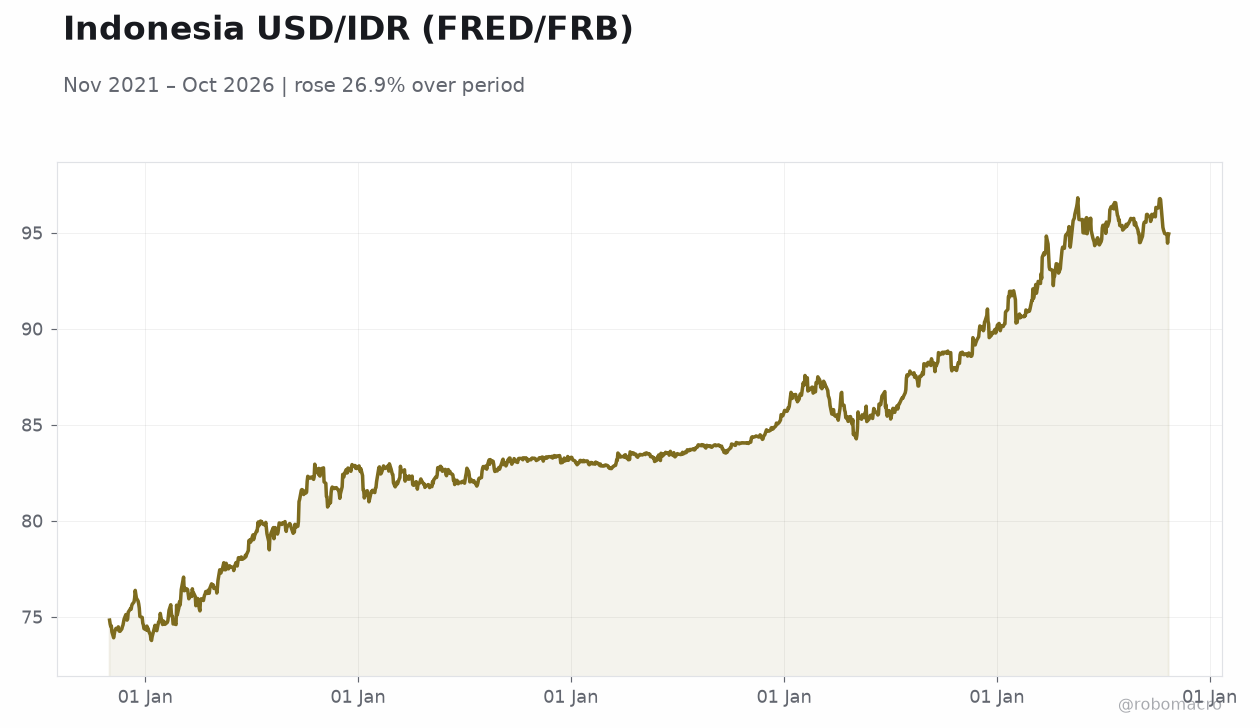
- Rupiah firmed on suspected Bank Indonesia intervention after touching record lows; Governor Destry pushed back on Hashim's Rp22,000 warning.
- Ringgit led ASEAN FX gains ahead of the BNM meeting on OPR normalisation hopes; Brent's 3.4% slide eased regional import bills.
Yesterday's Recap
The Bank of Thailand kept its policy rate unchanged at 1.00% on Wednesday, the fourth consecutive hold, matching consensus. Alongside the decision, the BoT upgraded its 2026 growth forecast, citing stronger export momentum and AI-related shipments, while the governor publicly argued growth remains too low and flagged the cost of cheap money. The baht firmed 0.24% to 33.69 per dollar, though DBS cautioned that curve-steepening risks persist and MUFG flagged oil-driven weakness ahead.
In Indonesia, the rupiah recovered from record lows, strengthening 0.06% to 18,128 on suspected BI intervention, with Governor Destry responding to Hashim's Rp22,000 warning and officials insisting the currency will stay below 19,000. Regional equities were firmer: Jakarta's JCI added 0.31%, the KLCI rose 0.13%, and Singapore's STI edged up 0.02%. The ringgit outperformed, gaining 0.72% to 4.06 ahead of the BNM decision, while the peso firmed 0.36% to 63.73.
The Day Ahead
No ASEAN statistical releases or central bank events are scheduled for Thursday, leaving markets to digest the BoT hold and position for Friday's BNM decision. Malaysia's overnight policy rate announcement is the week's key event, with the ringgit's pre-meeting rally reflecting expectations of normalisation rather than a cut. Singapore and Philippine markets will trade without fresh domestic catalysts, so direction will come from offshore risk appetite and oil.
Indonesia's bond market will be watched for follow-through after the rupiah's intervention-driven bounce, with the 10-year yield the key gauge of foreign investor confidence. Vietnam has no scheduled data, keeping focus on SBV liquidity operations.
Other Economic Notes
Thailand's upgraded growth outlook rests on export strength, particularly AI-linked electronics, but the BoT's cheap-money warning signals concern that ultra-low rates are distorting credit allocation and asset prices. Malaysia's ringgit strength reflects confidence in economic fundamentals and expectations of steady policy, with the FTA negotiations with Bangladesh adding a trade-diversification angle. Indonesia's rupiah defence carries fiscal costs, and the debate over Rp19,000 versus Rp22,000 underscores how sensitive sentiment remains to reserve adequacy.
↓ p.2