ASEAN Macro Daily(Beta Mode)
Rupiah Outflows, BoT Hold Frame ASEAN Risk
Market Snapshot
| Asset | Level | Change |
|---|---|---|
| JCI | 5,057.05 | -0.80% |
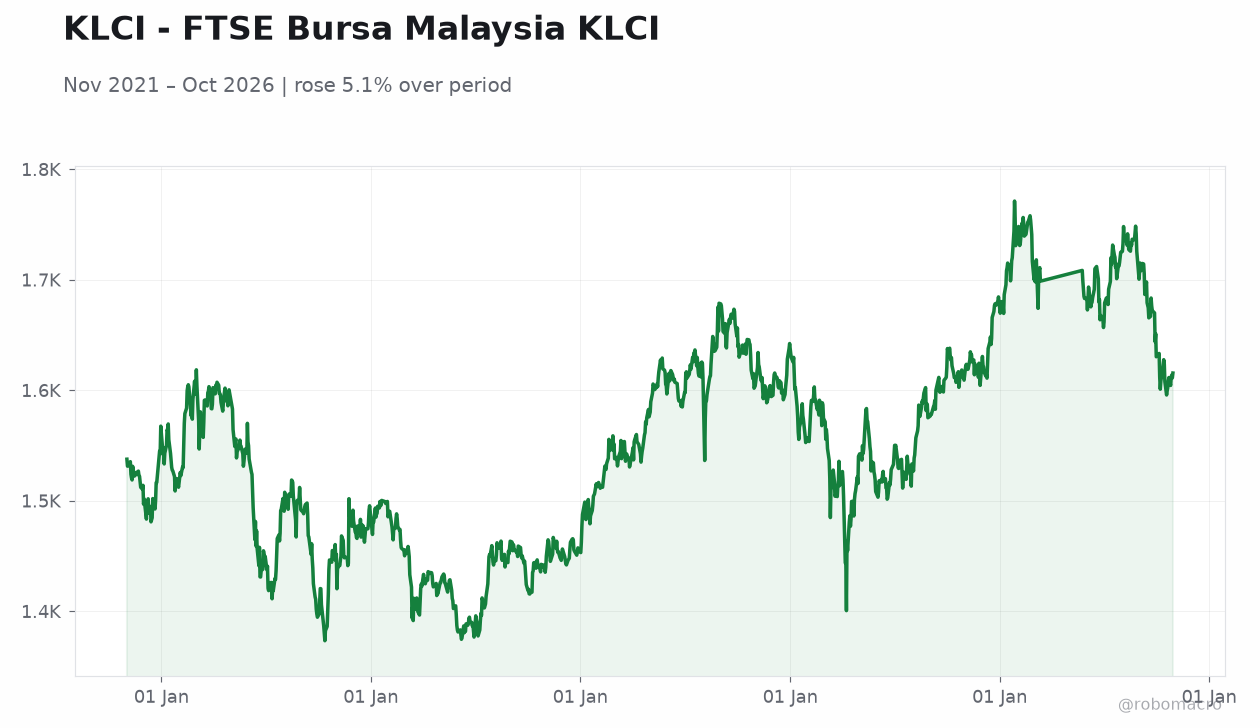
| KLCI | 1,615.60 | +0.28% |
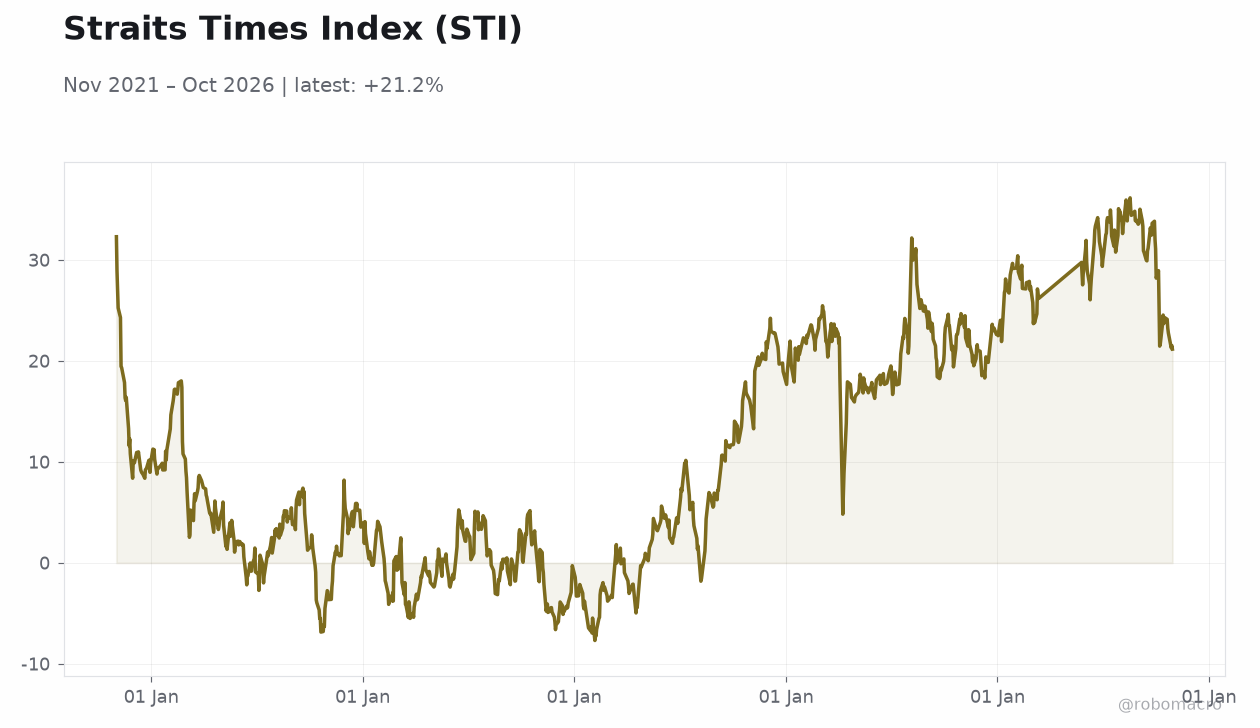
| STI | 5,376.74 | -0.36% |
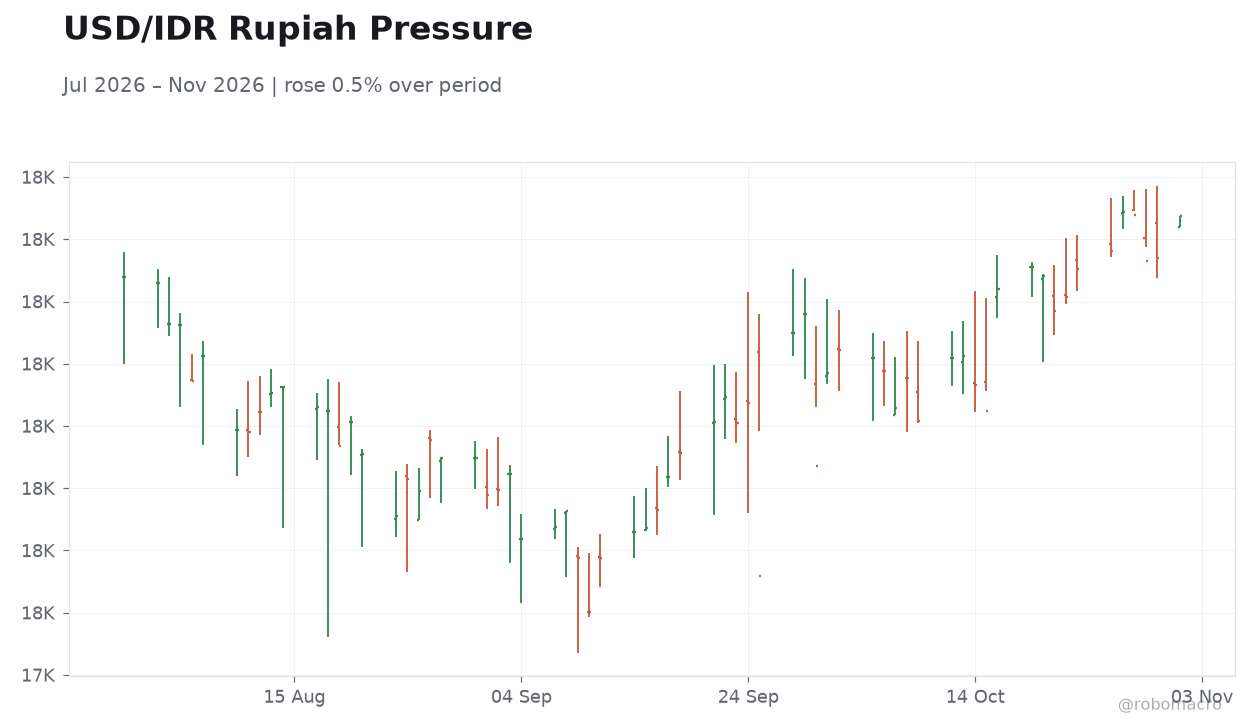
| USD/IDR | 18,138.00 | +0.37% |
| USD/THB | 33.74 | +0.07% |
| USD/MYR | 4.05 | -0.07% |
| USD/PHP | 63.68 | +0.13% |
| USD/SGD | 1.28 | -0.13% |
| Brent Crude | 113.43 | -1.26% |
| Gold | 3,898.90 | -3.29% |
| Bitcoin | 77,739.00 | +0.39% |
| Indonesia 10Y Govt Yield | - | - |
| Thailand 10Y Govt Yield | - | - |
Prior Economic Events
| Data | Prior | Cons | Actual |
|---|---|---|---|
| Central Bank Interest Rate Decision | 1 | 1 | 1 |
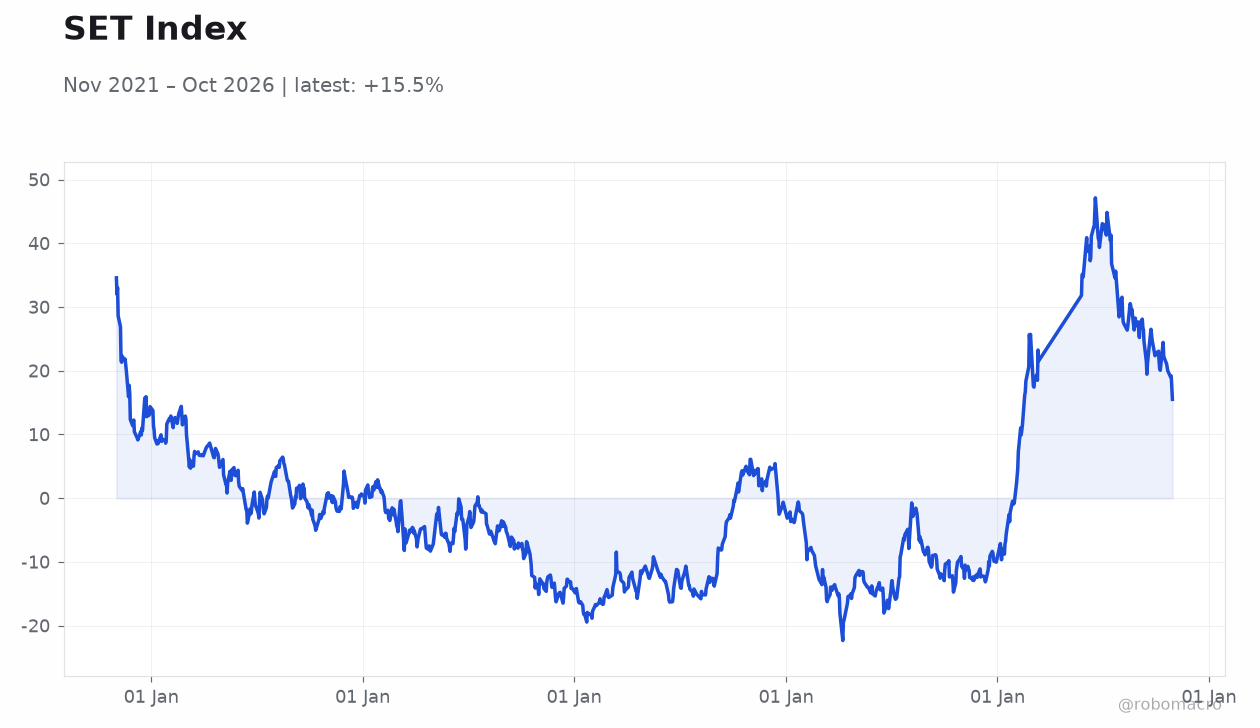
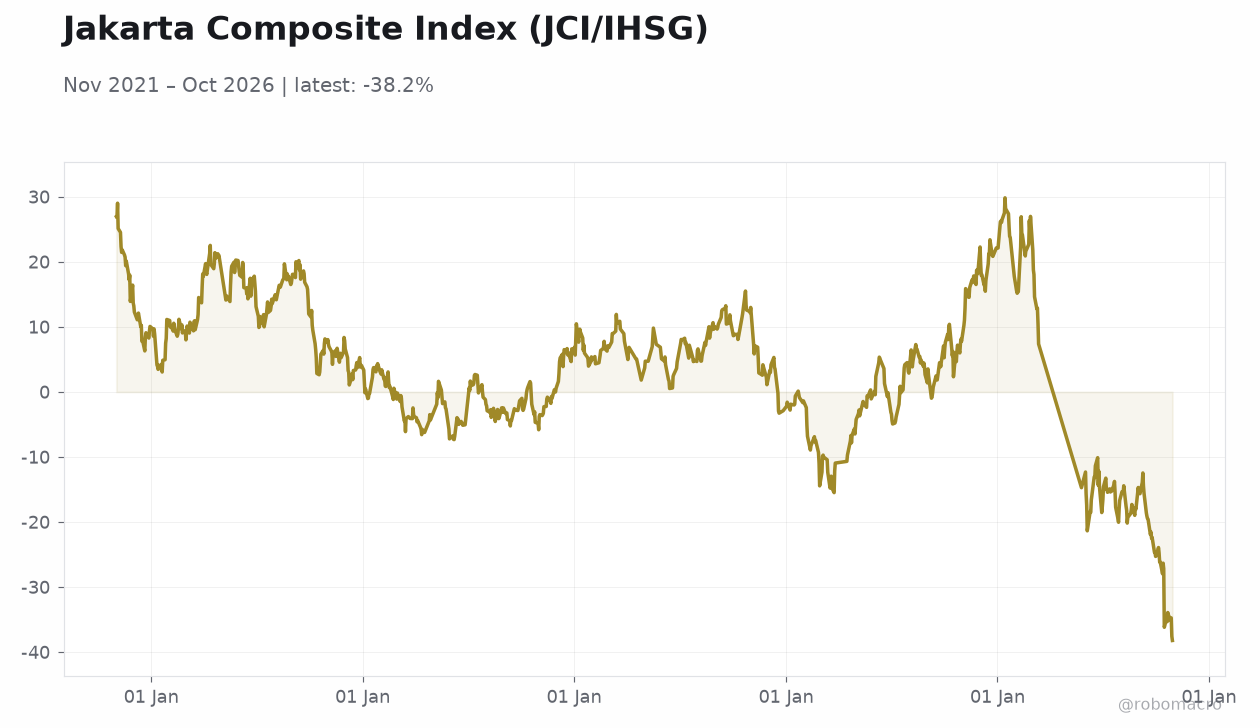 Jakarta Composite Index (JCI/IHSG) | Type: macro_line | Jakarta Composite Index (JCI/IHSG): -38.21 (2026-10-30) | Range: -38.21–29.84 | Trend(6pt): 26.94,3.274,5.349,-0.4468,-34.73,-38.21
Today's Economic Events
| Data | Prior | Cons | Time |
|---|---|---|---|
| No events available | |||
- Indonesian rupiah slides to 18,138/USD on persistent foreign outflows; JCI drops 0.80% as equity sentiment weakens.
- Bank of Thailand held its policy rate at 1.00% on 28 October, with a cautious normalisation stance keeping THB downside risks alive.
- Regional FX mixed: MYR and SGD firm modestly, PHP and THB softer; Brent down 1.26% and gold off 3.29% signal risk-off rotation.
Yesterday's Recap
The dominant ASEAN story was Indonesia, where the rupiah weakened 0.37% to 18,138/USD amid sustained foreign outflows and softer market sentiment, with the JCI shedding 0.80% to 5,057.05. Local press flagged MSCI downgrade concerns as a short-term shock, while a senior political figure warned the currency could slide toward 21,000/USD if stock-market manipulation goes unchecked — a reminder that ID equity governance risk is now feeding directly into FX. In Thailand, the Bank of Thailand's 28 October decision left the policy rate at 1.00%, in line with consensus and unchanged from the prior 1.00% setting; the baht edged 0.07% weaker to 33.74/USD.
Malaysia was the regional outperformer, with the KLCI up 0.28% to 1,615.60 and the ringgit firming 0.07% to 4.05/USD ahead of next week's BNM OPR decision. Singapore's STI slipped 0.36% to 5,376.74 while SGD strengthened 0.13% to 1.28/USD, and the Philippine peso softened 0.13% to 63.68/USD. Commodity markers reinforced the defensive tone: Brent fell 1.26% to USD113.43 and gold dropped 3.29% to USD3,898.90.
The Day Ahead
The ASEAN calendar is empty for 1 November, with no scheduled regional data releases or central bank events, and 2 November is likewise clear. Attention therefore shifts to positioning ahead of Malaysia's BNM OPR decision next week, with the ringgit expected to trade in a narrow range versus the dollar into that meeting. Indonesian markets will remain the focal point, with traders watching whether foreign outflow momentum persists and whether BI signals further FX defence.
Thai rates markets will digest the BoT hold and the curve-steepening risk flagged by sell-side commentary. Singapore traders will look through the quiet domestic calendar toward regional flow dynamics and MAS's exchange-rate stance.
Other Economic Notes
Indonesia's inflation backdrop remains contained, with CPI at 3.28% year-on-year as of September, giving BI room to prioritise currency stability over tightening. Thailand's CPI ran at 2.53% year-on-year as of August, comfortably within the BoT's tolerance band and consistent with its cautious normalisation bias. The BoT has raised growth forecasts but cautioned that the recovery remains concentrated, a theme that argues against aggressive rate normalisation.
Malaysia's stablecoin initiatives are progressing, a small but notable step in regional digital-finance infrastructure. ↓ p.2