ASEAN Macro Daily(Beta Mode)
Rupiah Slides as BI Holds, BNM Decision Eyed
Market Snapshot
| Asset | Level | Change |
|---|---|---|
| JCI | 5,057.05 | -0.80% |
| KLCI | 1,615.60 | +0.28% |
| STI | 5,376.74 | -0.36% |
| USD/IDR | 18,140.00 | +0.39% |
| USD/THB | 33.71 | -0.02% |
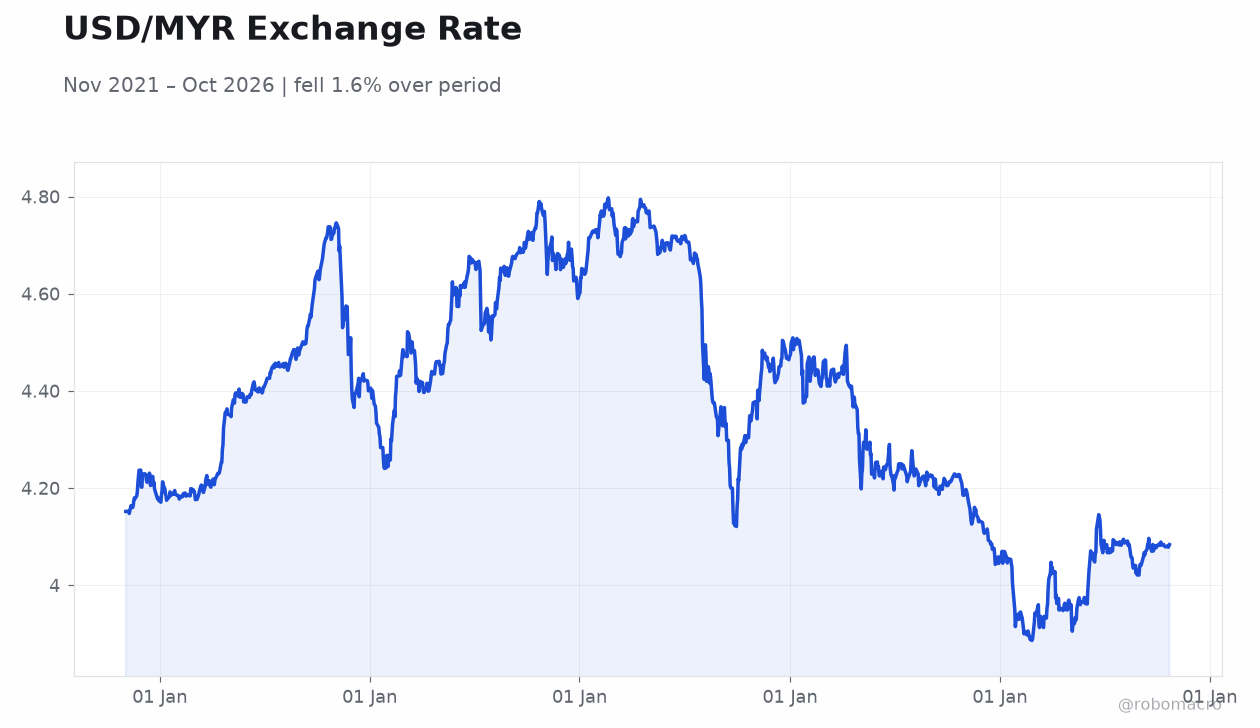
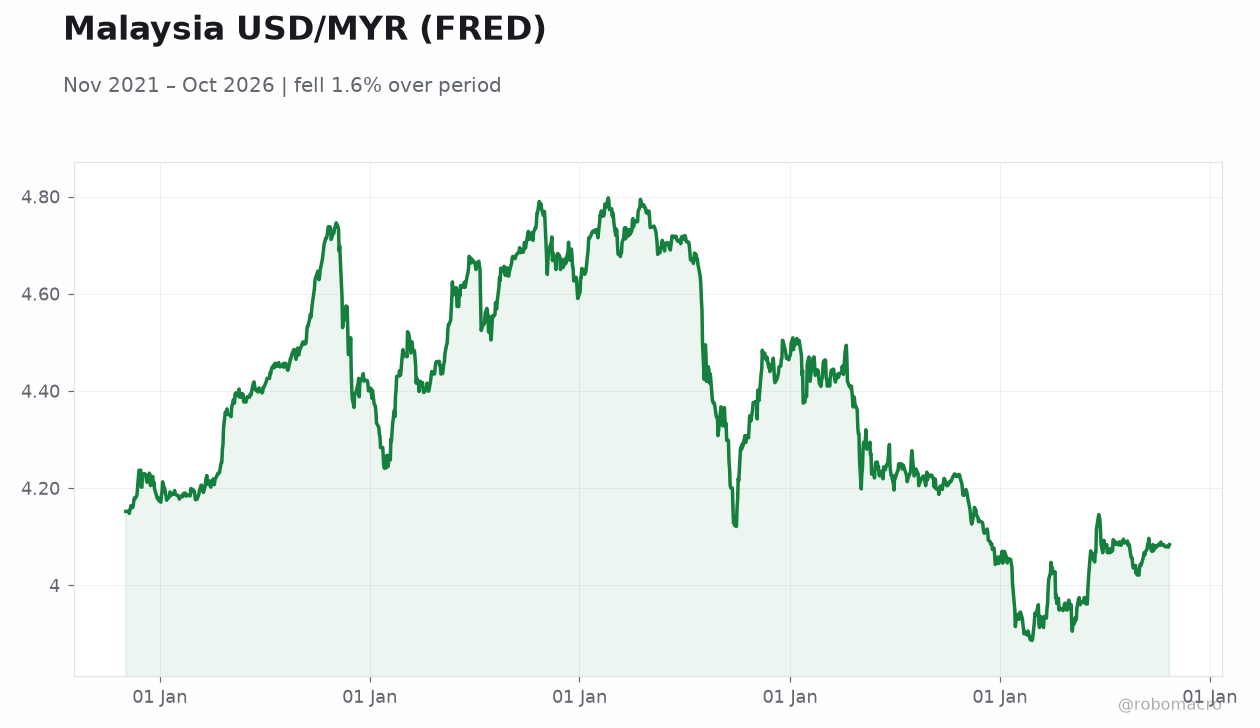
| USD/MYR | 4.07 | +0.28% |
| USD/PHP | 63.38 | -0.34% |
| USD/SGD | 1.28 | -0.07% |
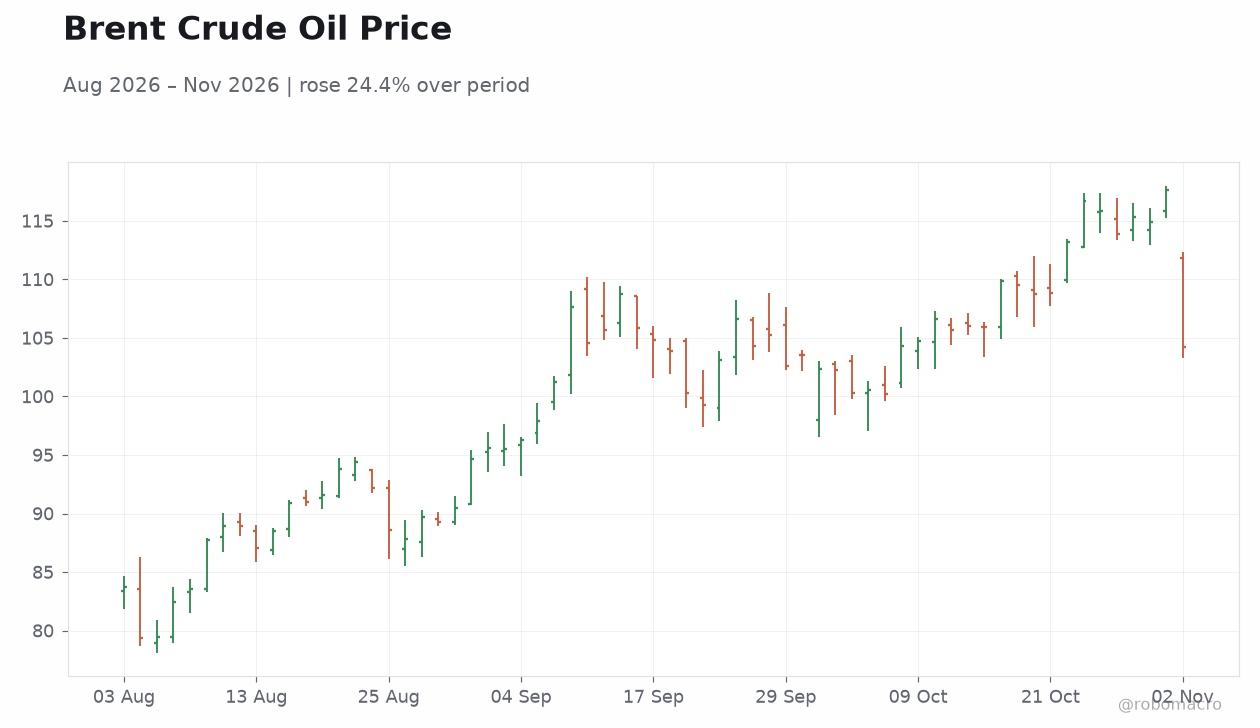
| Brent Crude | 104.23 | -11.40% |
| Gold | 3,956.60 | +1.48% |
| Bitcoin | 76,678.85 | -2.01% |
| Indonesia 10Y Govt Yield | - | - |
| Thailand 10Y Govt Yield | - | - |
Prior Economic Events
| Data | Prior | Cons | Actual |
|---|---|---|---|
| No events available | |||
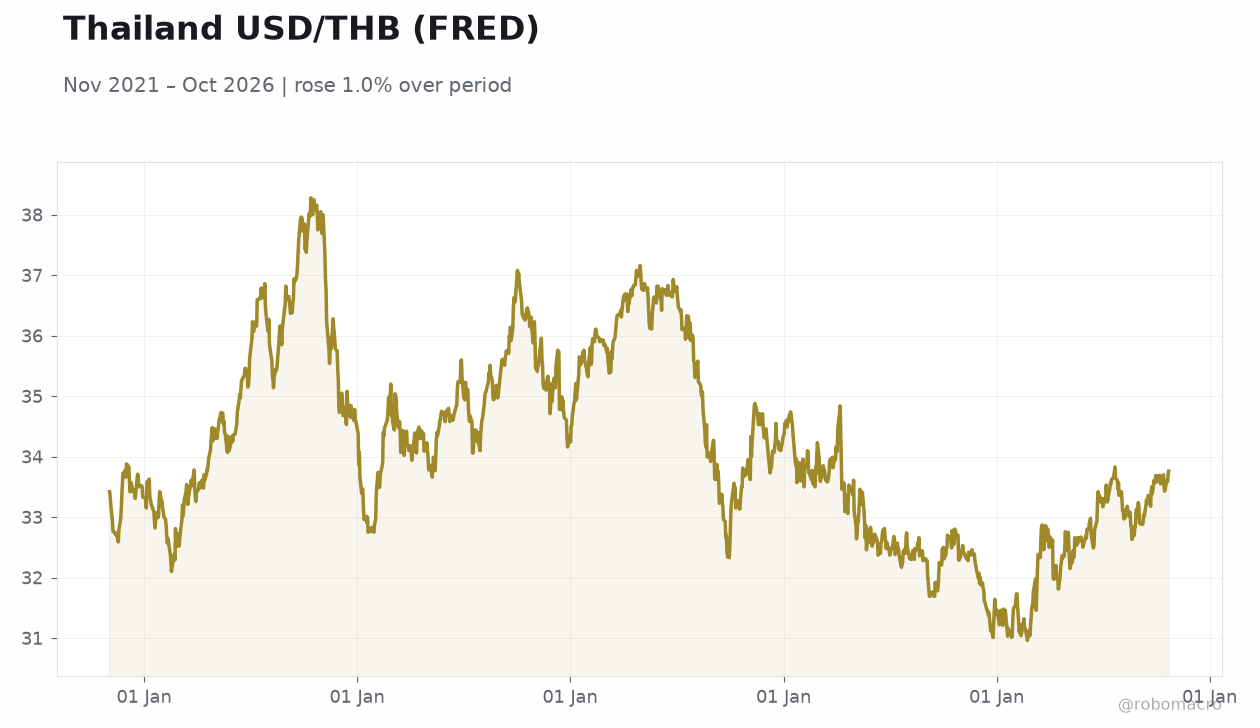 Thailand USD/THB (FRED) | Type: macro_line | Thailand USD/THB (FRED): 33.76 (2026-10-23) | Range: 30.96–38.28 | Trend(6pt): 33.42,32.96,37.01,32.43,33.59,33.76
Today's Economic Events
| Data | Prior | Cons | Time |
|---|---|---|---|
| No events available | |||
- Indonesian rupiah weakens to 18,140/USD as foreign outflows and mixed data weigh; JCI falls 0.80% to 5,057.05.
- Brent crude plunges 11.40% to $104.23, a major terms-of-trade swing for regional commodity exporters.
- BNM policy decision looms with ringgit range-bound; BoT holds at 1.00% amid cautious normalisation.
Yesterday's Recap
Indonesia dominated the ASEAN tape as the rupiah weakened 0.39% to 18,140/USD, with foreign outflows and mixed economic figures pressuring the currency despite Bank Indonesia highlighting a September trade surplus as an economic buffer. Jakarta equities followed FX lower, with the JCI shedding 0.80% to 5,057.05. Elsewhere in the region, Malaysia's KLCI edged up 0.28% to 1,615.60 as the ringgit opened firmer on expectations of policy normalisation ahead of Bank Negara's decision, though USD/MYR still drifted 0.28% higher to 4.07.
Singapore's STI slipped 0.36% to 5,376.74, and the peso firmed 0.34% to 63.38/USD even as IntelliNews flagged the Philippines and Indonesia as Asia's weakest currencies facing further rate hikes. The baht was essentially flat at 33.71/USD, with Commerzbank and DBS both noting a cautious BoT stance and persistent downside risks. Regional bond markets were quiet, with 10-year yields in Indonesia and Thailand unchanged on the day.
The Day Ahead
The ASEAN calendar is light to start the week, with no scheduled tier-one data releases across the six economies. Attention instead pivots to Malaysia, where markets are positioning for Bank Negara's overnight policy rate decision later this week, with the ringgit expected to trade in a narrow range against the dollar in the interim. Indonesian markets will continue to digest the rupiah's slide and monitor foreign flow dynamics, with BI's next policy meeting not due until November 18.
Singapore traders will watch for any MAS commentary on the NEER band as regional FX volatility persists. Thailand's focus remains on the BoT's growth-forecast upgrade and its cautious normalisation path, with no fresh data on the docket.
Other Economic Notes
The collapse in Brent crude of 11.40% to $104.23 is the dominant cross-asset theme, a sharp reversal that relieves imported inflation pressure for net energy importers like Thailand and the Philippines but squeezes Malaysia's and Indonesia's hydrocarbon revenues. Gold's 1.48% rally to $3,956.60 signals persistent risk aversion, consistent with the foreign outflows pressuring Indonesian assets. Bitcoin's 2.01% drop to 76,678.85 underscores the broader de-risking tone.
↓ p.2