Rupiah Breaches 18,000 as BI Defends, GDP Beats
7.80 Inflation Rate5.47 GDP Growth Year-over-Year2.75 Central Bank Interest5.40 Headline Unemployment Rate
JCI5,050.43+0.40%
KLCI1,616.58-1.18%
STI5,179.17-2.21%
USD/IDR18,003.50+3.00%
Market Snapshot
| Asset | Level | Change |
|---|
| JCI | 5,050.43 | +0.40% |
| KLCI | 1,616.58 | -1.18% |
| STI | 5,179.17 | -2.21% |
| USD/IDR | 18,003.50 | +3.00% |
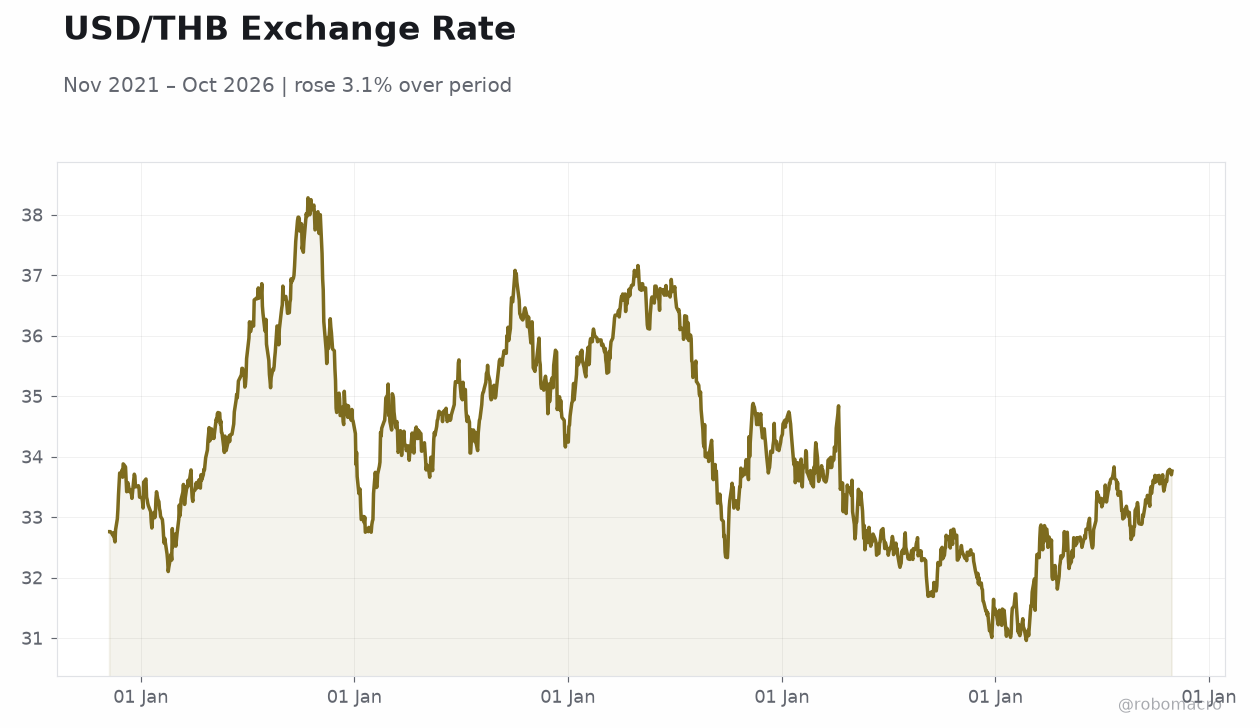
| USD/THB | 33.55 | +0.35% |
| USD/MYR | 4.06 | +0.28% |
| USD/PHP | 63.03 | +0.45% |
| USD/SGD | 1.28 | +0.35% |
| Brent Crude | 98.32 | +0.03% |
| Gold | 4,074.90 | -0.94% |
| Bitcoin | 74,356.80 | -1.84% |
| Indonesia 10Y Govt Yield | - | - |
| Thailand 10Y Govt Yield | - | - |
Prior Economic Events
| Data |
Prior |
Cons |
Actual |
| Inflation Rate Year-over-Year | 7.20 | 7.60 | 7.80 |
| GDP Growth Year-over-Year | 5.29 | 5.20 | 5.47 |
| Central Bank Interest Rate Decision | 2.75 | 2.75 | 2.75 |
| Headline Unemployment Rate | 5.30 | - | 5.40 |
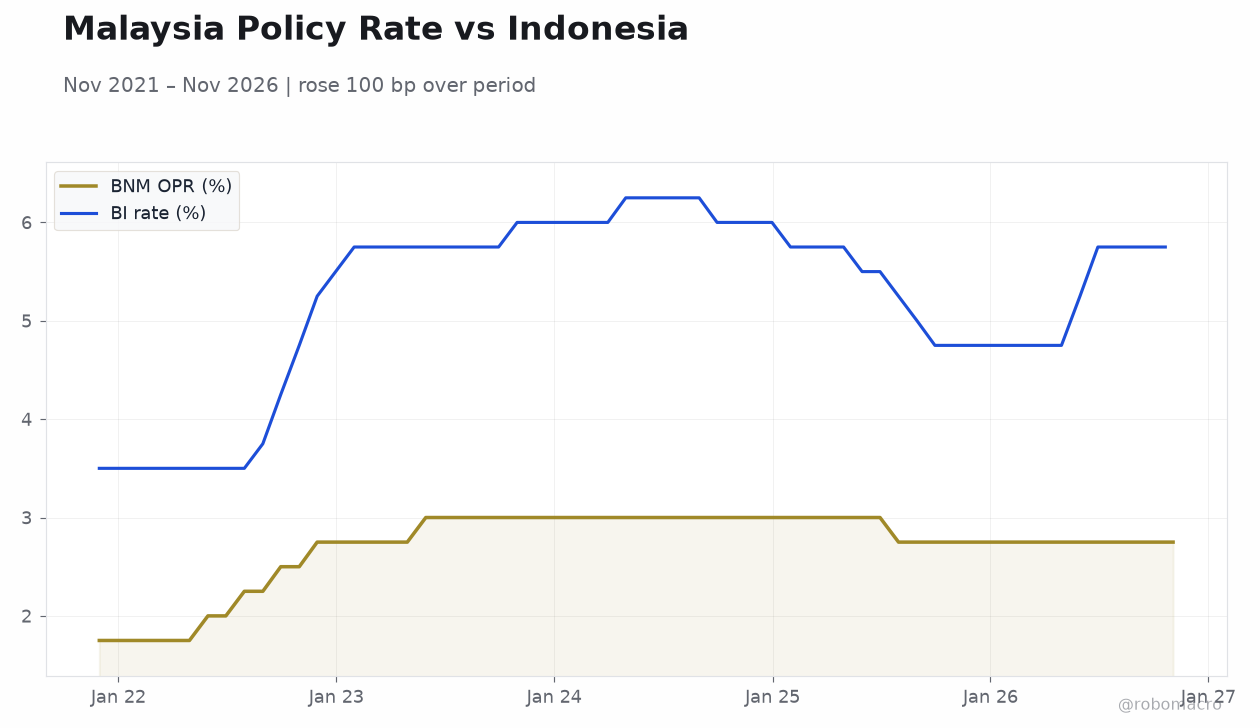 Malaysia Policy Rate vs Indonesia | Type: macro_line | BNM OPR (%): 2.75 (2026-11-03) | Range: 1.75–3 | Trend(5pt): 1.75,2.75,3,2.75,2.75 | BI rate (%): 5.75 (2026-10-21) | Range: 3.5–6.25 | Trend(5pt): 3.5,5.75,6.25,5,5.75
Today's Economic Events
| Data |
Prior |
Cons |
Time |
| No events available |
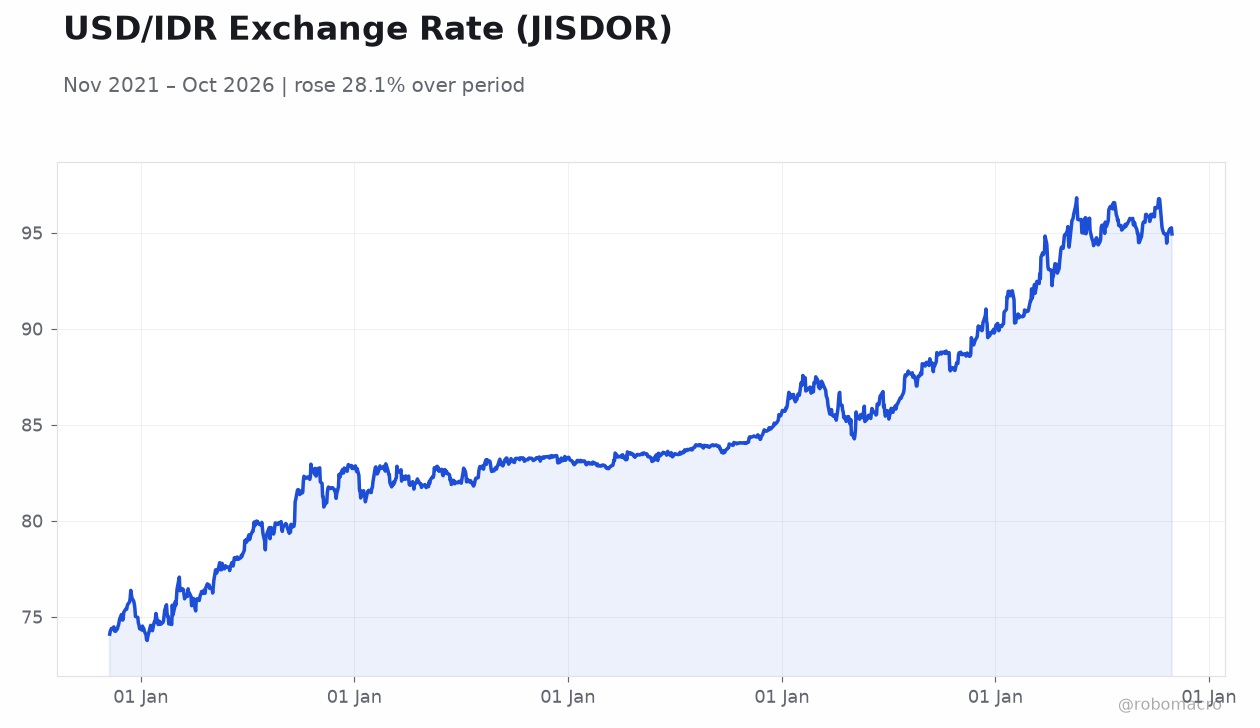
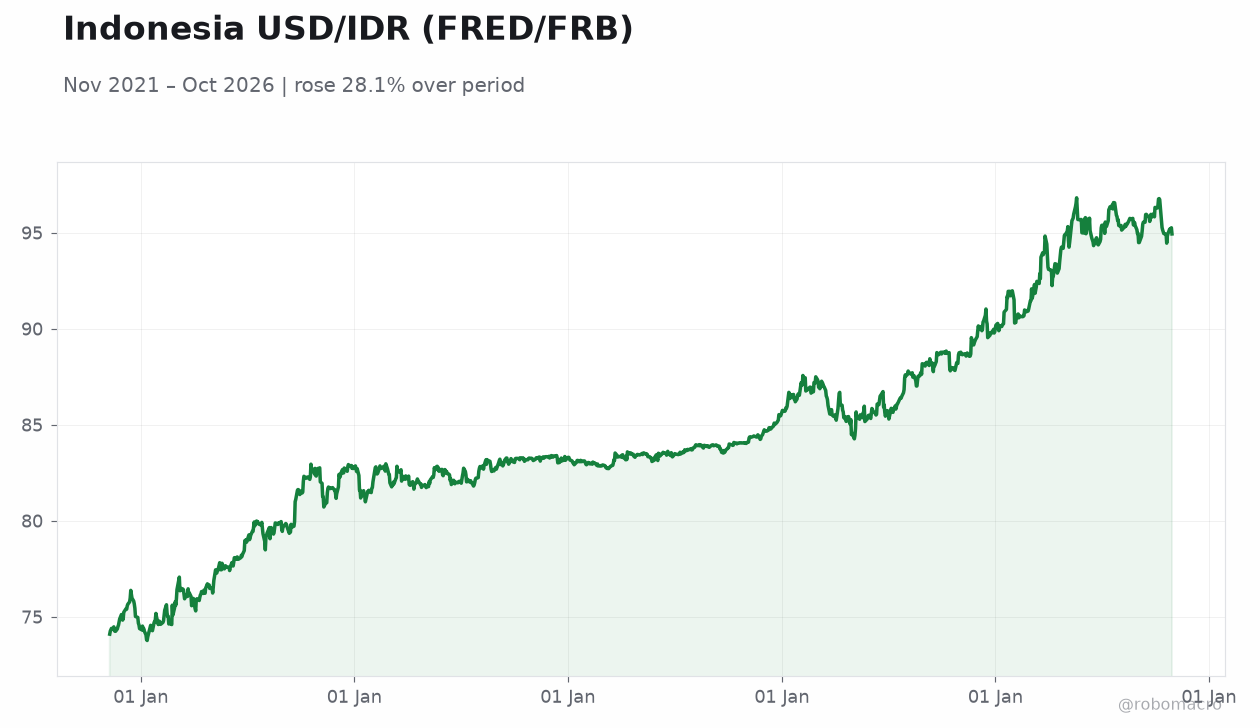
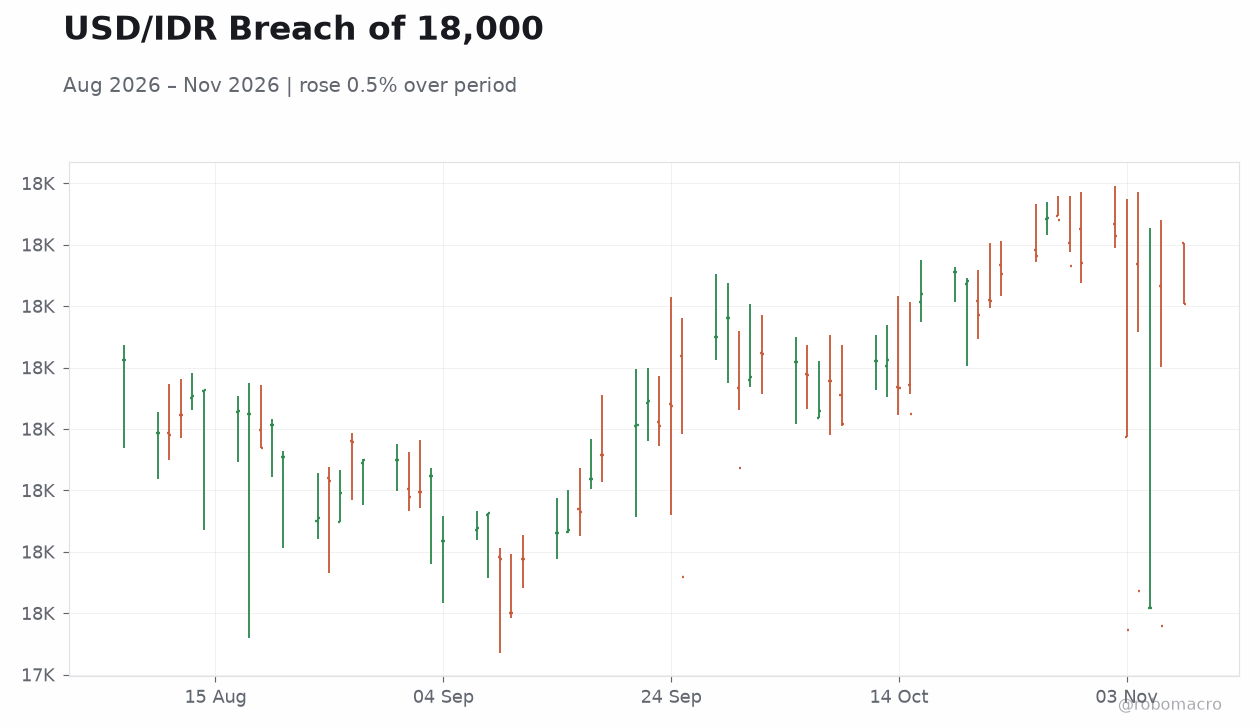
- Indonesia's Q3 GDP grew 5.47% y/y, beating the 5.2% consensus, but the rupiah slumped 3.00% to 18,003.50/USD — a headline-grabbing breach of the 18,000 level that has BI on intervention footing.
- Philippine October inflation accelerated to 7.8% y/y (consensus 7.6%, prior 7.2%), keeping BSP firmly in tightening mode even as unemployment ticked up to 5.4%.
- BNM held the OPR at 2.75% as expected; the ringgit firmed post-decision, though regional risk-off dragged KLCI down 1.18% and STI 2.21%.
Yesterday's Recap
Indonesia's statistics agency reported Q3 GDP growth of 5.47% y/y, comfortably above the 5.2% consensus and up from the prior 5.29%, driven by net exports of goods and services and steady household spending — yet the celebratory print was overshadowed by a sharp currency move. The rupiah weakened 3.00% to 18,003.50/USD, breaching the psychologically important 18,000 mark and forcing Bank Indonesia into defensive FX operations; local press framed the slide around oil prices near $98/bbl Brent and pending US data. In Manila, October inflation printed at 7.8% y/y versus consensus of 7.6% and a prior 7.2%, an acceleration that keeps price pressures entrenched, while the headline unemployment rate edged up to 5.4% from 5.3%.
Malaysia's BNM held its policy rate at 2.75% on November 5, as universally expected, and the ringgit subsequently strengthened against the dollar per local coverage — though the currency still closed 0.28% weaker at 4.06/USD on the day. Regional equities were broadly risk-off: KLCI fell 1.18% to 1,616.58 and Singapore's STI dropped 2.21% to 5,179.17, while Jakarta's JCI bucked the trend with a 0.40% gain to 5,050.43. Other ASEAN FX pairs drifted weaker against a firm dollar — USD/THB at 33.55 (+0.35%), USD/PHP at 63.03 (+0.45%), USD/SGD at 1.28 (+0.35%).
Gold slipped 0.94% to $4,074.90/oz and Bitcoin fell 1.84% to $74,356.80, signalling a broader de-risking tone.
The Day Ahead
The ASEAN calendar is empty for today and tomorrow, leaving markets to digest yesterday's heavy data slate and position ahead of Indonesia's November 18 BI meeting. With no regional prints scheduled, attention shifts to offshore drivers — US data and oil price action — which local desks flagged as the proximate pressure points for the rupiah. Singapore and Malaysian markets will trade on external cues, with the ringgit's post-BNM trajectory and the STI's sharp pullback the key levels to watch.
Thailand's October CPI reading of 3.9% (per local media) remains in focus as traders assess whether BoT's 1.00% policy setting stays appropriate. Expect thin liquidity and headline-driven FX volatility, particularly in IDR, absent fresh domestic catalysts.
Page 1
Never miss an issue
Subscribe to ASEAN Macro Daily and get each new issue delivered to your inbox.
Already a member? Visit robomacro.com
to log in and manage subscriptions, or use Forgot Password to set a password.