ASEAN Macro Daily(Beta Mode)
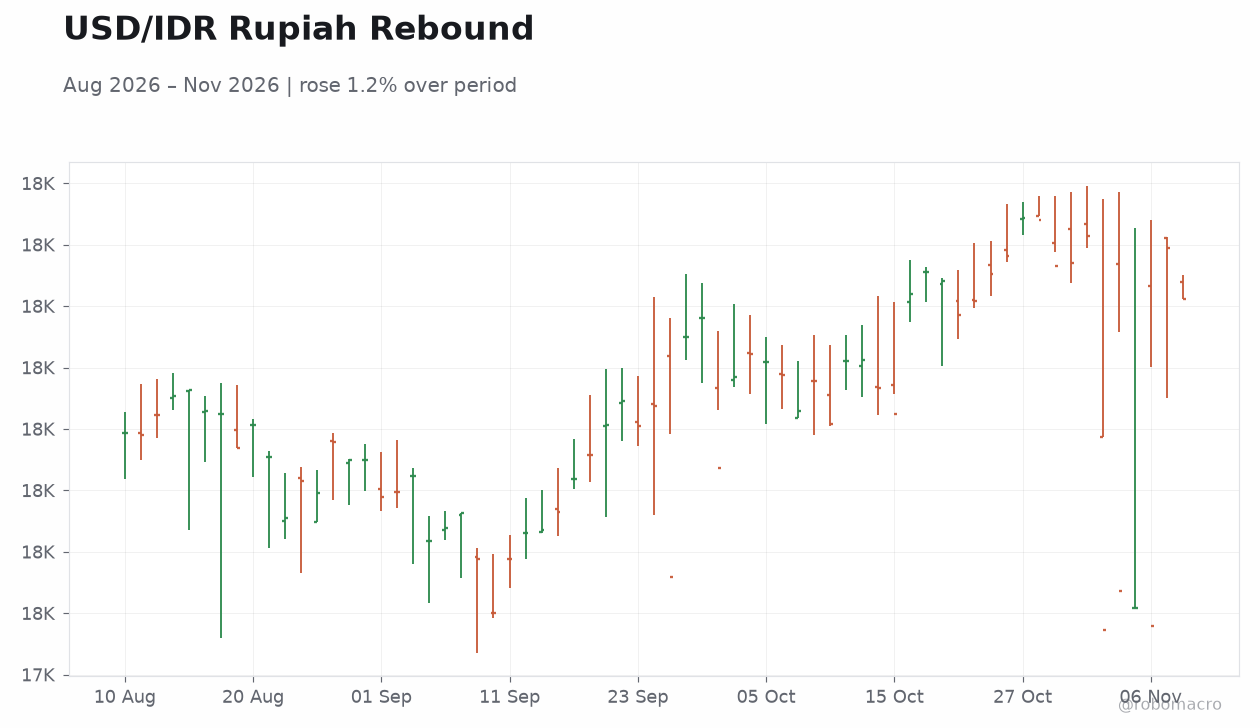
Rupiah Rebounds as Regional Equities Slide
Market Snapshot
| Asset | Level | Change |
|---|---|---|
| JCI | 5,073.77 | +0.46% |
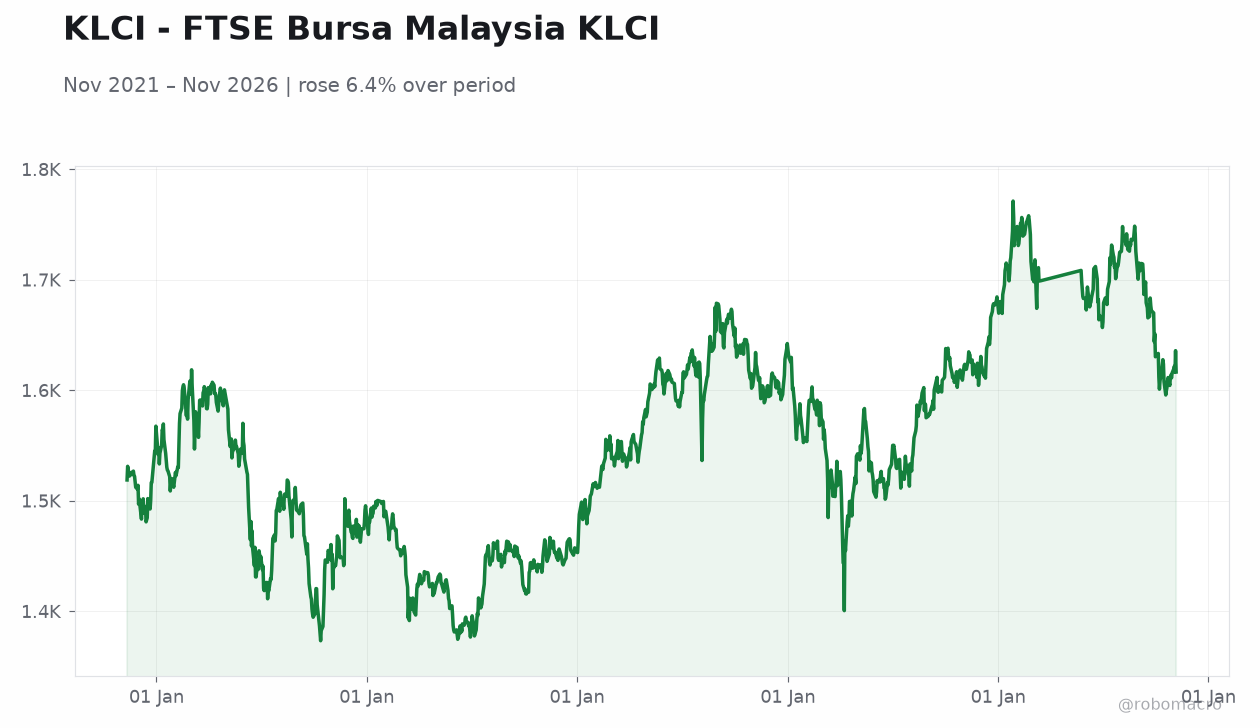
| KLCI | 1,616.58 | -1.18% |
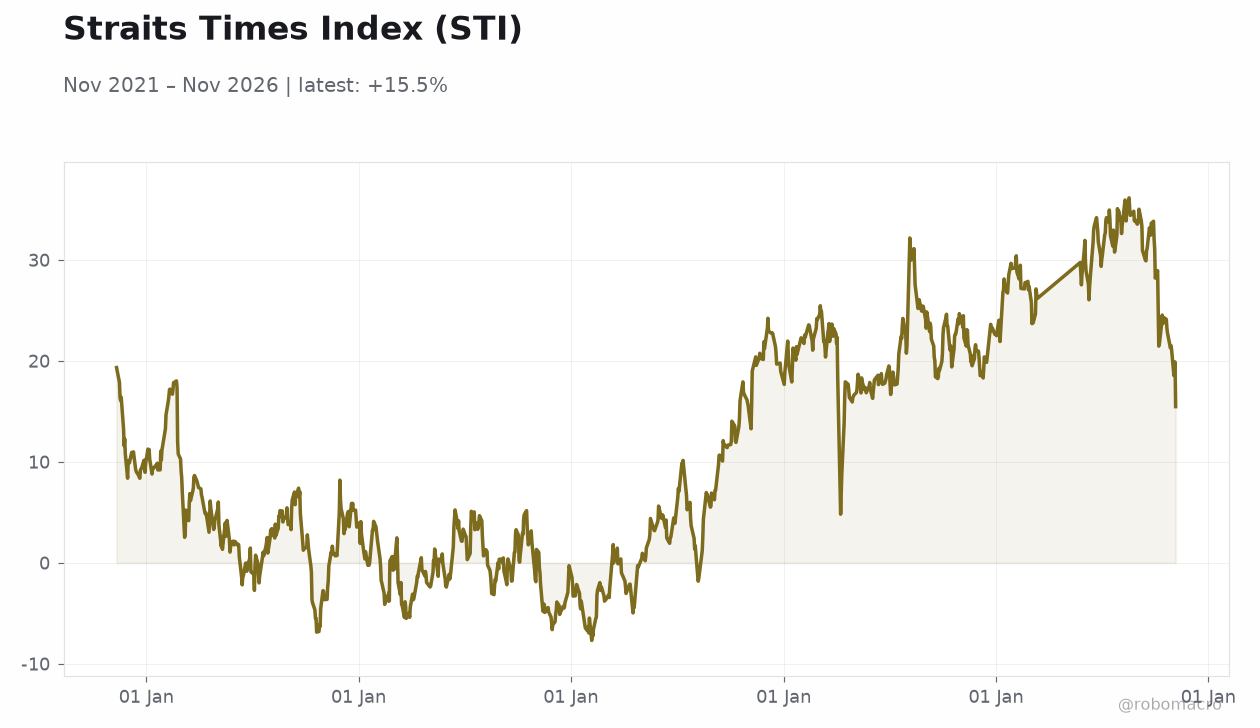
| STI | 5,179.17 | -2.21% |
| USD/IDR | 18,012.00 | -0.46% |
| USD/THB | 33.60 | +0.22% |
| USD/MYR | 4.05 | -0.12% |
| USD/PHP | 63.06 | +0.06% |
| USD/SGD | 1.28 | -0.11% |
| Brent Crude | 92.06 | -0.55% |
| Gold | 4,040.50 | -1.80% |
| Bitcoin | 73,805.58 | -1.88% |
| Indonesia 10Y Govt Yield | - | - |
| Thailand 10Y Govt Yield | - | - |
Prior Economic Events
| Data | Prior | Cons | Actual |
|---|---|---|---|
| No events available | |||
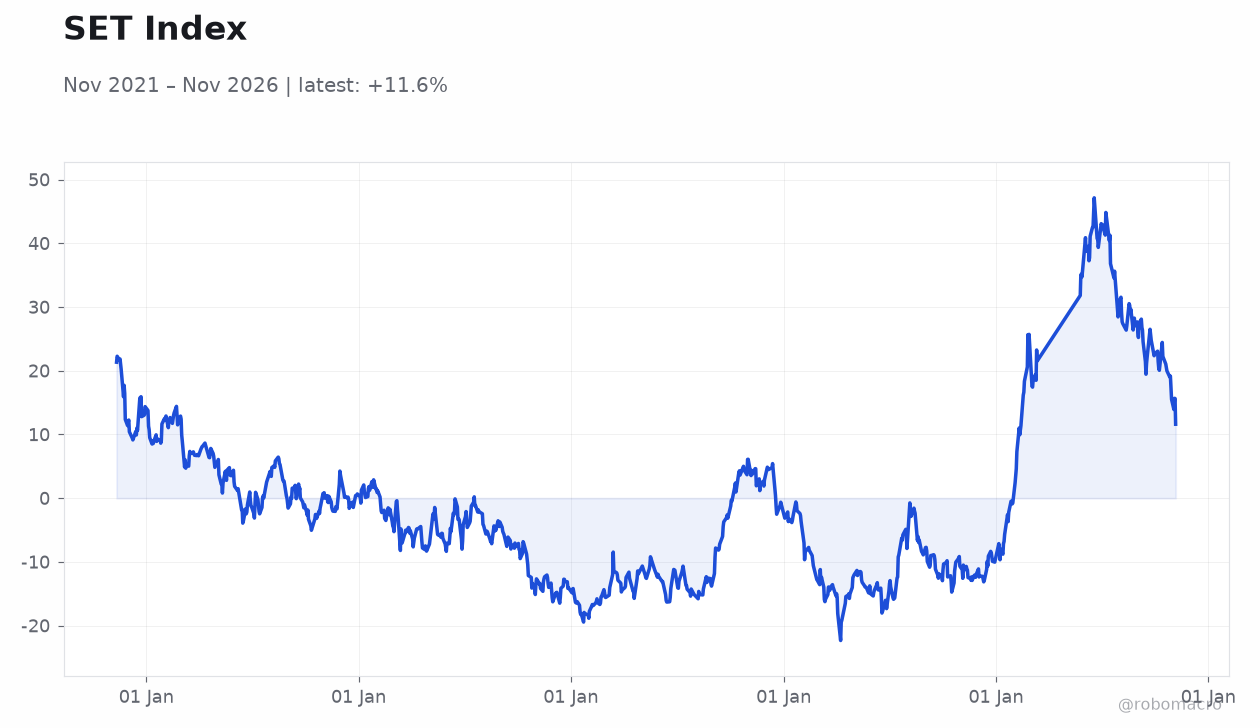
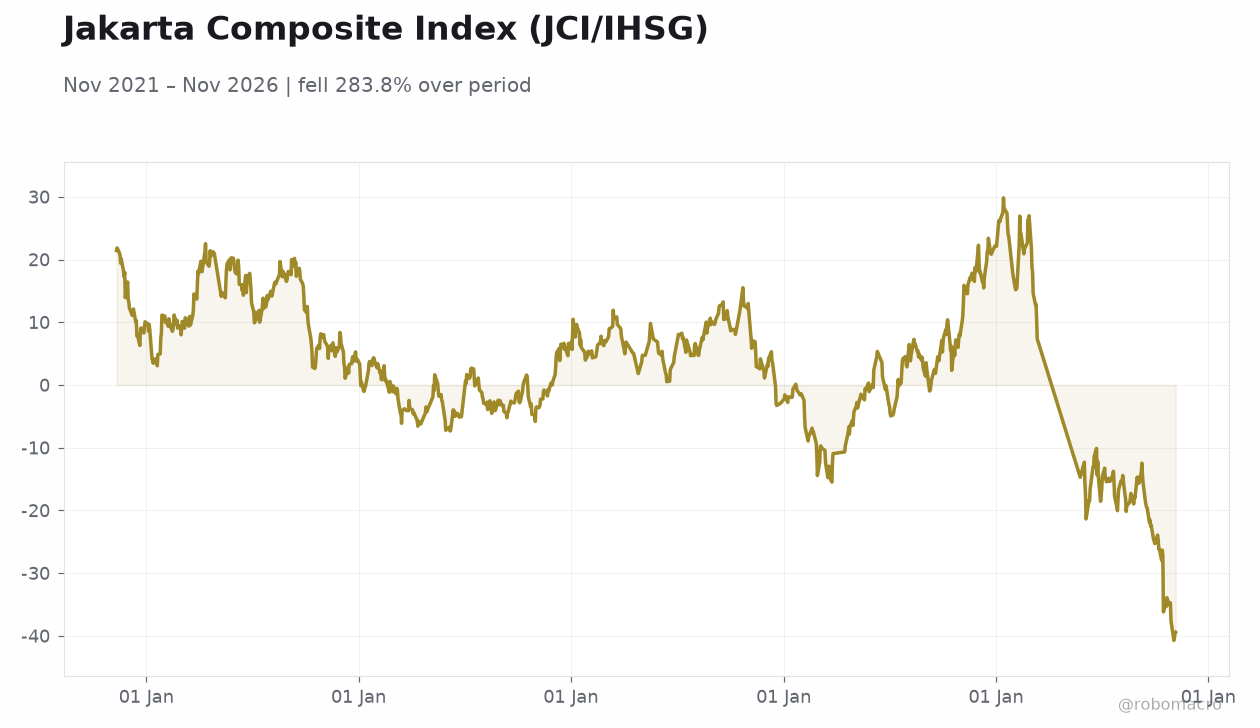 Jakarta Composite Index (JCI/IHSG) | Type: macro_line | Jakarta Composite Index (JCI/IHSG): -39.42 (2026-11-06) | Range: -40.73–29.84 | Trend(5pt): 21.45,3.296,5.053,4.188,-39.42
Today's Economic Events
| Data | Prior | Cons | Time |
|---|---|---|---|
| No events available | |||
- USD/IDR retreated 0.46% to 18,012 as softer Brent crude ($92.06, -0.55%) and a broad safe-haven selloff eased pressure on the rupiah, even as Jakarta's JCI bucked the regional trend with a 0.46% gain.
- Regional equity markets diverged sharply: Singapore's STI fell 2.21% and Malaysia's KLCI dropped 1.18%, while Thailand's baht weakened 0.22% to 33.60 despite the BoT's hold at 1.00%.
- The Philippine economy unexpectedly slowed, intensifying pressure on the Marcos administration and testing the BSP's policy stance, with USD/PHP edging up 0.06% to 63.06.
Yesterday's Recap
Indonesia dominated the ASEAN macro tape, with the rupiah strengthening 0.46% to 18,012 per dollar as softer crude prices and a regional risk-on tone weighed on the greenback. Jakarta's JCI defied the broader regional selloff, gaining 0.46% to 5,073.77, though the equity move contrasted with news flow flagging regional tensions and earlier rupiah weakness. Elsewhere, Singapore's STI slumped 2.21% to 5,179.17 and Malaysia's KLCI fell 1.18% to 1,616.58, with the ringgit opening marginally higher against the dollar after the Deepavali holiday and trading at 4.05 (-0.12%).
Thailand's baht softened 0.22% to 33.60 following the Bank of Thailand's decision to hold its policy rate at 1.00% at the 28 October meeting. The Philippine peso was little changed at 63.06 (+0.06%) as news emerged that the Philippine economy unexpectedly slowed, pressuring President Marcos and testing the central bank. On the data front, Indonesia's poverty rate fell to 8.07%, a modest positive for consumption dynamics, while Thai economic activity improved in September on exports and private investment.
No scheduled calendar releases printed yesterday.
The Day Ahead
The ASEAN calendar is empty for today, leaving markets to trade off external cues and residual positioning from yesterday's equity selloff. Attention will centre on US inflation data later in the week, which Malaysian FX desks have flagged as the key catalyst for the ringgit's push toward the RM4.00 level by year-end. Singapore's MAS will be watched for any signal on the NEER band as the STI's 2.21% slide raises questions about regional risk appetite.
Indonesia's bond market will be in focus after the rupiah's rebound, with the 10-year yield direction setting the tone for BI's 18 November meeting. Thailand's cyber-defence tightening order to banks is unlikely to move rates but bears monitoring for operational risk in the financial sector.
Other Economic Notes
Indonesia's structural story remains in focus, with op-eds highlighting the industrialization imperative in a fragmenting global economy and pension reform as a foundation for long-term stability, with the central bank holding a stake in the outcome. ↓ p.2