ASEAN Macro Daily(Beta Mode)
Rupiah Slips, Regional Equities Diverge
Market Snapshot
| Asset | Level | Change |
|---|---|---|
| JCI | 5,125.73 | +1.02% |
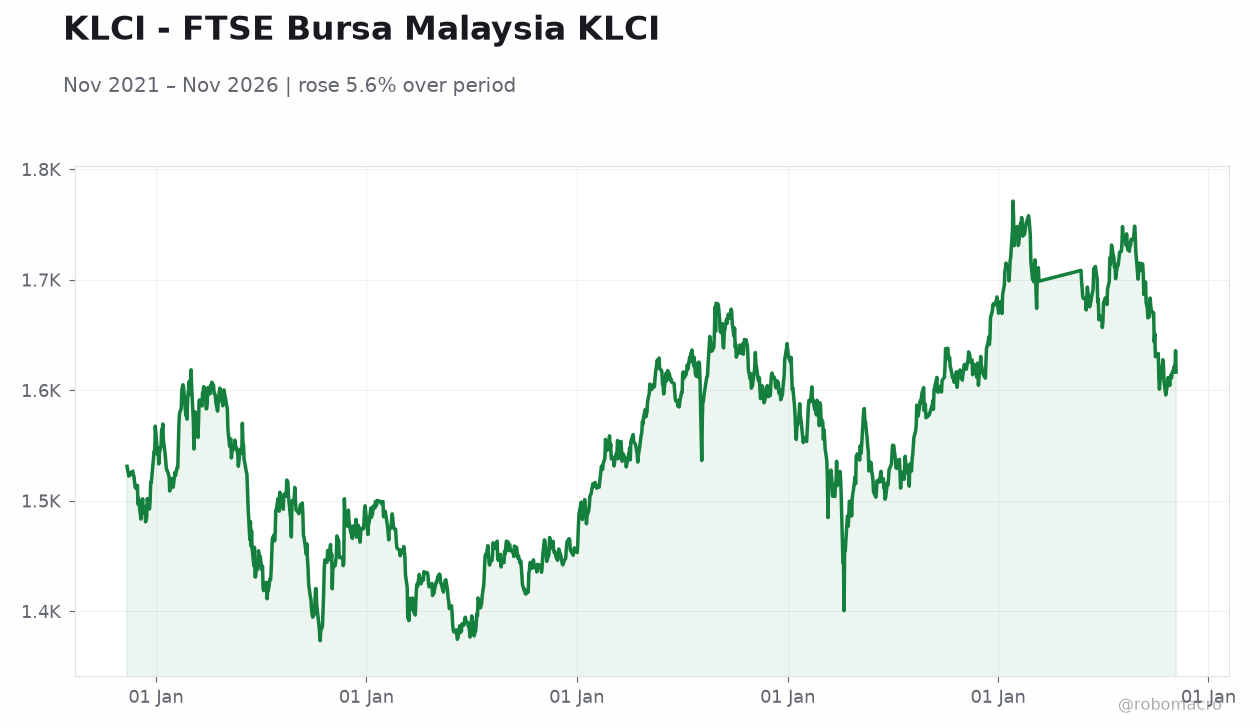
| KLCI | 1,604.07 | -0.77% |
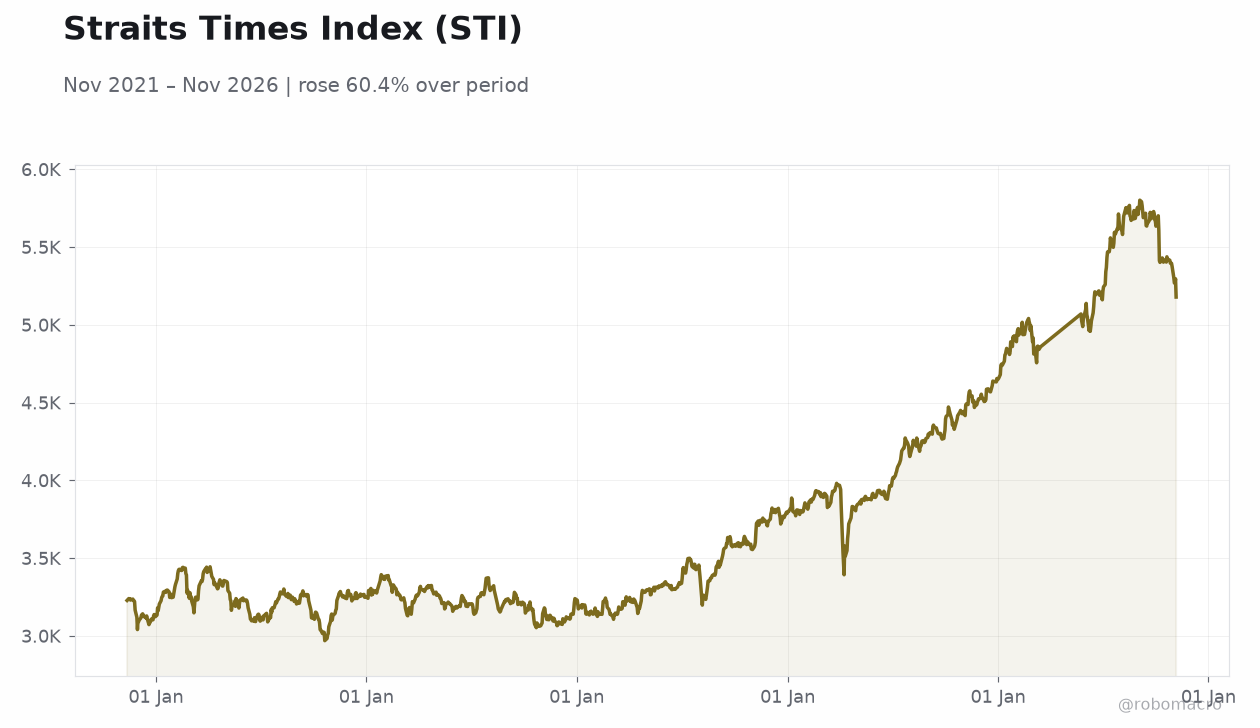
| STI | 5,258.59 | +1.53% |
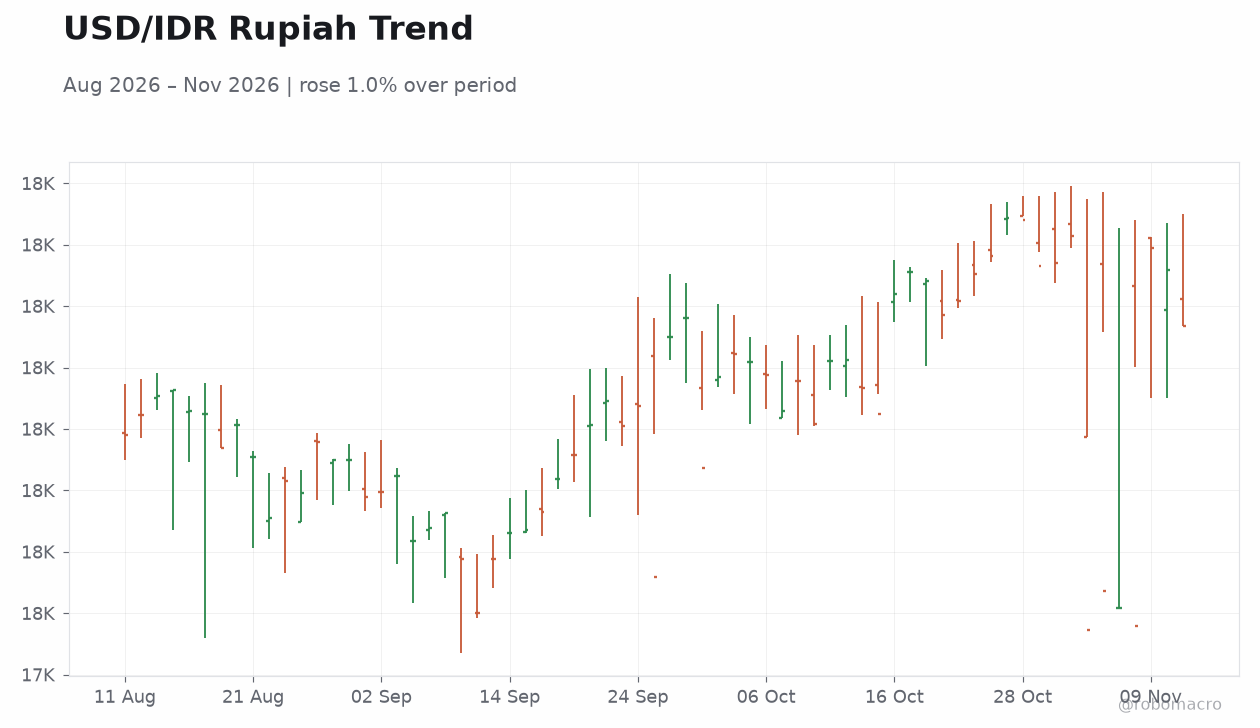
| USD/IDR | 17,968.00 | -0.50% |
| USD/THB | 33.73 | +1.02% |
| USD/MYR | 4.07 | +0.36% |
| USD/PHP | 63.28 | +0.55% |
| USD/SGD | 1.28 | +0.33% |
| Brent Crude | 92.63 | +1.25% |
| Gold | 3,994.30 | -0.89% |
| Bitcoin | 74,437.25 | +0.97% |
| Indonesia 10Y Govt Yield | - | - |
| Thailand 10Y Govt Yield | - | - |
Prior Economic Events
| Data | Prior | Cons | Actual |
|---|---|---|---|
| No events available | |||
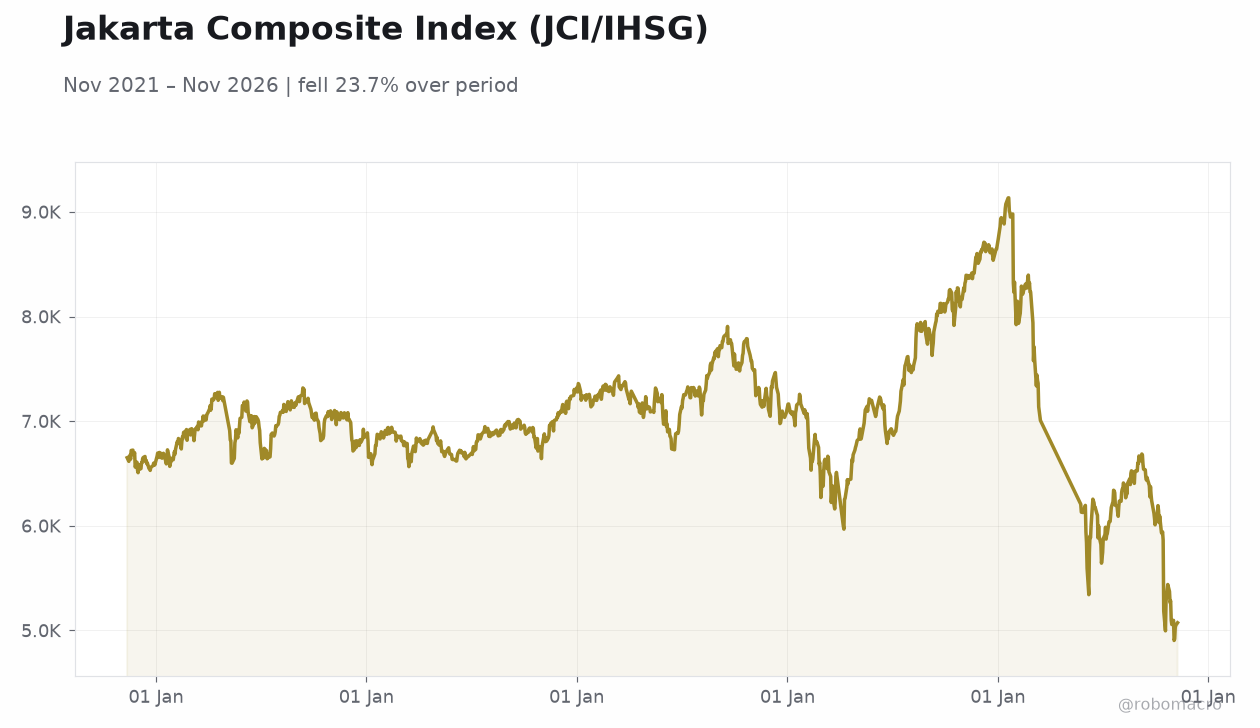 Jakarta Composite Index (JCI/IHSG) | Type: macro_line | Jakarta Composite Index (JCI/IHSG): 5074 (2026-11-09) | Range: 4904–9135 | Trend(5pt): 6651,6630,7205,6881,5074
Today's Economic Events
| Data | Prior | Cons | Time |
|---|---|---|---|
| No events available | |||
- Indonesian rupiah weakens past 17,900/USD as domestic political noise and MSCI review caution offset softer crude; JCI nonetheless rallies 1.02%.
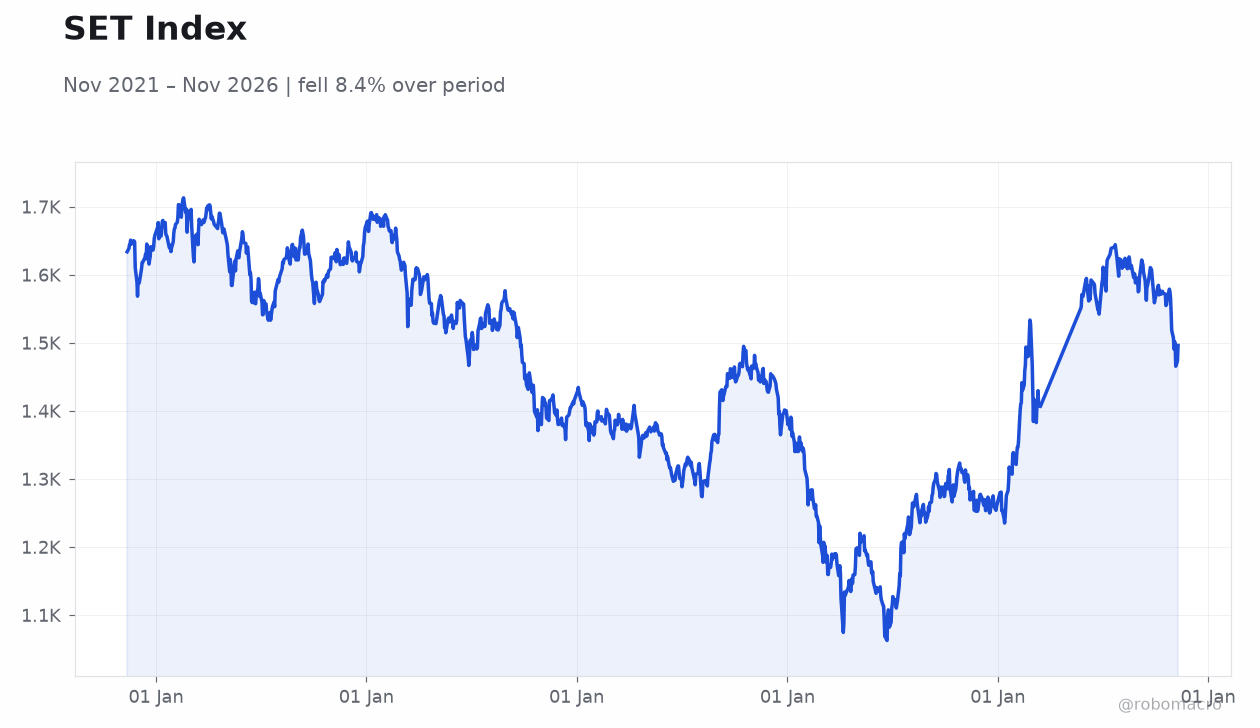
- Singapore STI outperforms (+1.53%) while Kuala Lumpur lags (-0.77%); Thai baht softens 1.02% to 33.73 despite improving September activity data.
- BI holds at 5.75% ahead of its 18 November meeting; BoT steady at 1.00% with 2027 inflation seen briefly negative, keeping easing bias alive.
Yesterday's Recap
Indonesian markets delivered a split signal on Tuesday: the JCI advanced 1.02% to 5,125.73 even as USD/IDR pushed to 17,968, a 0.50% rupiah decline, with political instability headlines and pre-positioning ahead of the MSCI review weighing on sentiment. Thai data showed activity improved in September on exports and private investment, yet the baht weakened 1.02% to 33.73/USD, suggesting external flows rather than fundamentals drove the move. Malaysia's KLCI fell 0.77% to 1,604.07 while the ringgit opened marginally firmer post-Deepavali, with USD/MYR at 4.07 (+0.36%).
Singapore was the regional standout, the STI gaining 1.53% to 5,258.59 as the financial hub benefited from regional rotation; USD/SGD edged up 0.33% to 1.28. The Philippine peso softened 0.55% to 63.28 amid a deeper economic slump testing Manila's policy credibility. Brent crude rose 1.25% to $92.63, a level that ordinarily pressures the rupiah, making its decline more notable.
The Day Ahead
The calendar is light, leaving markets to trade off positioning and external cues. Indonesia's MSCI review results are the key domestic catalyst, with investors wary of index-weight implications for the rupiah and equity flows. Malaysia's ringgit will take its direction from US inflation data due later in the global session, a print that could reset dollar sentiment across ASEAN.
Singapore and Thailand have no scheduled top-tier releases, so SGD and THB will track regional FX and oil. Philippine markets remain focused on whether authorities signal further support after the growth slump. Vietnam's SBV liquidity operations warrant monitoring after reported dollar buying.
Other Economic Notes
Indonesia's fiscal credibility is under scrutiny, with questions over revenue mobilization and subsidy burdens framing the 2027 budget debate. Food-sector inflation remains a political sensitivity in Indonesia, where CPI is running at 3.23% year-on-year, within BI's target band but with volatile food components stinging households. Thailand's September improvement was export- and investment-led, but UBS expects capital investment and a stronger baht to drive 2027 growth — a mix that complicates the export outlook.
↓ p.2