ASEAN Macro Daily(Beta Mode)
Rupiah Hits Record Low as JCI Defies FX Stress
Market Snapshot
| Asset | Level | Change |
|---|---|---|
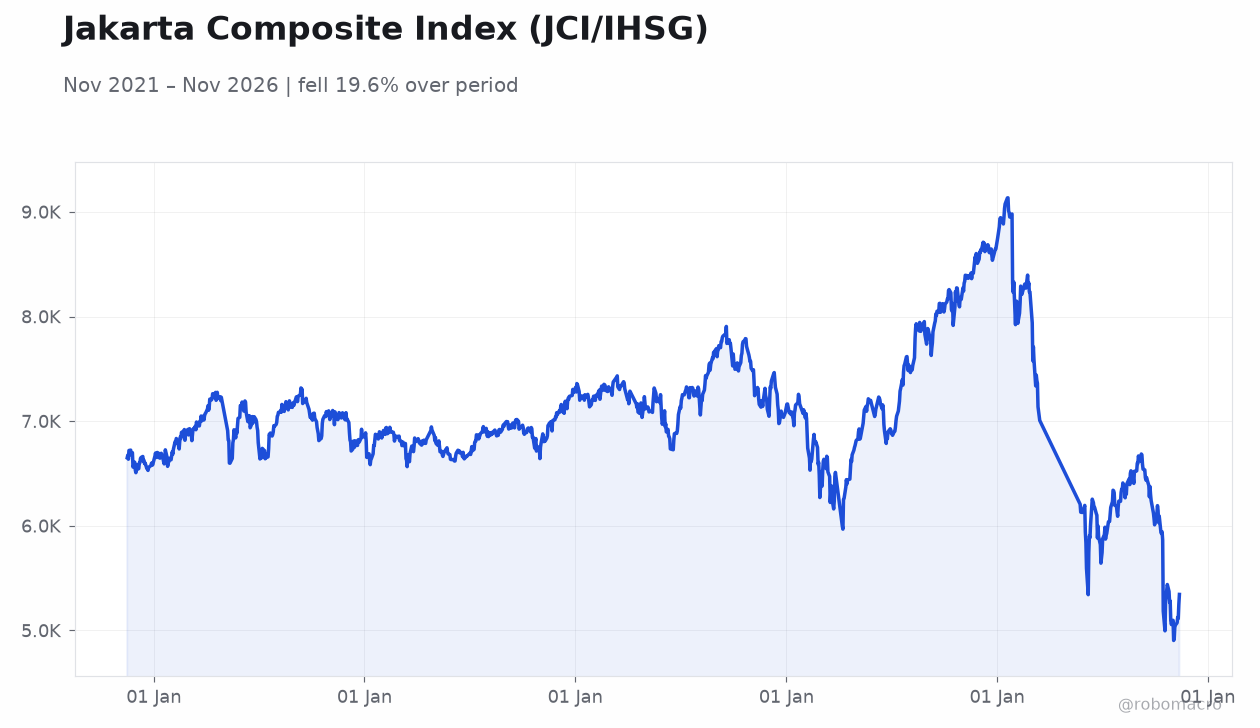
| JCI | 5,344.41 | +1.78% |
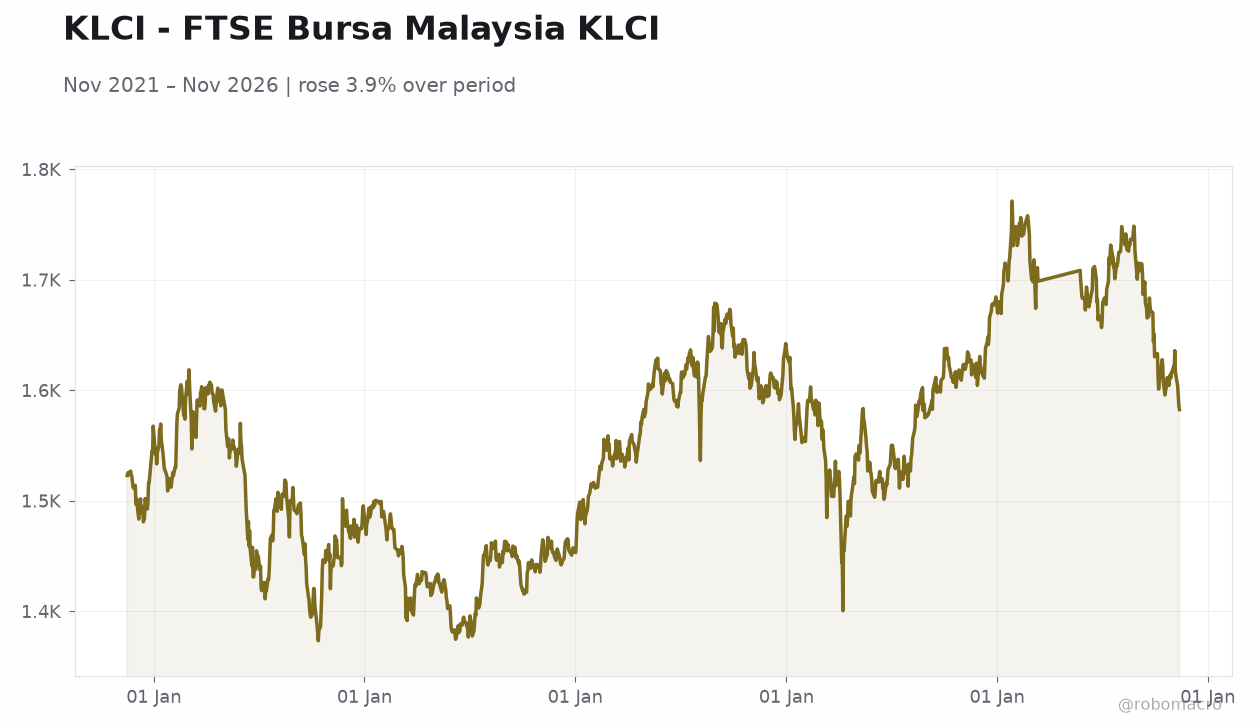
| KLCI | 1,582.59 | -0.21% |
| STI | 5,231.84 | -0.96% |
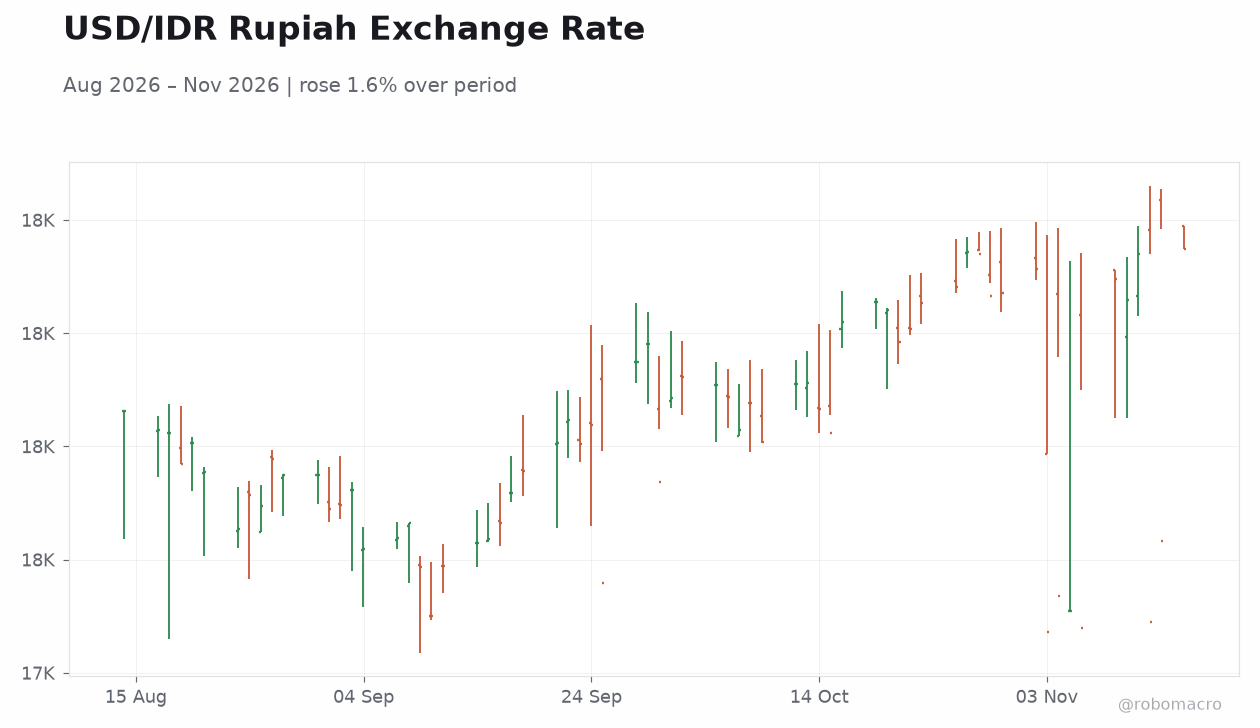
| USD/IDR | 18,149.00 | +2.93% |
| USD/THB | 33.84 | -0.03% |
| USD/MYR | 4.09 | +0.19% |
| USD/PHP | 63.75 | +1.24% |
| USD/SGD | 1.29 | -0.07% |
| Brent Crude | 95.84 | +0.02% |
| Gold | 3,886.30 | +0.03% |
| Bitcoin | 65,173.58 | +1.63% |
| Indonesia 10Y Govt Yield | - | - |
| Thailand 10Y Govt Yield | - | - |
Prior Economic Events
| Data | Prior | Cons | Actual |
|---|---|---|---|
| No events available | |||
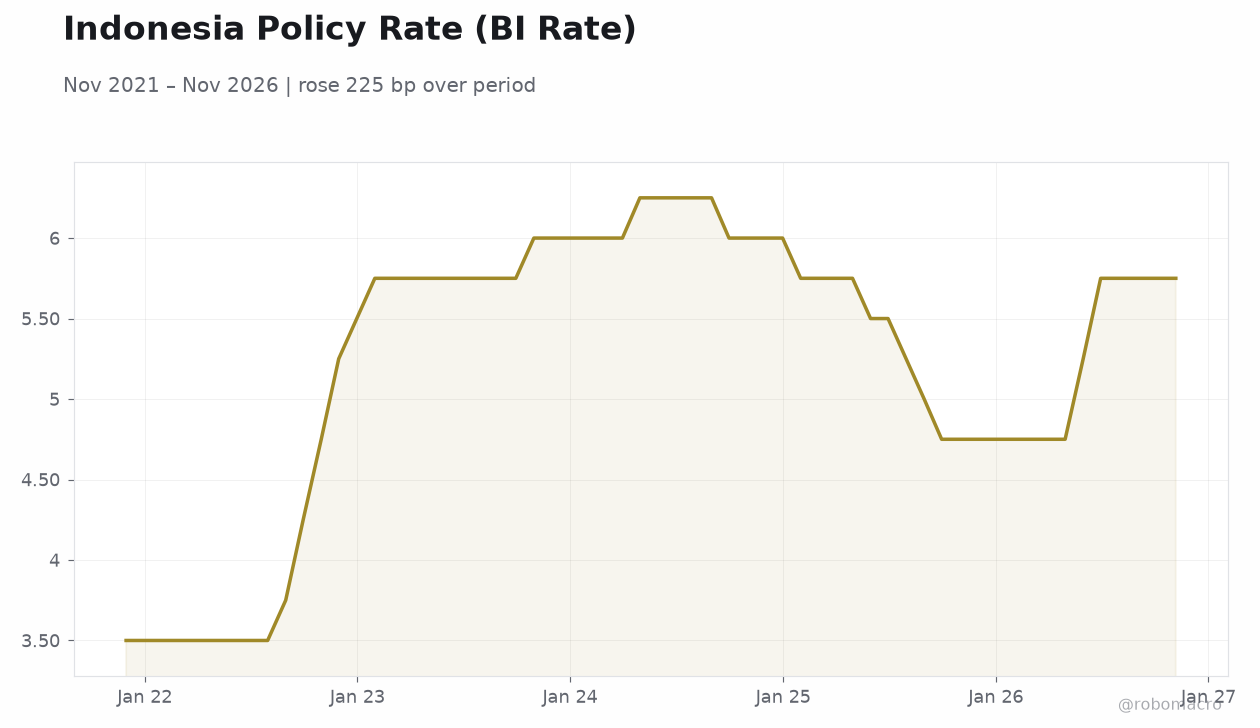 Indonesia Policy Rate (BI Rate) | Type: macro_line | BI policy rate (%): 5.75 (2026-11-06) | Range: 3.5–6.25 | Trend(5pt): 3.5,5.75,6.25,5,5.75
Today's Economic Events
| Data | Prior | Cons | Time |
|---|---|---|---|
| No events available | |||
- Indonesian rupiah plunges 2.93% to a record low of 18,149 per dollar, forcing Bank Indonesia intervention as political infighting and MSCI outflow risks compound Fed-driven dollar strength.
- Jakarta stocks buck the currency weakness, with the JCI rallying 1.78% to 5,344.41 even as Singapore's STI falls 0.96% and Malaysia's KLCI slips 0.21%.
- Indonesia and the Philippines deepen central bank cooperation, while MAS, BoE and BoT advance cross-border FX settlement under Project Meridian FX APAC.
Yesterday's Recap
The Indonesian rupiah dominated ASEAN markets yesterday, plunging 2.93% against the dollar to 18,149 — a record low — as a broad dollar rally and domestic political turmoil weighed on sentiment. Bank Indonesia intervened to stabilise the currency, with the intervention coinciding with consolidation in the AUD/IDR cross. Despite the FX stress, Jakarta's JCI defied gravity, climbing 1.78% to 5,344.41 as investors positioned around Fed rate bets and easing political uncertainty headlines.
Elsewhere, the Philippine peso weakened 1.24% to 63.75, while the Malaysian ringgit edged 0.19% softer to 4.09. Singapore's STI fell 0.96% to 5,231.84 and the KLCI slipped 0.21% to 1,582.59. The Thai baht was essentially flat at 33.84, and the Singapore dollar held firm at 1.29.
Regional bond markets were quiet, with no fresh 10-year yield prints for Indonesia or Thailand.
The Day Ahead
The calendar is light for November 15, with no scheduled ASEAN data releases, leaving markets to digest the rupiah's record low and position ahead of Bank Indonesia's November 18 policy meeting. Attention will centre on whether BI steps up FX intervention and verbal guidance to defend the currency, given the dollar's strength and domestic political noise. Indonesian equity flows and the JCI's resilience versus the currency will be watched for signs of foreign investor conviction.
Regional markets will also track the Philippine peso after its sharp slide and any follow-through from the deepening BSP–BI central bank cooperation. With no tier-one prints, price action in FX and local rates will carry the informational load.
Other Economic Notes
Indonesia's political infighting is emerging as a key risk to macroeconomic stability, with Bloomberg flagging that internal discord is the last thing the economy needs as the rupiah tests record lows. The establishment of an RMB clearing bank in Indonesia signals a push toward diversified settlement architecture and greater Asian financial resilience, reducing reliance on dollar intermediation. ↓ p.2