ASEAN Macro Daily(Beta Mode)
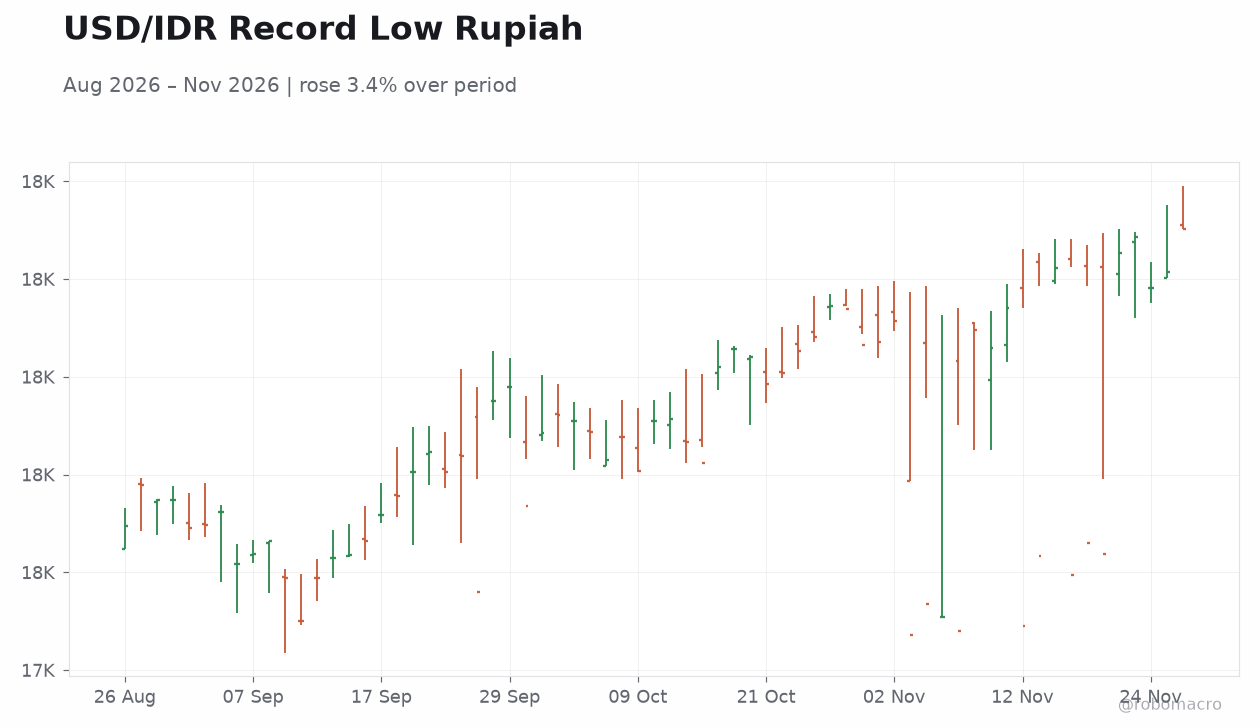
Rupiah Hits Record Low Despite BI Hike; Baht at 19-Month Low
Market Snapshot
| Asset | Level | Change |
|---|---|---|
| JCI | 5,197.61 | -0.84% |
| KLCI | 1,562.29 | +0.04% |
| STI | 4,930.83 | -0.57% |
| USD/IDR | 18,303.00 | +0.49% |
| USD/THB | 34.01 | +0.32% |
| USD/MYR | 4.11 | +0.06% |
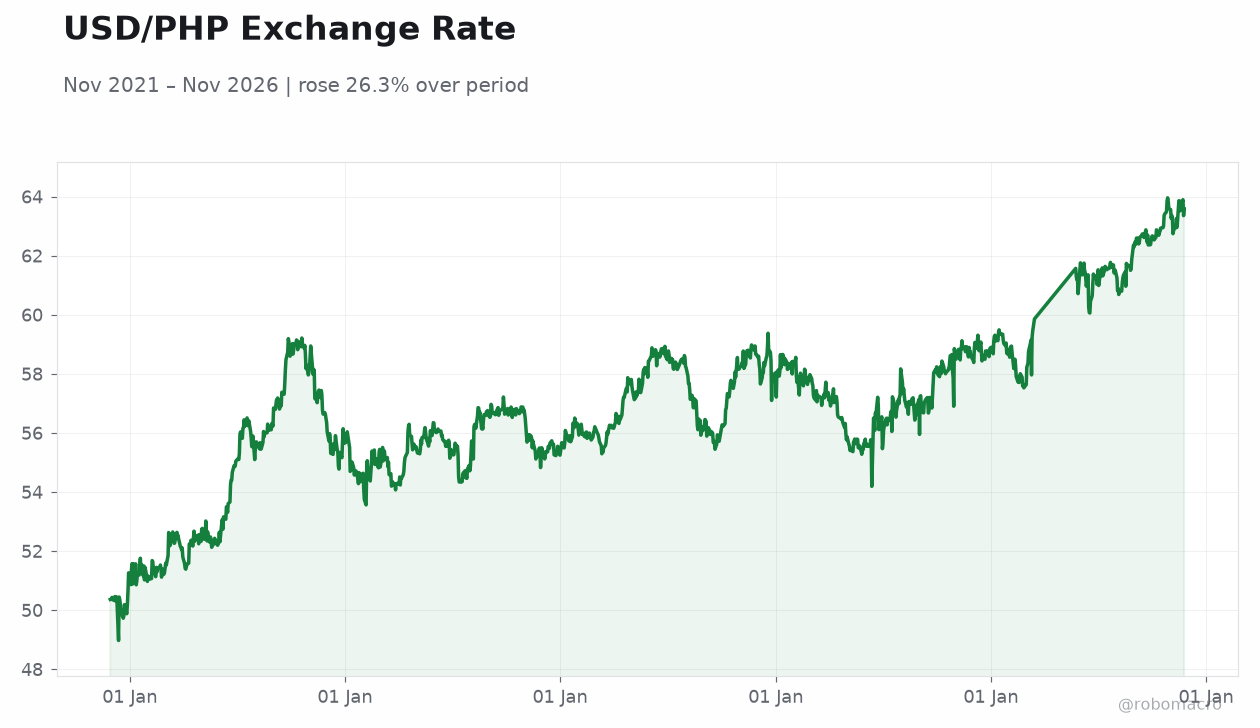
| USD/PHP | 63.71 | +0.08% |
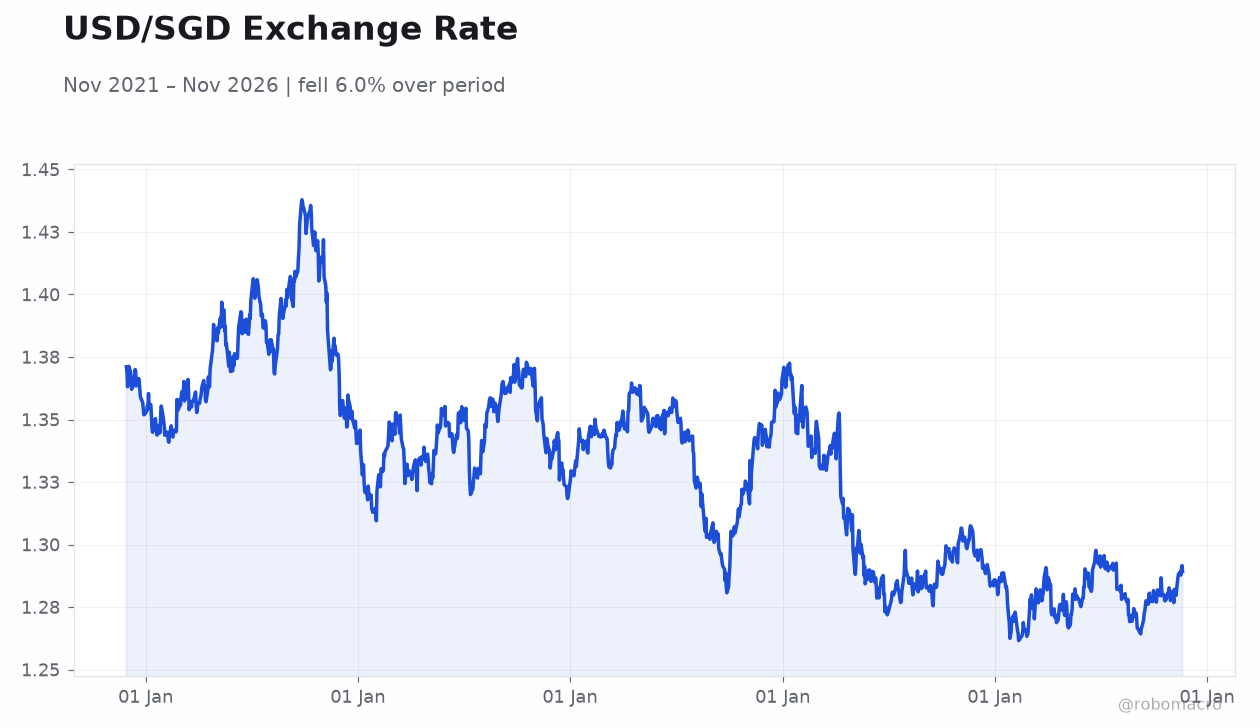
| USD/SGD | 1.29 | +0.02% |
| Brent Crude | 91.73 | -3.04% |
| Gold | 3,593.40 | +1.63% |
| Bitcoin | 60,449.86 | +0.12% |
| Indonesia 10Y Govt Yield | - | - |
| Thailand 10Y Govt Yield | - | - |
Prior Economic Events
| Data | Prior | Cons | Actual |
|---|---|---|---|
| No events available | |||
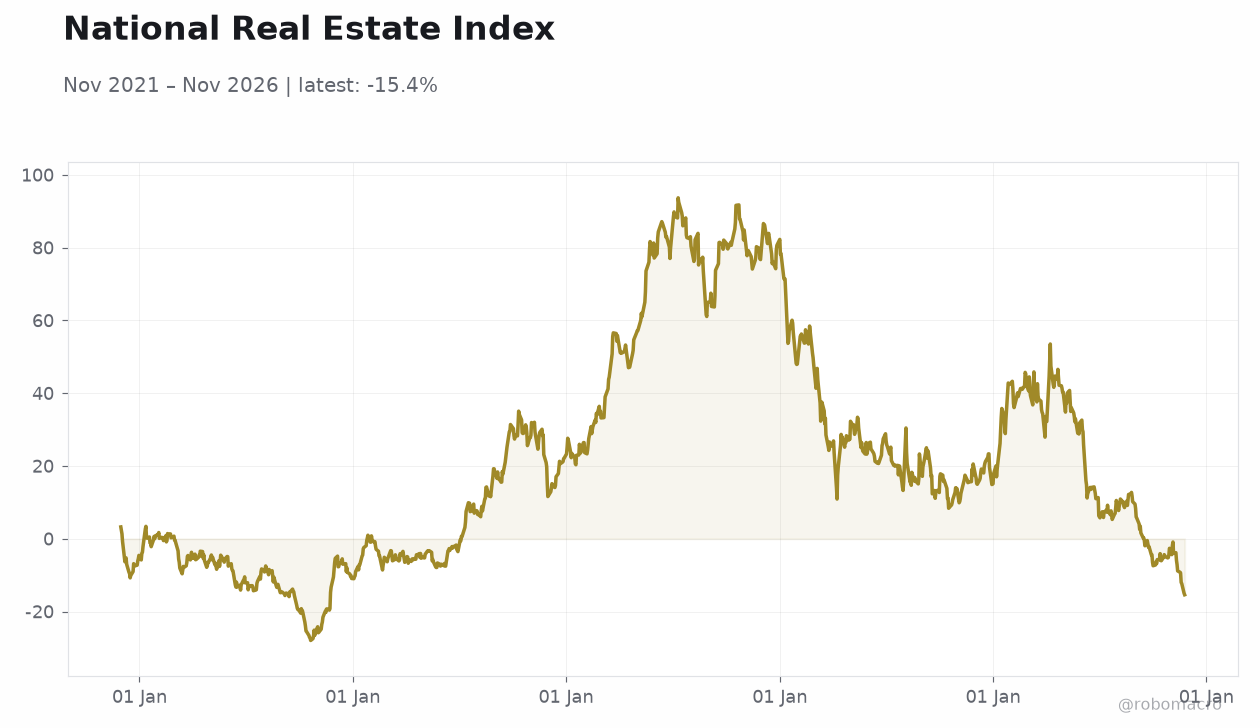 National Real Estate Index | Type: macro_line | National Real Estate Index: -15.38 (2026-11-25) | Range: -27.95–93.69 | Trend(6pt): 3.251,-0.221,51.83,17.04,-14.97,-15.38
Today's Economic Events
| Data | Prior | Cons | Time |
|---|---|---|---|
| No events available | |||
- IDR punched through 18,300/USD to a fresh record low even after Bank Indonesia's 25bp hike to 6.00% on Nov 18, with the governor guiding the benchmark to stay at 6% through 2027.
- THB weakened past 34.00/USD, its weakest in over 19 months, as Thailand's public debt approaches the 70% statutory cap and the informal economy looms at 48% of GDP.
- Brent crude slumped 3.04% to $91.73 while gold jumped 1.63% to $3,593.40 — a risk-off cocktail pressuring ASEAN FX and equities simultaneously.
Yesterday's Recap
Indonesian markets bore the brunt of the selloff, with the JCI falling 0.84% to 5,197.61 as USD/IDR climbed 0.49% to 18,303 — a record low — despite Bank Indonesia's Nov 18 hike to 6.00%. Finance Minister Purbaya blamed the Fed rate outlook for the rupiah's slide past 18,400 intraday, while BI Governor Perry Warjiyo signalled the benchmark will hold at 6% through 2027. Singapore's STI dropped 0.57% to 4,930.83, with USD/SGD edging up 0.02% to 1.29.
Thailand's baht weakened 0.32% to 34.01/USD, its lowest in over 19 months, as Bangkok grapples with public debt nearing the 70% cap. Malaysia was the regional outlier, with the KLCI adding 0.04% to 1,562.29 and USD/MYR up just 0.06% to 4.11. The Philippines saw USD/PHP rise 0.08% to 63.71, while regional bond markets were quiet with no 10-year yield prints available.
The Day Ahead
The ASEAN calendar is empty for Thursday, with no scheduled tier-one data releases across the six economies. Attention will centre on secondary market pricing of the rupiah, with VOI.ID reporting expectations that USD/IDR could break 18,400. Thai markets will watch whether the baht stabilises below 34.00 after the 19-month low.
Malaysian investors will monitor follow-through from the KK Mart IPO restart and EPF's stated preference for infrastructure assets in 2027. Singapore traders will look to regional risk sentiment given the STI's 0.57% decline. With US markets observing Thanksgiving, liquidity will be thin, amplifying any FX moves.
Other Economic Notes
Thailand's structural vulnerabilities are mounting: the Bank of Thailand flags the informal economy at 48% of GDP — the 14th highest globally — and is moving to curb gray money, while public debt near the 70% cap forces tougher spending choices. Malaysia's Investment Development Authority chairman Zafrul Aziz said it is too early to gauge the impact of US chip curbs, a key concern given Malaysia's role in semiconductor packaging. Indonesia's consumer story remains bifurcated, with the Jakarta Post noting optimism outpacing actual purchasing power.
Malaysia's EPF is tilting toward infrastructure in 2027, signalling a shift in institutional allocation. ↓ p.2