Andeans Macro Daily(Beta Mode)
Copper Rallies 2.5%; Andean FX Strengthens Broadly
Market Snapshot
| Asset | Level | Change |
|---|---|---|
| MSCI Colombia | 9.02 | +0.00% |
| MSCI Chile | 37.68 | +0.67% |
| MSCI Peru | 88.66 | +0.01% |
| USD/COP | 3,216.85 | -0.92% |
| USD/CLP | 972.98 | -0.39% |
| USD/PEN | 3.43 | -0.48% |
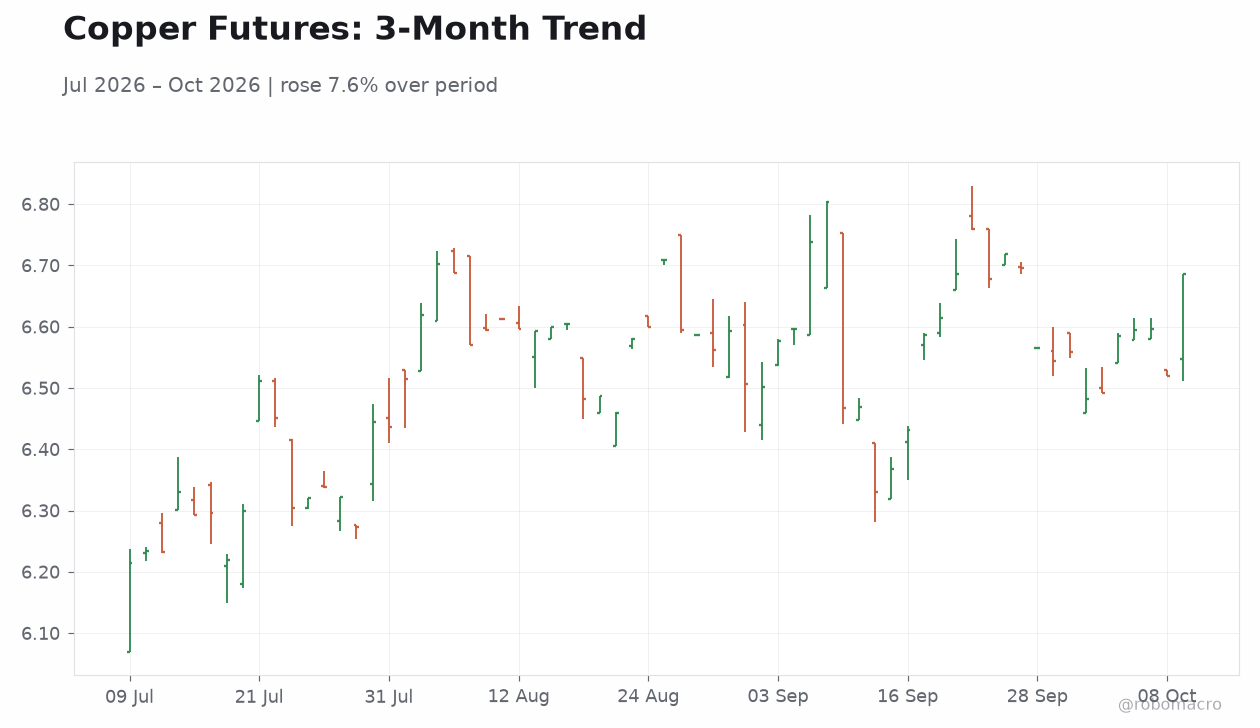
| Copper | 6.68 | +2.51% |
| Gold | 4,200.30 | +1.04% |
| Brent Crude | 102.80 | -1.42% |
| Bitcoin | 82,475.04 | +0.98% |
| Colombia 10Y Govt Yield | - | - |
| Peru 10Y Govt Yield | - | - |
Prior Economic Events
| Data | Prior | Cons | Actual |
|---|---|---|---|
| No events available | |||
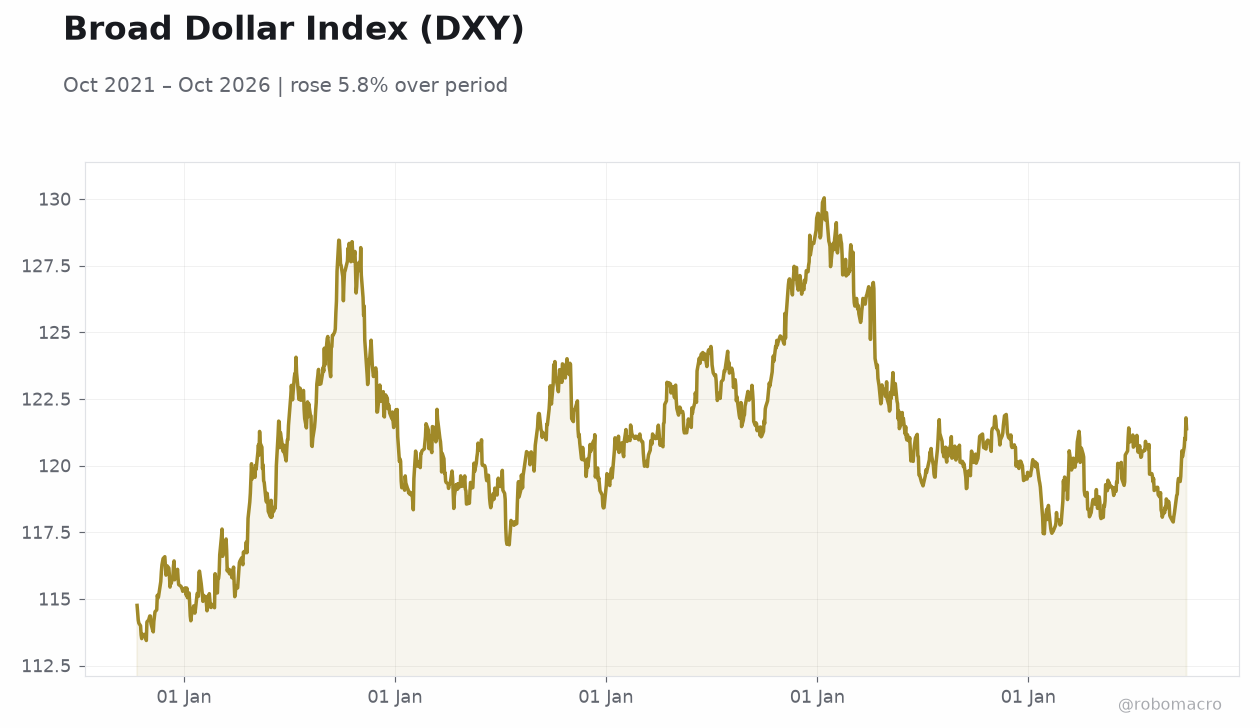 Broad Dollar Index (DXY) | Type: macro_line | Index: 121.4 (2026-10-02) | Range: 113.4–130 | Trend(5pt): 114.8,120.2,120.7,119.8,121.4
Today's Economic Events
| Data | Prior | Cons | Time |
|---|---|---|---|
| No events available | |||
- Copper surged 2.51% to $6.68/lb, lifting the MSCI Chile index 0.67% and supporting CLP gains
- All three Andean currencies strengthened against the dollar: COP -0.92%, PEN -0.48%, CLP -0.39%
- Brent crude fell 1.42% to $102.80, a modest headwind for Colombia's oil-linked fiscal revenues
Yesterday's Recap
Andean markets closed Wednesday with a broadly risk-on tone, anchored by a sharp rally in copper that lifted the MSCI Chile index 0.67% to 37.68. The red metal's 2.51% gain to $6.68/lb provided a direct tailwind for Chile and Peru, the region's two dominant copper producers, and left the MSCI Peru index essentially flat at 88.66, up just 0.01%. Currency markets told a consistent story of dollar softness against Andean peers: the Colombian peso appreciated 0.92% with USD/COP closing at 3,216.85, while the Peruvian sol gained 0.48% to 3.43 and the Chilean peso firmed 0.39% to 972.98.
The synchronized FX strength across all three Andean currencies suggests the move was driven by the commodity complex and broader dollar dynamics rather than country-specific flows. Gold's 1.04% advance to $4,200.30/oz added further support, given Peru's significant gold mining sector and its role in reserve accumulation. The lone soft spot was Brent crude, which slipped 1.42% to $102.80/barrel — a marginal negative for Colombia's hydrocarbon-heavy export base and fiscal revenues, though the peso still outperformed its Andean peers on the day.
Equity performance diverged, with Chile's clear gain contrasting against flat prints in Colombia and Peru, consistent with Chile's heavier commodity-beta exposure.
The Day Ahead
The calendar is light into the end of the week, with no major scheduled data releases across Colombia, Chile, or Peru for Friday. With the docket quiet, attention shifts to secondary flows: portfolio rebalancing, copper price momentum, and any central bank communication that may emerge. Traders will watch whether the COP's grind lower in USD/COP extends, particularly if oil stabilizes after Wednesday's pullback.
Chilean assets may continue to track the copper complex, where the 2.5% rally has restored a constructive technical picture. Peruvian sol strength bears monitoring for any signs of BCRP discomfort with the appreciation pace, though the central bank has historically tolerated gradual moves. Local dealer commentary will be the main incremental input absent hard data.
Other Economic Notes
The commodity complex is doing heavy lifting for Andean asset performance, with copper's breakout to $6.68/lb reinforcing the region's terms-of-trade cushion. ↓ p.2