| Asset | Level | Change |
|---|---|---|
| MSCI Colombia | 9.02 | +0.00% |
| MSCI Chile | 37.78 | +0.13% |
| MSCI Peru | 90.70 | +0.02% |
| USD/COP | 3,188.05 | -1.12% |
| USD/CLP | 975.63 | -0.26% |
| USD/PEN | 3.44 | -0.04% |
| Copper | 6.76 | +0.94% |
| Gold | 4,210.90 | +0.48% |
| Brent Crude | 104.74 | -1.79% |
| Bitcoin | 83,103.13 | +1.64% |
| Colombia 10Y Govt Yield | - | - |
| Peru 10Y Govt Yield | - | - |
| Data | Prior | Cons | Actual |
|---|---|---|---|
| No events available | |||
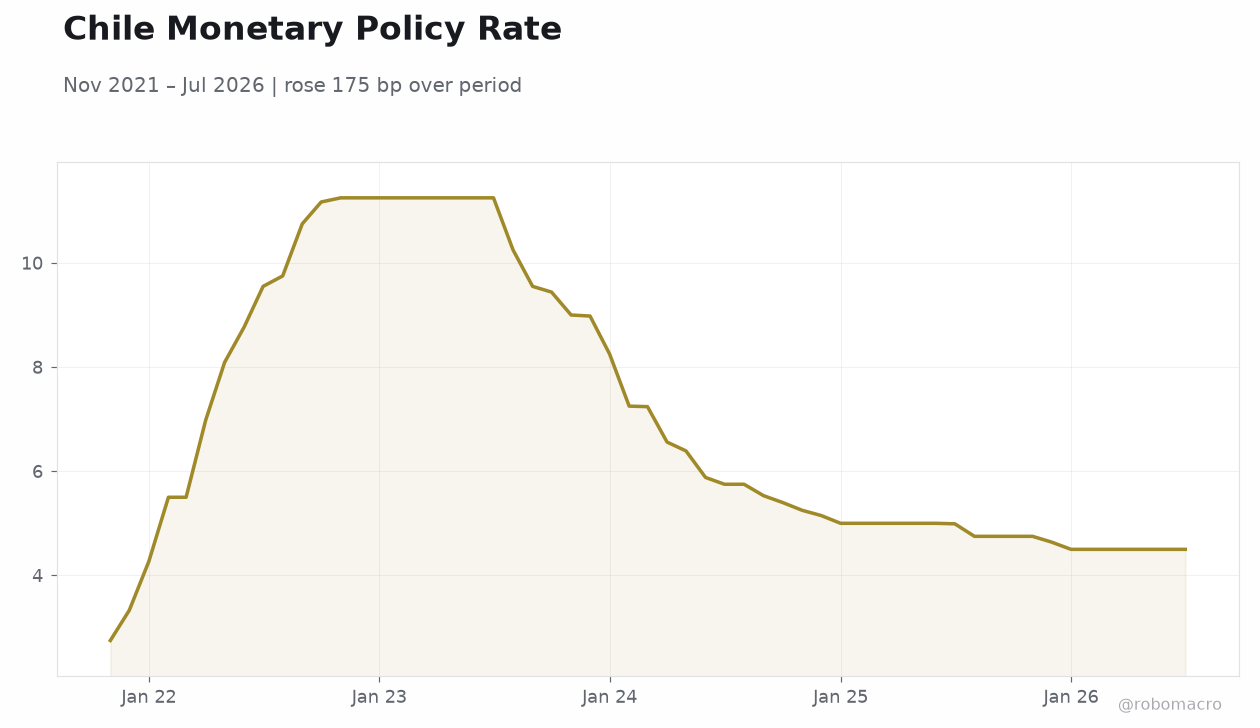
Chile Monetary Policy Rate | Type: macro_line | Short-Term Rate (%): 4.5 (2026-07-01) | Range: 2.75–11.25 | Trend(5pt): 2.75,11.25,7.24,5,4.5
| Data | Prior | Cons | Time |
|---|---|---|---|
| No events available | |||
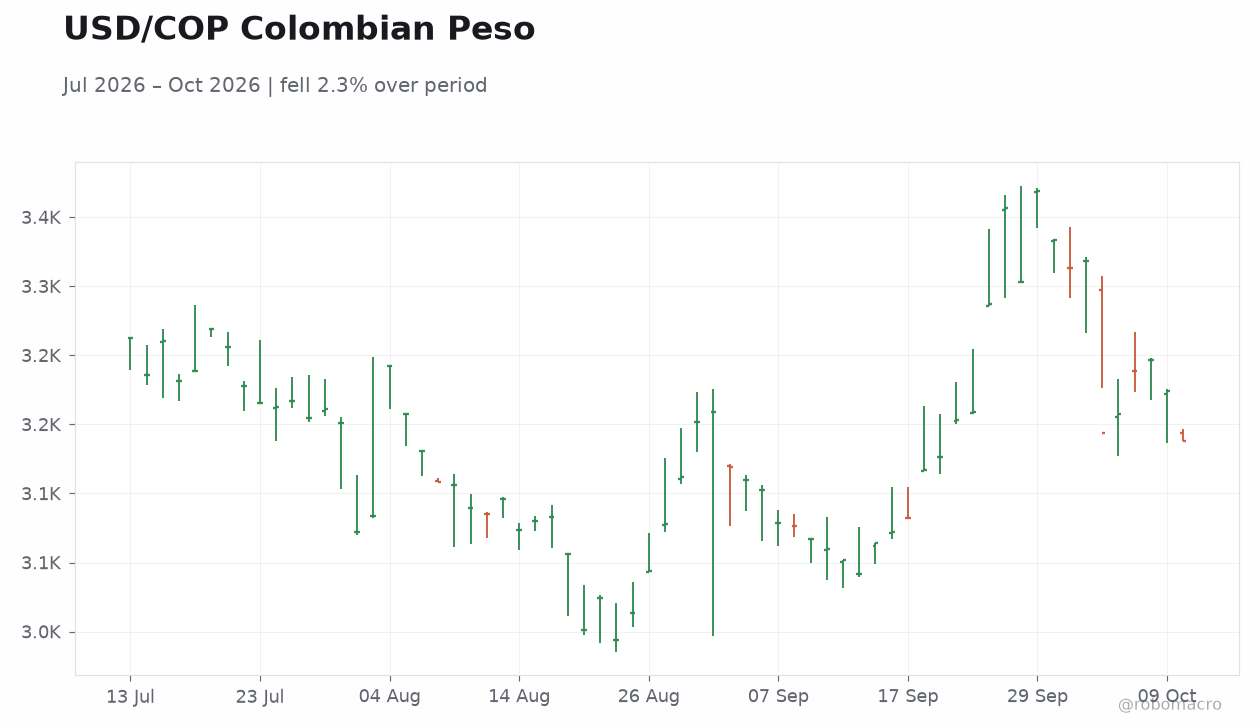
Andean FX markets were the focal point on Monday, October 12. The Colombian peso slid 2.9% against the dollar, the largest move in the region, as hawkish Federal Reserve commentary lifted the greenback broadly and pressured high-yield EM currencies. The move came despite BanRep's surprise rate hike, which the market initially read as supportive but insufficient to offset global dollar strength.
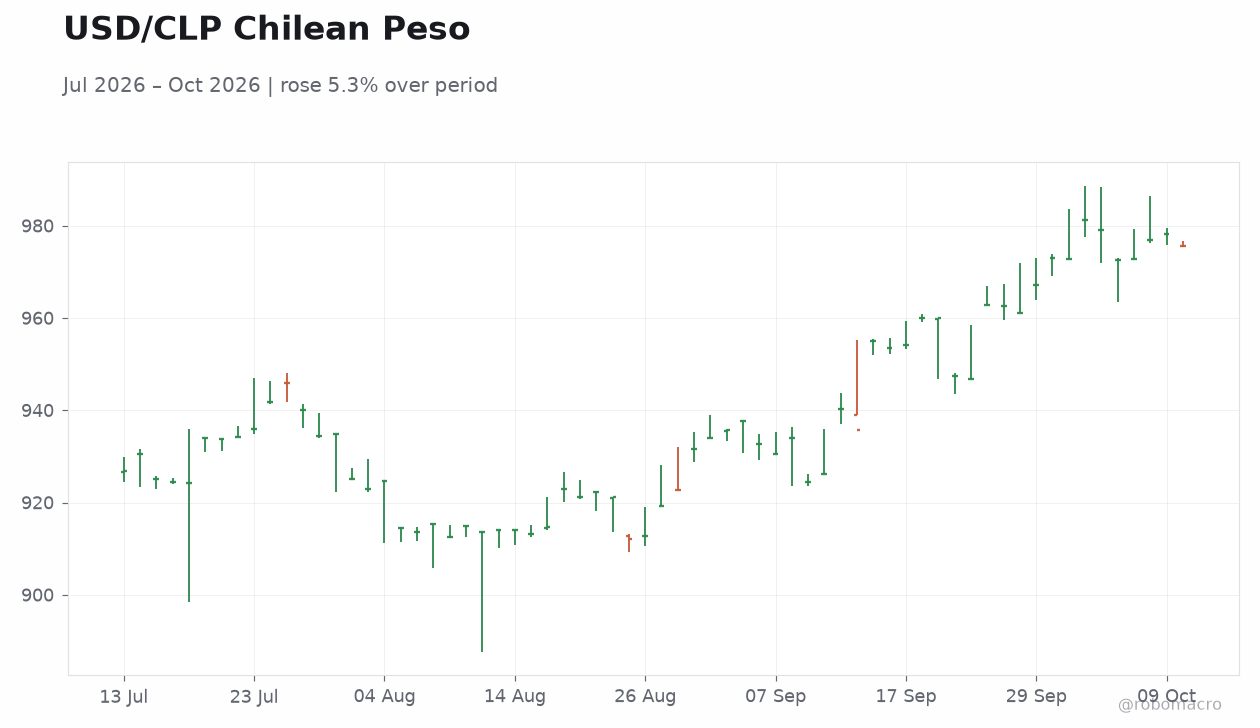
The Chilean peso and Peruvian sol were more resilient, with USD/CLP easing 0.26% to 975.63 and USD/PEN slipping 0.04% to 3.44, reflecting copper's firmness and Peru's stable policy backdrop. Equity proxies told a similar story of resilience: MSCI Chile gained 0.13% to 37.78, MSCI Peru added 0.02% to 90.70, and MSCI Colombia was flat at 9.02 as the peso's slide offset underlying equity support. In commodities, copper advanced 0.94% to 6.76, providing a tailwind for Chilean and Peruvian terms of trade, while gold rose 0.48% to 4,210.90.
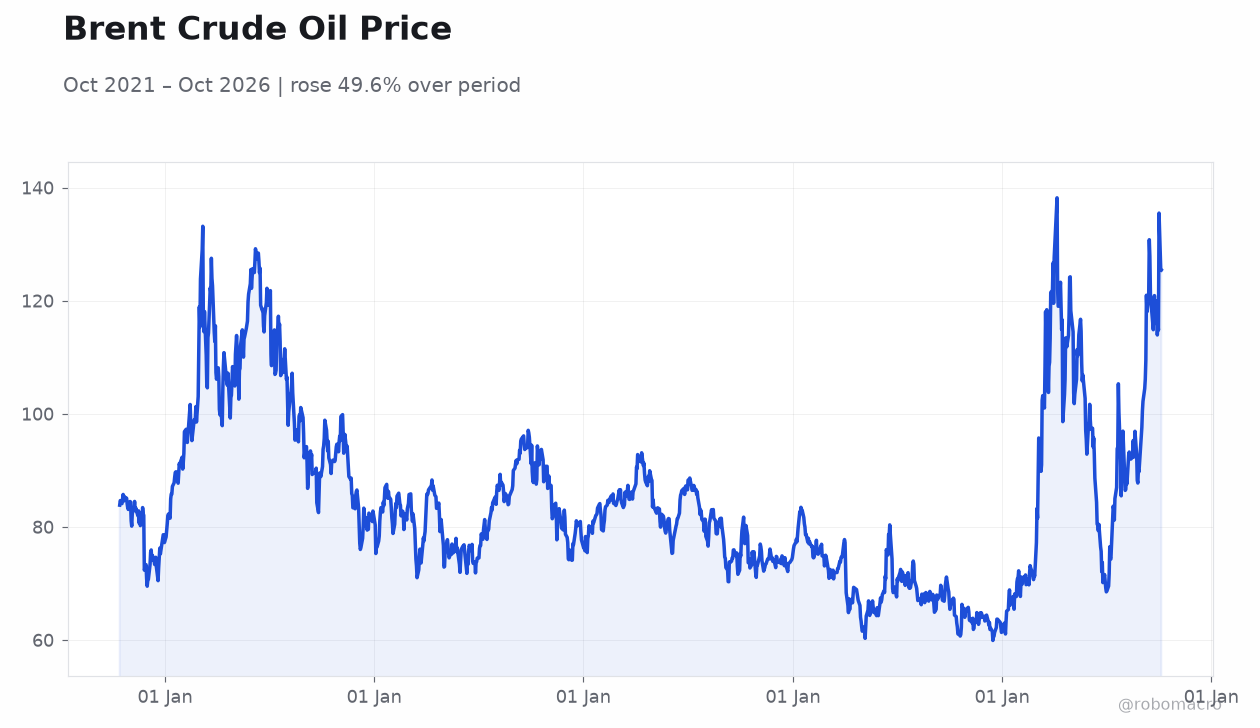
Brent crude fell 1.79% to 104.74, a modest negative for Colombia's fiscal revenues given the economy's oil dependence. Bitcoin rallied 1.64% to 83,103.13, though crypto flows remain a marginal factor for Andean markets.
The calendar is light across the Andean region, with no major data releases scheduled from Colombia, Chile, or Peru in the immediate pipeline. Attention will shift to secondary indicators and central bank communication. In Colombia, markets will parse any follow-up commentary from BanRep officials following the surprise hike, particularly regarding the committee's assessment of inflation persistence and the peso's recent volatility.
Chilean policymakers at BCCh face questions about the pace of further normalization given the currency's relative stability. Peru's BCRP remains the region's anchor of stability, and any signals on the timing of future adjustments will be closely watched. Globally, Fed speakers including Hammack, who backed further hikes citing a thriving economy, will shape the dollar trajectory that has been the dominant driver of Andean FX.
Copper and oil prices will remain key swing factors for the region's external accounts and fiscal positions.
Subscribe to Andeans Macro Daily and get each new issue delivered to your inbox.
Already a member? Visit robomacro.com to log in and manage subscriptions, or use Forgot Password to set a password.
Brent Crude Oil Price | Type: macro_line | USD per Barrel: 125.4 (2026-10-06) | Range: 59.93–138.2 | Trend(6pt): 83.86,82.59,91.49,71.98,125.5,125.4
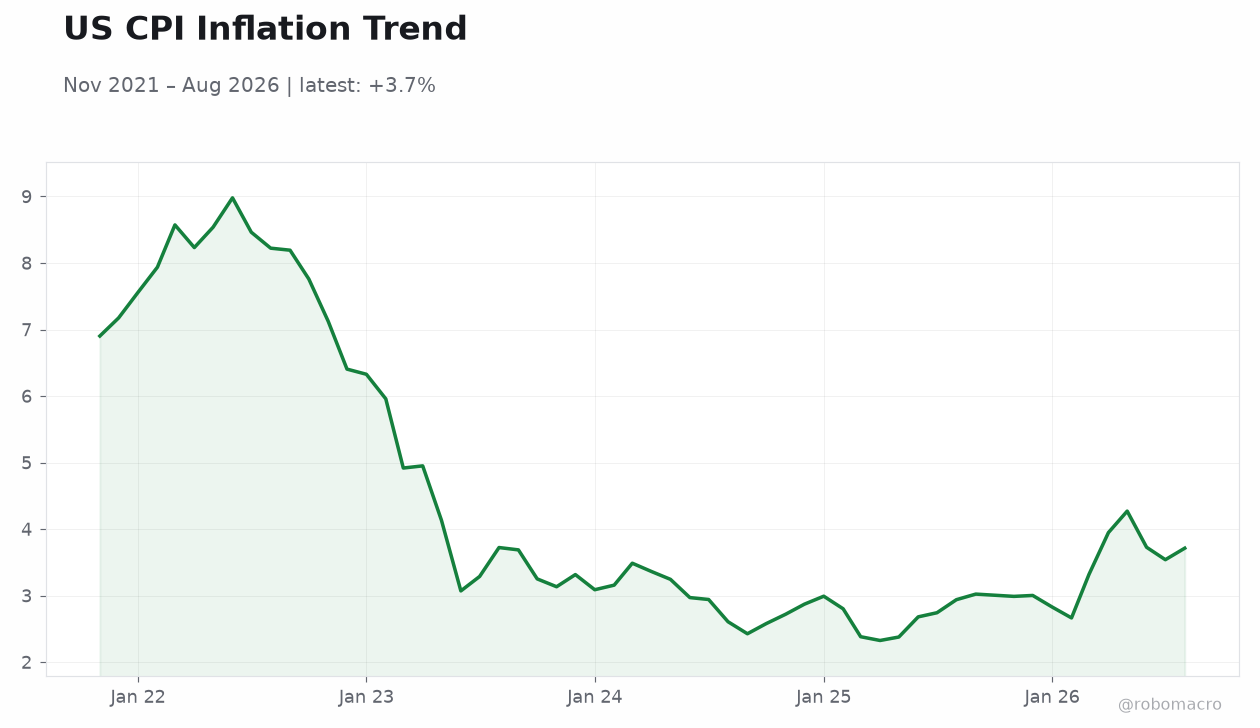
US CPI Inflation Trend | Type: macro_line | CPI Index: 3.713 (2026-08-01) | Range: 2.325–8.979 | Trend(5pt): 6.902,6.327,3.487,2.377,3.713
USD/COP Colombian Peso | Type: market_hloc | USD/COP: 3188 (2026-10-13) | Range: 3044–3369 | Trend(6pt): 3263,3242,3094,3132,3224,3188
USD/CLP Chilean Peso | Type: market_hloc | USD/CLP: 975.6 (2026-10-13) | Range: 912.2–981.2 | Trend(6pt): 926.9,924.7,912.8,954.1,978.1,975.6
Peru's mining sector continues to attract international capital, with Highlander Silver welcomed by former president Keiko Fujimori, a signal of political backing for foreign investment in the sector. The endorsement comes as the company advances its precious metals projects, underscoring Peru's appeal as a jurisdiction for metals development despite the broader EM risk-off tone. In Chile, lithium remains a strategic theme as the government balances state participation models with private investment incentives.
Colombia's fiscal position remains the key vulnerability, with oil revenues sensitive to the recent pullback in Brent. Across the region, the terms-of-trade picture is bifurcated: metals producers Chile and Peru benefit from copper's firmness, while Colombia's oil-linked revenues face pressure from the crude slide.
The Federal Reserve's hawkish turn is the dominant global macro theme, with Cleveland Fed President Hammack describing the economy as thriving and explicitly backing further rate hikes. This has lifted the dollar and compressed carry-trade returns across emerging markets, with the Mexican peso also suffering as the rate differential with the US narrows to multi-year lows. The Bank of England's Megan Greene has advocated for rate hikes as well, adding to the global repricing of policy paths.
The IMF's projection that Iraq's economy will shrink 16% in 2026 underscores the fragility of oil-dependent economies, a cautionary tale relevant to Colombia's fiscal structure. ↓ p.3
More broadly, 'worrying omens' are stalking the global economy despite resilient growth, with the IMF flagging pockets of stress. The RBA's concern that Australia's economy has less breathing room reflects a broader theme of narrowing policy margins.
BanRep's surprise hike marks a decisive hawkish signal from Colombia, reinforcing its status as the region's most inflation-focused central bank. The move, delivered alongside the peso's 2.9% slide, suggests the board prioritizes anchoring expectations over growth support, and further tightening cannot be ruled out if the currency remains volatile. The BCCh has been the region's most aggressive cutter, and with the CLP holding relatively steady near 975, the bank has room to continue gradual normalization without destabilizing expectations.
However, copper's strength complicates the picture by supporting the currency and dampening imported inflation, potentially allowing a slower pace. The BCRP remains the region's stability anchor, with the sol's resilience near 3.44 reflecting credible inflation targeting and strong reserves. Peru's policy path is the most predictable, and the bank is unlikely to deviate absent a significant global shock.
The key divergence to monitor is Colombia's hawkishness versus Chile's easing bias, a spread dynamic that will drive relative value trades in Andean rates. All three banks will be watching the Fed's next moves, as US policy remains the exogenous variable shaping regional FX and rates.