Andeans Macro Daily(Beta Mode)
BCRP Hikes 25bp to 4.50%; Andean FX Slides
Market Snapshot
| Asset | Level | Change |
|---|---|---|
| MSCI Colombia | 9.02 | +0.00% |
| MSCI Chile | 35.48 | -0.50% |
| MSCI Peru | 80.87 | -1.16% |
| USD/COP | 3,307.06 | +0.84% |
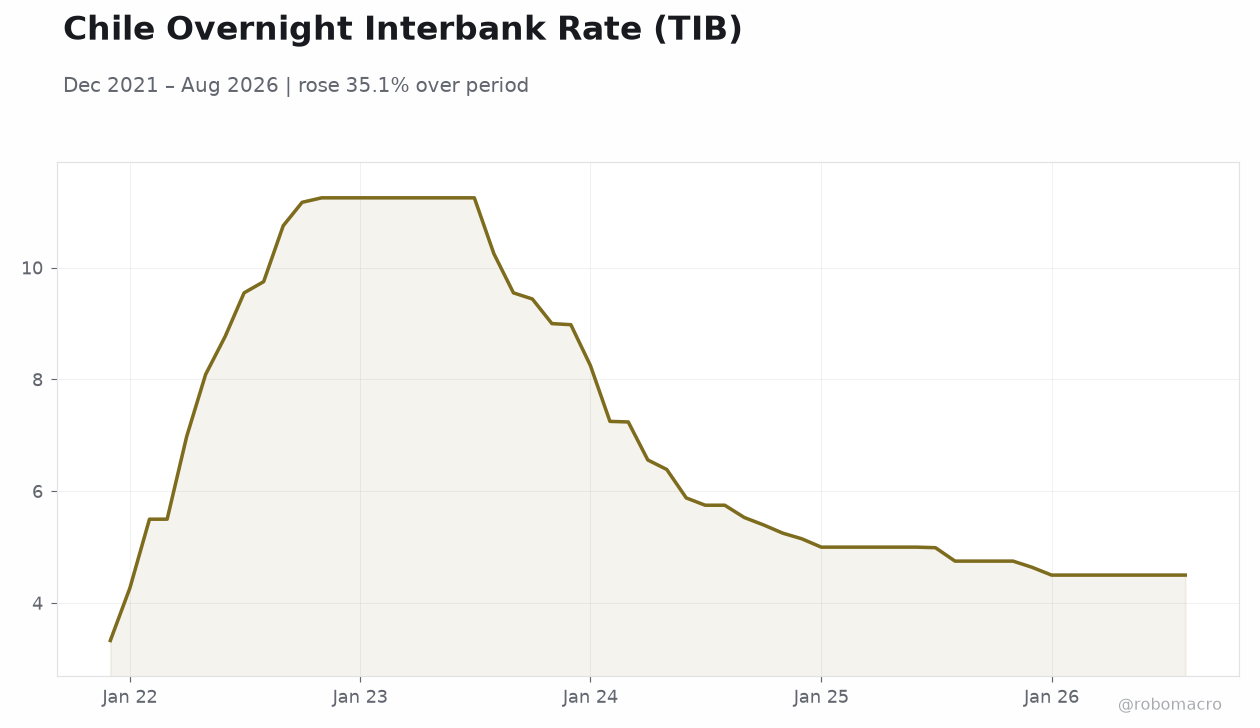
| USD/CLP | 998.33 | +1.52% |
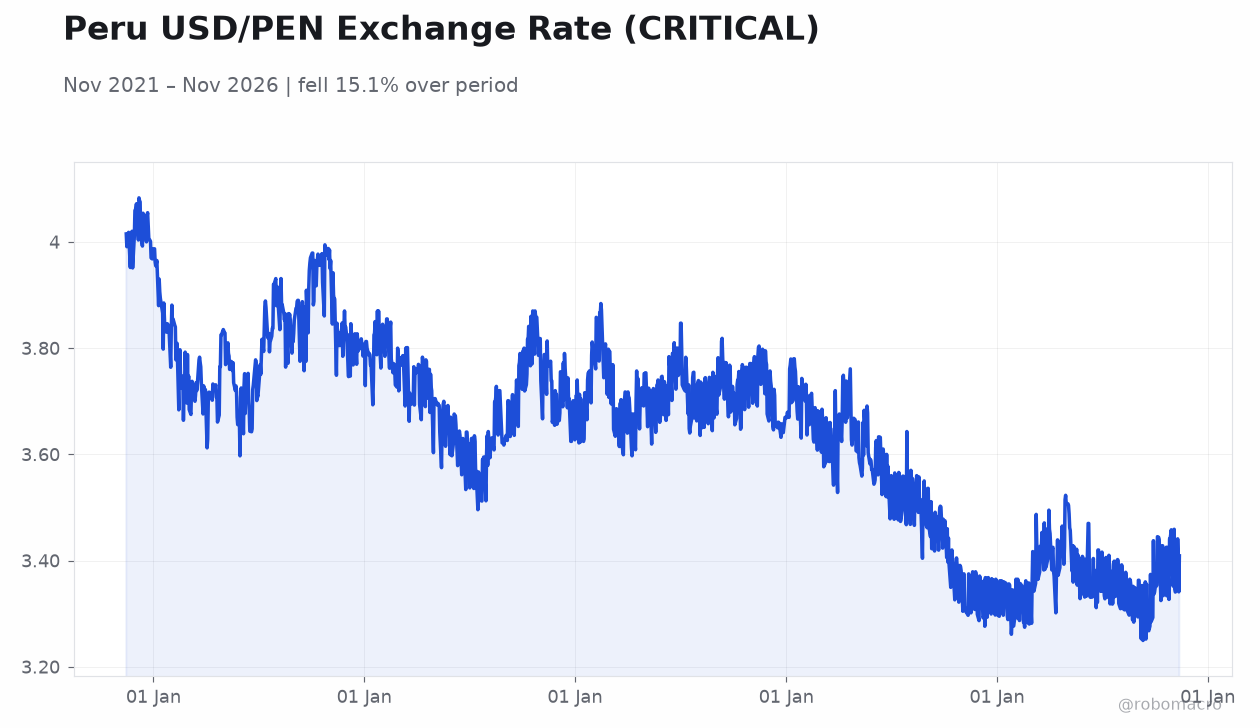
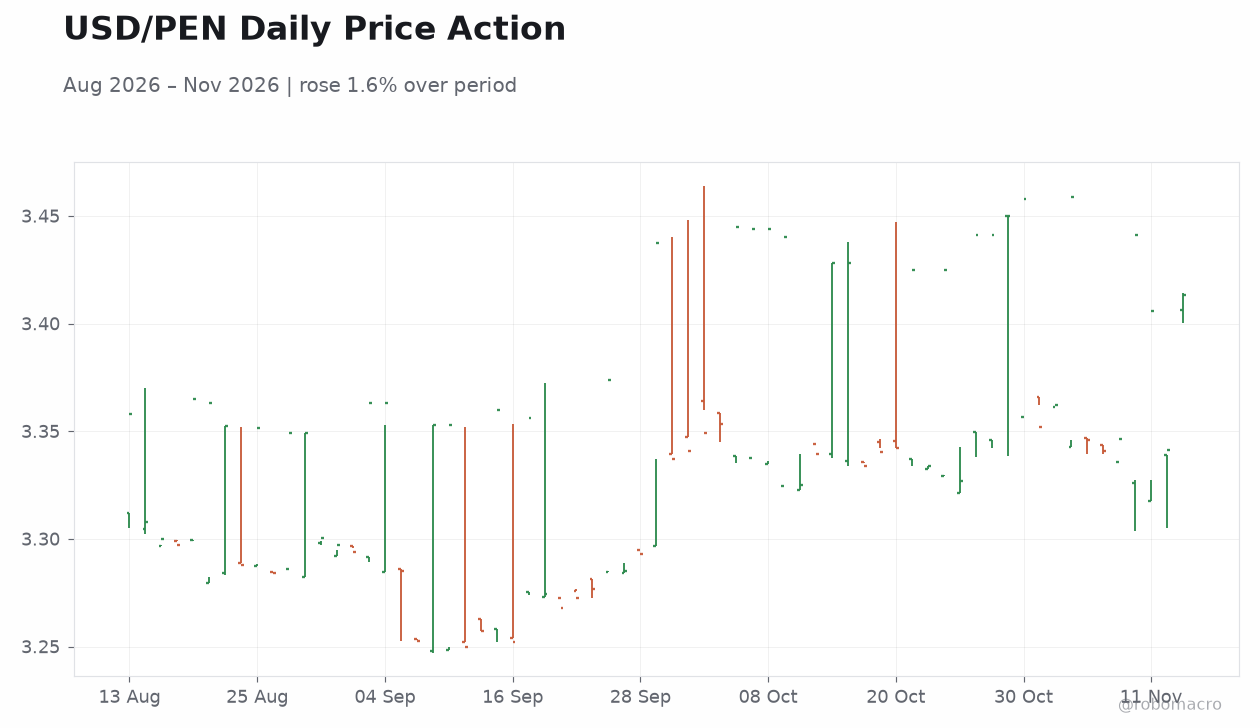
| USD/PEN | 3.41 | +2.15% |
| Copper | 6.15 | -0.51% |
| Gold | 3,895.80 | +0.27% |
| Brent Crude | 95.74 | -0.08% |
| Bitcoin | 69,146.31 | -3.08% |
| Colombia 10Y Govt Yield | - | - |
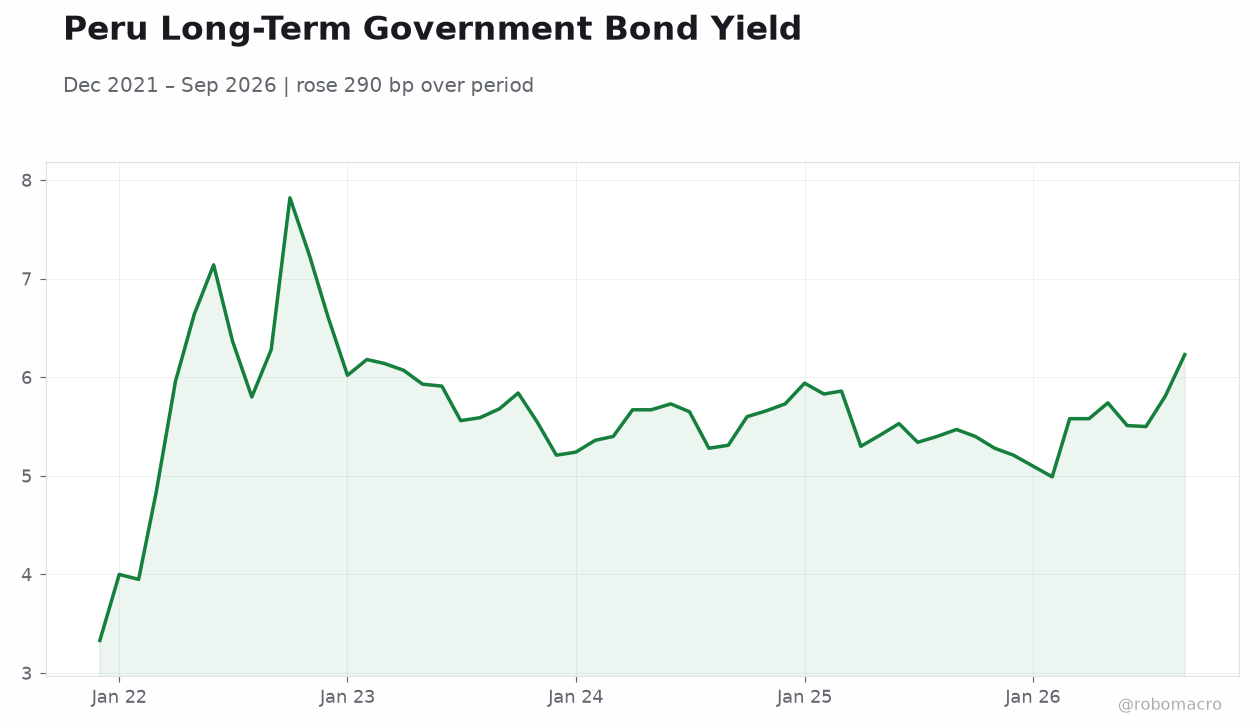
| Peru 10Y Govt Yield | - | - |
Prior Economic Events
| Data | Prior | Cons | Actual |
|---|---|---|---|
| Central Bank Interest Rate Decision | 4.25 | 4.50 | 4.50 |
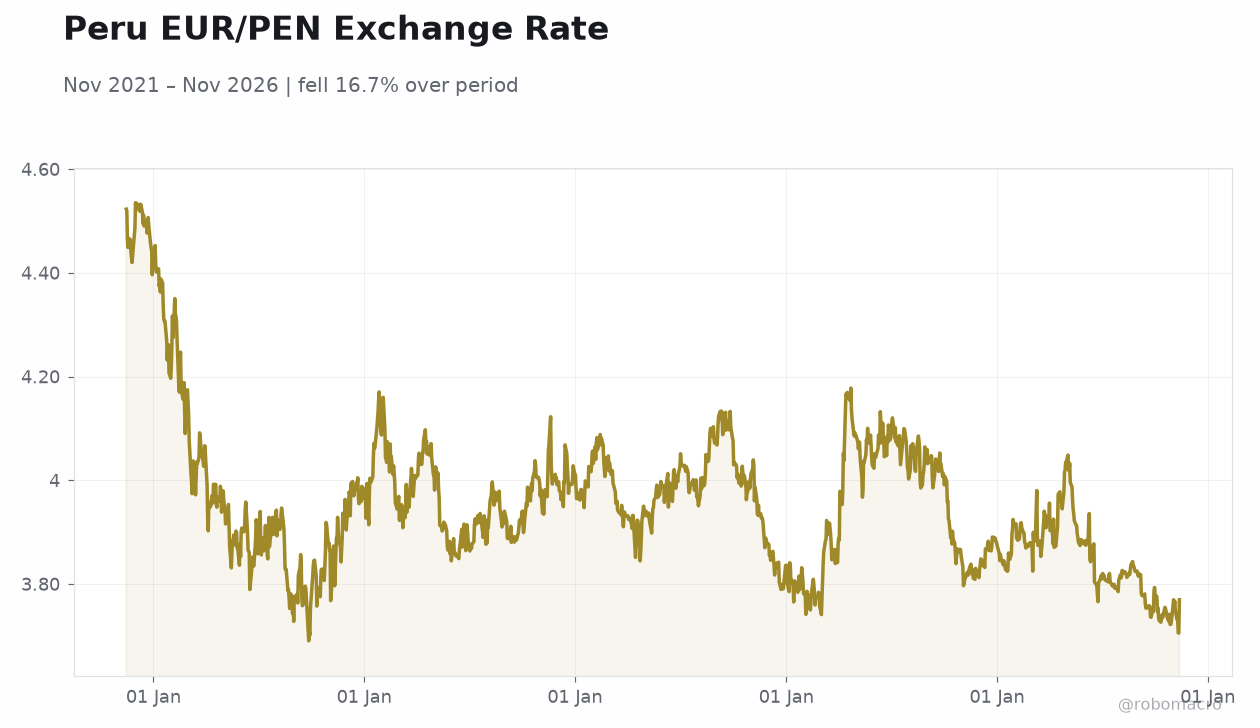 Peru EUR/PEN Exchange Rate | Type: macro_line | EUR/PEN Exchange Rate: 3.77 (2026-11-13) | Range: 3.69–4.535 | Trend(5pt): 4.523,4.048,3.898,4.049,3.77
Today's Economic Events
| Data | Prior | Cons | Time |
|---|---|---|---|
| No events available | |||
- Peru's BCRP raised its policy rate 25bp to 4.50% on November 12, its first hike in nearly four years, as CPI at 5.25% YoY forces a tightening pivot.
- Andean currencies sold off broadly: USD/PEN +2.15%, USD/CLP +1.52%, USD/COP +0.84%, with MSCI Peru -1.16% and MSCI Chile -0.50%.
- Chile's fiscal trajectory worsens as debt nears 45% of GDP and the government retreats from its 2030 balanced-budget goal; Codelco eyes private capital.
Yesterday's Recap
The dominant event was Peru's central bank decision, which printed a 25bp hike to 4.50% versus consensus of 4.50% and a previous 4.25% — the first increase in nearly four years, driven by an inflation spike from food and energy prices with CPI running at 5.25% YoY. The sol bore the brunt of the repricing, with USD/PEN jumping 2.15% on the day, the sharpest move in the bloc. Chilean assets also weakened: USD/CLP rose 1.52% and MSCI Chile slipped 0.50%, while headlines flagged Chile's debt approaching 45% of GDP as the government steps back from its 2030 balance target, plus reports that Codelco is exploring private capital.
Colombia was comparatively quiet, with MSCI Colombia flat at 9.02 and USD/COP up 0.84% to 3,307.06, largely tracking the regional risk-off tone. Peru's equity proxy fell 1.16% to 80.87, reflecting the double hit of tighter policy and currency weakness. Copper eased 0.51% to 6.15, a mild headwind for the Chilean and Peruvian export complex, while gold added 0.27% to 3,895.80.
The Day Ahead
The Andean calendar is empty for both today (November 13) and tomorrow (November 14), leaving markets to digest the BCRP's hawkish pivot and the broad regional FX selloff without fresh domestic catalysts. With no scheduled prints, attention shifts to secondary drivers: copper price action for Chile and Peru, and oil for Colombia, where Brent at 95.74 remains a fiscal and external-account support. Traders will watch whether the sol's 2.15% depreciation extends or stabilizes, given the BCRP's history of smoothing excessive volatility.
Chilean and Colombian local rates may take their cue from global core yields and the dollar, with no local supply events on the docket. Expect thin, positioning-driven flows into the weekend.
Other Economic Notes
Peru's hike underscores a broadening inflation problem across the bloc: Colombia's CPI sits at 6.29% YoY and Chile's at 4.52%, both well above target, while Peru's 5.25% has now forced a policy reversal. Chile's fiscal slippage — debt nearing 45% of GDP and abandonment of the 2030 balance goal — raises sovereign-spread and rating sensitivity, particularly with copper soft. Codelco's search for private capital signals mounting funding strain in the world's top copper producer, a theme worth monitoring for Chilean fiscal and investment dynamics.
↓ p.2