Argentina Macro Daily(Beta Mode)
MERVAL Slides as Peso Holds Steady
Market Snapshot
| Asset | Level | Change |
|---|---|---|
| MERVAL | 2,758,840.00 | -2.15% |
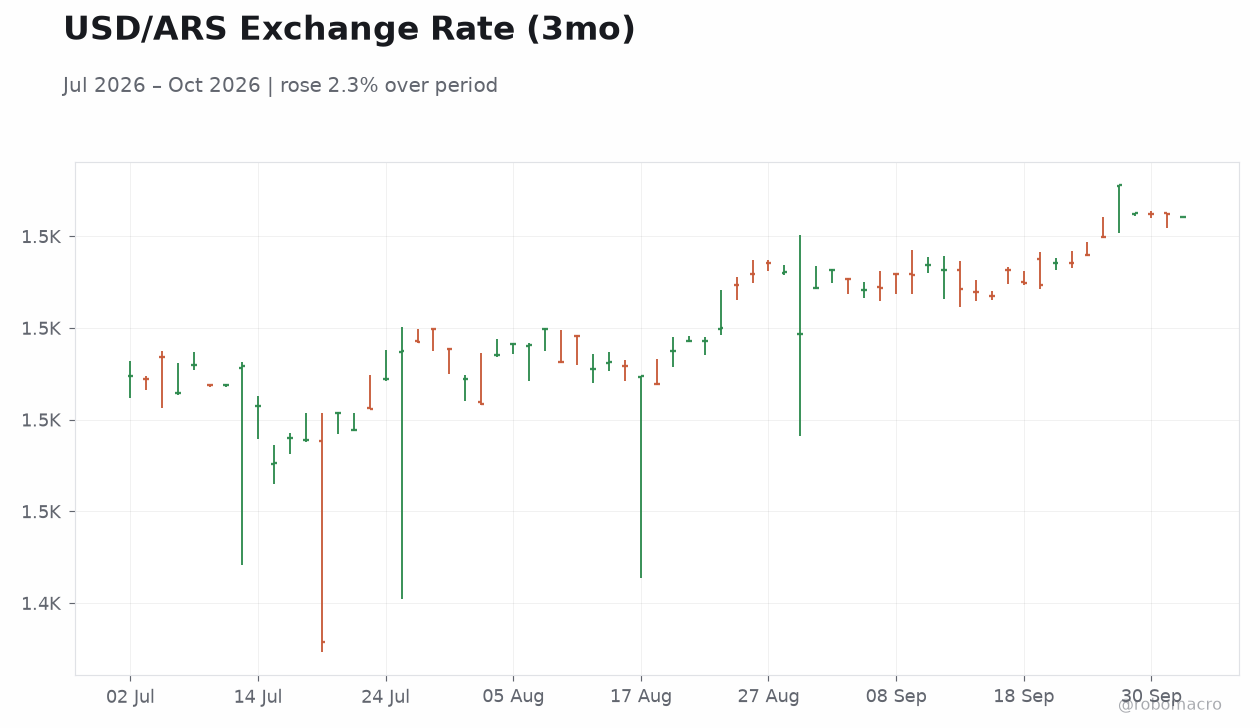
| USD/ARS | 1,524.25 | -0.05% |
| EUR/ARS | 1,714.98 | -0.71% |
| Gold | 4,211.30 | +0.21% |
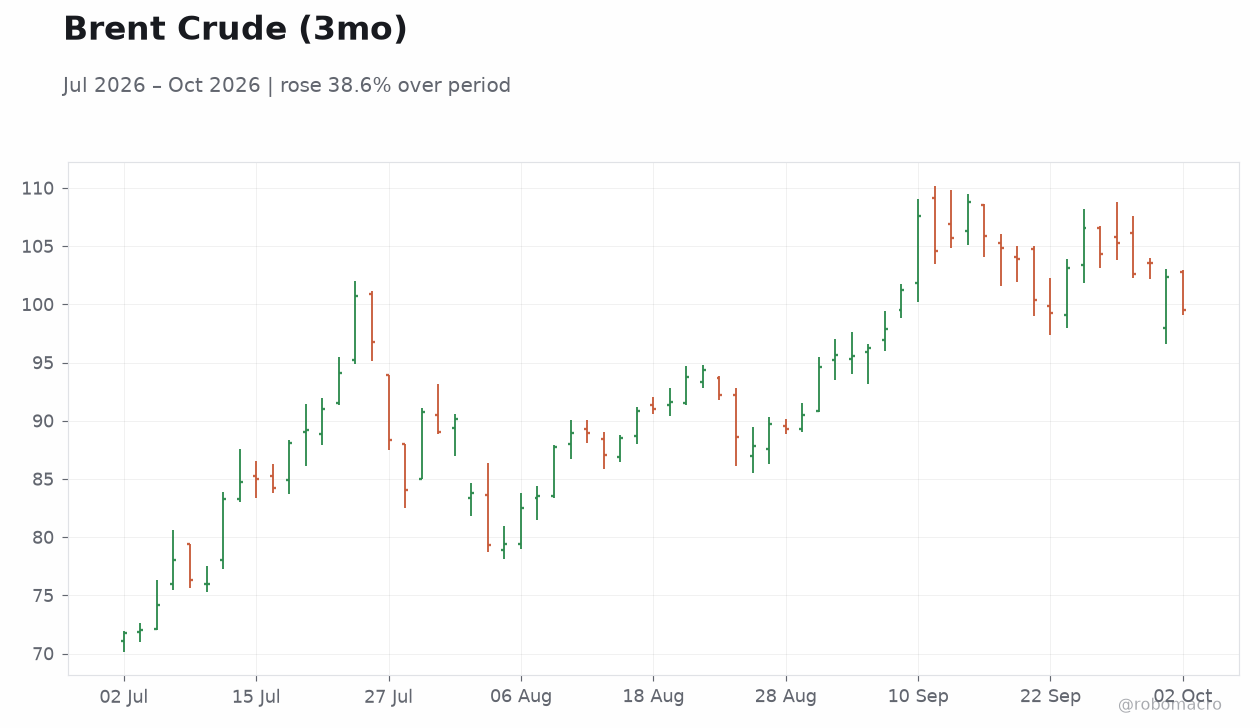
| Brent Crude | 99.35 | -2.89% |
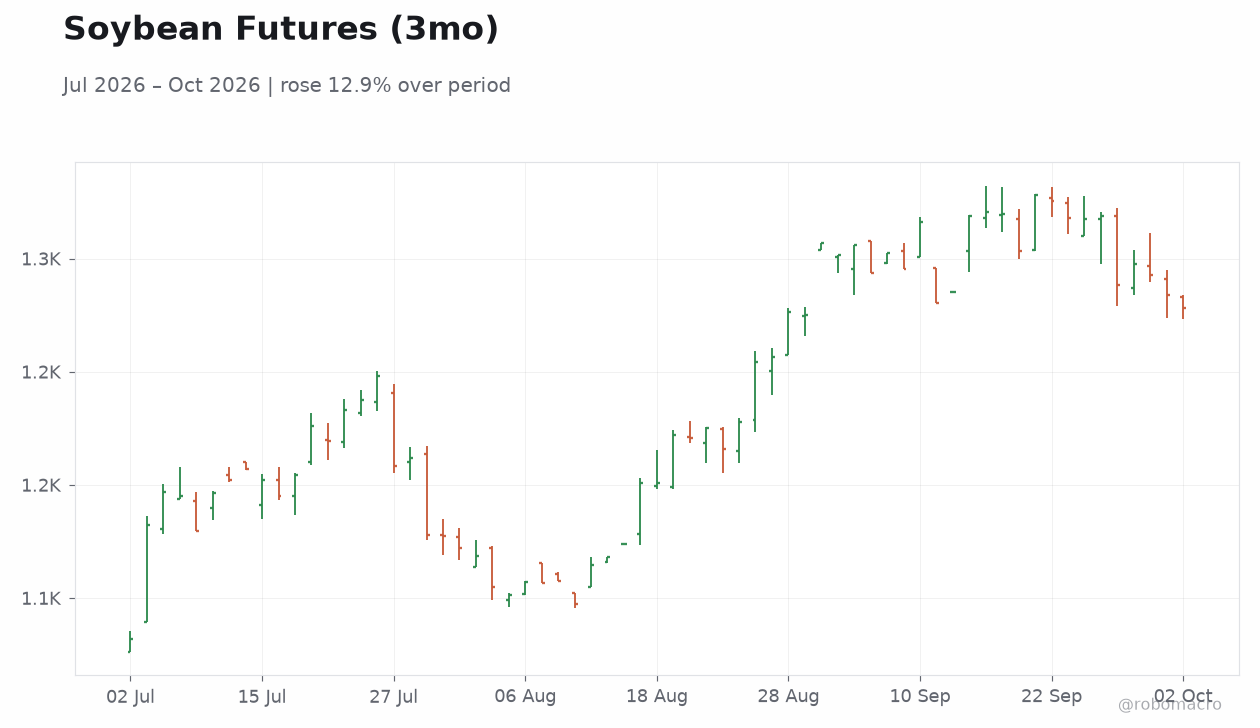
| Soybean | 1,278.25 | -0.45% |
| Bitcoin | 86,179.48 | +1.56% |
| Argentina 10Y | - | - |
Prior Economic Events
| Data | Prior | Cons | Actual |
|---|---|---|---|
| No events available | |||
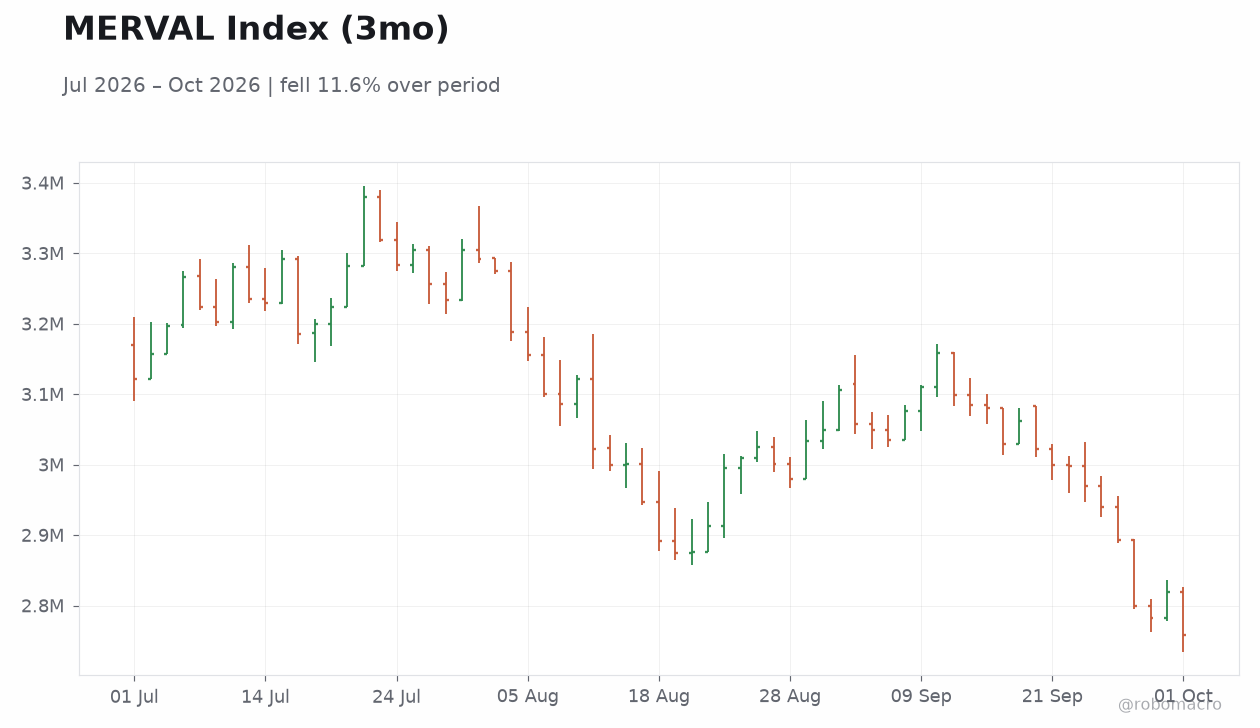 MERVAL Index (3mo) | Type: market_hloc | Index: 2.759e+06 (2026-10-01) | Range: 2.759e+06–3.38e+06 | Trend(5pt): 3.122e+06,3.284e+06,2.892e+06,3.11e+06,2.759e+06
Today's Economic Events
| Data | Prior | Cons | Time |
|---|---|---|---|
| No events available | |||
- MERVAL fell 2.15% to 2,758,840 amid thin trading and no domestic data releases.
- USD/ARS eased 0.05% to 1,524.25 while EUR/ARS declined 0.71% to 1,714.98.
- Brent crude dropped 2.89% to 99.35, pressuring soybean-linked export revenues.
Yesterday's Recap
Argentine equities posted a clear decline on October 1 as the MERVAL index closed 2.15% lower at 2,758,840.00. The peso showed modest resilience with USD/ARS slipping 0.05% to 1,524.25 and EUR/ARS falling 0.71% to 1,714.98. Commodity moves weighed on sentiment after Brent crude declined 2.89% to 99.35 and soybeans eased 0.45% to 1,278.25.
Gold rose 0.21% to 4,211.30, offering limited offset for reserve management. No inflation, activity or fiscal prints appeared, leaving the latest OECD reading of 33.5% CPI YoY from August 31 as the prevailing inflation benchmark. Markets therefore focused on external drivers and BCRA liquidity operations rather than fresh domestic signals.
The absence of surprises kept near-term policy expectations unchanged.
The Day Ahead
No scheduled releases appear on the calendar for October 2 or 3, directing attention to external factors and any unscheduled BCRA statements. Traders will monitor soybean export flows and fiscal consolidation progress under the current IMF programme. Peso liquidity conditions and reserve levels remain key watchpoints given the lack of new data.
Global commodity prices, especially Brent and soybeans, will influence daily peso and equity moves. Any BCRA reserve-management updates could shift expectations ahead of the next policy meeting.
Other Economic Notes
Argentina’s 33.5% CPI YoY print from August continues to anchor inflation expectations in the absence of fresher figures. Fiscal consolidation efforts under the IMF programme remain central to restoring reserve buffers and supporting peso stability. Soybean export proceeds continue to drive hard-currency inflows, making commodity price volatility a direct transmission channel to BCRA reserves.
Equity market weakness may reflect positioning ahead of external catalysts rather than domestic data surprises. Broader themes of reserve accumulation and inflation control will dominate until the next scheduled prints arrive.