Argentina Macro Daily(Beta Mode)
Peso Steady, Merval Slips as BCRA Watch Persists
Market Snapshot
| Asset | Level | Change |
|---|---|---|
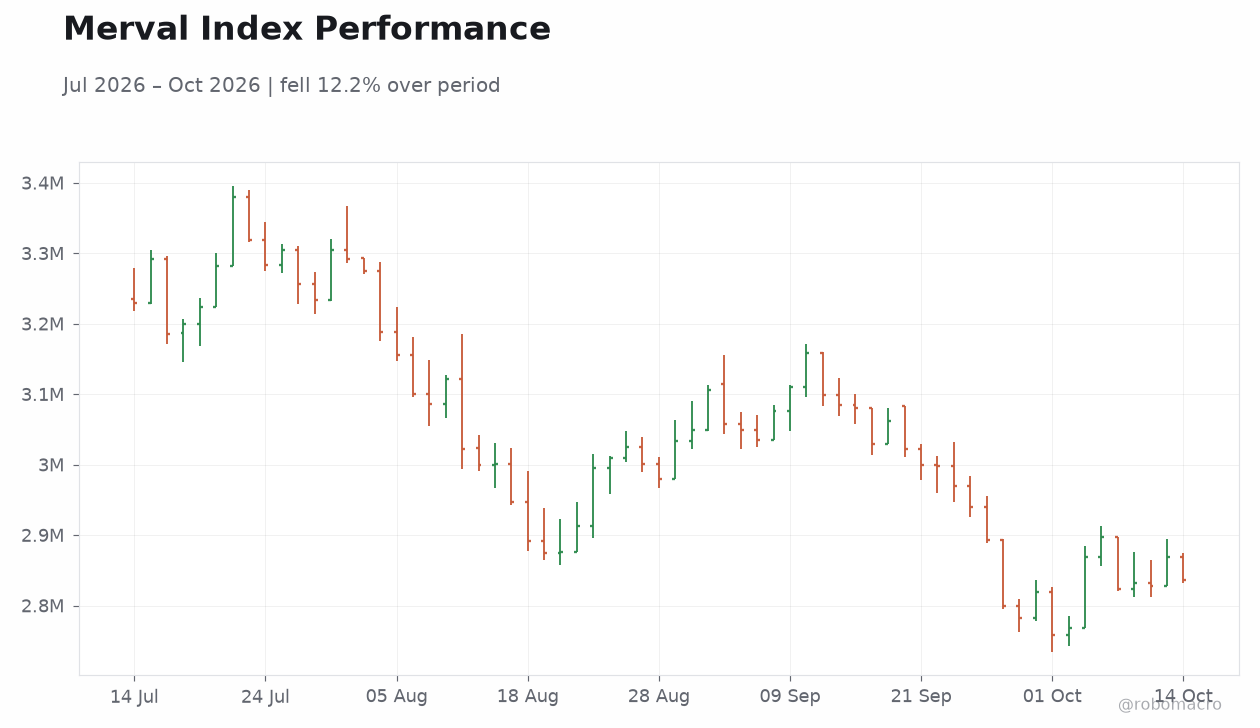
| MERVAL | 2,835,843.00 | -1.16% |
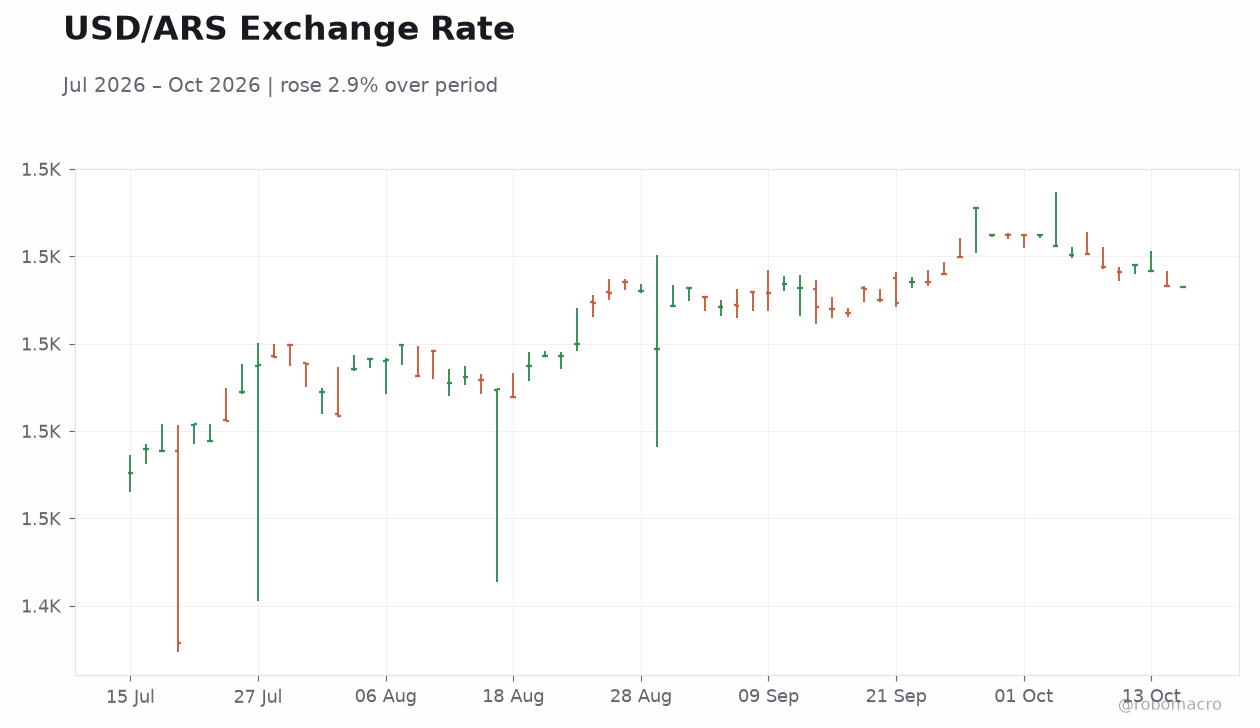
| USD/ARS | 1,513.00 | -0.02% |
| EUR/ARS | 1,698.74 | +0.22% |
| Gold | 4,172.70 | +1.58% |
| Brent Crude | 104.18 | -1.77% |
| Soybean | 1,272.75 | -0.35% |
| Bitcoin | 81,238.40 | -0.40% |
| Argentina 10Y | - | - |
Prior Economic Events
| Data | Prior | Cons | Actual |
|---|---|---|---|
| No events available | |||
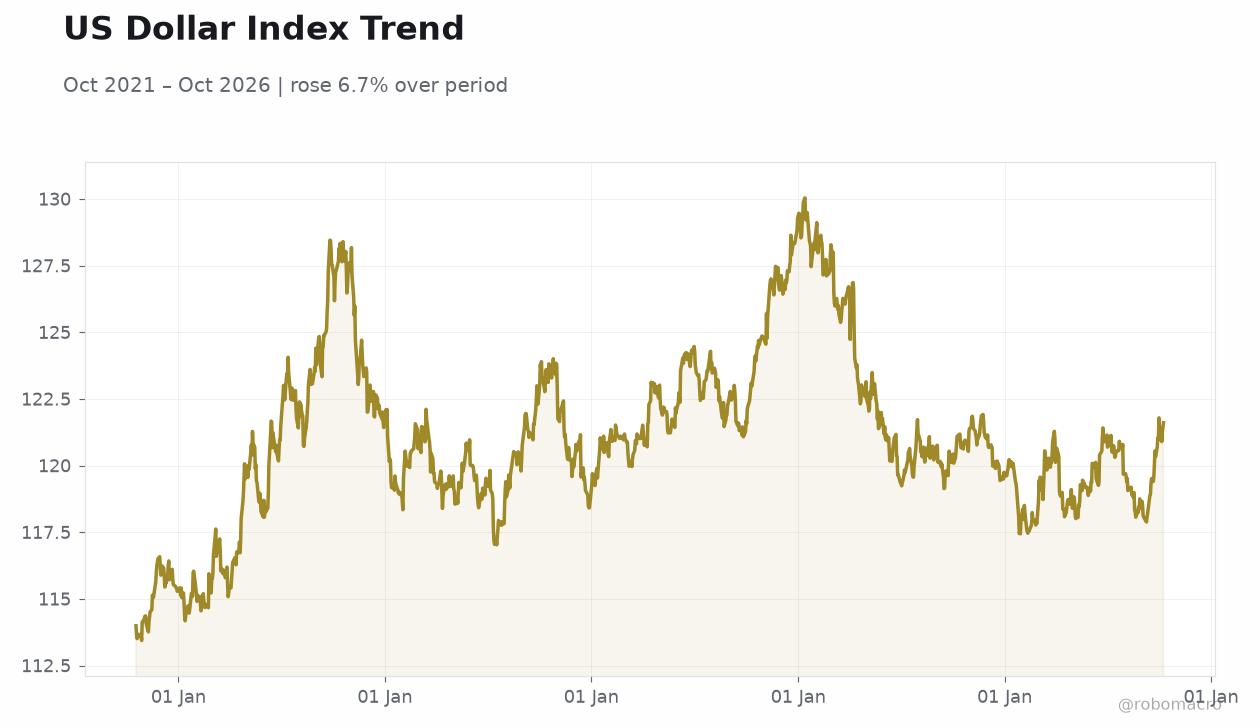 US Dollar Index Trend | Type: macro_line | Broad Dollar Index: 121.6 (2026-10-09) | Range: 113.4–130 | Trend(6pt): 114,119.1,122.4,120.2,121.4,121.6
Today's Economic Events
| Data | Prior | Cons | Time |
|---|---|---|---|
| No events available | |||
- Merval fell 1.16% to 2,835,843 while the peso held near 1,513/USD, down 0.02%, as equity weakness contrasted with a stable currency.
- Soybeans slipped 0.35% to $1,272.75, a soft signal for Argentina's export engine, while Brent crude dropped 1.77% to $104.18.
- No domestic data releases or calendar events are scheduled for today, leaving BCRA communications and global risk appetite to drive price action.
Yesterday's Recap
Argentina's equity market closed lower on Wednesday, with the Merval shedding 1.16% to finish at 2,835,843.00 as profit-taking weighed on benchmark names. The currency market was calmer, with USD/ARS essentially flat at 1,513.00, slipping just 0.02% in a session marked by limited intervention headlines. The cross against Europe firmed, with EUR/ARS up 0.22% to 1,698.74, reflecting euro strength against a basket of emerging currencies rather than peso-specific pressure.
In commodities relevant to the Argentine trade balance, soybean futures eased 0.35% to $1,272.75, a modest drag on the export receipts outlook, while Brent crude fell sharply by 1.77% to $104.18, reducing the energy import bill. Gold rallied 1.58% to $4,172.70, signaling persistent demand for hard assets amid global uncertainty. Bitcoin, often a proxy for capital-flight hedging in Argentina, declined 0.40% to $81,238.40.
The 10-year Argentine bond yield was not quoted, leaving the local fixed-income picture dependent on secondary-market proxies and BCRA liquidity operations.
The Day Ahead
Thursday's domestic calendar is empty, with no scheduled statistical releases from INDEC or auction announcements from the Finance Ministry. Absent local prints, attention shifts to BCRA money-market operations and the pace of peso liquidity absorption, which traders will parse for signals on the crawling-peg trajectory. Soybean and corn futures will be watched closely as the 2026/2027 planting season progresses, given their outsized weight in export tax receipts.
Regional peers, including Brazil's real and Chilean peso, may offer direction for the ARS in thin conditions. Any statements from Economy Ministry officials on fiscal consolidation targets under the IMF programme would likely move the sovereign curve. With the Merval having retreated from recent highs, technical support levels will be tested if global risk sentiment deteriorates further.
Other Economic Notes
Argentina's inflation trajectory remains the central macro variable, with the latest OECD reading showing consumer prices up 33.5% year-on-year as of end-August. ↓ p.2