Argentina Macro Daily(Beta Mode)
Peso Steadies, Merval Extends Gains
Market Snapshot
| Asset | Level | Change |
|---|---|---|
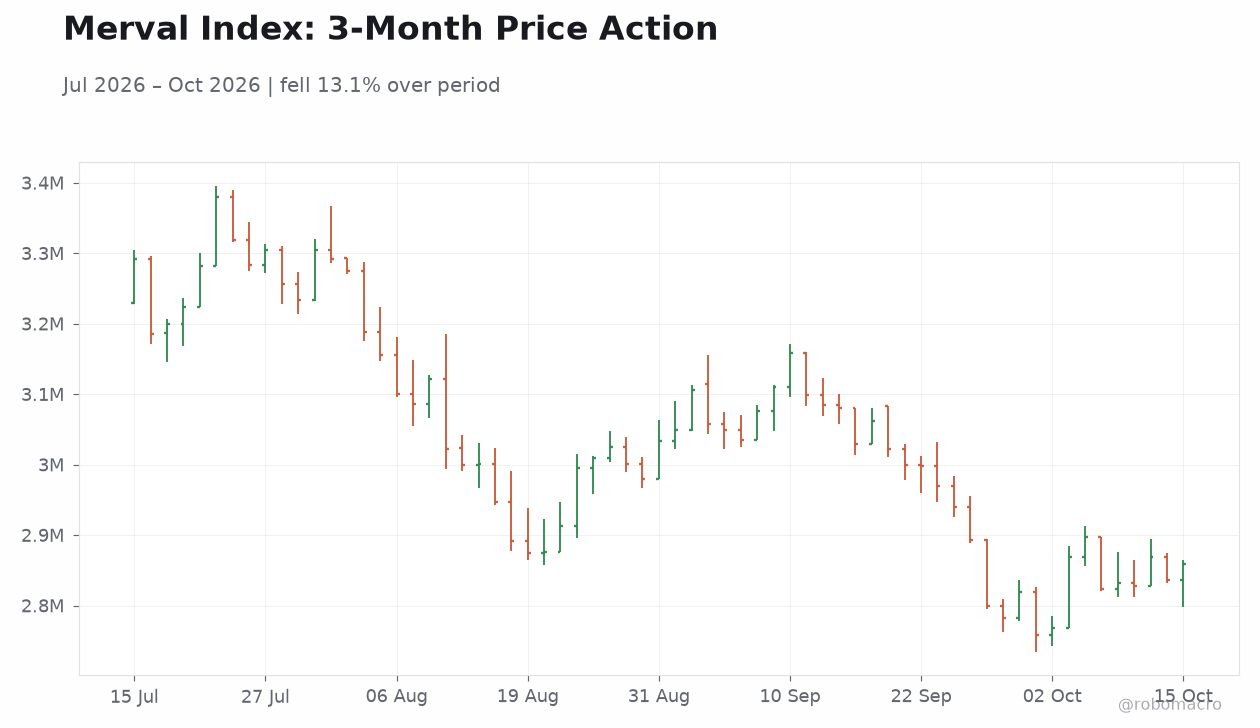
| MERVAL | 2,859,051.00 | +0.82% |
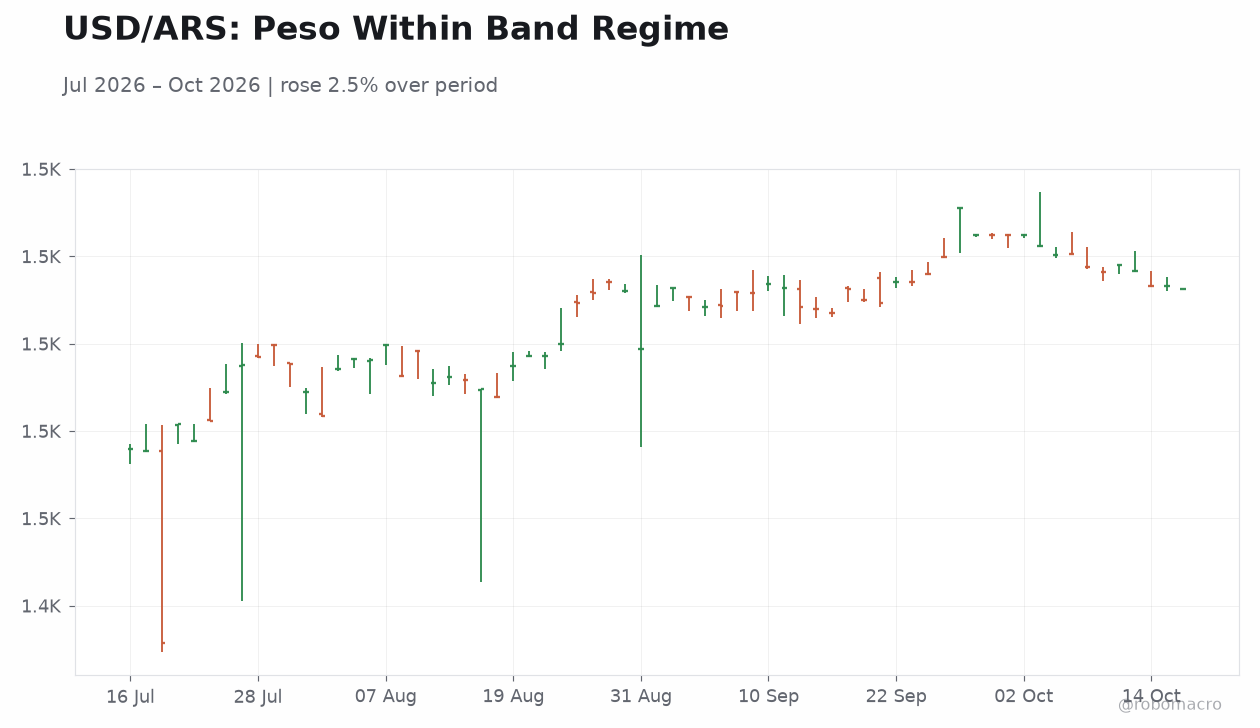
| USD/ARS | 1,512.50 | -0.05% |
| EUR/ARS | 1,698.83 | +0.28% |
| Gold | 4,210.80 | +0.98% |
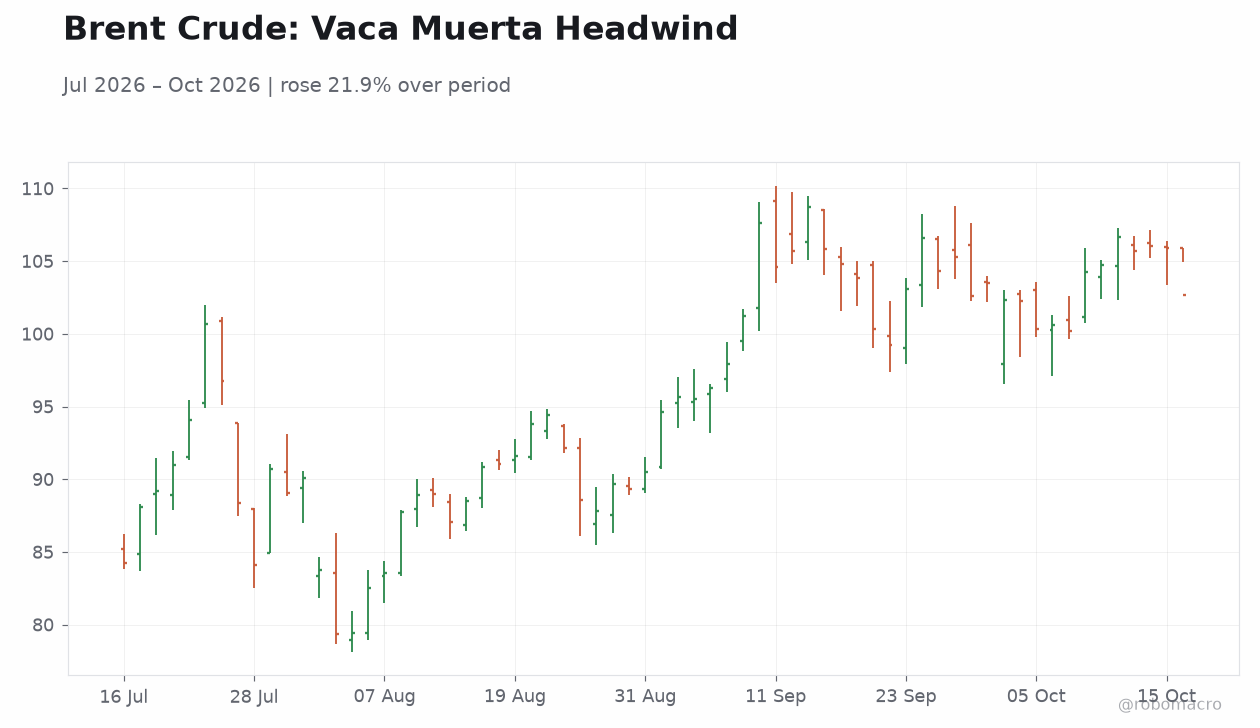
| Brent Crude | 102.66 | -3.08% |
| Soybean | 1,261.75 | -0.10% |
| Bitcoin | 82,121.67 | -0.02% |
| Argentina 10Y | - | - |
Prior Economic Events
| Data | Prior | Cons | Actual |
|---|---|---|---|
| No events available | |||
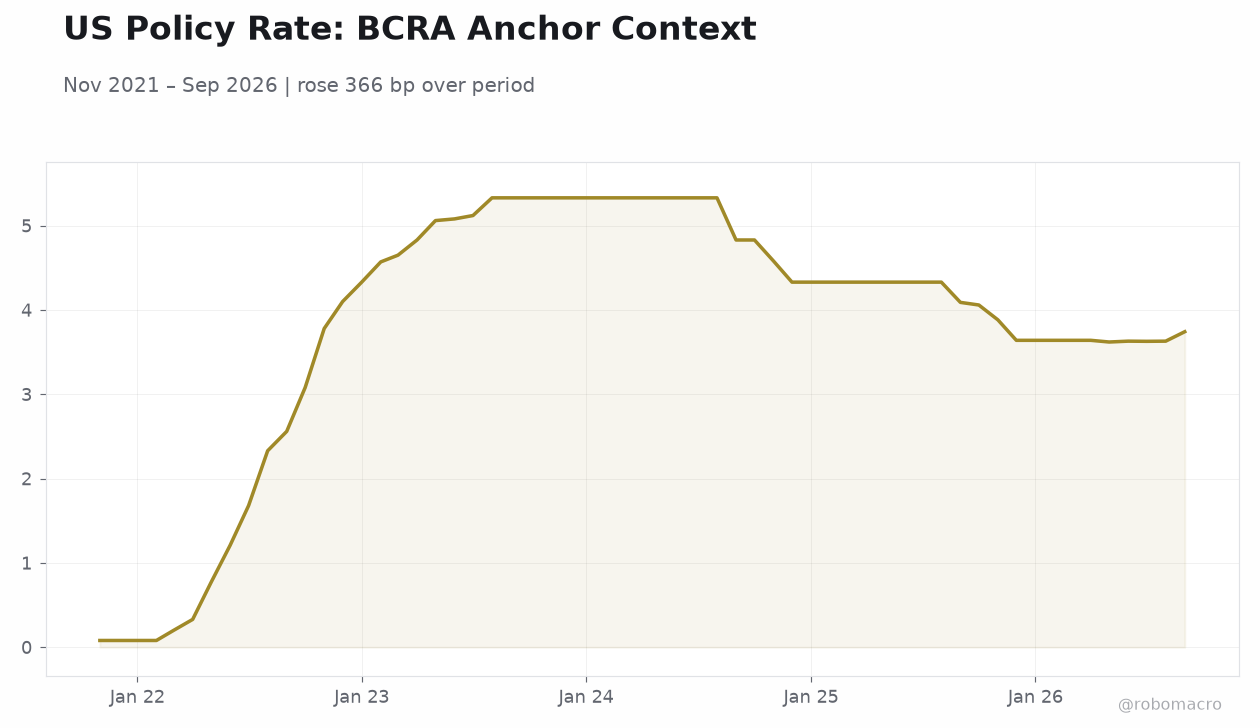 US Policy Rate: BCRA Anchor Context | Type: macro_line | Percent per Annum: 3.742 (2026-09-01) | Range: 0.08–5.33 | Trend(6pt): 0.08,4.33,5.33,4.33,3.628,3.742
Today's Economic Events
| Data | Prior | Cons | Time |
|---|---|---|---|
| No events available | |||
- Merval adds 0.82% to 2,859,051 as peso holds near 1,512.50/USD
- Brent slides 3.08% to $102.66, a headwind for Vaca Muerta economics
- No scheduled data prints; focus shifts to BCRA communication and IMF review cadence
Yesterday's Recap
Argentine equities ground higher on Thursday, with the Merval closing at 2,859,051, up 0.82%, extending the index's recent grind upward even as turnover remained thin. The peso was the quiet story: USD/ARS slipped 0.05% to 1,512.50, a marginal move that nonetheless signals the currency band regime continues to hold without heavy central bank intervention. Crossed rates diverged slightly, with EUR/ARS up 0.28% to 1,698.83, reflecting euro strength against the dollar rather than peso-specific pressure.
Commodity moves were mixed and matter for Argentina's external accounts: Brent crude fell sharply, down 3.08% to $102.66, trimming the revenue outlook for the energy sector just as Vaca Muerta shale output scales. Soybeans eased 0.10% to $1,261.75, leaving the export tax base and farmer selling incentives broadly intact. Gold rallied 0.98% to $4,210.80, while Bitcoin was flat at $82,121.67, offering little directional signal for risk appetite.
The long end of the local curve was quiet, with no meaningful yield prints on the benchmark 10-year.
The Day Ahead
Friday's calendar is sparse, with no scheduled Argentine data releases, leaving the tape to be driven by flows and secondary-market dynamics in bonds and equities. Attention stays on the peso's behavior within the band, particularly whether the BCRA intervenes to smooth volatility ahead of the weekend. Soybean and corn prices will be watched for any pickup in farmer dollar liquidation, which has been a key source of FX supply.
Energy headlines may continue to percolate after the Guardian's reporting on health and environmental concerns around Vaca Muerta, a reminder of the social license risks surrounding the shale buildout. With no domestic prints, regional and global risk sentiment will do the heavy lifting for Argentine assets into the close of the week.
Other Economic Notes
The most telling domestic datapoint this week was not a government release but a cost-of-living analysis showing Argentine families need ever-higher incomes to stay above the poverty line, as essential-goods inflation outpaces the headline basket. That dynamic matters politically and for wage negotiations, which feed back into the BCRA's inflation outlook. ↓ p.2