| Asset | Level | Change |
|---|---|---|
| MERVAL | 2,848,945.00 | -0.35% |
| USD/ARS | 1,517.50 | +0.30% |
| EUR/ARS | 1,703.29 | +0.40% |
| Gold | 4,190.60 | +0.23% |
| Brent Crude | 107.93 | -1.76% |
| Soybean | 1,260.75 | -0.04% |
| Bitcoin | 82,696.95 | +0.83% |
| Argentina 10Y | - | - |
| Data | Prior | Cons | Actual |
|---|---|---|---|
| No events available | |||
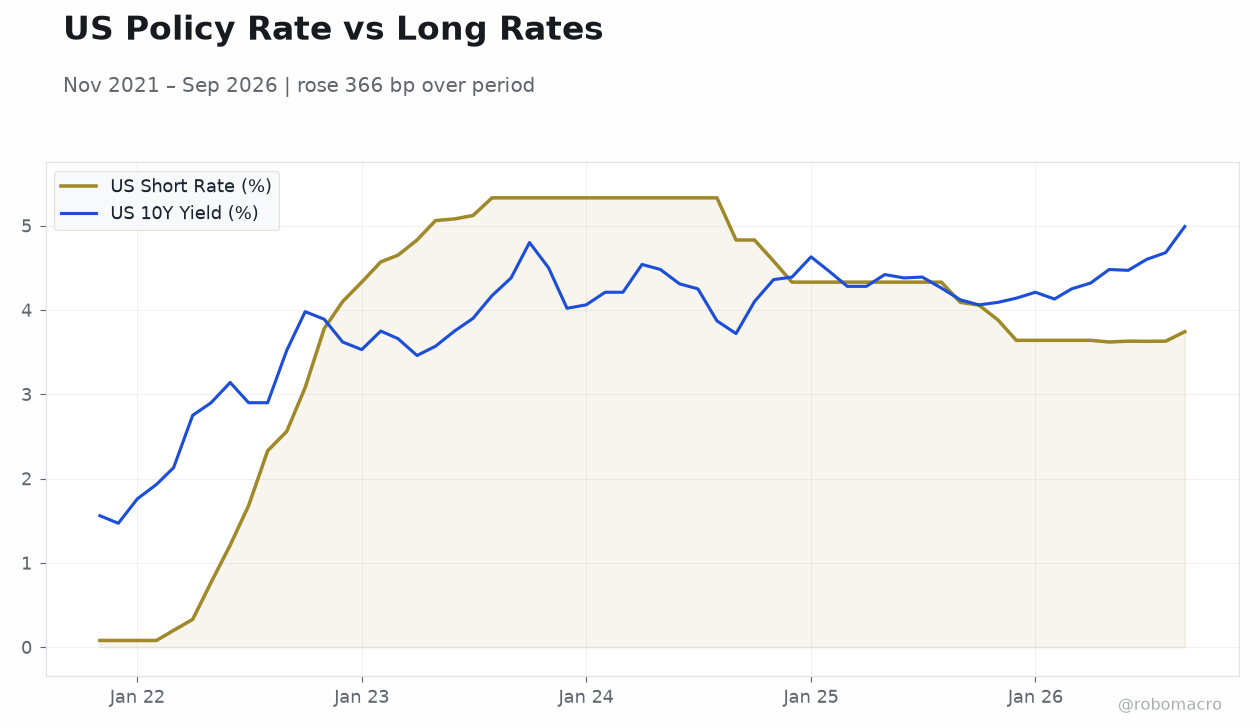
US Policy Rate vs Long Rates | Type: macro_line | US Short Rate (%): 3.742 (2026-09-01) | Range: 0.08–5.33 | Trend(6pt): 0.08,4.33,5.33,4.33,3.628,3.742 | US 10Y Yield (%): 4.99 (2026-09-01) | Range: 1.47–4.99 | Trend(6pt): 1.56,3.53,4.21,4.42,4.6,4.99
| Data | Prior | Cons | Time |
|---|---|---|---|
| No events available | |||
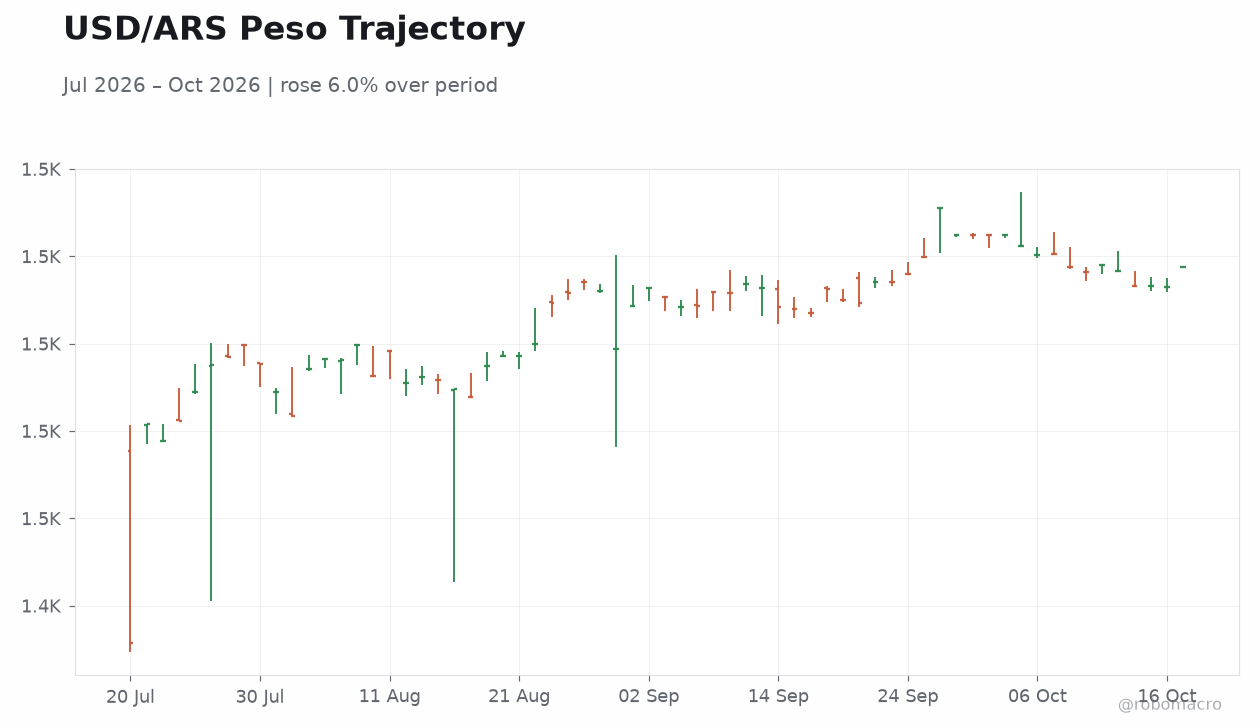
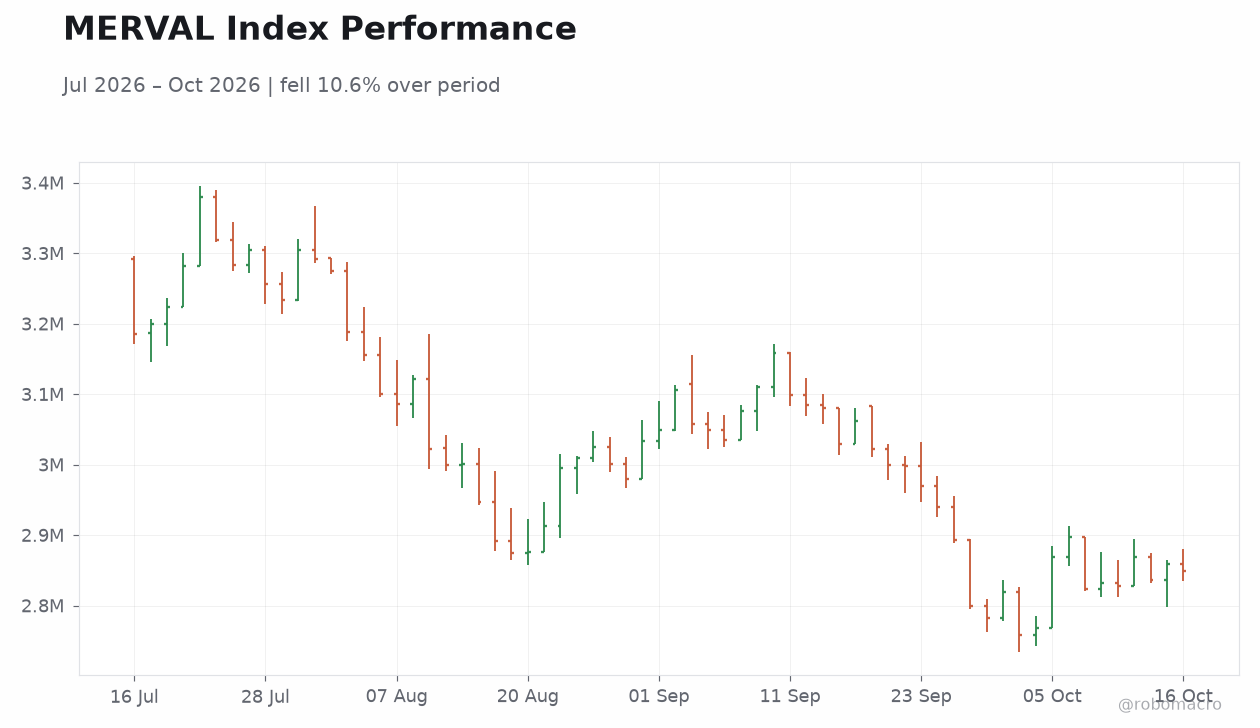
Friday's session closed with Argentine equities under modest pressure, the MERVAL shedding 0.35% to finish at 2,848,945.00 as investors digested Economy Minister Luis Caputo's assertion that the economy is positioned for a strong fourth-quarter rebound. Caputo explicitly dismissed recession probabilities, arguing that the fiscal consolidation achieved under the IMF programme has laid the groundwork for a durable recovery in activity. The currency market told a more nuanced story, with USD/ARS rising 0.30% to 1,517.50, a depreciation pace consistent with the crawling peg's managed glide path rather than disorderly pressure.
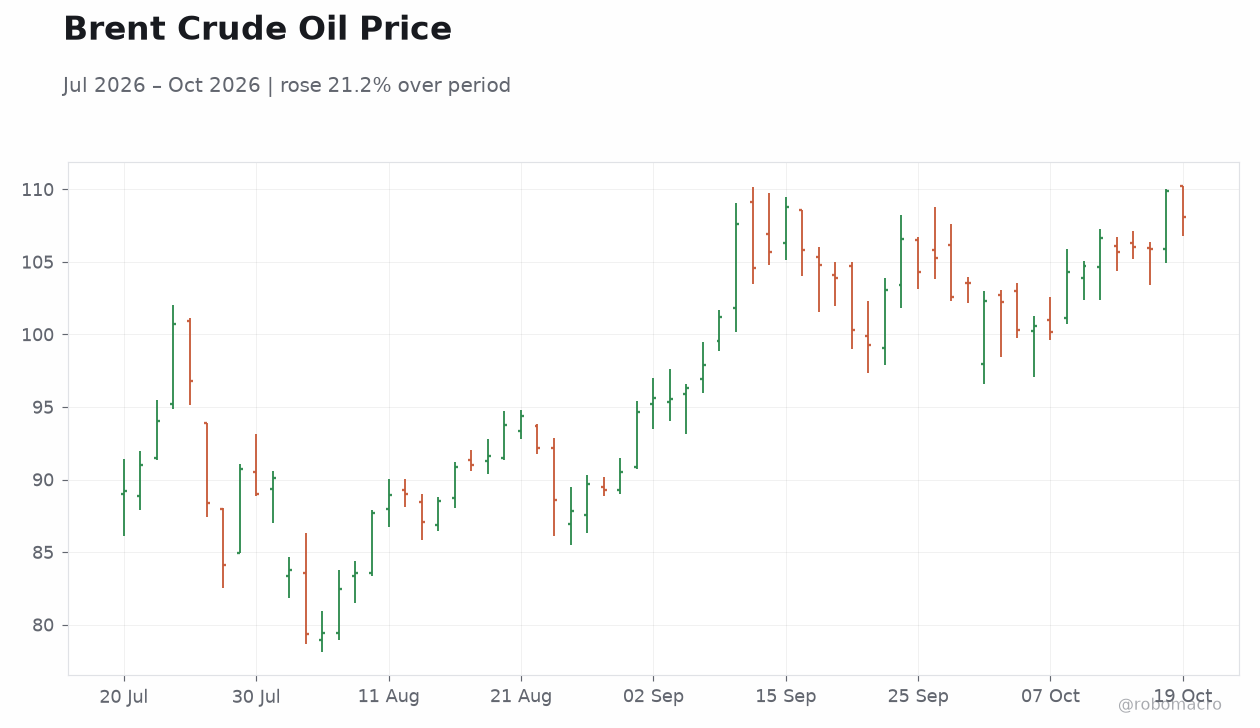
Crossed rates moved in tandem, EUR/ARS adding 0.40% to 1,703.29, reflecting broad dollar strength across emerging markets rather than Argentina-specific stress. Commodity proxies relevant to the export complex were mixed: soybeans were essentially flat at $1,260.75, down just 0.04%, offering little directional impetus for the farm-driven trade surplus. Brent crude fell sharply, dropping 1.76% to $107.93, a tailwind for the energy balance given Argentina's growing self-sufficiency from Vaca Muerta output.
Bitcoin, a barometer of capital-flight appetite, gained 0.83% to $82,696.95, suggesting measured appetite for alternative stores of value.
The calendar is light at the start of the week, leaving markets to trade on policy signals and external drivers rather than fresh domestic prints. Attention turns to BCRA communications as the monetary authority calibrates the pace of its easing cycle against residual inflation stickiness and the crawling-peg trajectory. Currency desks will watch whether the peso's gradual slide remains orderly near 1,517 per dollar, with band dynamics and intervention posture key variables.
Sovereign bond spreads should track the global risk tone, where softer crude and resilient US data are shaping emerging-market appetite. Grain exporters' daily settlement volumes will be scrutinized for signs of harvest-driven dollar inflows that underpin the balance of payments. Any ministerial remarks on the 2027 fiscal path or IMF review timing could move the curve.
Subscribe to Argentina Macro Daily and get each new issue delivered to your inbox.
Already a member? Visit robomacro.com to log in and manage subscriptions, or use Forgot Password to set a password.
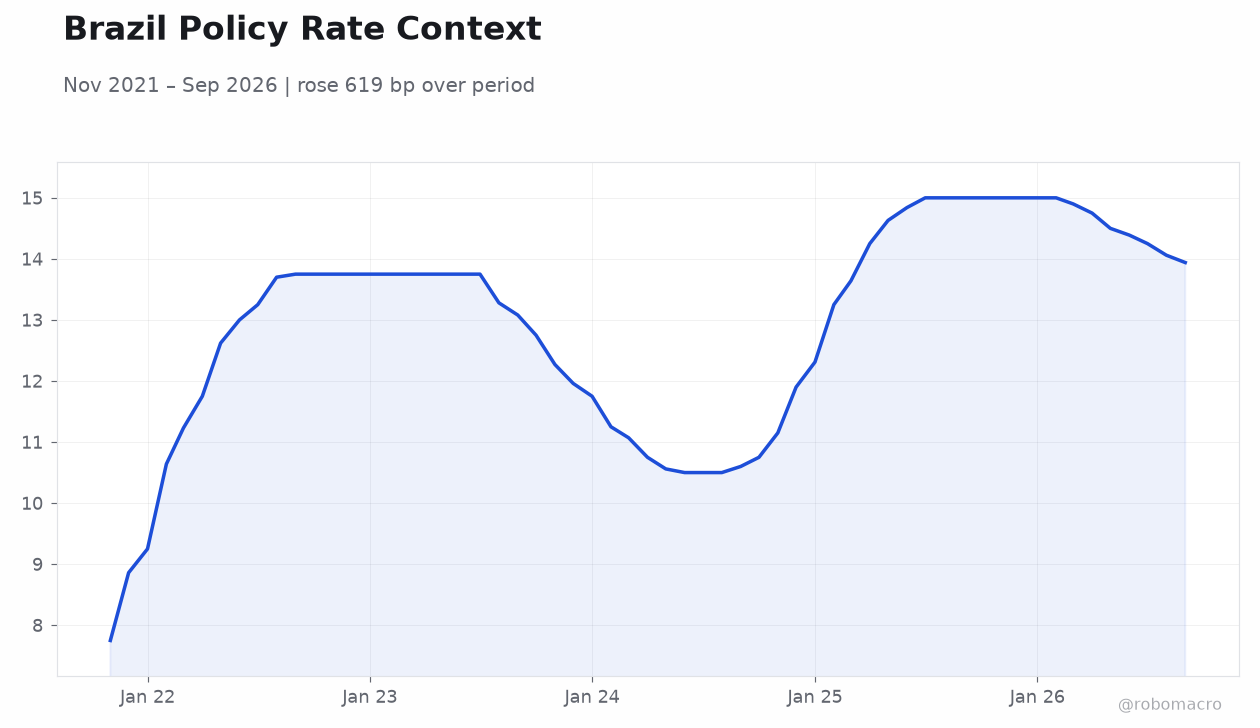
Brazil Policy Rate Context | Type: macro_line | Brazil Selic (%): 13.94 (2026-09-01) | Range: 7.75–15 | Trend(6pt): 7.75,13.75,11.07,14.63,14.25,13.94
USD/ARS Peso Trajectory | Type: market_hloc | USD/ARS: 1518 (2026-10-19) | Range: 1432–1531 | Trend(6pt): 1432,1498,1513,1516,1513,1518
MERVAL Index Performance | Type: market_hloc | MERVAL Index: 2.849e+06 (2026-10-16) | Range: 2.759e+06–3.38e+06 | Trend(5pt): 3.185e+06,3.087e+06,3.049e+06,2.97e+06,2.849e+06
Brent Crude Oil Price | Type: market_hloc | Brent ($/bbl): 108.1 (2026-10-19) | Range: 79.36–109.9 | Trend(5pt): 89.22,88.91,95.63,104.3,108.1
The inflation picture remains the central macro anchor, with consumer prices up 33.5% year-on-year as of end-August, a level that still constrains the BCRA's room for aggressive normalization even as the monthly trend decelerates. Caputo's growth optimism rests on the thesis that fiscal discipline, not demand stimulus, is restoring credibility and will unlock investment. The agricultural export engine remains pivotal: soybean values near $1,260 per ton support the trade surplus that anchors reserve accumulation under the IMF programme.
Energy economics are shifting favorably, with domestic production gains reducing the import dependence that historically strained the external accounts.
Global central banks dominated the weekend narrative, with the Iranian conflict stoking inflation concerns and prompting rate-hike talk across emerging markets. The Philippine peso's tumble beyond 63 per dollar on Fed hike bets illustrates the broader EM currency squeeze as US rate expectations firm — a dynamic that frames the BCRA's own calibration. India's RBI delivered a repo hike to 5.50%, while New Zealand's central bank faces a split debate on October tightening as inflation pressures mount.
The Bank of England's path is similarly contested among forecasters. Ghana's central bank flagged a still-low-risk credit environment with a negative credit-to-GDP gap, underscoring the global theme of cautious financial deepening. For Argentina, the key transmission is the dollar's trajectory: sustained Fed hawkishness raises the bar for EM carry trades and could complicate the peso's managed descent.
↓ p.3
Oil's pullback to $107.93 offers marginal relief on the energy account, while firm soy prices support export receipts.
The central bank's communications continue to emphasize gradualism, pairing the crawling-peg depreciation with a measured policy stance designed to keep real rates positive without choking the nascent recovery. With August CPI at 33.5% year-on-year, the BCRA has room to continue lowering nominal rates only if the monthly disinflation trend holds; officials have signaled data dependence rather than a preset path. The interplay between monetary easing and the fiscal anchor is the crux: Caputo's insistence that no recession looms raises the stakes for the BCRA to validate growth expectations without undermining the disinflation credibility earned this year.
Watch for the monetary authority's stance on sterilization and its handling of peso liquidity around harvest-driven dollar inflows, which will determine whether the 1,517 level holds as a stable equilibrium. Any guidance on the crawling-peg daily depreciation schedule remains the single most important signal for bond desks pricing inflation expectations. The committee's consensus posture suggests continuity through the next meeting, with market focus on the pace, not the direction, of normalization.