Argentina Macro Daily(Beta Mode)
Peso Slides as BCRA Holds Firm
Market Snapshot
| Asset | Level | Change |
|---|---|---|
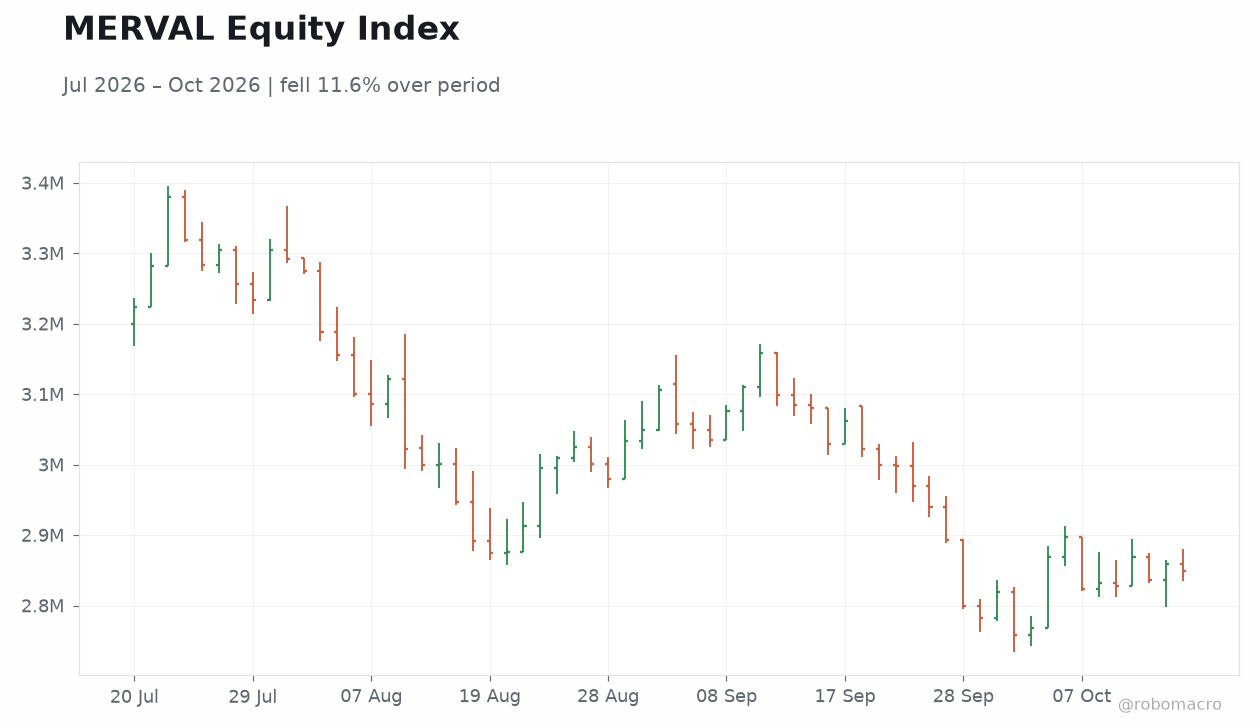
| MERVAL | 2,848,945.00 | -0.35% |
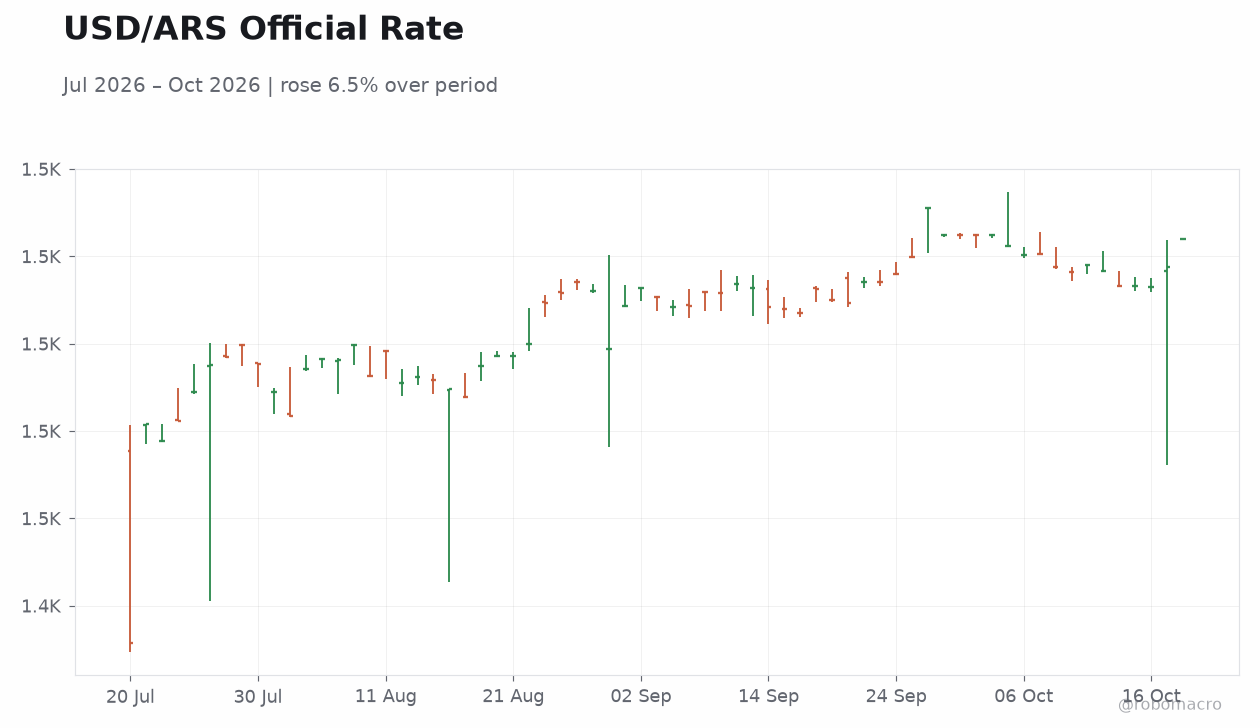
| USD/ARS | 1,524.00 | +0.42% |
| EUR/ARS | 1,711.07 | +3.50% |
| Gold | 4,139.10 | -0.50% |
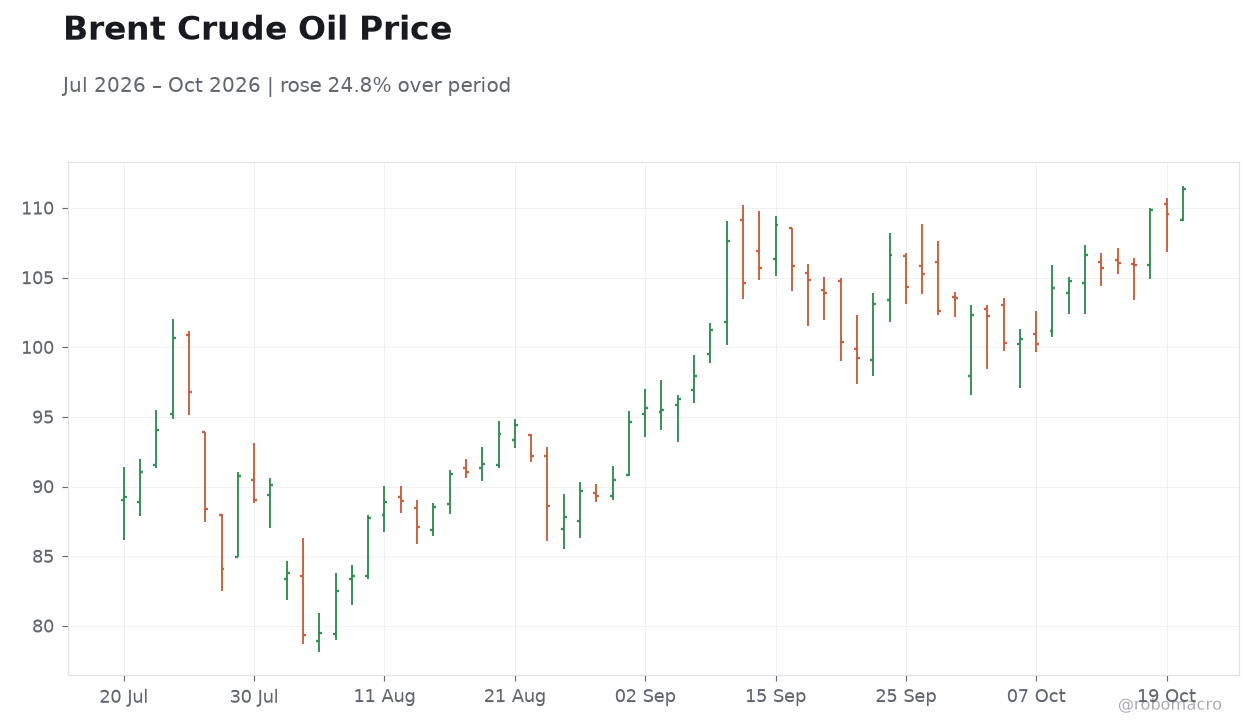
| Brent Crude | 111.35 | +1.64% |
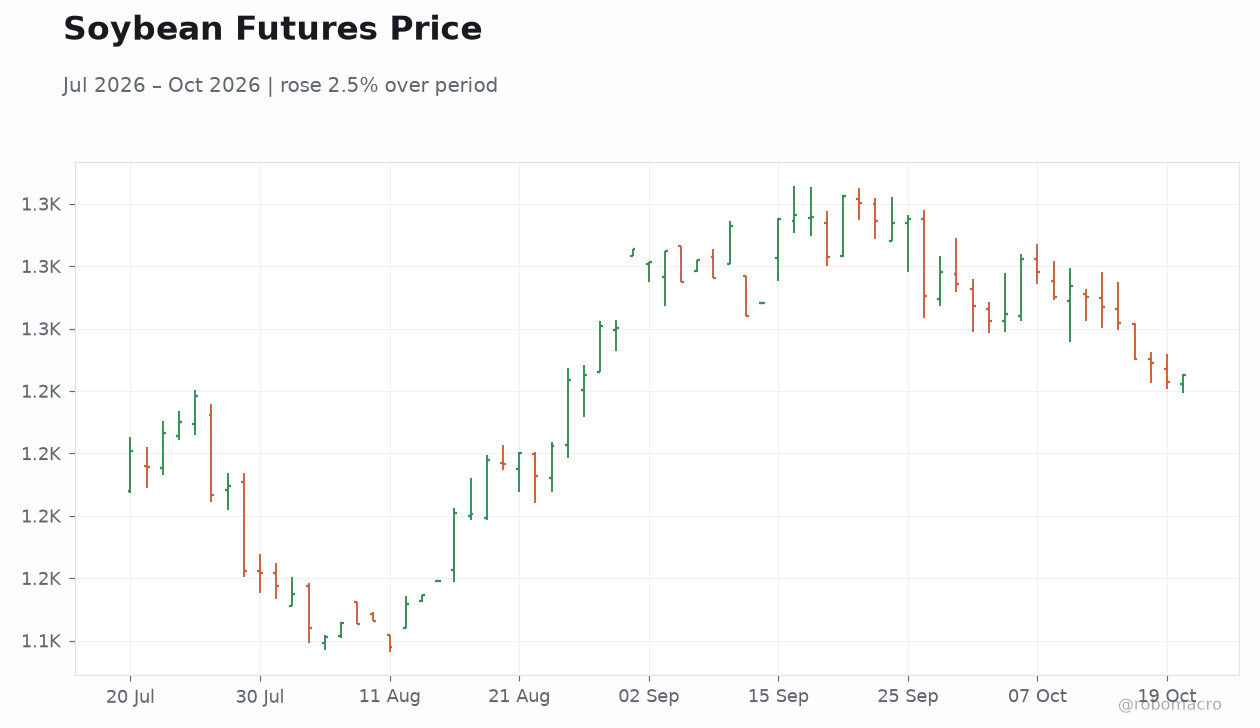
| Soybean | 1,256.25 | +0.22% |
| Bitcoin | 81,440.65 | -0.50% |
| Argentina 10Y | - | - |
Prior Economic Events
| Data | Prior | Cons | Actual |
|---|---|---|---|
| No events available | |||
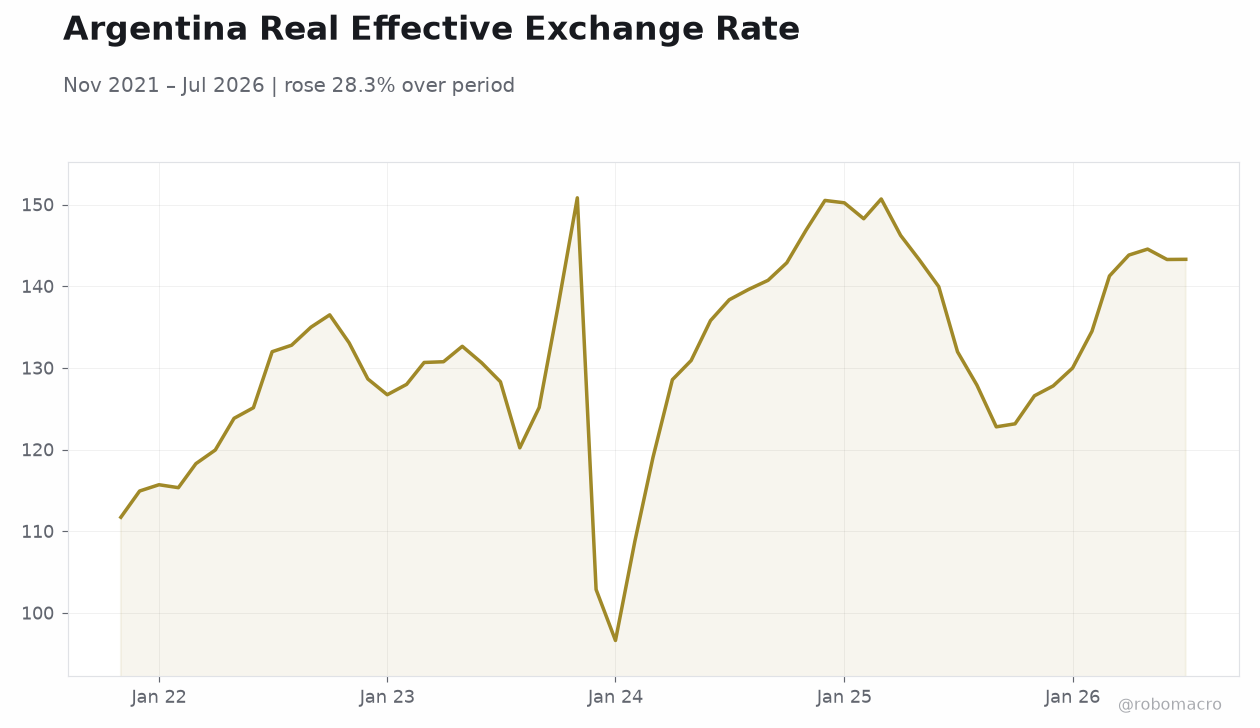 Argentina Real Effective Exchange Rate | Type: macro_line | REER Index: 143.3 (2026-07-01) | Range: 96.62–150.8 | Trend(5pt): 111.7,126.7,119,143.2,143.3
Today's Economic Events
| Data | Prior | Cons | Time |
|---|---|---|---|
| No events available | |||
- USD/ARS rose 0.42% to 1,524 while EUR/ARS jumped 3.50% to 1,711.07, signaling broad dollar strength against the peso.
- MERVAL slipped 0.35% to 2,848,945 as Argentine equities lagged regional peers.
- Brent crude climbed 1.64% to $111.35, a tailwind for Vaca Muerta-linked energy names but a headwind for the trade balance.
Yesterday's Recap
Argentine markets opened the week on a defensive footing, with the MERVAL easing 0.35% to 2,848,945 as investors trimmed exposure to local equities amid persistent FX pressure. The peso weakened against the dollar, with USD/ARS rising 0.42% to 1,524, while the euro cross surged 3.50% to 1,711.07, reflecting a softer euro backdrop rather than a peso-specific shock. The 10-year sovereign yield was not quoted in the latest data pull, leaving bond investors without a fresh benchmark, though the absence of a print suggests thin secondary-market liquidity.
Soybean futures edged up 0.22% to $1,256.25, offering marginal support to the export complex ahead of the core harvest-marketing window. Gold fell 0.50% to $4,139.10, trimming the hedge value of BCRA's reserve composition. Bitcoin slipped 0.50% to $81,440.65, a neutral signal for Argentine crypto-dollar demand.
No official Argentine data releases were scheduled for the session, leaving price action to drive the narrative.
The Day Ahead
The calendar is empty for Wednesday, October 21, with no scheduled Argentine data releases, so markets will trade on positioning and external cues. Attention turns to the peso's parallel-market spread and whether BCRA intervenes to smooth the official rate. Soybean and Brent pricing will be the key swing factors for the trade surplus outlook and energy-sector equities.
Traders will also watch for any BCRA communication on reserve accumulation and sterilization operations. With no domestic catalyst, Argentine assets are likely to take their direction from global risk appetite and the dollar index.
Other Economic Notes
Argentina's disinflation trajectory remains the anchor of the macro story, with CPI running at 33.5% year-on-year as of August 2026, a marked improvement from prior years but still elevated by regional standards. Fiscal consolidation continues to be the government's central credibility lever, and the IMF programme remains the key external backstop for reserve adequacy. Soybean export receipts are the primary hard-currency engine, making the current pricing environment critical for reserve build.
↓ p.2