Argentina Macro Daily(Beta Mode)
BCRA Autonomy Reform Advances as Peso Holds
Market Snapshot
| Asset | Level | Change |
|---|---|---|
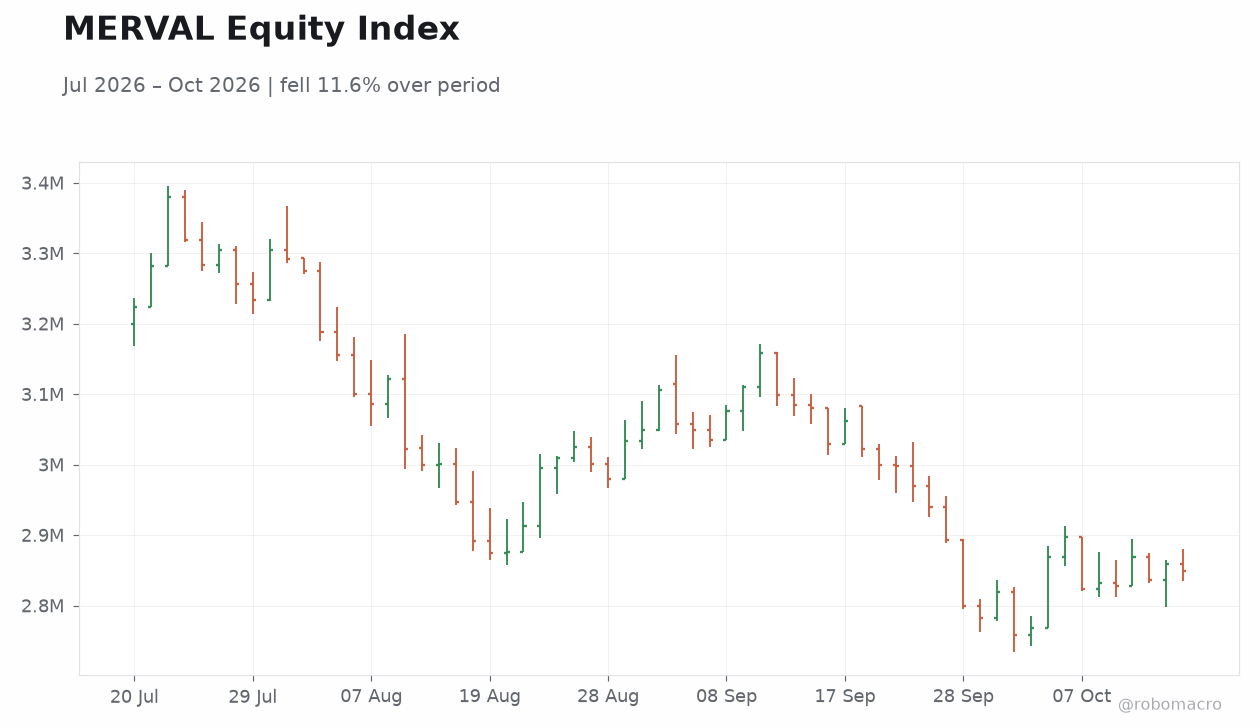
| MERVAL | 2,848,945.00 | -0.35% |
| USD/ARS | 1,524.50 | +0.02% |
| EUR/ARS | 1,711.71 | +0.14% |
| Gold | 4,139.40 | -0.08% |
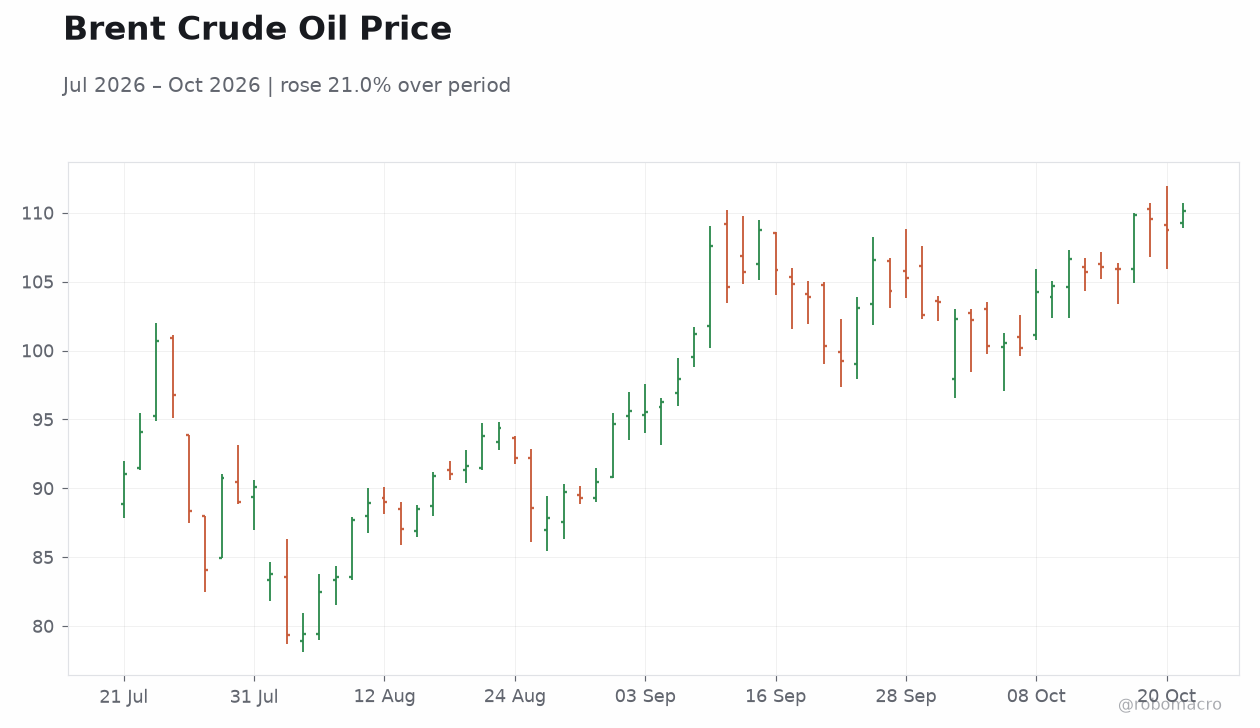
| Brent Crude | 110.11 | +1.21% |
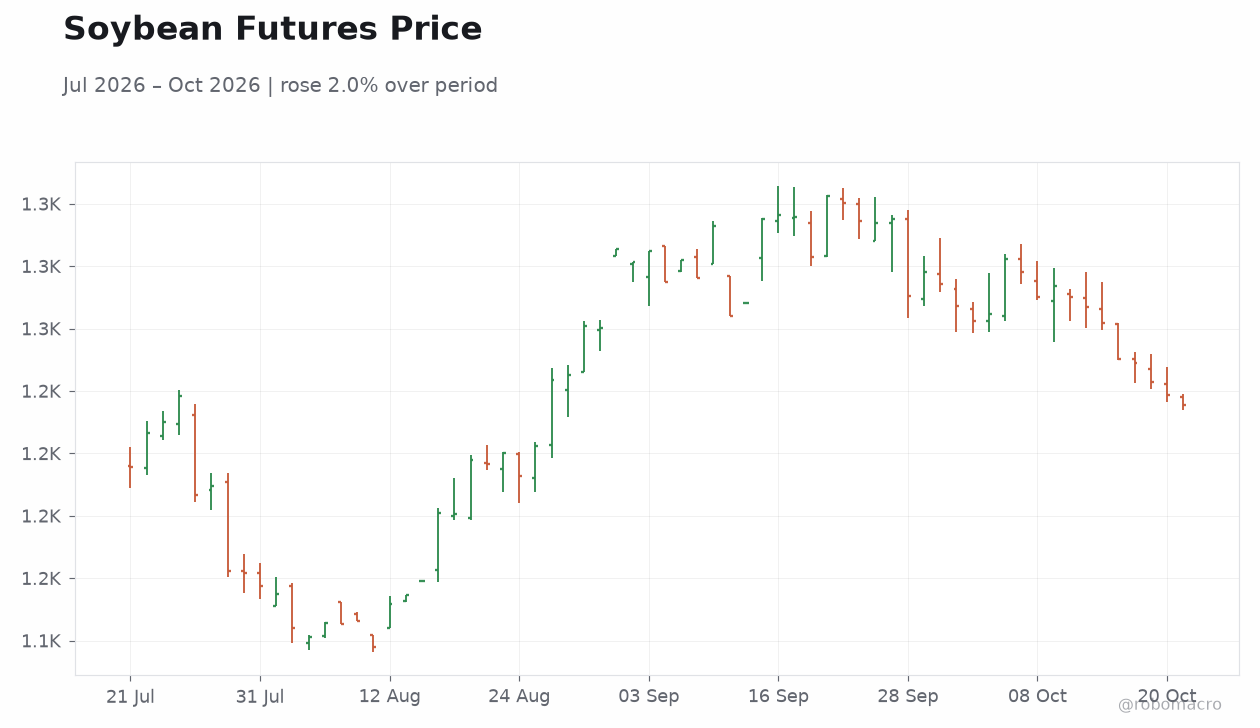
| Soybean | 1,244.25 | -0.32% |
| Bitcoin | 83,511.03 | +0.69% |
| Argentina 10Y | - | - |
Prior Economic Events
| Data | Prior | Cons | Actual |
|---|---|---|---|
| No events available | |||
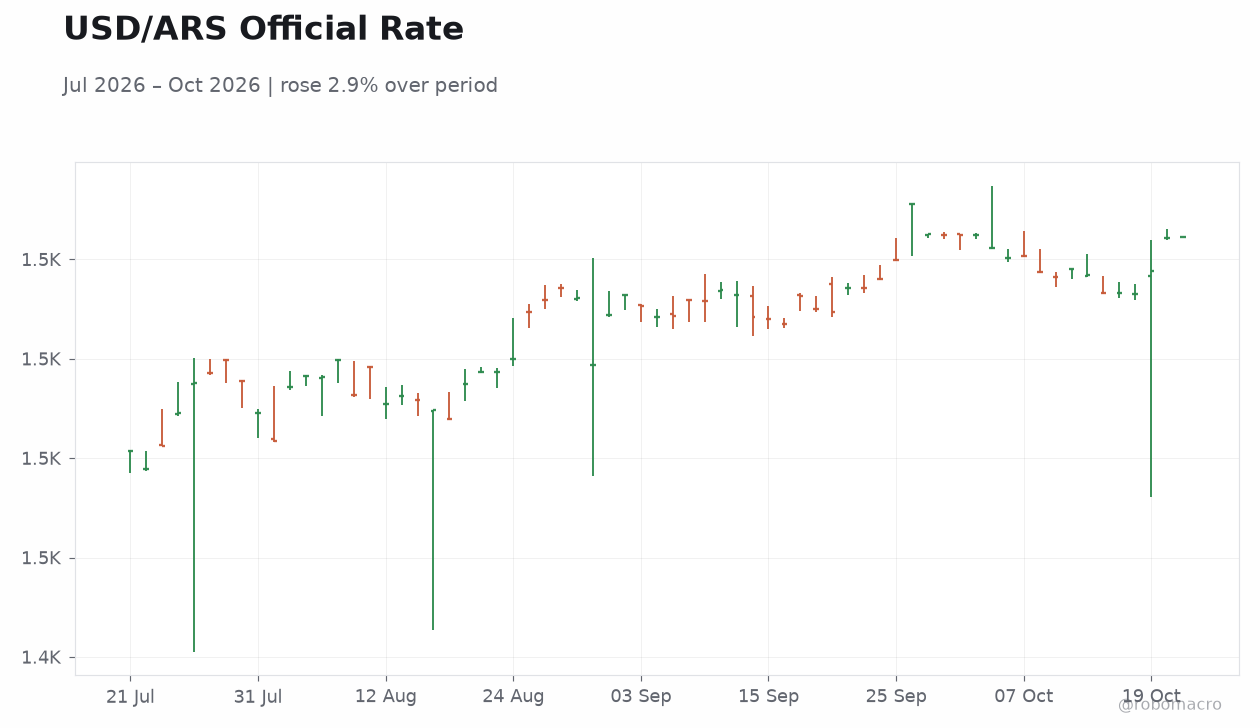 USD/ARS Official Rate | Type: market_hloc | USD/ARS: 1524 (2026-10-21) | Range: 1478–1531 | Trend(6pt): 1482,1491,1511,1520,1518,1524
Today's Economic Events
| Data | Prior | Cons | Time |
|---|---|---|---|
| No events available | |||
- Peso steady near 1,524.5/USD; MERVAL slips 0.35% amid thin pre-data trading
- Bank of Spain endorses Milei's BCRA autonomy reform, a key IMF-program signal
- Brent above $110 keeps energy import bill and inflation risk in focus; soybeans softer
Yesterday's Recap
Argentina's calendar was empty on Tuesday, leaving markets to trade on positioning and external cues. The MERVAL closed at 2,848,945, down 0.35%, with volume light and investors reluctant to add risk ahead of fresh domestic catalysts. USD/ARS finished at 1,524.50, effectively flat at +0.02%, suggesting the crawling-band regime continues to anchor spot with minimal intervention pressure.
EUR/ARS edged up 0.14% to 1,711.71, tracking euro-side flows rather than any local development. In commodities, Brent crude rose 1.21% to $110.11, a reminder that energy remains the main imported-inflation channel for Argentina, while soybean prices slipped 0.32% to $1,244.25, trimming the export-revenue outlook for the upcoming harvest. Gold eased 0.08% to $4,139.40, offering little directional signal.
With no official prints to digest, the session was a holding pattern, and the 10-year sovereign yield showed no quoted change in the data feed.
The Day Ahead
Wednesday's domestic calendar is again empty, so attention shifts to secondary drivers rather than scheduled releases. Traders will watch the official wholesale and retail FX windows for any widening of the gap between the official rate and parallel quotes, a persistent signal of reserve pressure. Soybean and Brent pricing will matter more than usual: softer beans undercut export settlement flows, while $110 crude sustains the energy import bill.
Any BCRA communication on reserve accumulation or the crawling-band pace will be parsed closely given the reform debate. With no local data to move the tape, global risk sentiment and commodity direction will likely set the tone for the MERVAL and sovereign bonds.
Other Economic Notes
The Milei government's push to entrench central bank autonomy is the dominant structural theme, with the Bank of Spain calling the reform "reasonable" — a meaningful external validation that strengthens the credibility case with the IMF and foreign investors. Fiscal consolidation remains the anchor of the program, and market participants are focused on whether spending discipline holds through the electoral cycle. ↓ p.2