Argentina Macro Daily(Beta Mode)
Argentina Bonds Slump as Growth Sputters
Market Snapshot
| Asset | Level | Change |
|---|---|---|
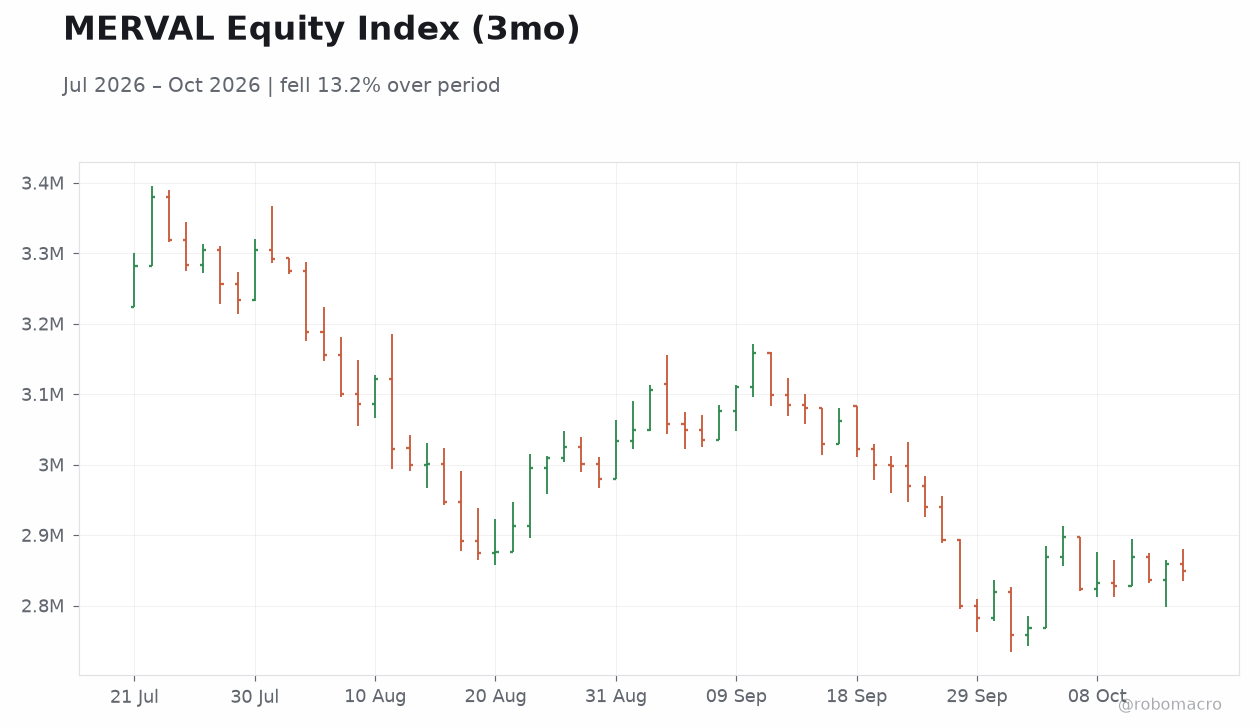
| MERVAL | 2,848,945.00 | -0.35% |
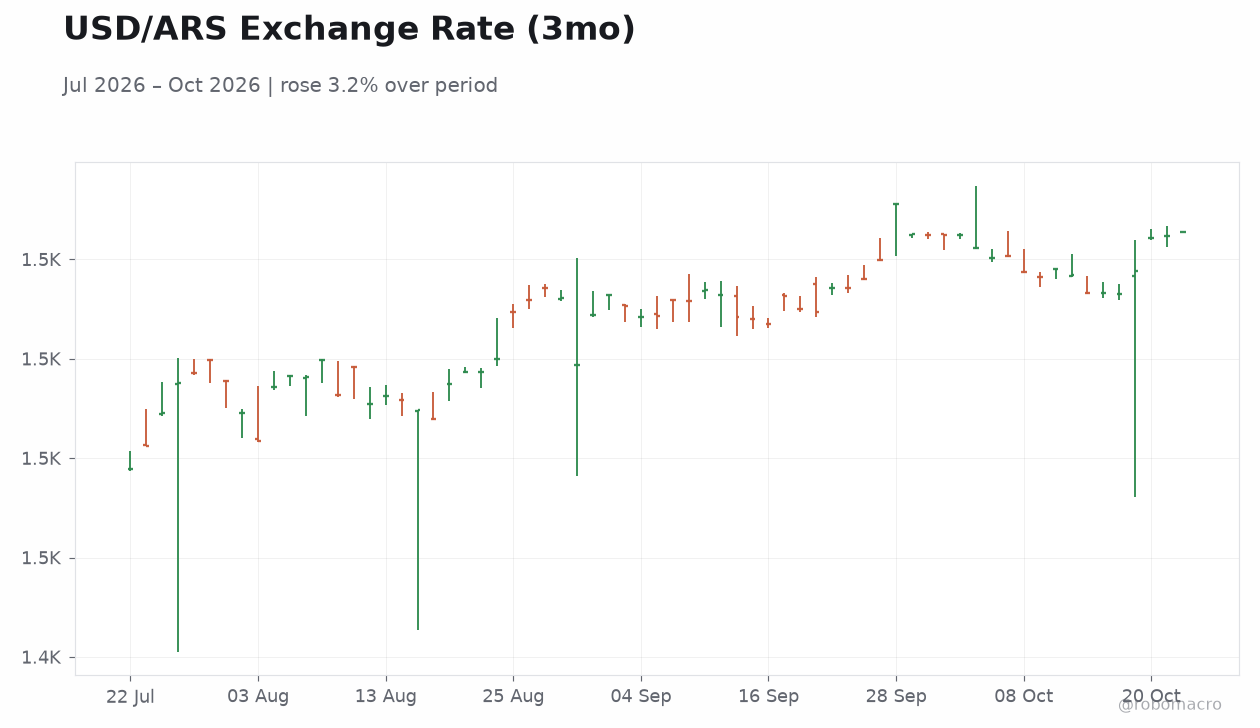
| USD/ARS | 1,525.50 | +0.05% |
| EUR/ARS | 1,715.20 | +0.20% |
| Gold | 4,098.30 | -1.25% |
| Brent Crude | 112.49 | +3.37% |
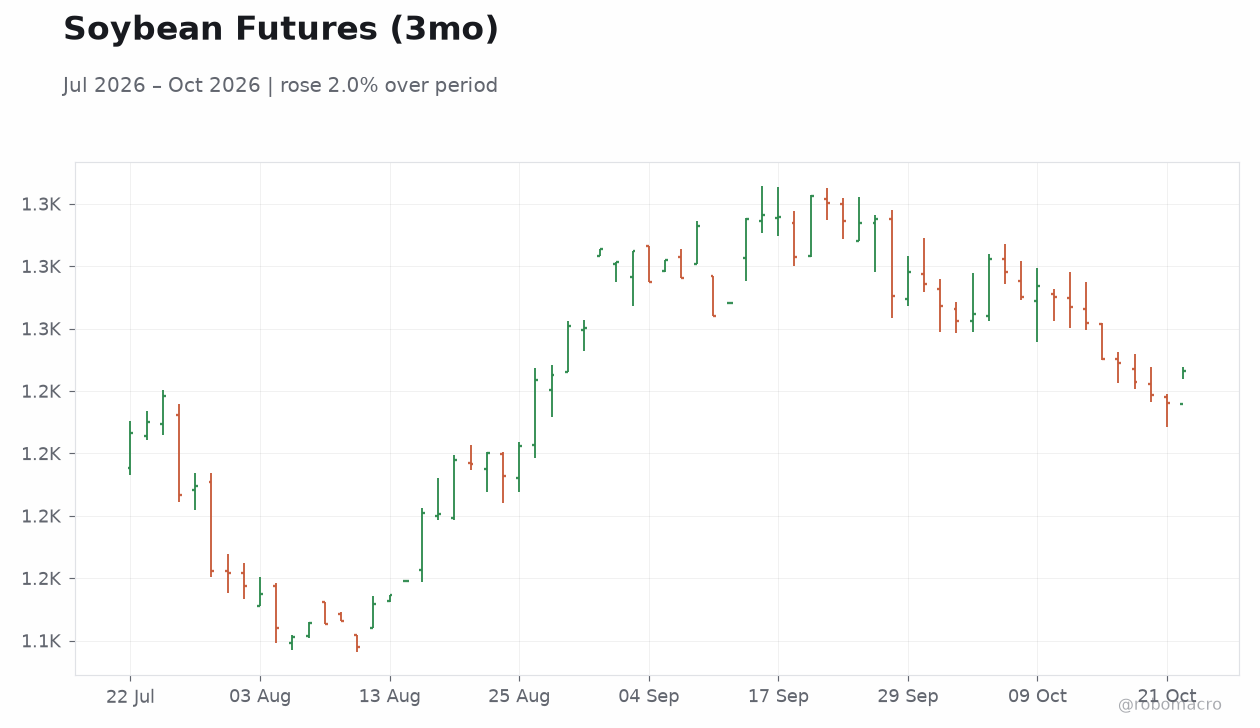
| Soybean | 1,258.00 | +1.02% |
| Bitcoin | 81,645.04 | -2.82% |
| Argentina 10Y | - | - |
Prior Economic Events
| Data | Prior | Cons | Actual |
|---|---|---|---|
| No events available | |||
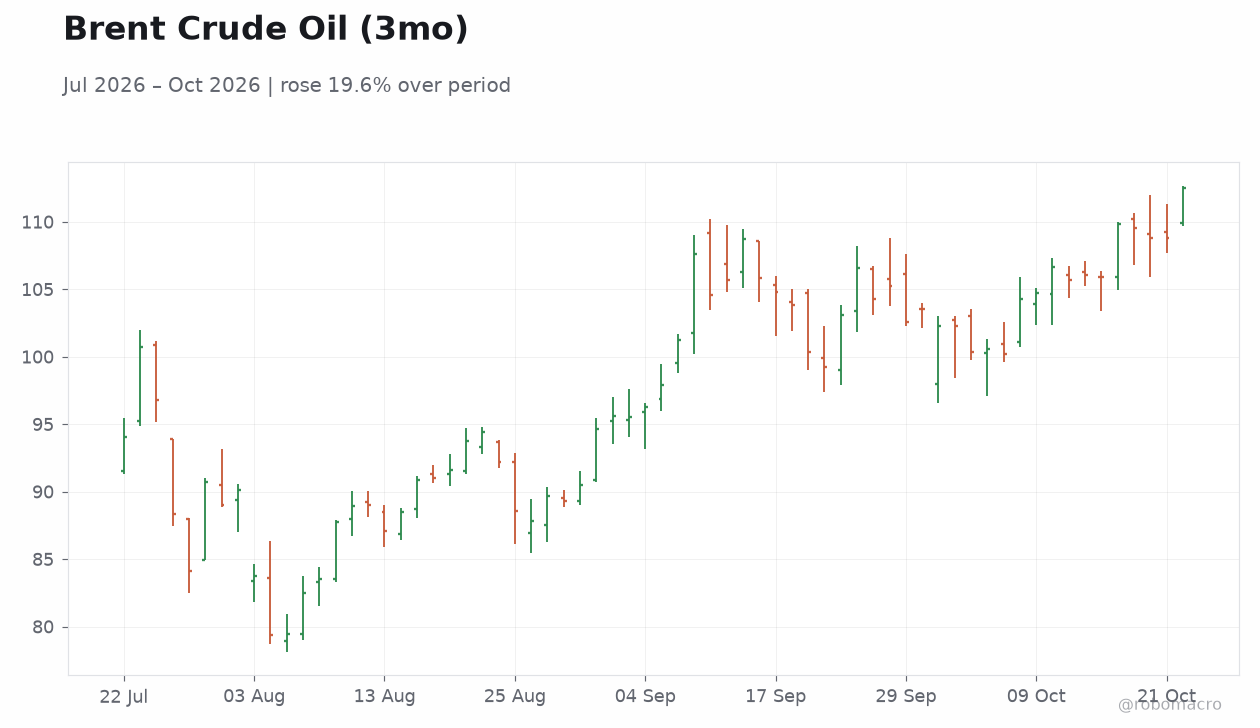 Brent Crude Oil (3mo) | Type: market_hloc | Brent Crude (USD/bbl): 112.5 (2026-10-22) | Range: 79.36–112.5 | Trend(6pt): 94.07,87.07,96.28,102.6,108.8,112.5
Today's Economic Events
| Data | Prior | Cons | Time |
|---|---|---|---|
| No events available | |||
- Mild August rebound follows sharp July contraction
- MERVAL slips 0.35% while bonds extend selloff
- USD/ARS edges up 0.05% as peso holds steady
Yesterday's Recap
Argentina's economy posted a mild recovery in August after a steeper contraction in July, leaving growth on a sputtering path through the second half of the year. The MERVAL index declined 0.35% to 2,848,945 amid a broader rout in local bonds that caught bullish investors off guard. The USD/ARS rate rose 0.05% to 1,525.50 while the EUR/ARS pair advanced 0.20% to 1,715.20, reflecting contained peso pressure.
Soybean prices climbed 1.02% to 1,258.00, supporting export revenues, yet Brent crude's 3.37% jump to 112.49 added to imported inflation risks. Bitcoin's 2.82% drop to 81,645.04 offered little offset for risk sentiment. The Argentina 10-year bond segment showed no quoted change, underscoring thin trading and ongoing caution ahead of political developments.
The Day Ahead
With an empty domestic calendar, attention turns to soybean export flows and any fresh signals on fiscal consolidation under the IMF programme. Traders will monitor peso liquidity and any BCRA interventions that could influence USD/ARS stability near 1,525.50. Global oil strength at 112.49 may feed into next month's inflation prints and keep pressure on real wages.
Investors also await updates on debt-market sentiment following the recent bond selloff. Any remarks from officials on spending restraint or reserve accumulation could shift short-term positioning.
Other Economic Notes
Fiscal consolidation remains central to restoring credibility with multilateral lenders and domestic holders of peso assets. Soybean export proceeds continue to anchor hard-currency inflows, yet volatile global commodity prices add uncertainty to the trade balance. The 33.5% August CPI reading highlights persistent price pressures that complicate efforts to rebuild reserves without renewed currency stress.
Markets remain sensitive to any perceived slippage in primary-balance targets, which could reignite depreciation expectations. Sustained high inflation also limits room for growth-oriented policy adjustments in the near term.
Global Macro News
A renewed selloff in French bonds and oil's surge above 112 added to global risk aversion that spilled into emerging-market assets, including Argentina. ↓ p.2