Argentina Macro Daily(Beta Mode)
Peso Weakens as MERVAL Slips on Quiet Day
Market Snapshot
| Asset | Level | Change |
|---|---|---|
| MERVAL | 2,848,945.00 | -0.35% |
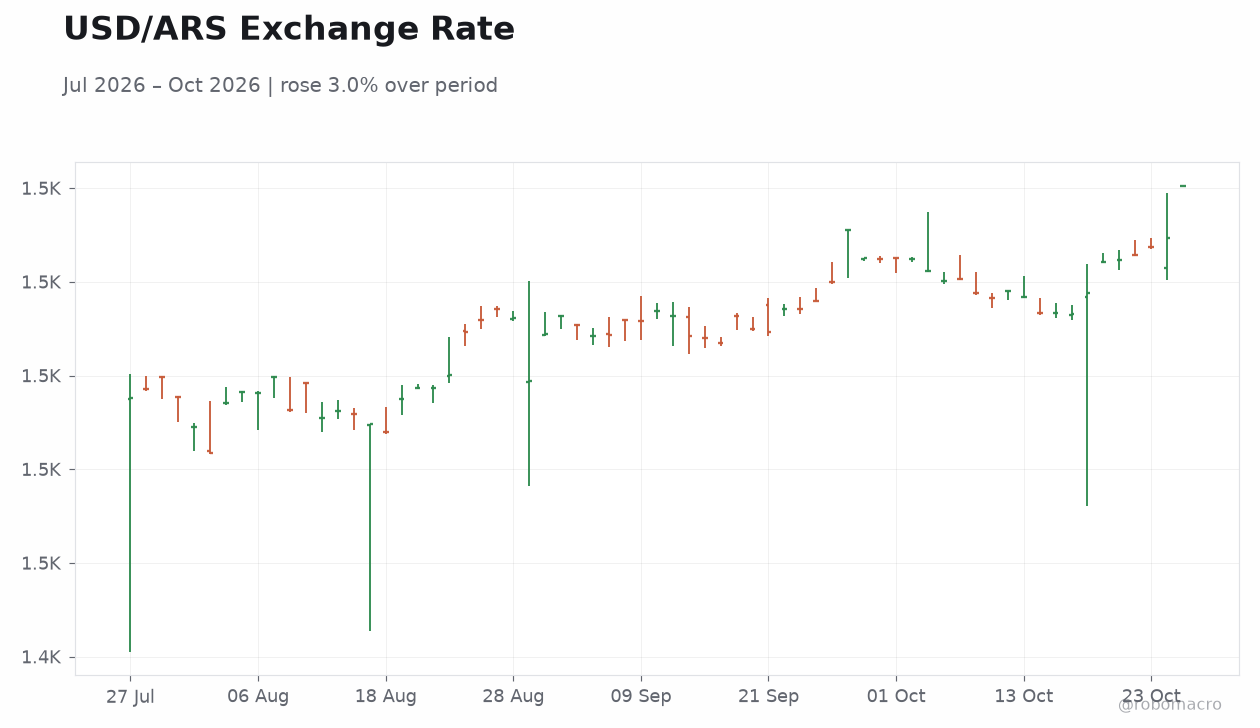
| USD/ARS | 1,540.50 | +0.74% |
| EUR/ARS | 1,720.88 | +0.85% |
| Gold | 4,012.50 | -0.64% |
| Brent Crude | 110.90 | -4.24% |
| Soybean | 1,255.75 | +1.17% |
| Bitcoin | 79,574.02 | -0.54% |
| Argentina 10Y | - | - |
Prior Economic Events
| Data | Prior | Cons | Actual |
|---|---|---|---|
| No events available | |||
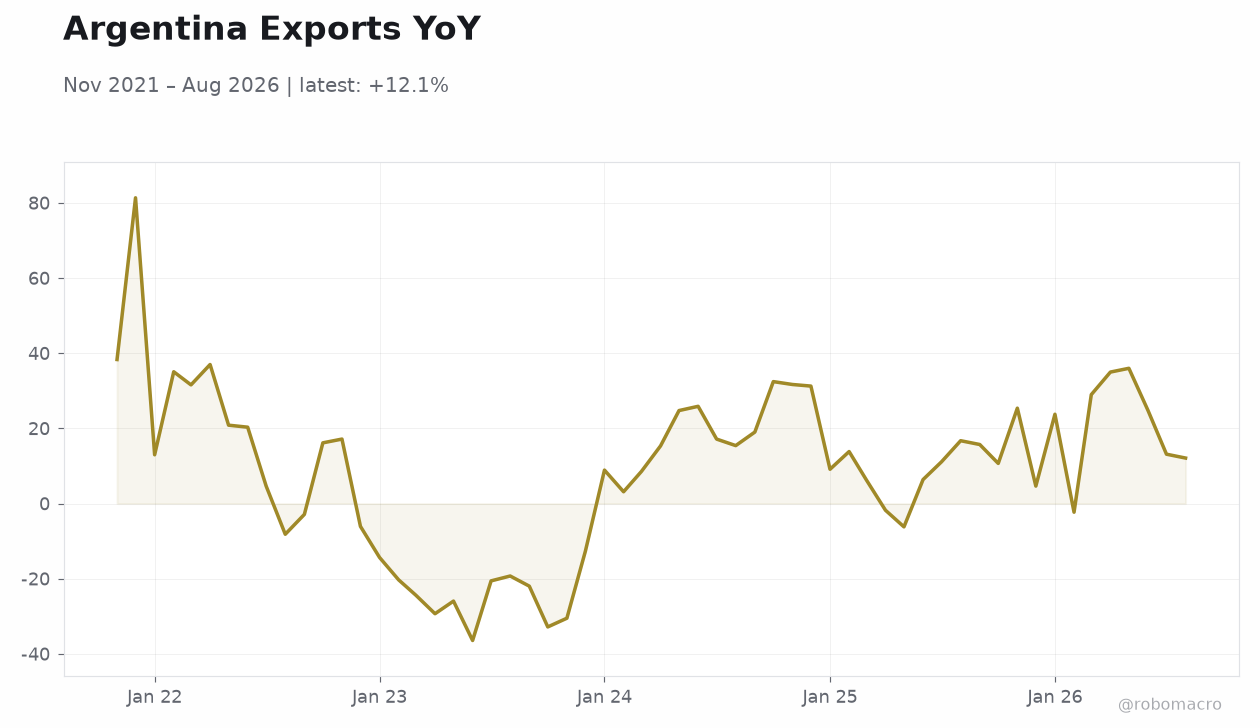 Argentina Exports YoY | Type: macro_line | Exports YoY %: 12.11 (2026-08-01) | Range: -36.43–81.35 | Trend(6pt): 38.33,-14.34,8.552,-6.198,13.14,12.11
Today's Economic Events
| Data | Prior | Cons | Time |
|---|---|---|---|
| No events available | |||
- USD/ARS climbs 0.74% to 1,540.50 as peso faces renewed pressure
- MERVAL declines 0.35% while soybean prices advance 1.17%
- Brent crude drops 4.24% to 110.90 amid global demand concerns
Yesterday's Recap
Argentine markets recorded modest losses on 26 October with limited domestic data releases. The MERVAL index closed at 2,848,945.00, down 0.35% as investors adopted a cautious stance ahead of month-end positioning. The peso depreciated against the dollar, with USD/ARS rising 0.74% to 1,540.50 and EUR/ARS advancing 0.85% to 1,720.88.
Soybean futures gained 1.17% to 1,255.75, offering support to export revenues, while Brent crude fell sharply 4.24% to 110.90 and gold eased 0.64%. Bitcoin declined 0.54% to 79,574.02. The September CPI reading of 33.4% YoY continued to anchor inflation expectations without fresh prints altering the picture.
Thin trading volumes reflected the absence of major economic releases.
The Day Ahead
The domestic calendar remains empty through 28 October, leaving markets to focus on external drivers. Attention will center on soybean export flows and any updates on IMF program disbursements. Traders will monitor global commodity prices for signals on Argentina’s trade balance.
The lack of scheduled BCRA announcements suggests policy continuity in the near term. Fiscal consolidation efforts and peso liquidity management remain key themes for participants. Any surprise comments from officials could shift sentiment quickly in thin conditions.
Other Economic Notes
Argentina’s economy continues to navigate high inflation and external financing constraints under the current IMF framework. Soybean exports provide critical foreign exchange inflows that help stabilize reserves amid persistent peso weakness. Fiscal consolidation remains essential to contain monetary financing pressures and support credibility with multilateral lenders.
The 33.4% YoY CPI level underscores the challenge of anchoring expectations without new policy signals. Export competitiveness will depend on both domestic costs and global demand for agricultural commodities.
Global Macro News
Lula’s re-election in Brazil carries direct implications for Argentina through deeper trade integration and potential regional financing support. Weaker global oil prices, with Brent falling 4.24%, reduce import costs but also highlight softer demand that could affect commodity exporters. ↓ p.2