Argentina Macro Daily(Beta Mode)
Peso Firms as Brent Collapse Reshapes Outlook
Market Snapshot
| Asset | Level | Change |
|---|---|---|
| MERVAL | 2,848,945.00 | -0.35% |
| USD/ARS | 1,534.00 | -0.29% |
| EUR/ARS | 1,714.28 | -0.36% |
| Gold | 3,909.00 | +0.26% |
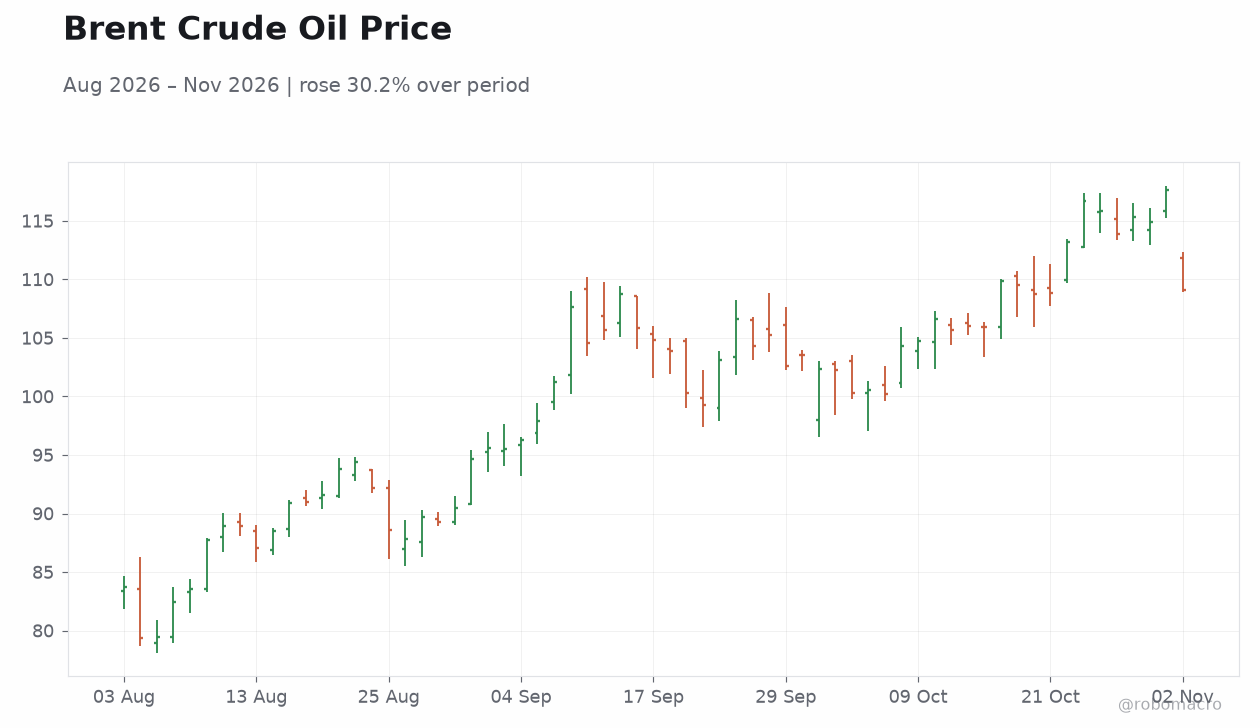
| Brent Crude | 109.05 | -7.30% |
| Soybean | 1,232.50 | +0.84% |
| Bitcoin | 78,194.43 | -0.07% |
| Argentina 10Y | - | - |
Prior Economic Events
| Data | Prior | Cons | Actual |
|---|---|---|---|
| No events available | |||
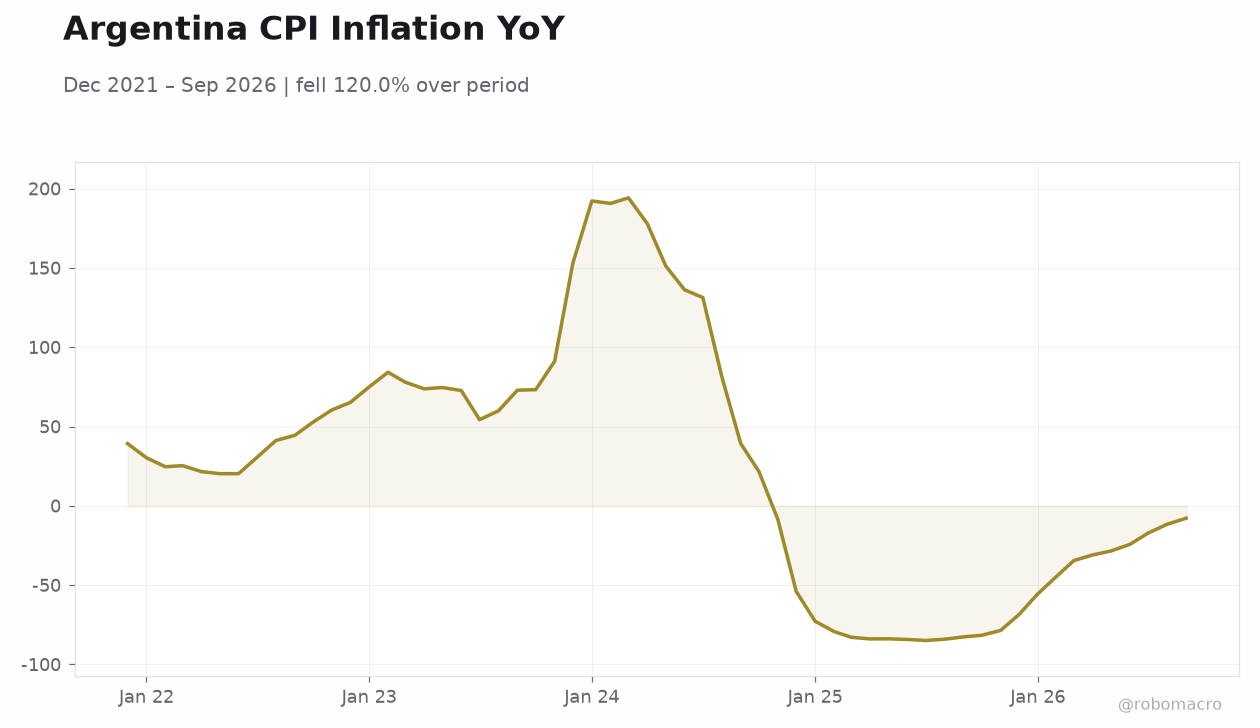 Argentina CPI Inflation YoY | Type: macro_line | CPI YoY %: -7.835 (2026-09-01) | Range: -84.92–194.2 | Trend(6pt): 39.25,84.21,177.9,-84.27,-11.64,-7.835
Today's Economic Events
| Data | Prior | Cons | Time |
|---|---|---|---|
| No events available | |||
- USD/ARS slipped 0.29% to 1,534 as the peso firmed modestly in thin post-holiday trade
- Brent crude collapsed 7.30% to $109.05, a disinflationary tailwind for Argentina's import bill
- MERVAL eased 0.35% to 2,848,945 with no domestic data releases on the calendar
Yesterday's Recap
Argentine assets traded mixed-to-soft to open the week, with the MERVAL shedding 0.35% to close at 2,848,945 points in a session devoid of domestic catalysts. The peso strengthened marginally, with USD/ARS easing 0.29% to 1,534.00 and EUR/ARS down 0.36% to 1,714.28, suggesting modest exporter supply outweighed importer demand. The standout move came from energy markets, where Brent crude plunged 7.30% to $109.05, a development with outsized relevance for Argentina's trade balance and inflation trajectory.
Soybean futures gained 0.84% to $1,232.50, offering a constructive signal for the key agricultural export complex ahead of the core harvest marketing window. Gold rose 0.26% to $3,909.00, while Bitcoin was essentially flat at $78,194.43. The Argentina 10-year benchmark showed no quoted level in the data feed, leaving sovereign curve direction unclear for the session.
The Day Ahead
The calendar is empty for November 2, with no scheduled Argentine data releases, leaving markets to trade off external drivers and positioning flows. Attention will center on the peso's reaction to the Brent collapse, given the currency's sensitivity to energy import costs and the resulting current-account arithmetic. Sovereign bond traders will look for direction from the global risk backdrop, particularly US rates and broad emerging-market sentiment, absent a fresh local 10-year print.
Equity flows will likely track the agricultural complex after soybean's gain, with export-oriented names in focus. With no BCRA communication scheduled, the market will parse secondary signals on reserve accumulation and FX intervention behavior.
Other Economic Notes
The 7.30% single-session Brent decline is the dominant macro variable this week, mechanically lowering Argentina's energy import bill and easing pressure on the trade balance and FX market. September CPI printed at 33.4% year-on-year, and a sustained energy-price retreat would reinforce the disinflation path into year-end. Soybean's 0.84% gain supports the export complex that anchors fiscal revenue and BCRA reserve accumulation.
↓ p.2