Argentina Macro Daily(Beta Mode)
Peso Slips as BCRA Stays on Hold
Market Snapshot
| Asset | Level | Change |
|---|---|---|
| MERVAL | 2,848,945.00 | -0.35% |
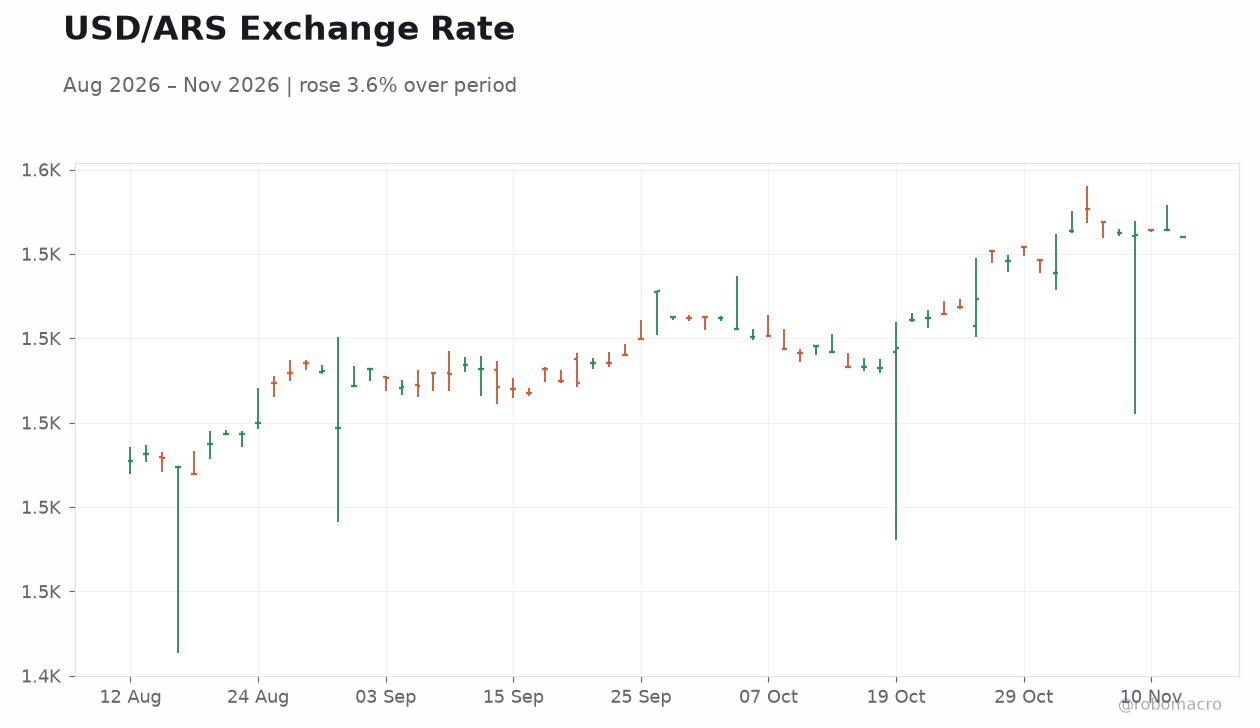
| USD/ARS | 1,544.00 | -0.11% |
| EUR/ARS | 1,710.00 | -0.94% |
| Gold | 3,936.00 | -1.61% |
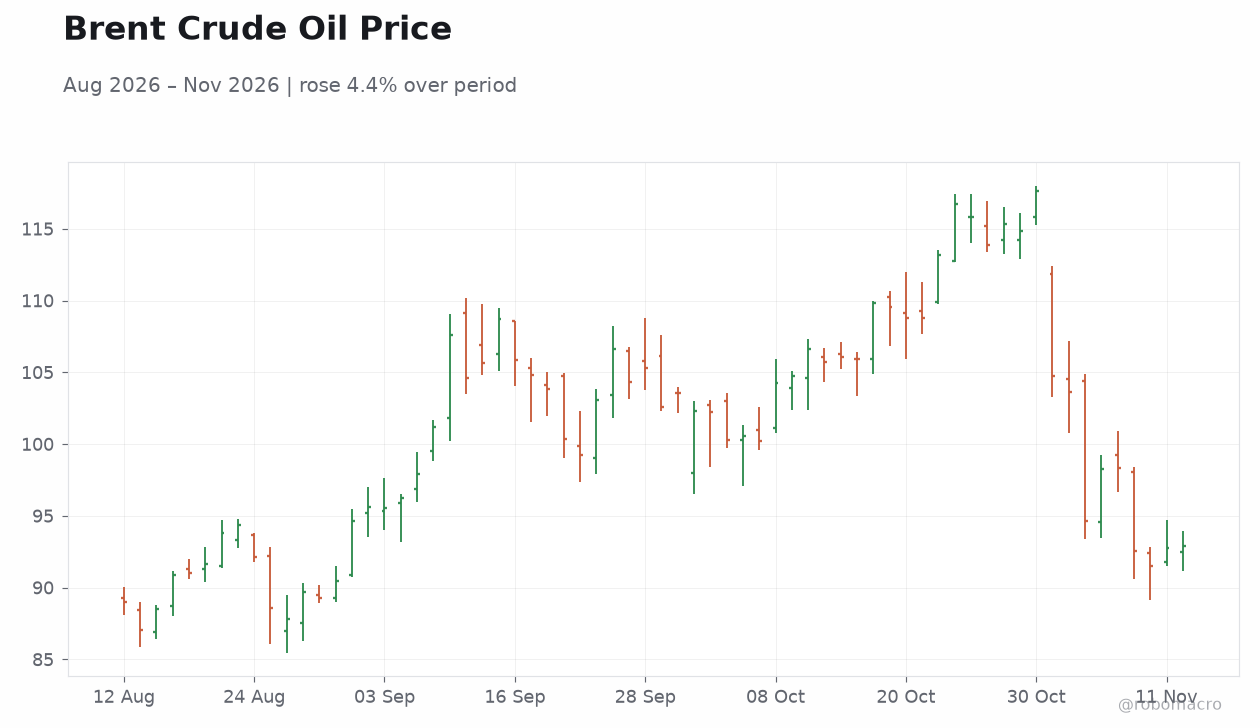
| Brent Crude | 92.84 | +0.09% |
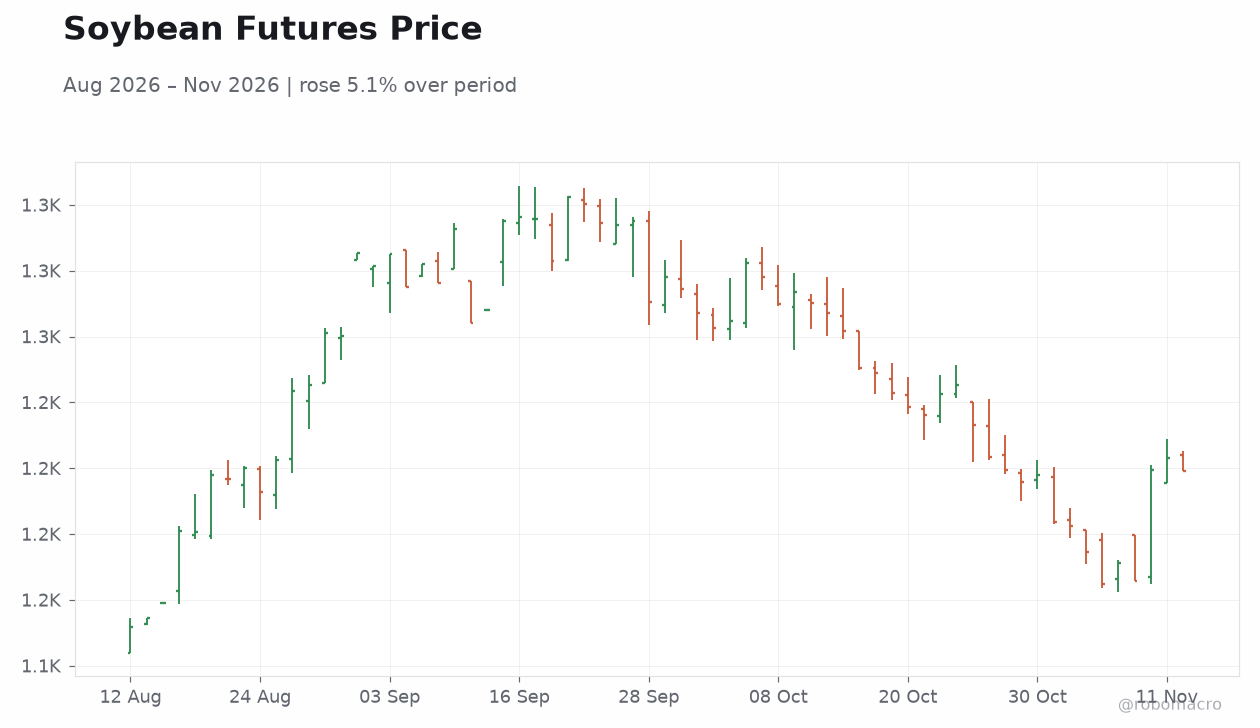
| Soybean | 1,224.00 | -0.41% |
| Bitcoin | 73,216.75 | -1.01% |
| Argentina 10Y | - | - |
Prior Economic Events
| Data | Prior | Cons | Actual |
|---|---|---|---|
| No events available | |||
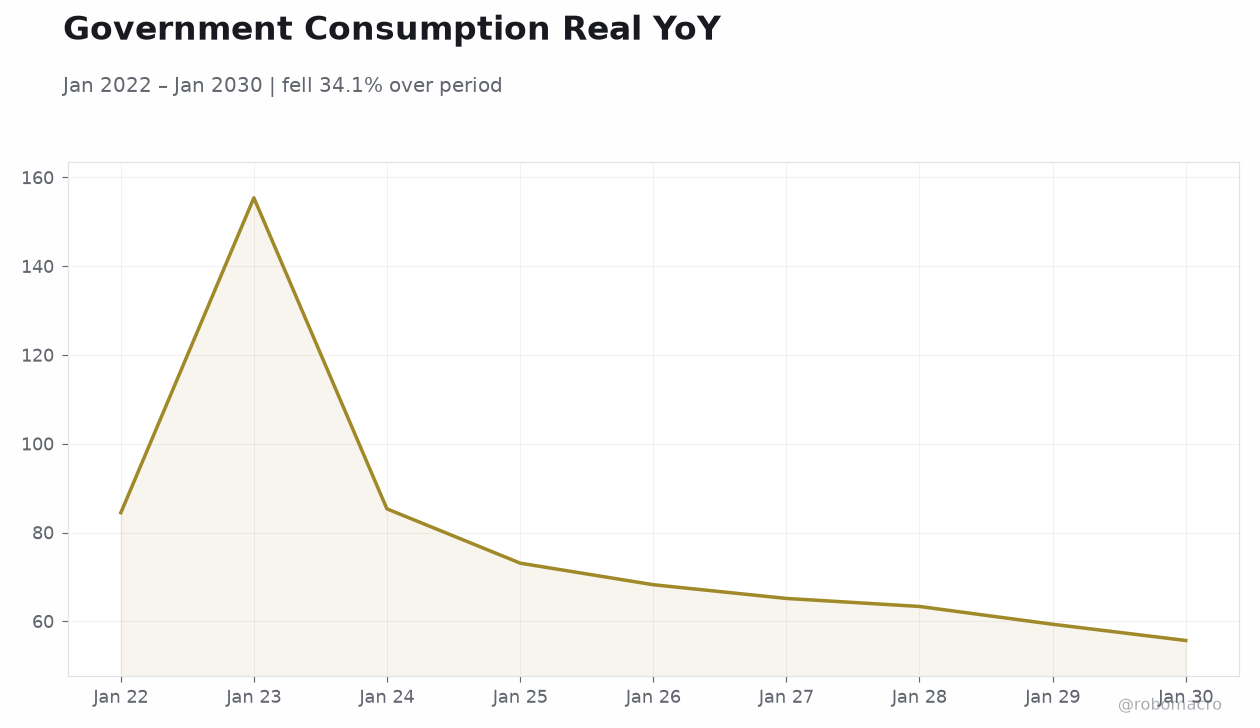 Government Consumption Real YoY | Type: macro_line | Government Consumption Real YoY: 55.67 (2030-01-01) | Range: 55.67–155.4 | Trend(5pt): 84.46,85.33,68.23,63.34,55.67
Today's Economic Events
| Data | Prior | Cons | Time |
|---|---|---|---|
| No events available | |||
- USD/ARS eased 0.11% to 1,544 while EUR/ARS fell 0.94%, pointing to broad dollar strength rather than acute peso stress
- MERVAL slipped 0.35% to 2,848,945 in a session with no domestic catalysts; Brent edged up 0.09% to $92.84 while gold dropped 1.61%
- CPI YoY stands at 33.4% (Sept 30, DATOSAR), anchoring the disinflation narrative as the BCRA keeps its cautious, data-dependent stance
Yesterday's Recap
Argentine assets closed mixed-to-soft on November 11, with the MERVAL shedding 0.35% to 2,848,945 points in a session lacking fresh domestic catalysts. The peso weakened marginally against the dollar, with USD/ARS at 1,544 (-0.11%), while the euro cross fell 0.94% to 1,710, reflecting broader dollar strength rather than idiosyncratic peso stress. Commodity markets offered little support: soybean futures slipped 0.41% to $1,224 and gold tumbled 1.61% to $3,936, weighing on export-linked sentiment.
Brent crude ticked up 0.09% to $92.84, a marginal positive for energy-sector revenue. The calendar was empty on both the domestic data and event fronts, leaving markets to trade on external flows and positioning. Argentina's 10-year yield was not quoted in the latest data feed, limiting visibility on the sovereign curve.
The Day Ahead
The domestic calendar remains bare on November 12, with no scheduled Argentine data releases or BCRA events, so attention shifts to secondary market flows and any official commentary. Traders will watch the USD/ARS fix and parallel-market spreads for signs of accumulation ahead of month-end export liquidation. With no local prints to digest, the sovereign curve and MERVAL will likely take direction from global risk appetite and commodity moves.
Soybean and Brent pricing remain the key swing factors for the trade balance and fiscal revenue outlook. Any BCRA intervention in the FX market will be scrutinized for signals on reserve accumulation.
Other Economic Notes
The disinflation path remains the central macro anchor, with CPI YoY at 33.4% as of September 30, a level that keeps real-rate dynamics firmly positive in peso terms. Fiscal consolidation continues to underpin the sovereign credit narrative, though the pace of reserve accumulation remains the binding constraint on external financing costs. Soybean export receipts are the swing variable for hard-currency inflows, and the recent softness in soybean futures (-0.41%) bears watching for the trade surplus trajectory.
The energy sector benefits from firm Brent, but gold's 1.61% slide offers little hedge support. Overall, the macro backdrop is stable but thin on fresh catalysts, leaving markets vulnerable to external shocks.