Argentina Macro Daily(Beta Mode)
Peso Steadies as Global Bond Selloff Tests Carry
Market Snapshot
| Asset | Level | Change |
|---|---|---|
| MERVAL | 2,848,945.00 | -0.35% |
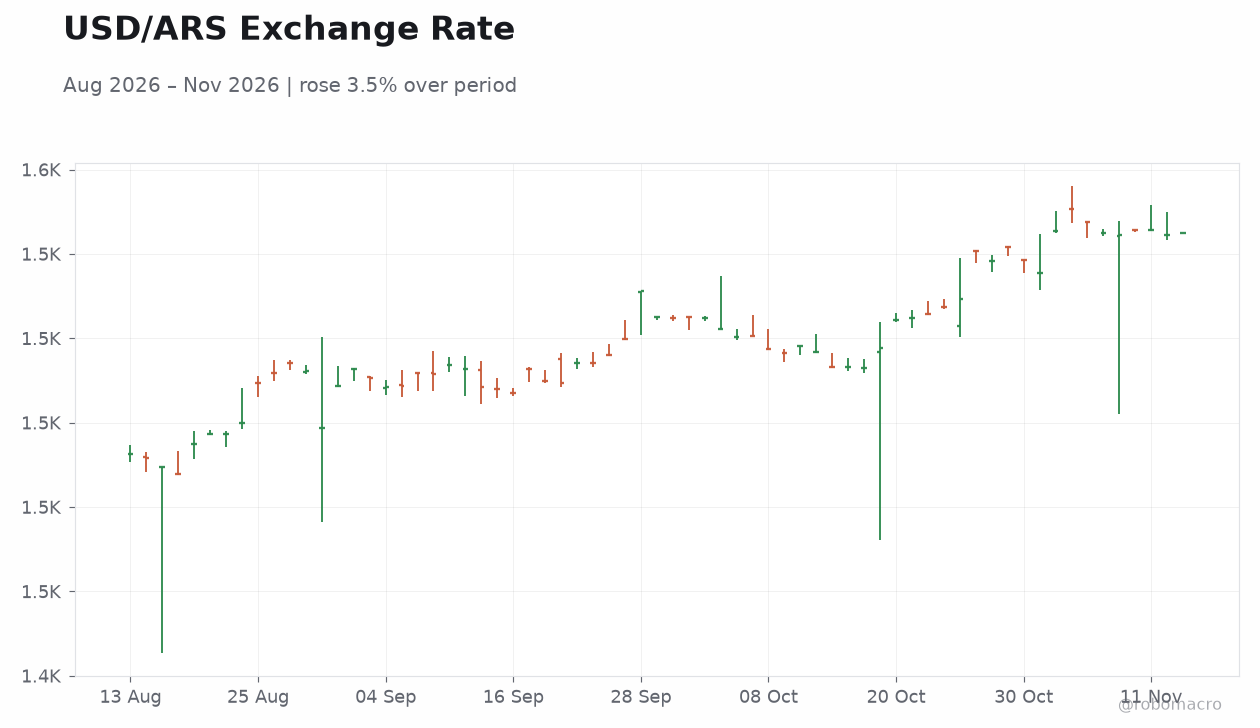
| USD/ARS | 1,545.00 | +0.03% |
| EUR/ARS | 1,708.72 | -0.29% |
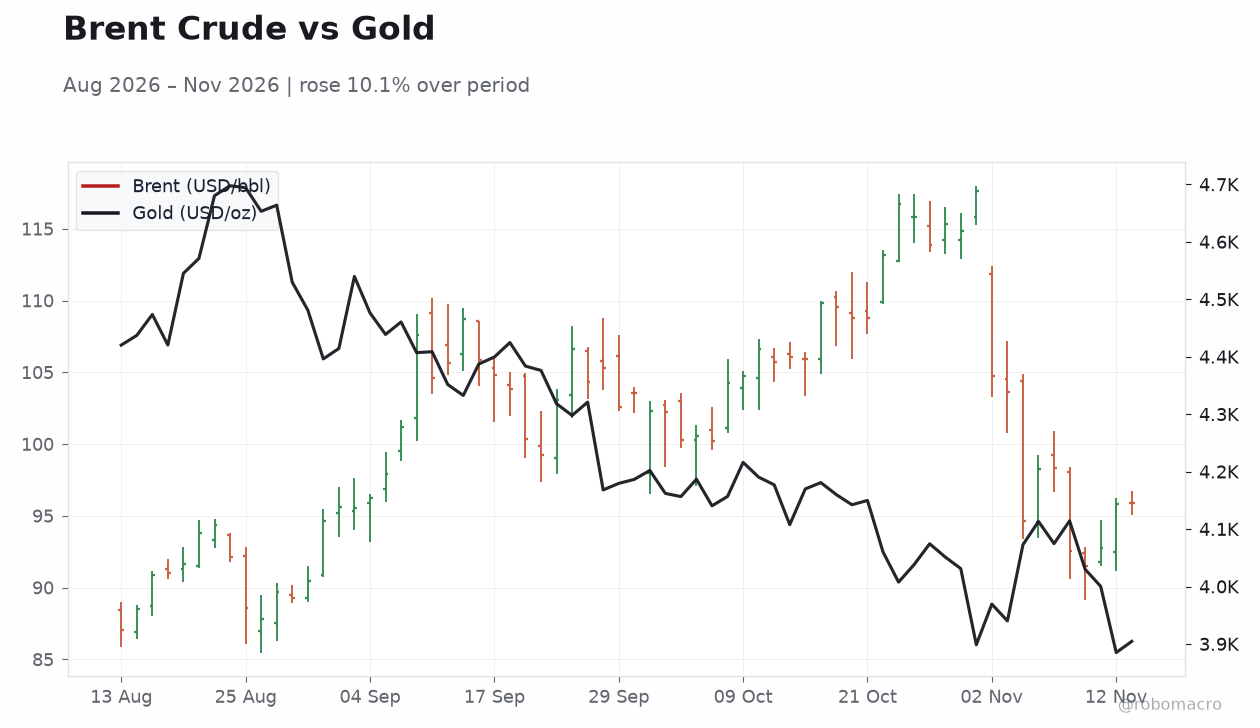
| Gold | 3,902.60 | +0.45% |
| Brent Crude | 96.00 | +0.19% |
| Soybean | 1,233.00 | +0.49% |
| Bitcoin | 68,742.00 | -3.65% |
| Argentina 10Y | - | - |
Prior Economic Events
| Data | Prior | Cons | Actual |
|---|---|---|---|
| No events available | |||
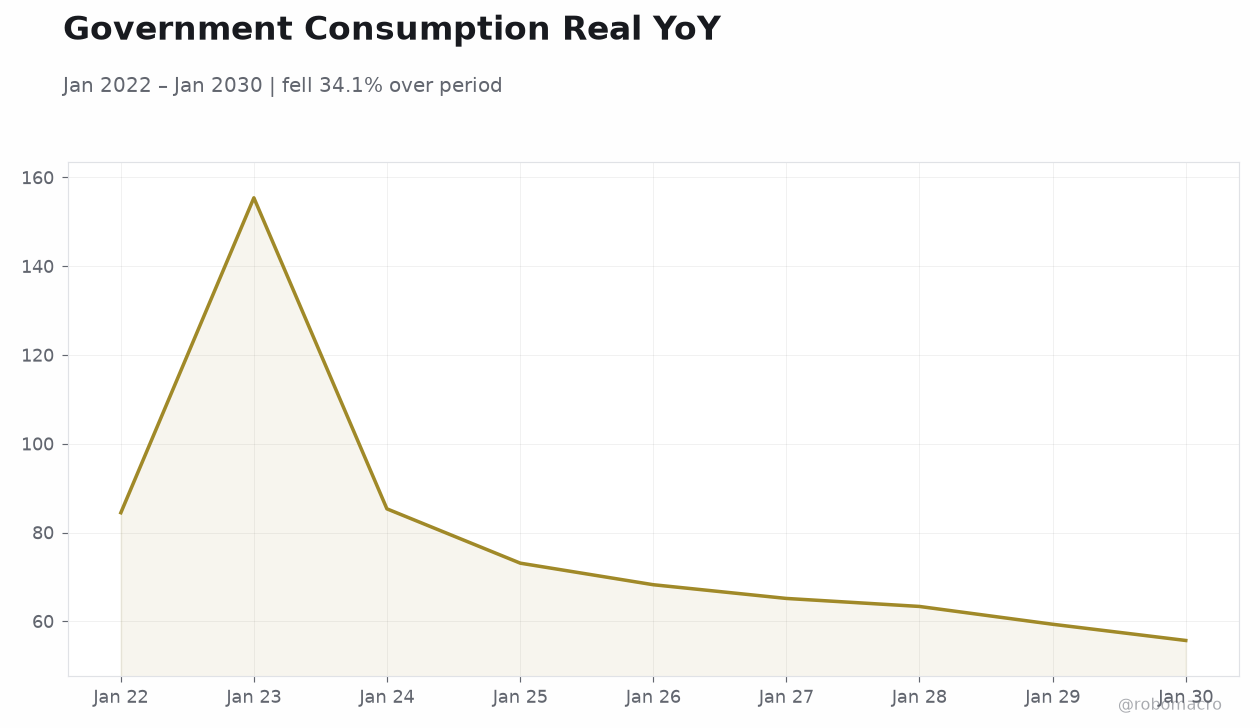 Government Consumption Real YoY | Type: macro_line | Government Consumption Real YoY: 55.67 (2030-01-01) | Range: 55.67–155.4 | Trend(5pt): 84.46,85.33,68.23,63.34,55.67
Today's Economic Events
| Data | Prior | Cons | Time |
|---|---|---|---|
| No events available | |||
- USD/ARS holds near 1,545 as the peso absorbs a fresh global rates shock
- MERVAL slips 0.35% while soybeans firm, offering marginal export support
- BCRA silence on rates leaves markets parsing inflation trajectory from 33.1% YoY
Yesterday's Recap
Argentina's calendar was empty on Thursday, leaving price action to carry the signal. The MERVAL closed at 2,848,945, down 0.35%, a modest pullback that nonetheless underperforms firming commodity proxies. USD/ARS finished at 1,545.00, effectively flat at +0.03%, while EUR/ARS eased 0.29% to 1,708.72 — a cross that implies the peso gained modest ground against the euro even as it held versus the dollar.
Soybean prices rose 0.49% to 1,233, a constructive print for the export complex that underpins BCRA reserve accumulation. Brent edged up 0.19% to 96.00, keeping energy import costs elevated. Gold added 0.45% to 3,902.60, a reminder that hard-asset demand persists.
Bitcoin's 3.65% slide to 68,742 offered no direct read-through to Argentine assets, but the broader risk-off tone in crypto mirrored the Treasury selloff abroad.
The Day Ahead
Friday's domestic calendar is again bare, so attention shifts to secondary market signals and the weekly close. Traders will watch whether the parallel FX spreads compress further after the peso's steady Thursday fix. Soybean follow-through matters: a sustained grind higher in the oilseed complex would support exporter selling and hard-currency settlement into BCRA reserves.
With no scheduled BCRA communication, market-implied policy expectations will do the talking. Month-end fiscal data remains the next hard catalyst, and positioning into the weekend should stay light given the offshore rates backdrop.
Other Economic Notes
The disinflation story remains the anchor of the macro case, with CPI at 33.1% year-on-year as of end-October — a level that keeps real rates deeply positive if the policy corridor holds. Fiscal consolidation continues to underpin the sovereign credit narrative, and primary-balance overperformance is the single most important variable for spread compression. Soybean export receipts are the swing factor for reserve adequacy, and the firming price tape is a modest tailwind.
The IMF programme remains the external anchor, with quarterly reviews the key gate for disbursements. Reserve accumulation versus peso appreciation is the tension to monitor: too fast a real appreciation erodes competitiveness just as the export engine needs to run.