Argentina Macro Daily(Beta Mode)
Peso Firm, Bonds Quiet as BCRA Holds Course
Market Snapshot
| Asset | Level | Change |
|---|---|---|
| MERVAL | 2,848,945.00 | -0.35% |
| USD/ARS | 1,552.00 | +0.14% |
| EUR/ARS | 1,705.49 | +0.05% |
| Gold | 3,769.40 | -2.45% |
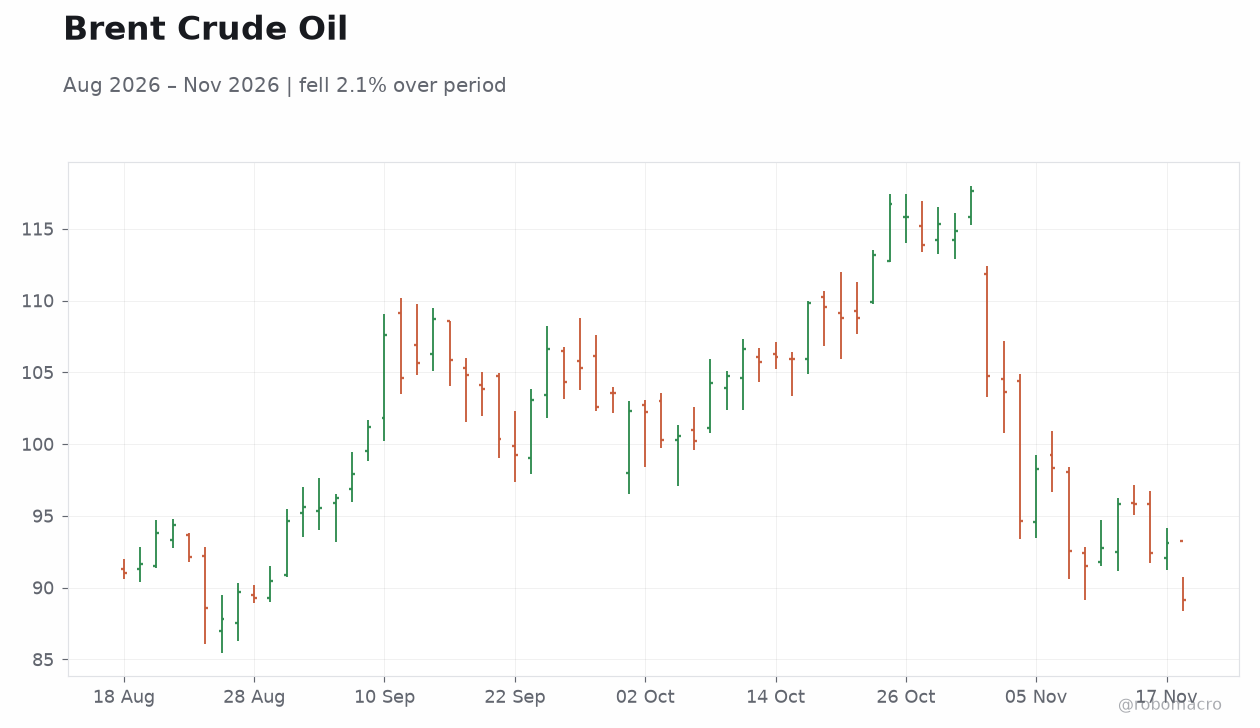
| Brent Crude | 89.19 | -4.24% |
| Soybean | 1,221.00 | -0.37% |
| Bitcoin | 64,604.44 | -0.45% |
| Argentina 10Y | - | - |
Prior Economic Events
| Data | Prior | Cons | Actual |
|---|---|---|---|
| No events available | |||
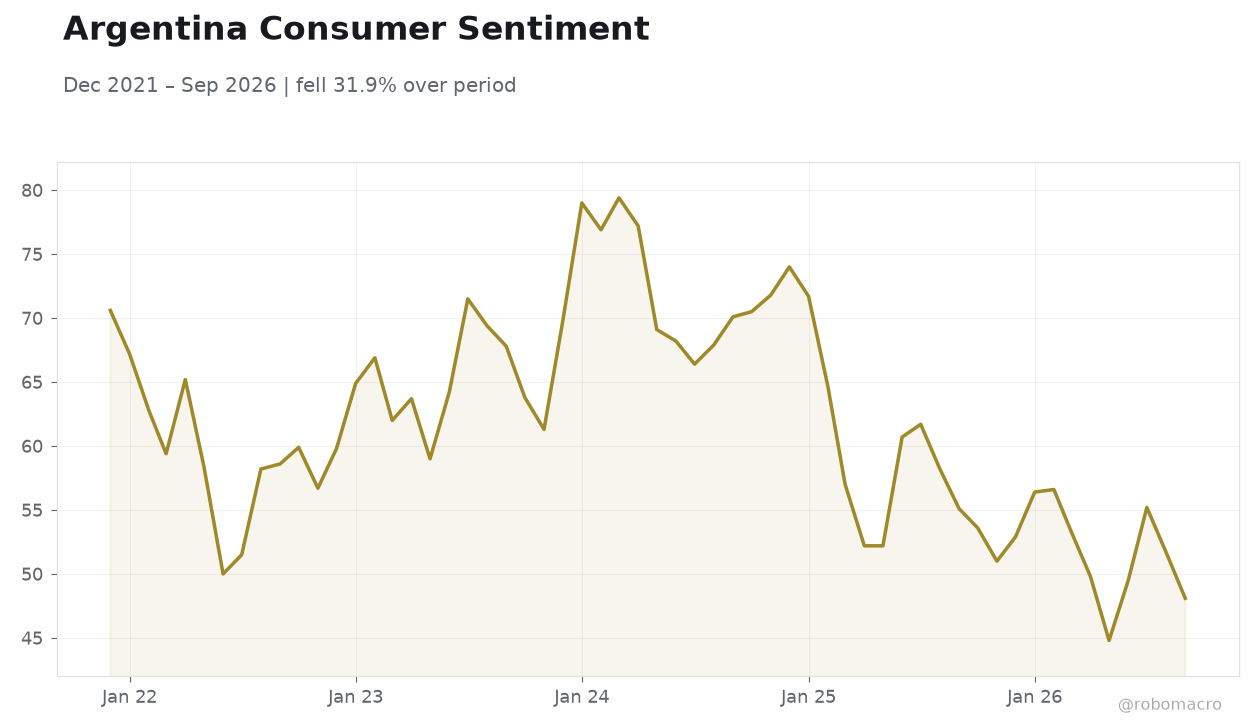 Argentina Consumer Sentiment | Type: macro_line | Consumer Sentiment Index: 48.1 (2026-09-01) | Range: 44.8–79.4 | Trend(6pt): 70.6,66.9,77.2,60.7,51.7,48.1
Today's Economic Events
| Data | Prior | Cons | Time |
|---|---|---|---|
| No events available | |||
- USD/ARS edged to 1,552.00 (+0.14%), peso holding firm despite softer risk appetite
- MERVAL slipped 0.35% to 2,848,945 as energy names tracked Brent's 4.24% slide
- BCRA holding steady; CPI at 33.1% YoY keeps disinflation narrative intact
Yesterday's Recap
Argentine assets traded mixed-to-soft in the November 17 session, with the MERVAL shedding 0.35% to close at 2,848,945 points as global energy weakness weighed on domestic names. The peso was essentially stable, with USD/ARS at 1,552.00 (+0.14%) and EUR/ARS at 1,705.49 (+0.05%), suggesting continued official-market management and adequate FX supply. The Argentina 10-year benchmark showed no quoted yield change in the data feed, leaving the curve without a fresh directional signal.
External drivers dominated the tape: Brent crude collapsed 4.24% to $89.19 and gold fell 2.45% to $3,769.40, a combination that pressures commodity-linked equity sectors while offering modest relief on the import bill. Soybean futures slipped 0.37% to $1,221.00, a marginal move that nonetheless matters for export-earning expectations ahead of the core harvest-marketing window. With no domestic data releases on the calendar, price action reflected positioning and global risk sentiment rather than local fundamentals.
The Day Ahead
The calendar is empty for November 18, leaving Argentine markets to trade off external flows and BCRA FX operations rather than scheduled domestic catalysts. Traders will watch the official wholesale FX rate and parallel-market spreads for signs of demand pressure after the modest peso slippage yesterday. With no inflation, activity, or fiscal prints due, attention shifts to the primary auction calendar and any BCRA communication on sterilization and reserve accumulation.
Global inputs — particularly the oil complex after Brent's sharp drop and the tone from major central banks abroad — will likely set the direction for local equities. Bond desks will look for secondary-market yield discovery in the absence of a fresh 10-year quote, with sovereign spreads the key gauge of country-risk appetite.
Other Economic Notes
The disinflation path remains the anchor of the macro story, with CPI at 33.1% year-over-year as of end-October, a level that keeps real-rate considerations central to BCRA policy. Fiscal consolidation continues to underpin the sovereign credit narrative, and market participants are focused on whether primary-surplus delivery stays on track through year-end. Soybean export receipts remain the swing factor for reserve accumulation, and the marginal decline in futures prices bears watching as the marketing season progresses.
↓ p.2