Brazil Macro Daily(Beta Mode)
Record-Low Unemployment Bolsters BRL
Market Snapshot
| Asset | Level | Change |
|---|---|---|
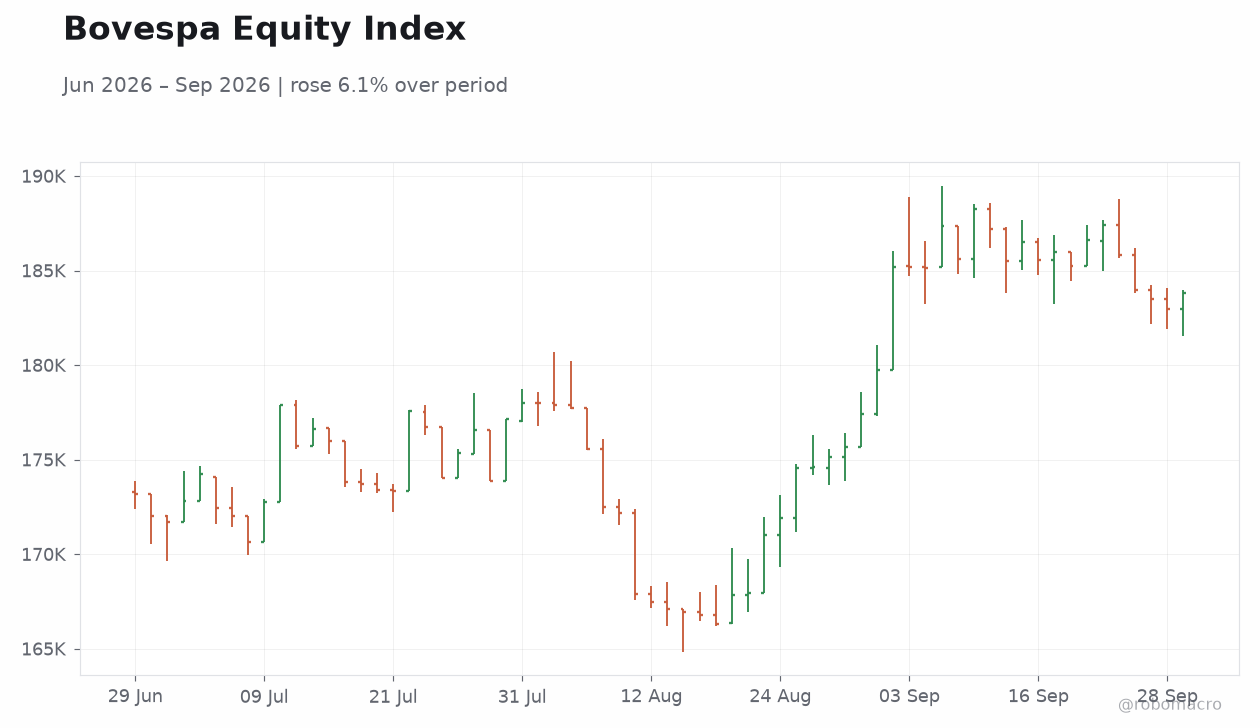
| Bovespa | 183,828.00 | +0.46% |
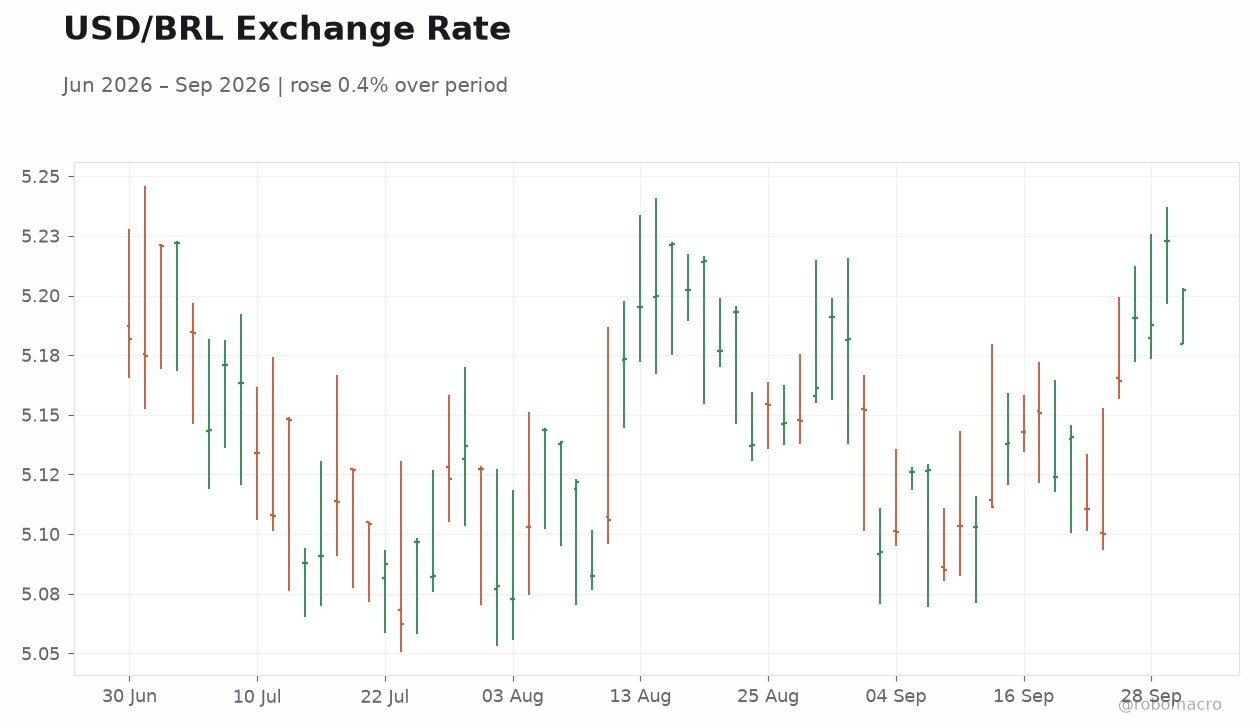
| USD/BRL | 5.20 | -0.39% |
| EUR/BRL | 5.91 | -0.49% |
| Vale | 13.30 | -2.13% |
| Petrobras | 20.65 | +0.00% |
| WTI Crude | 90.26 | +0.98% |
| Gold | 4,223.70 | +1.05% |
| Bitcoin | 83,224.27 | -0.48% |
| Brazil 5Y Govt Yield | 14.11% | +2 bp |
| Brazil 10Y Govt Yield | 14.12% | +1 bp |
Prior Economic Events
| Data | Prior | Cons | Actual |
|---|---|---|---|
| Headline Unemployment Rate | 5.30 | 5.30 | 5.30 |
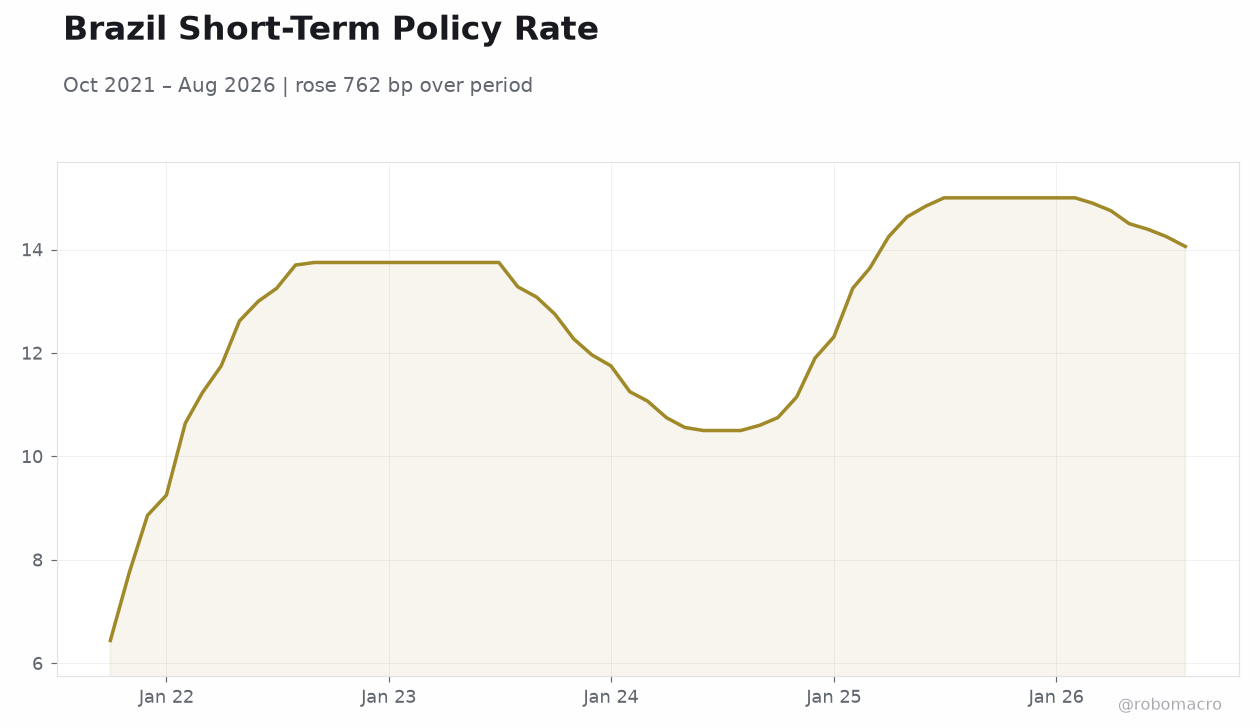 Brazil Short-Term Policy Rate | Type: macro_line | Policy Rate %: 14.06 (2026-08-01) | Range: 6.44–15 | Trend(6pt): 6.44,13.75,11.25,14.25,14.39,14.06
Today's Economic Events
| Data | Prior | Cons | Time |
|---|---|---|---|
| Friday (2026-10-02) | |||
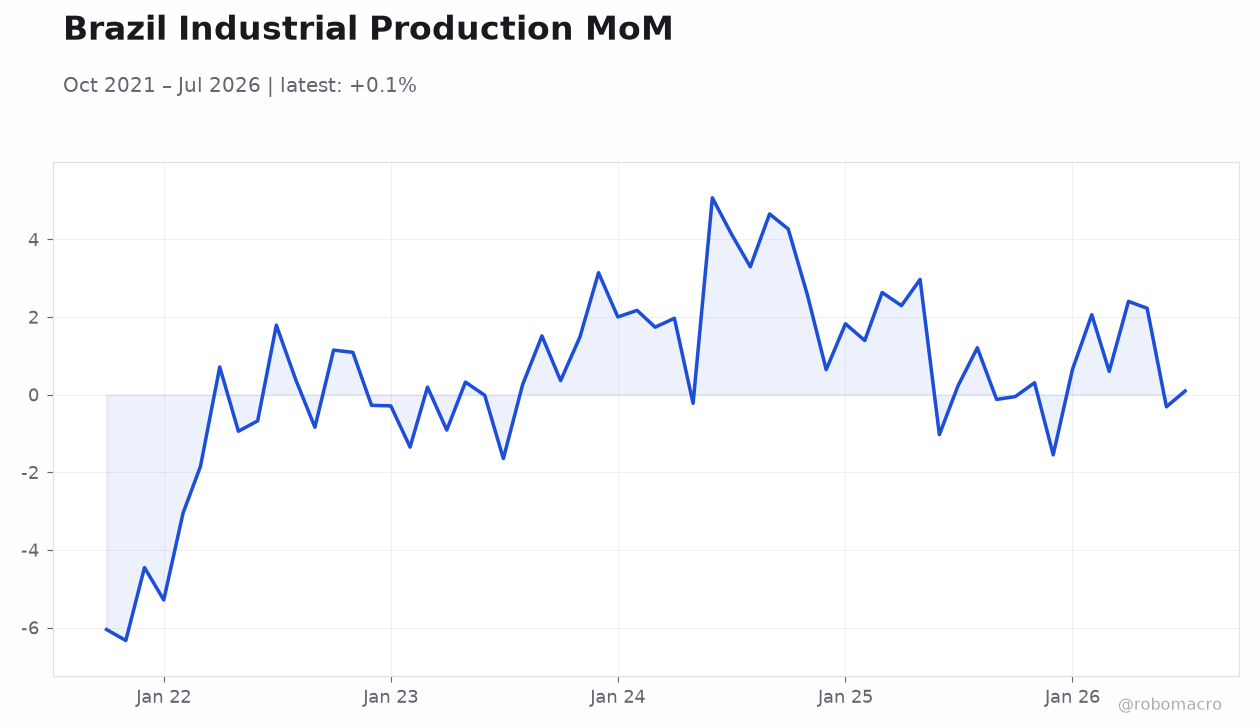
| Industrial Production Month-over-Month | 0.20 | 0.10 | 04:00 |
- Brazil’s headline unemployment rate held at a record-low 5.3% in line with consensus, confirming resilient job creation ahead of the election.
- Bovespa rose 0.46% while USD/BRL fell 0.39% to 5.20 as markets priced steady Selic policy amid stable labor data.
- Brazil 5Y and 10Y yields edged 2 bp and 1 bp higher to 14.11% and 14.12%, respectively, with WTI crude advancing 0.98% to 90.26.
Yesterday's Recap
Brazil’s headline unemployment rate printed unchanged at the consensus 5.3%, matching the prior reading and establishing a fresh record low. Separate reports showed job creation beating forecasts in the run-up to the election, reinforcing labor-market strength without altering near-term growth expectations. Bovespa advanced 0.46% to close at 183,828 while USD/BRL declined 0.39% to 5.20 and EUR/BRL fell 0.49% to 5.91.
Vale shares dropped 2.13% to 13.30 as iron-ore prices faced pressure, whereas Petrobras held steady at 20.65. WTI crude gained 0.98% to 90.26 and gold rose 1.05% to 4,223.70, supporting commodity-linked sentiment. Brazil 5Y government yields increased 2 bp to 14.11% and 10Y yields added 1 bp to 14.12%, reflecting modest repricing of duration risk.
The data release produced limited immediate market reaction beyond the observed BRL appreciation, leaving COPOM expectations anchored.
The Day Ahead
No Brazilian economic releases are scheduled for September 30 or October 1. Attention turns to the October 2 Industrial Production MoM print, expected at +0.1% after the prior +0.2% reading. The medium-impact figure will provide the first post-election signal on manufacturing momentum ahead of the October COPOM meeting.
Markets will also monitor any fiscal updates tied to fuel-subsidy costs amid elevated oil prices. Broader EM flows and commodity price moves will continue to influence BRL direction and local yield curves.
Other Economic Notes
Morningstar highlighted Brazil and Mexico as preferred EM allocations over low-growth South Africa, citing stronger structural prospects. Reports noted persistent financial strain weighing on domestic demand and contributing to the broader economic slowdown. The government confirmed it will maintain fuel subsidies until oil prices stabilize, preserving near-term fiscal support for households.
These measures coincide with Brazil CPI YoY at 4.22% as of end-August, keeping inflation within the BCB’s tolerance band but limiting room for early policy easing.