"CPI in Focus as Bonds Rally, Real Steadies"
49.20 S&P Global Services PMI7,740m Trade Balance
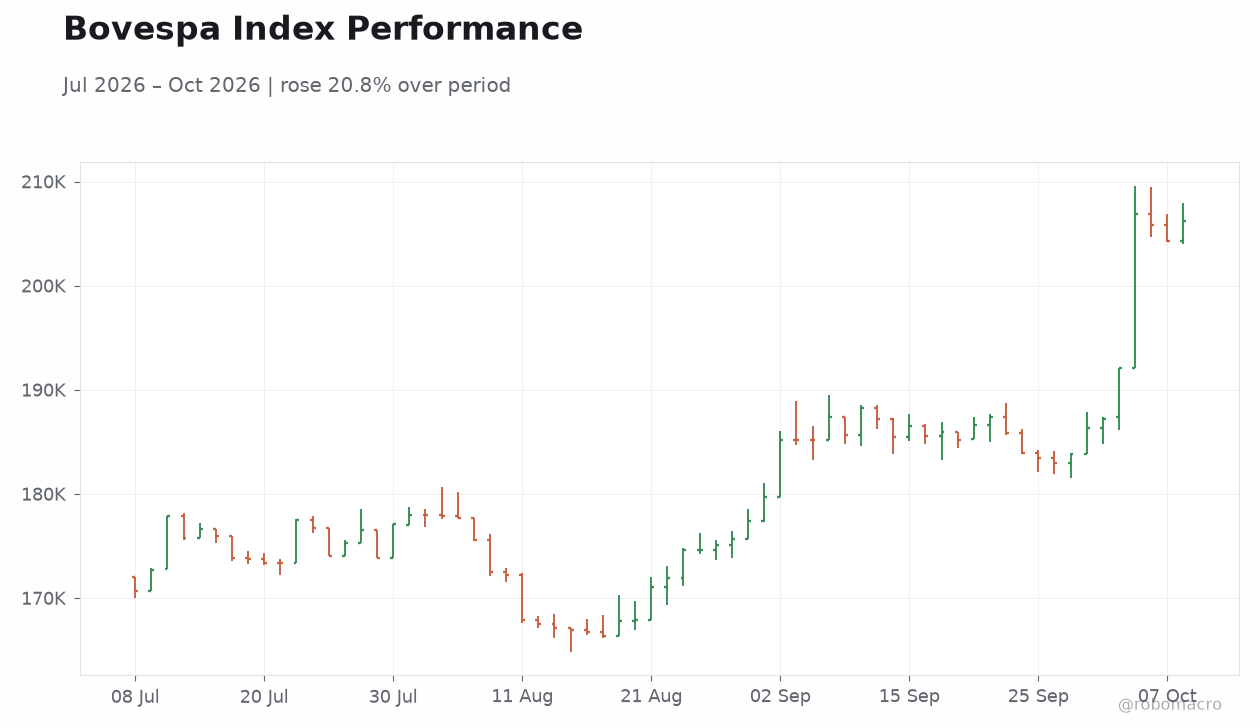
Bovespa206,220.00+0.94%
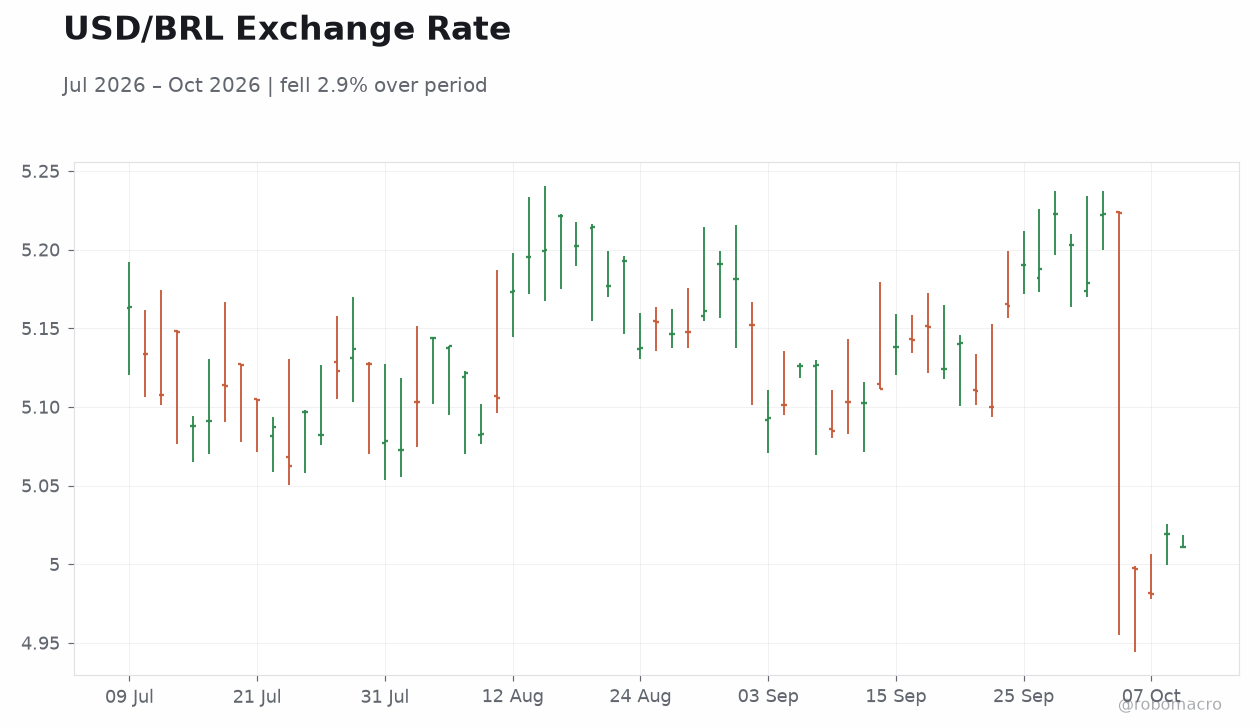
USD/BRL5.01-0.16%
EUR/BRL5.63+0.17%
Vale13.42-1.40%
Market Snapshot
| Asset | Level | Change |
|---|
| Bovespa | 206,220.00 | +0.94% |
| USD/BRL | 5.01 | -0.16% |
| EUR/BRL | 5.63 | +0.17% |
| Vale | 13.42 | -1.40% |
| Petrobras | 24.69 | +2.92% |
| WTI Crude | 90.35 | -1.25% |
| Gold | 4,211.30 | +1.31% |
| Bitcoin | 82,474.91 | +0.98% |
| Brazil 5Y Govt Yield | 12.68% | -23 bp |
| Brazil 10Y Govt Yield | 12.79% | -21 bp |
Prior Economic Events
| Data |
Prior |
Cons |
Actual |
| S&P Global Services PMI | 50.50 | - | 49.20 |
| Trade Balance | 7,390m | 7,190m | 7,740m |
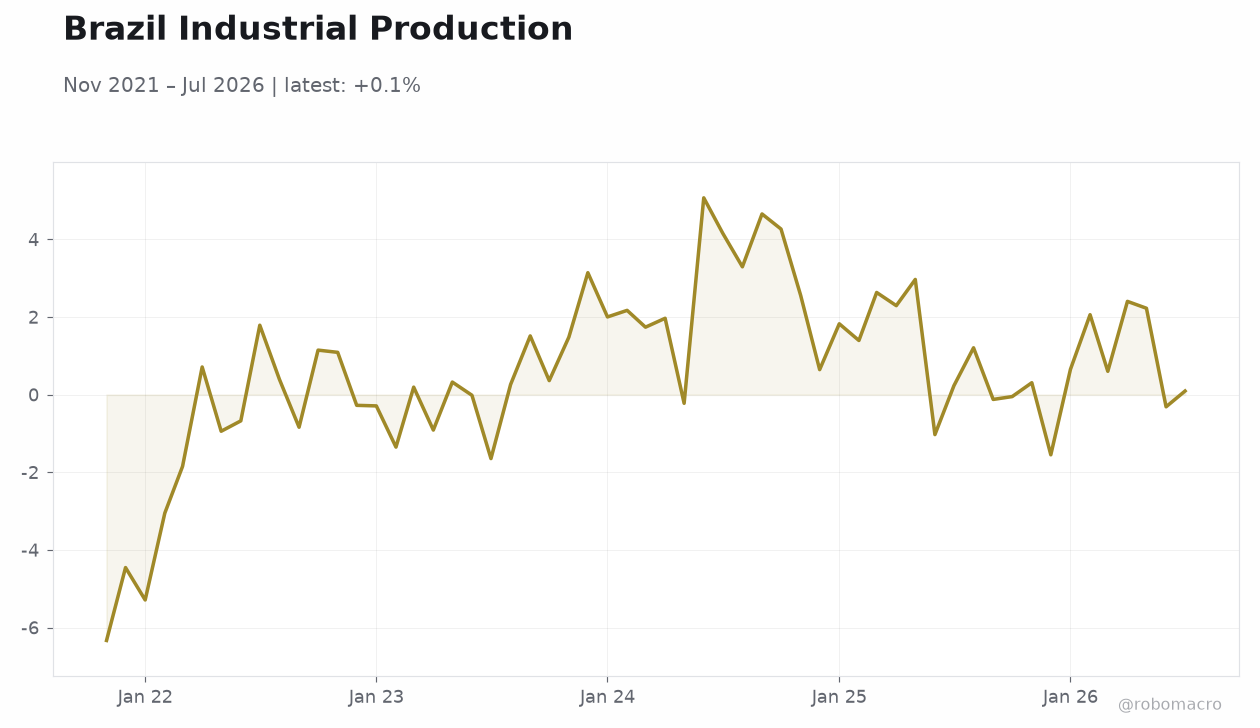 Brazil Industrial Production | Type: macro_line | Industrial Prod., SA: 0.09432 (2026-07-01) | Range: -6.332–5.071 | Trend(5pt): -6.332,-0.2891,1.739,2.968,0.09432
Today's Economic Events
| Data |
Prior |
Cons |
Time |
| Inflation Rate Month-over-Month | -0.32 | 0.73 | 08:00 |
| Inflation Rate Year-over-Year | 4.22 | 4.50 | 08:00 |
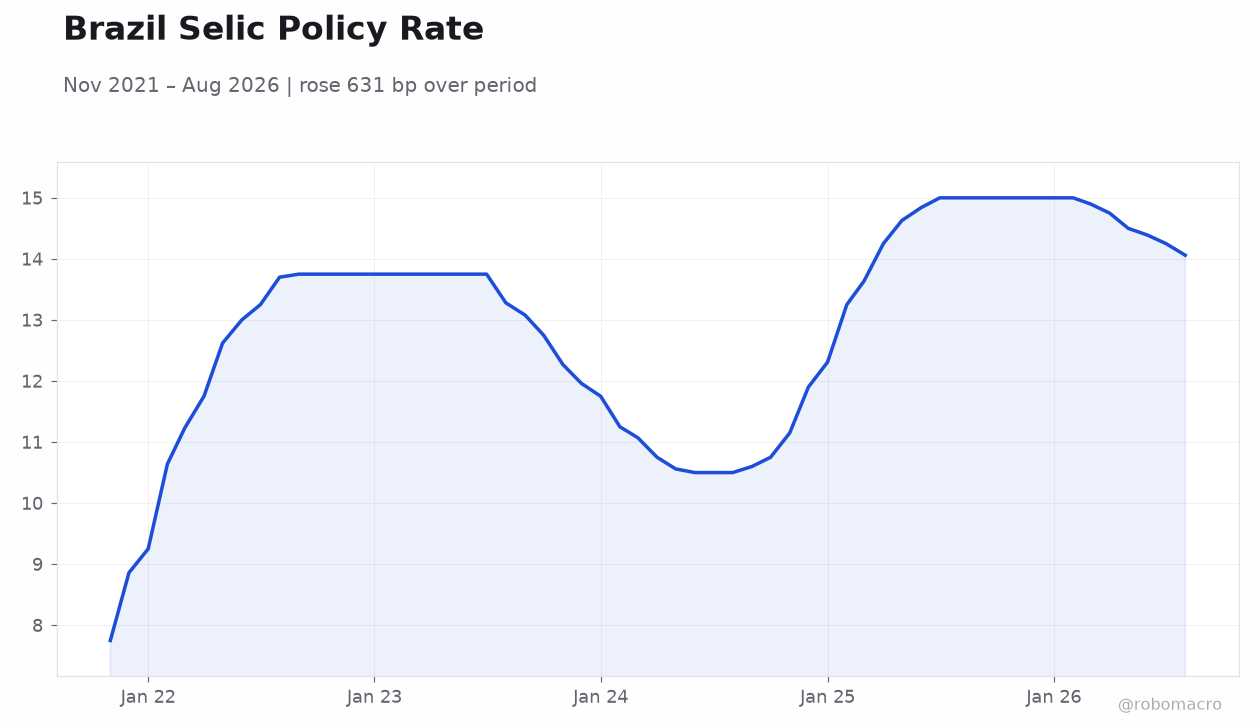
- Brazil's 5-year yield eased 23 bp to 12.68% and the 10-year fell 21 bp to 12.79% as rate-cut conviction builds ahead of today's September IPCA print.
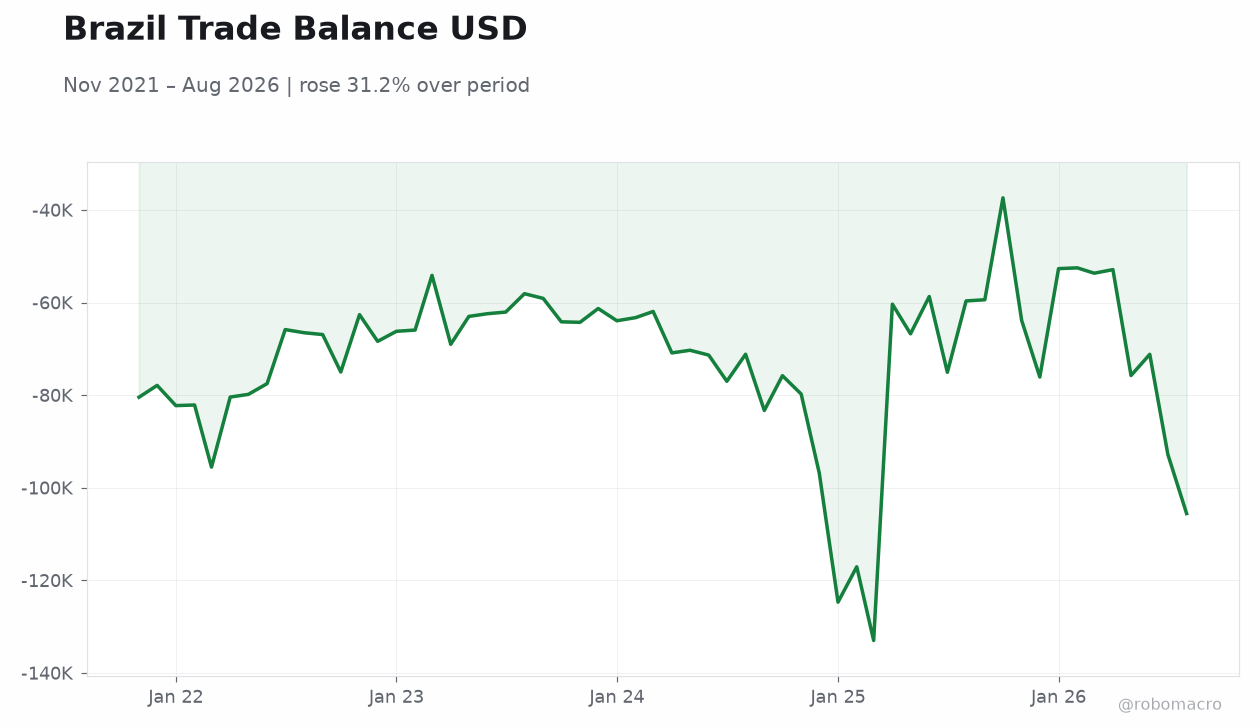
- September trade balance surprised to the upside at $7.74bn versus $7.19bn expected, while the services PMI slipped back into contraction at 49.2.
- Petrobras gained 2.92% after R$3.5bn in oil auction awards, lifting the Bovespa 0.94% to 206,220 despite Vale's 1.40% decline.
Yesterday's Recap
Brazilian fixed income led Tuesday's charge, with the 5-year government yield falling 23 bp to 12.68% and the 10-year easing 21 bp to 12.79% as traders positioned for a continued easing cycle from the Banco Central do Brasil. The real firmed modestly, with USD/BRL slipping 0.16% to 5.01, while EUR/BRL edged up 0.17% to 5.63 on euro-area softness. Equities were more mixed: the Bovespa advanced 0.94% to 206,220, powered by a 2.92% surge in Petrobras after the government raised R$3.5bn in oil auctions led by the state champion.
Vale lagged, shedding 1.40% to 13.42 as iron ore sentiment stayed cautious. On the data front, September's trade balance delivered a $7.74bn surplus, comfortably beating the $7.19bn consensus and underscoring the strength of the external accounts. The S&P Global services PMI, released earlier in the week, printed 49.2, down from 50.5 and back below the 50 expansion threshold — a reminder that domestic demand is cooling under restrictive policy.
Elsewhere in the complex, WTI crude fell 1.25% to $90.35 and gold rallied 1.31% to $4,211, while Bitcoin added 0.98% to $82,475.
The Day Ahead
Today's centerpiece is the September IPCA consumer price release at 08:00 local time, with both the monthly and annual readings due simultaneously. The headline month-over-month figure is expected at 0.73% after August's seasonally negative 0.32% print, while the year-over-year rate is seen accelerating to 4.50% from 4.22%. A softer-than-expected outcome would reinforce the market's growing conviction in near-term Copom cuts and likely extend the bond rally that gathered pace Tuesday.
Conversely, a hot print — particularly in services or food-at-home components — could force a reassessment of the easing path and pressure the real. With no other Brazilian releases on the calendar today, attention will shift to how the IPCA interacts with the fiscal narrative heading into year-end. Tomorrow's calendar is currently empty, leaving the CPI as the week's final domestic catalyst before attention turns to the October Copom meeting cycle.
Page 1
Never miss an issue
Subscribe to Brazil Macro Daily and get each new issue delivered to your inbox.
Already a member? Visit robomacro.com
to log in and manage subscriptions, or use Forgot Password to set a password.