Brazil Macro Daily(Beta Mode)
Real Rallies, Yields Sink on Election Optimism
Market Snapshot
| Asset | Level | Change |
|---|---|---|
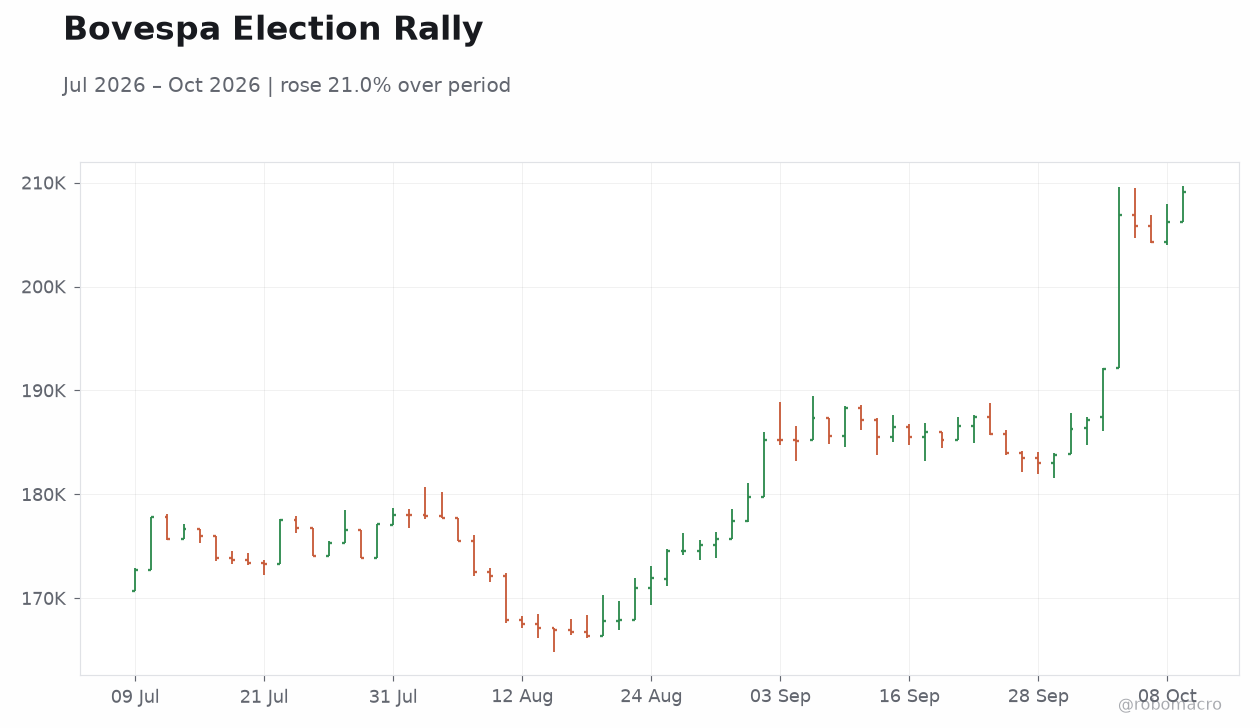
| Bovespa | 209,067.00 | +1.38% |
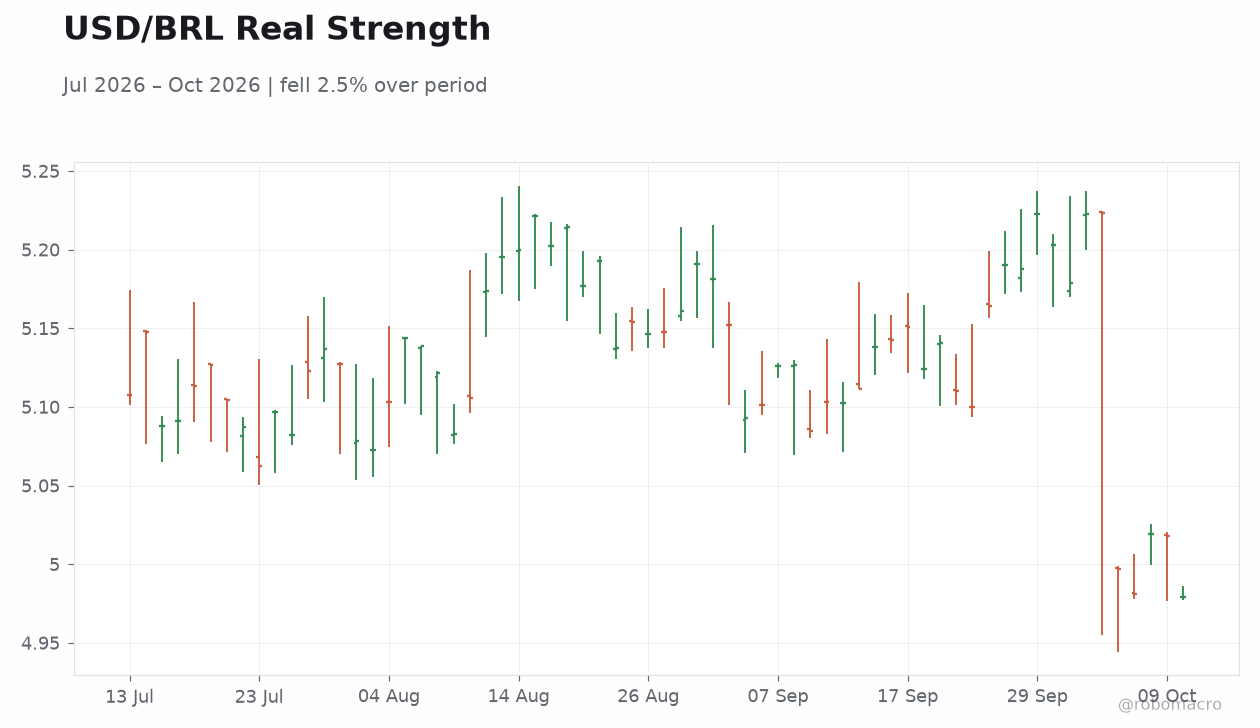
| USD/BRL | 4.98 | -0.77% |
| EUR/BRL | 5.58 | -0.82% |
| Vale | 13.52 | -0.73% |
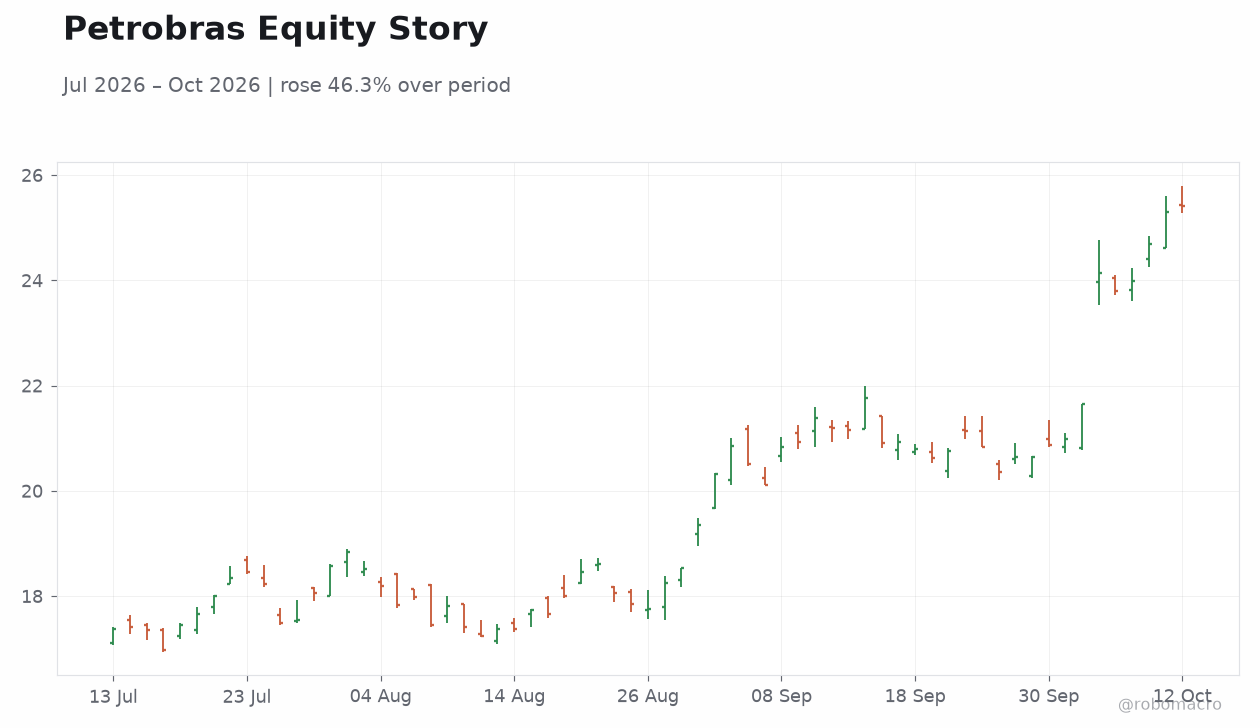
| Petrobras | 25.42 | +0.47% |
| WTI Crude | 92.12 | -1.73% |
| Gold | 4,210.70 | +0.48% |
| Bitcoin | 83,435.82 | +2.05% |
| Brazil 5Y Govt Yield | 12.48% | -26 bp |
| Brazil 10Y Govt Yield | 12.57% | -34 bp |
Prior Economic Events
| Data | Prior | Cons | Actual |
|---|---|---|---|
| No events available | |||
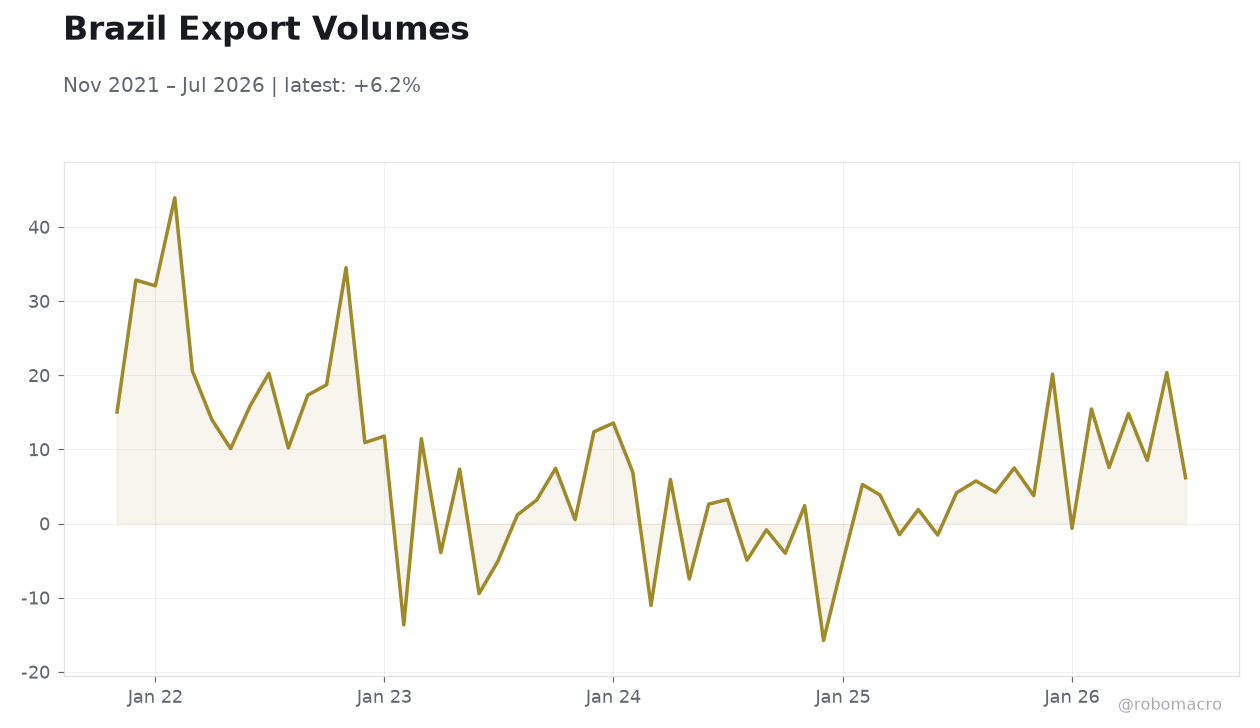 Brazil Export Volumes | Type: macro_line | Exports (USD bn): 6.195 (2026-07-01) | Range: -15.76–43.94 | Trend(5pt): 15.05,11.81,-11.04,1.904,6.195
Today's Economic Events
| Data | Prior | Cons | Time |
|---|---|---|---|
| Wednesday (2026-10-14) | |||
| Business Confidence Index | 44.90 | - | 10:00 |
| Thursday (2026-10-15) | |||
| Retail Sales Month-over-Month | -0.80 | - | 08:00 |
- Bovespa climbed 1.38% to 209,067 as equities extended their election-driven breakout
- USD/BRL fell 0.77% to 4.98; 10-year yield dropped 34 bp to 12.57%
- Business Confidence and Retail Sales headline a light but pivotal data week
Yesterday's Recap
Brazilian markets delivered a broad risk-on session Monday, with the Bovespa advancing 1.38% to 209,067 as investors rotated into the country's equity story. MarketWatch reported the rally is drawing attention from allocators wary of concentrated tech exposure, with the presidential runoff powering optimism about Brazil's macro trajectory. The real strengthened alongside, with USD/BRL easing 0.77% to 4.98 and EUR/BRL down 0.82% to 5.58, signaling broad-based dollar softness rather than a euro-specific move.
Fixed-income markets were the standout: the 10-year government yield plunged 34 bp to 12.57% and the 5-year fell 26 bp to 12.48%, a sharp rally suggesting markets are pricing a friendlier fiscal and monetary mix post-election. Petrobras gained 0.47% to 25.42, supported by domestic sentiment even as WTI crude slid 1.73% to $92.12. Vale lagged the index, dipping 0.73% to 13.52 despite gold's 0.48% climb to $4,210.70.
Bitcoin's 2.05% rise to $83,436 underscored the appetite for risk assets globally, reinforcing the tailwind behind emerging-market inflows.
The Day Ahead
Wednesday brings the Business Confidence Index at 10:00 local time, with the prior reading at 44.9 — a level still below the 50 expansion threshold that would signal meaningful momentum in services and commerce. A print above 45 would reinforce the narrative that sentiment is recovering into the runoff, while a miss could temper the equity rally's fundamental underpinning. Thursday's Retail Sales Month-over-Month follows, after a soft -0.8% prior decline; consensus is absent, so the market will take direction from the print itself.
Given a Selic rate of 13.75%, household credit conditions remain restrictive, making any rebound in consumption a positive surprise for rate-cut expectations. Both releases carry medium impact tags but outsized signaling value given the thin calendar. Traders should also watch for follow-through in the real after Monday's strength, with 4.95 the next technical level on USD/BRL.
Other Economic Notes
Brazil's beef export sector is pressing its advantage in the US market, with Australian producers warning they face a decade-long window before Brazilian scale erodes their share — a reminder of the competitiveness underpinning Brazil's agricultural trade surplus. ↓ p.2