Brazil Macro Daily(Beta Mode)
Lula Win Sparks Brazil Market Rout
Market Snapshot
| Asset | Level | Change |
|---|---|---|
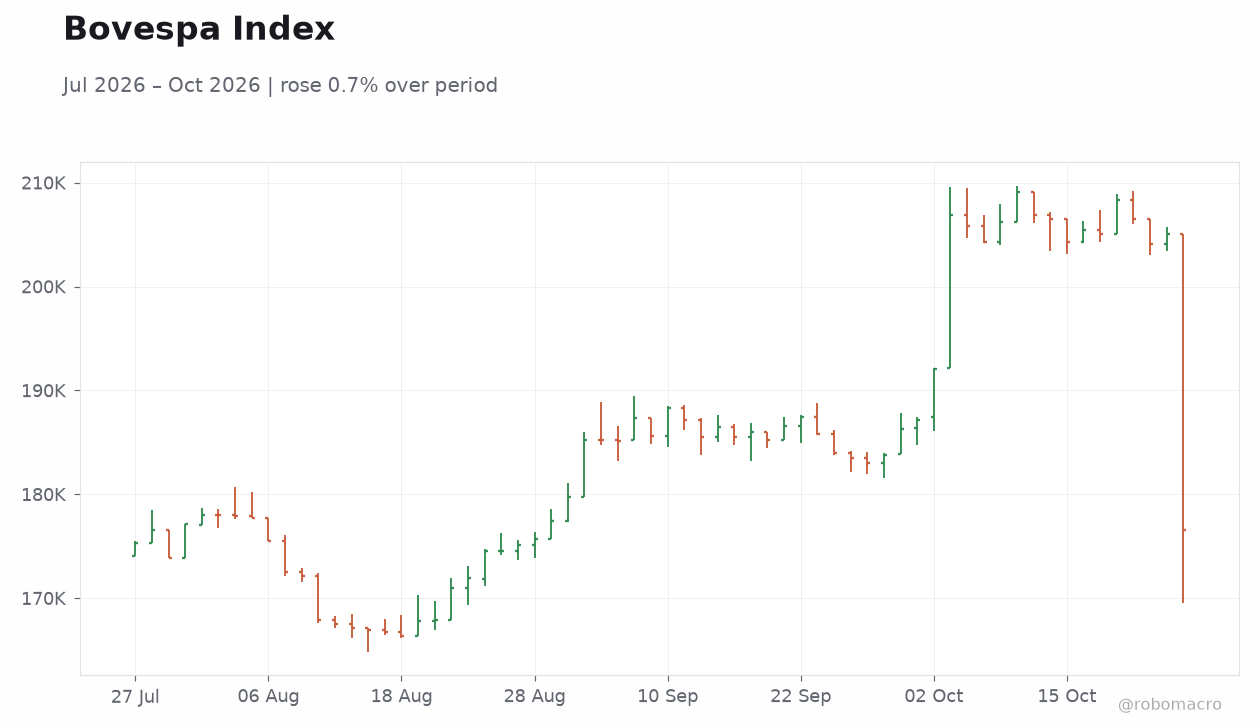
| Bovespa | 176,608.00 | -13.88% |
| USD/BRL | 5.41 | +9.04% |
| EUR/BRL | 6.04 | +9.08% |
| Vale | 12.00 | -3.23% |
| Petrobras | 22.50 | -13.99% |
| WTI Crude | 102.55 | +0.78% |
| Gold | 4,005.40 | -0.82% |
| Bitcoin | 79,710.15 | -0.37% |
| Brazil 5Y Govt Yield | 12.85% | -2 bp |
| Brazil 10Y Govt Yield | 12.90% | -7 bp |
Prior Economic Events
| Data | Prior | Cons | Actual |
|---|---|---|---|
| BCB Focus Market Readout | - | - | "" |
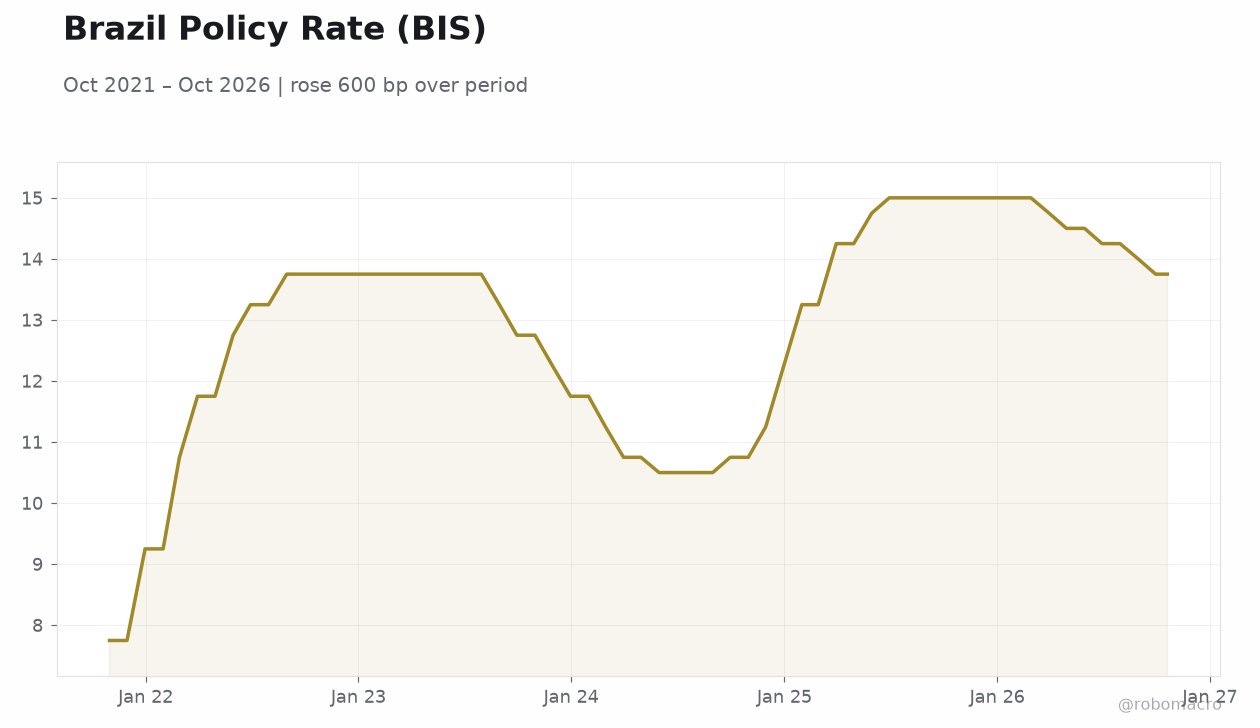 Brazil Policy Rate (BIS) | Type: macro_line | Policy Rate %: 13.75 (2026-10-20) | Range: 7.75–15 | Trend(5pt): 7.75,13.75,10.75,15,13.75
Today's Economic Events
| Data | Prior | Cons | Time |
|---|---|---|---|
| Friday (2026-10-30) | |||
| Headline Unemployment Rate | 5.30 | 5.20 | 08:00 |
- Bovespa plunged 13.88% while USD/BRL surged 9.04% to 5.41 after Lula’s narrow re-election victory.
- Brazil 10Y yield eased 7 bp to 12.90% and 5Y yield fell 2 bp to 12.85% amid fiscal-spending concerns.
- Selic rate remains at 13.75% with next COPOM decision scheduled for 4 November.
Yesterday's Recap
Markets opened sharply lower on Monday after Lula defeated Flávio Bolsonaro in the presidential runoff. The Bovespa index dropped 13.88% while Petrobras fell 13.99% and Vale declined 3.23%. The real weakened sharply, lifting USD/BRL to 5.41 and EUR/BRL to 6.04.
The BCB Focus Market Readout provided no new signals on policy expectations. Long-term yields eased modestly as investors priced higher fiscal risk rather than immediate monetary easing. Commodity exporters faced additional pressure from the currency move despite steady WTI crude prices.
The steep selloff reflected immediate repricing of fiscal expansion risks under the incoming administration, with equity and currency moves far outpacing any shift in the policy-rate outlook. Petrobras and Vale bore the brunt of the rotation out of cyclicals as markets anticipated higher public spending and potential tax changes. The absence of fresh BCB signals left the focus squarely on fiscal signals rather than near-term rate adjustments.
The Day Ahead
Attention turns to Friday’s Headline Unemployment Rate release, expected at 5.2% versus 5.3% previously. No major data prints are scheduled for Tuesday through Thursday. Traders will monitor any fiscal statements from the incoming administration that could influence market sentiment.
Global commodity prices and external risk appetite will continue to shape BRL flows ahead of the print. The absence of domestic releases leaves room for further positioning around fiscal policy signals. With the Selic path still data-dependent, markets will watch for any early clues on spending priorities that could alter inflation or growth trajectories before the next COPOM meeting.
Other Economic Notes
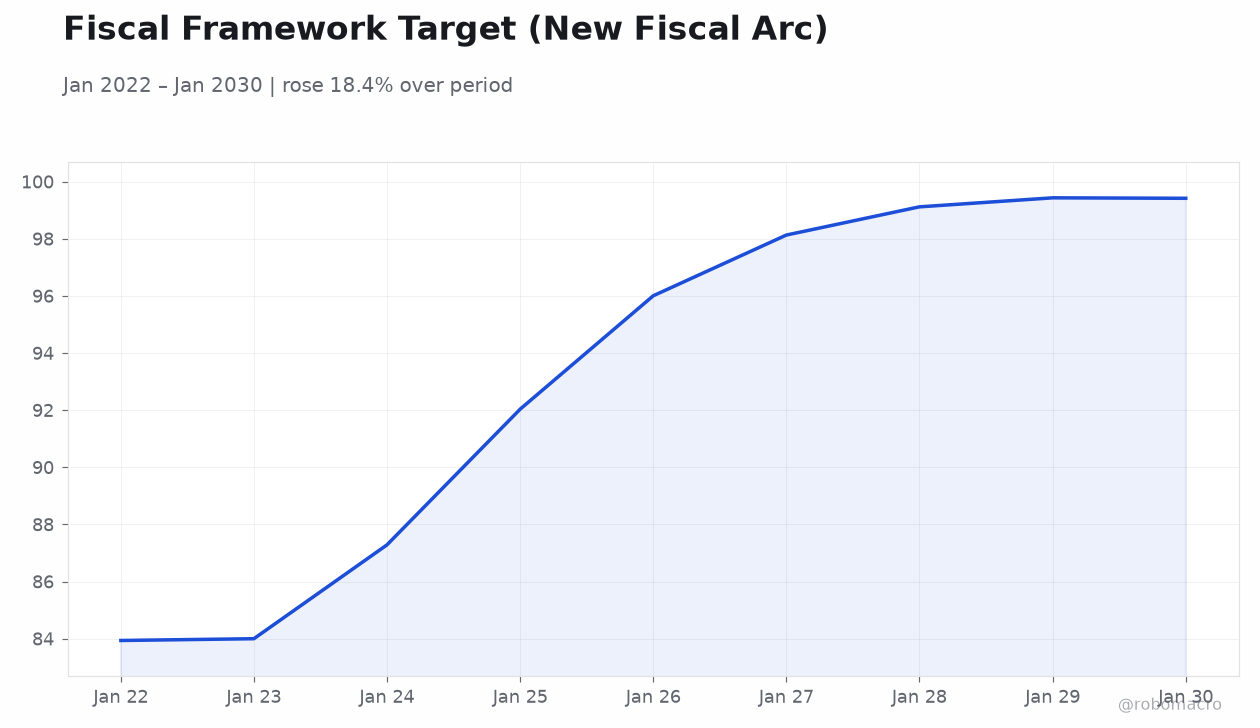
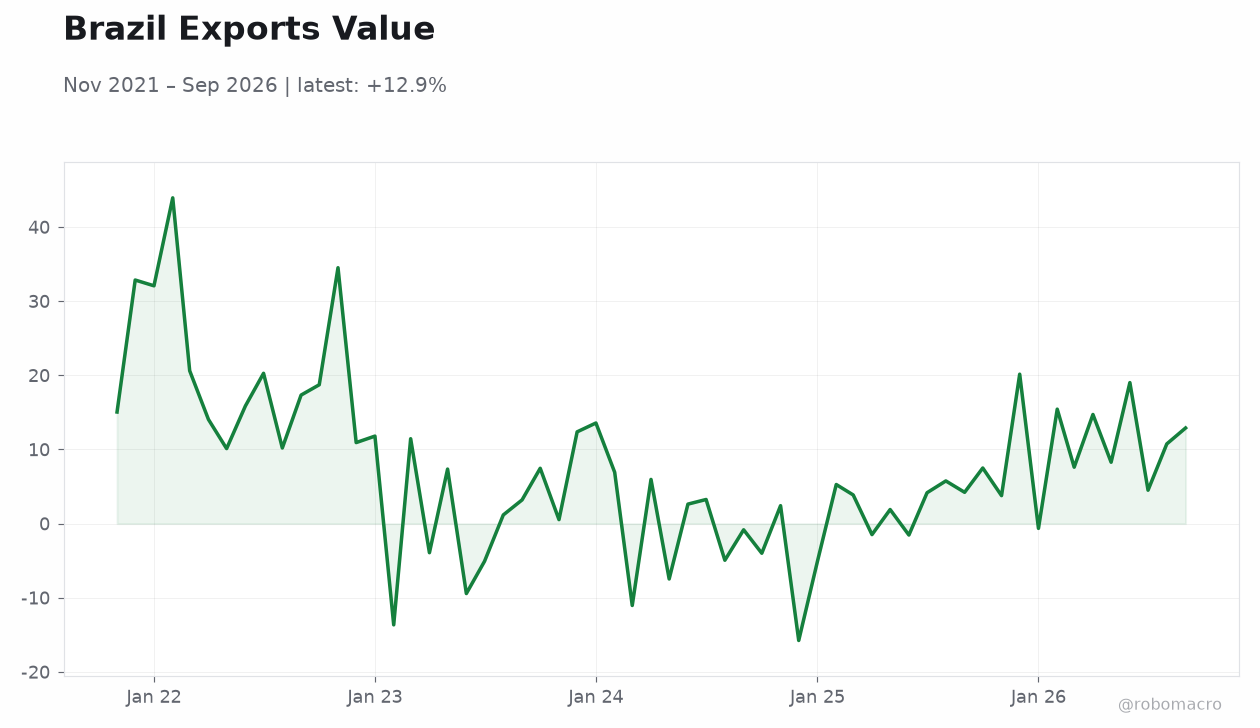
Markets are pricing a potential shift toward higher public spending under the re-elected government. Fiscal sustainability concerns have driven the steepest real depreciation since 1999 and widened sovereign spreads. Export sectors face mixed effects from a weaker currency that supports commodity revenues but raises imported input costs.
↓ p.2