Brazil Macro Daily(Beta Mode)
BCB Hold Looms as Real, Yields Spike
Market Snapshot
| Asset | Level | Change |
|---|---|---|
| Bovespa | 165,529.00 | -1.43% |
| USD/BRL | 5.49 | +0.96% |
| EUR/BRL | 6.17 | +1.46% |
| Vale | 10.98 | -3.17% |
| Petrobras | 21.08 | -0.38% |
| WTI Crude | 96.55 | +0.48% |
| Gold | 4,045.10 | +2.66% |
| Bitcoin | 78,389.16 | +1.35% |
| Brazil 5Y Govt Yield | 15.29% | +19 bp |
| Brazil 10Y Govt Yield | 15.23% | +23 bp |
Prior Economic Events
| Data | Prior | Cons | Actual |
|---|---|---|---|
| BCB Focus Market Readout | - | - | - |
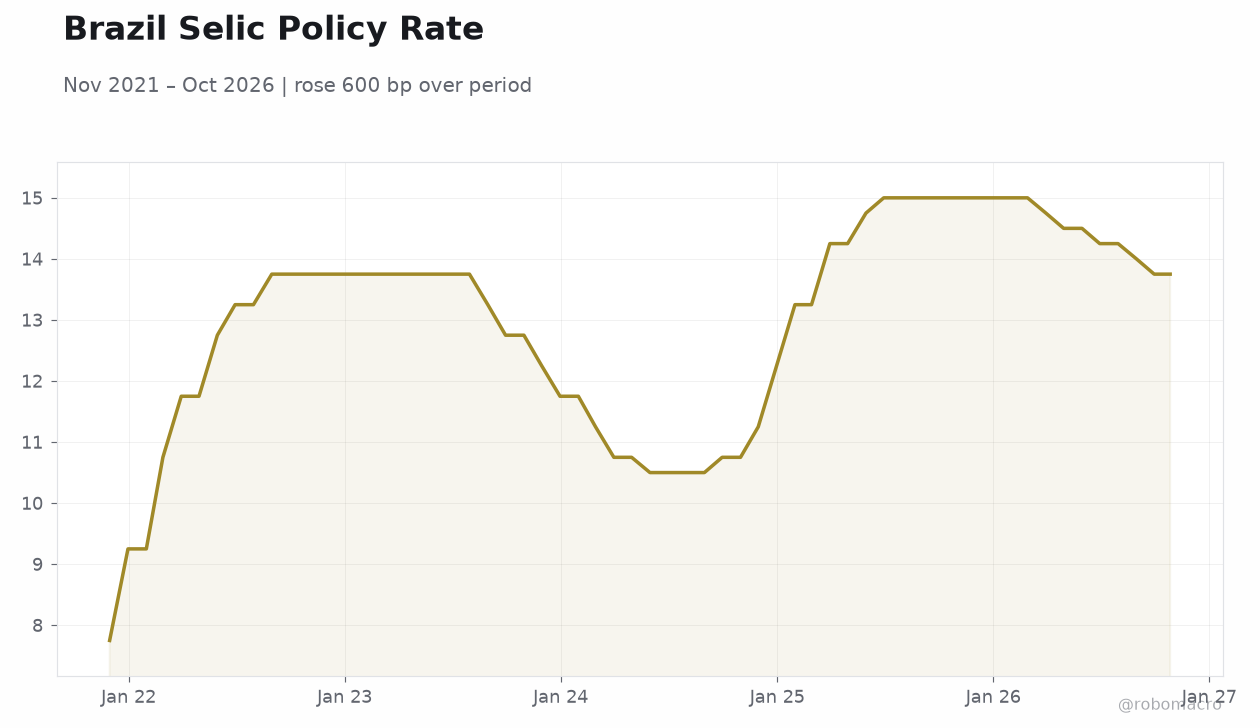 Brazil Selic Policy Rate | Type: macro_line | Selic rate (%): 13.75 (2026-10-27) | Range: 7.75–15 | Trend(5pt): 7.75,13.75,10.5,15,13.75
Today's Economic Events
| Data | Prior | Cons | Time |
|---|---|---|---|
| Central Bank Interest Rate Decision | 13.75 | 13.75 | 16:30 |
| Thursday (2026-11-05) | |||
| Industrial Production Month-over-Month | -0.60 | -0.20 | 07:00 |
| S&P Global Services PMI | 49.20 | - | 08:00 |
| Friday (2026-11-06) | |||
| Trade Balance | 7,740m | 9,000m | 13:00 |
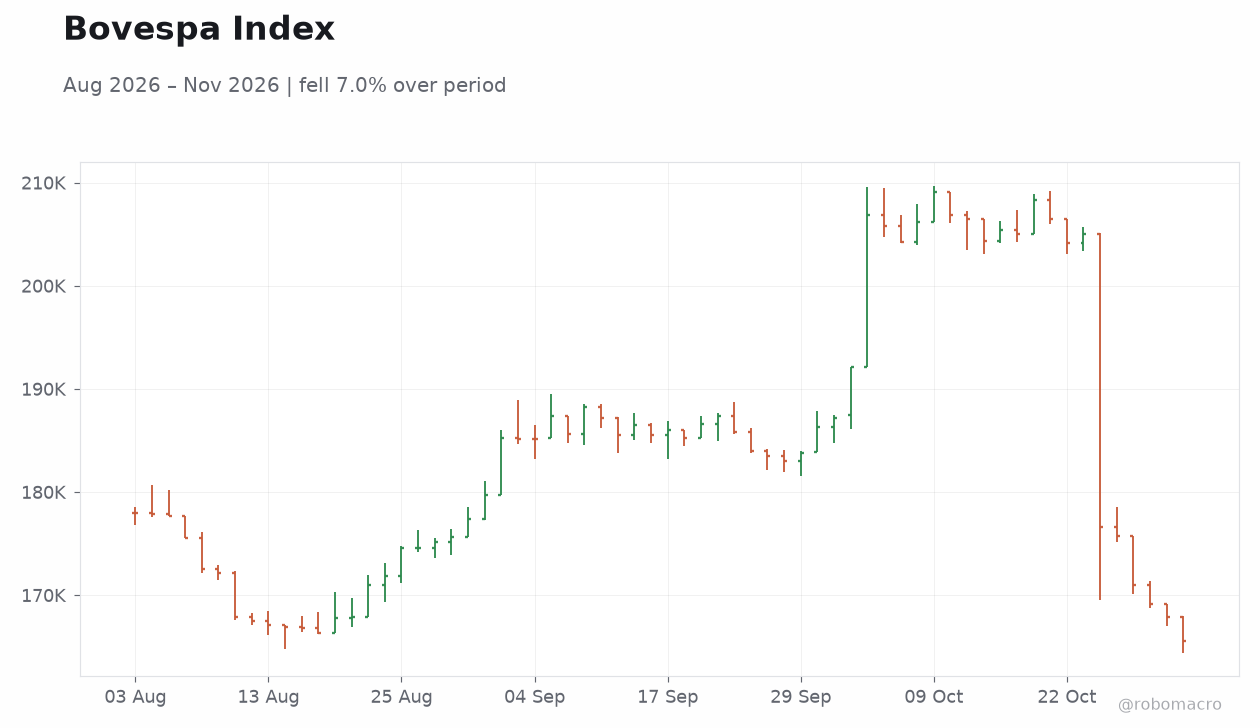
- Brazilian assets sold off sharply yesterday, with the Ibovespa down 1.43% to 165,529 and USD/BRL up 0.96% to 5.49 amid fiscal and Petrobras-related speculation.
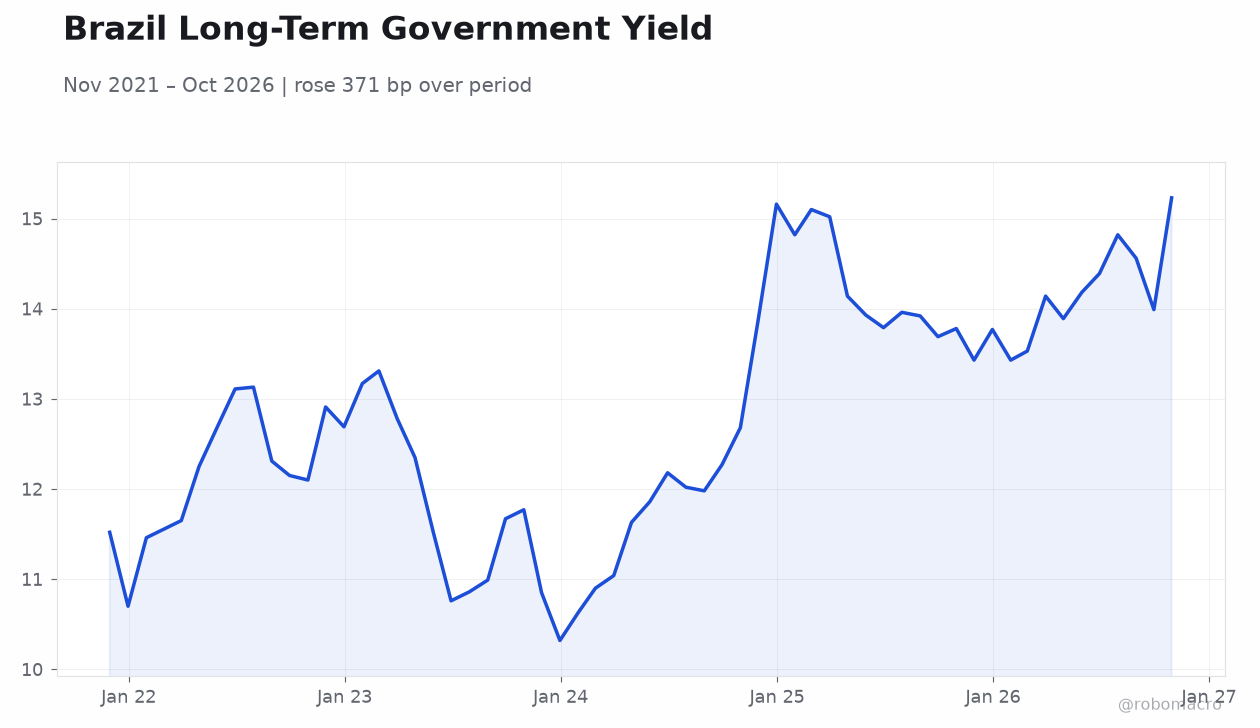
- The 10-year government yield jumped 23 bp to 15.23% and the 5-year rose 19 bp to 15.29%, reflecting heightened risk premia ahead of today's COPOM decision.
- The BCB is widely expected to hold the Selic at 13.75% at today's 16:30 ET decision, with markets focused on forward guidance and any signal on the pace of future easing.
Yesterday's Recap
Brazilian markets opened November on a weak footing, with the Ibovespa falling 1.43% to 165,529 as fiscal concerns and Petrobras-related speculation weighed on sentiment. The real bore the brunt of the risk-off tone, with USD/BRL climbing 0.96% to 5.49 and EUR/BRL up 1.46% to 6.17. The fixed-income market sold off sharply, with the 10-year government yield rising 23 bp to 15.23% and the 5-year up 19 bp to 15.29%, underscoring elevated fiscal risk premia.
Vale shares dropped 3.17% to 10.98, tracking weakness in iron ore and broader commodity sentiment, while Petrobras slipped 0.38% to 21.08. The BCB Focus Market Readout was released with no surprises, but attention remains squarely on today's COPOM decision. Global commodities offered little support, with WTI crude up 0.48% to 96.55 and gold surging 2.66% to 4,045.10, signaling persistent demand for safe havens.
The Day Ahead
The central bank's interest rate decision at 16:30 ET is the dominant event today, with consensus expecting the Selic to remain at 13.75%. Markets will parse the accompanying statement for any shift in tone on the pace of disinflation and the fiscal backdrop, particularly given the recent run-up in long-end yields. Tomorrow brings industrial production month-over-month at 07:00 ET, with consensus at -0.2% versus the prior -0.6%, which will offer a read on the real economy's momentum.
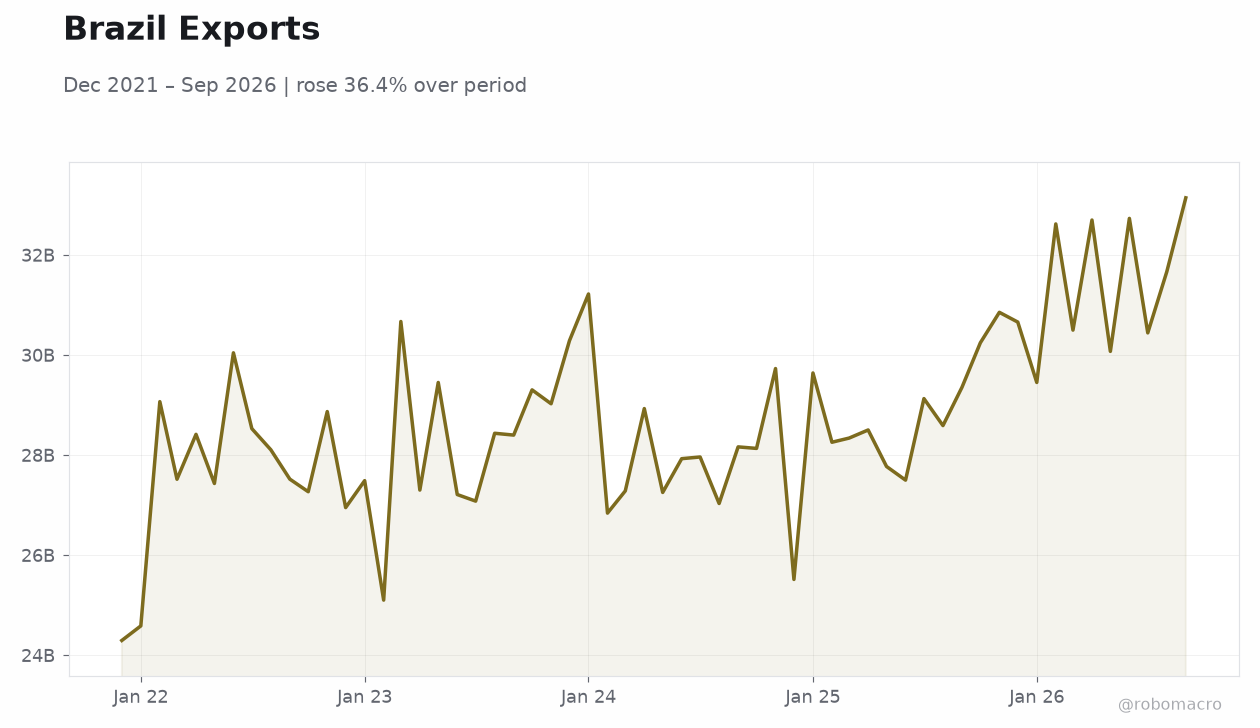
The S&P Global Services PMI follows at 08:00 ET, with the prior print at 49.2, still in contraction territory. Friday's trade balance release at 13:00 ET is expected to show a surplus of $9.0 billion versus the prior $7.74 billion, providing a check on external accounts.
Other Economic Notes
Structural themes continue to shape Brazil's medium-term outlook, with economists flagging inequality as a drag on GDP growth and Kearney projecting average growth of just 1.7% through 2028. Santander's Botín noted that Brazil makes slow progress regardless of government, underscoring the institutional and structural constraints on faster expansion. ↓ p.2