Brazil Macro Daily(Beta Mode)
BCB Holds as Activity Cracks
Market Snapshot
| Asset | Level | Change |
|---|---|---|
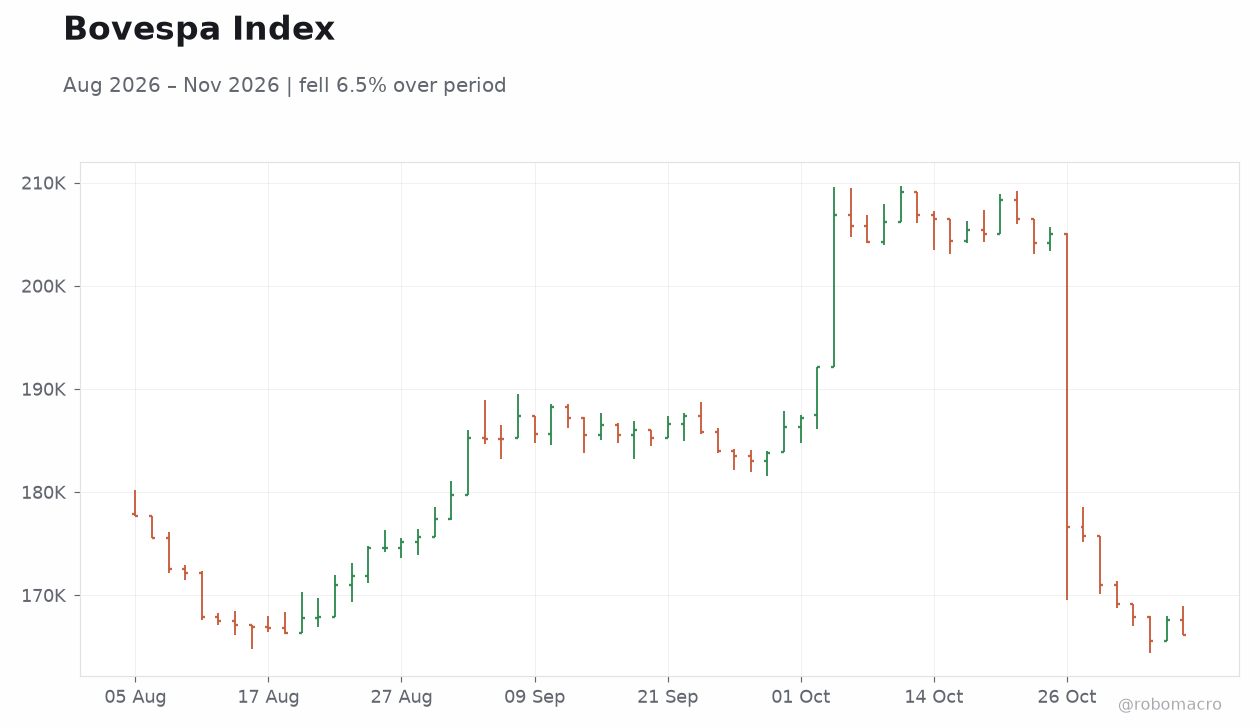
| Bovespa | 166,192.00 | -0.82% |
| USD/BRL | 5.50 | +0.82% |
| EUR/BRL | 6.16 | +0.46% |
| Vale | 11.45 | +0.17% |
| Petrobras | 18.80 | -4.13% |
| WTI Crude | 89.86 | -0.73% |
| Gold | 4,083.10 | -0.74% |
| Bitcoin | 75,646.09 | -0.39% |
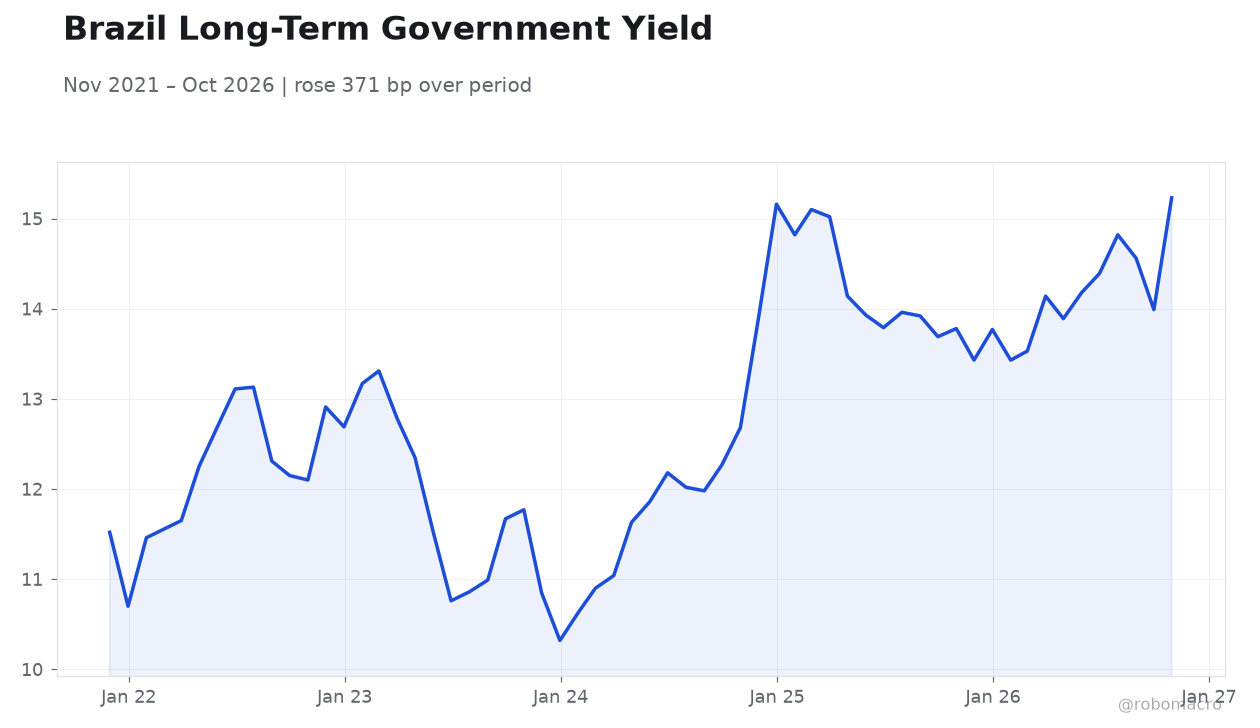
| Brazil 5Y Govt Yield | 15.29% | +19 bp |
| Brazil 10Y Govt Yield | 15.23% | +23 bp |
Prior Economic Events
| Data | Prior | Cons | Actual |
|---|---|---|---|
| BCB Focus Market Readout | - | - | "" |
| Central Bank Interest Rate Decision | 13.75 | 13.75 | 13.75 |
| Industrial Production Month-over-Month | -0.60 | -0.20 | -0.80 |
| S&P Global Services PMI | 49.20 | - | 44.50 |
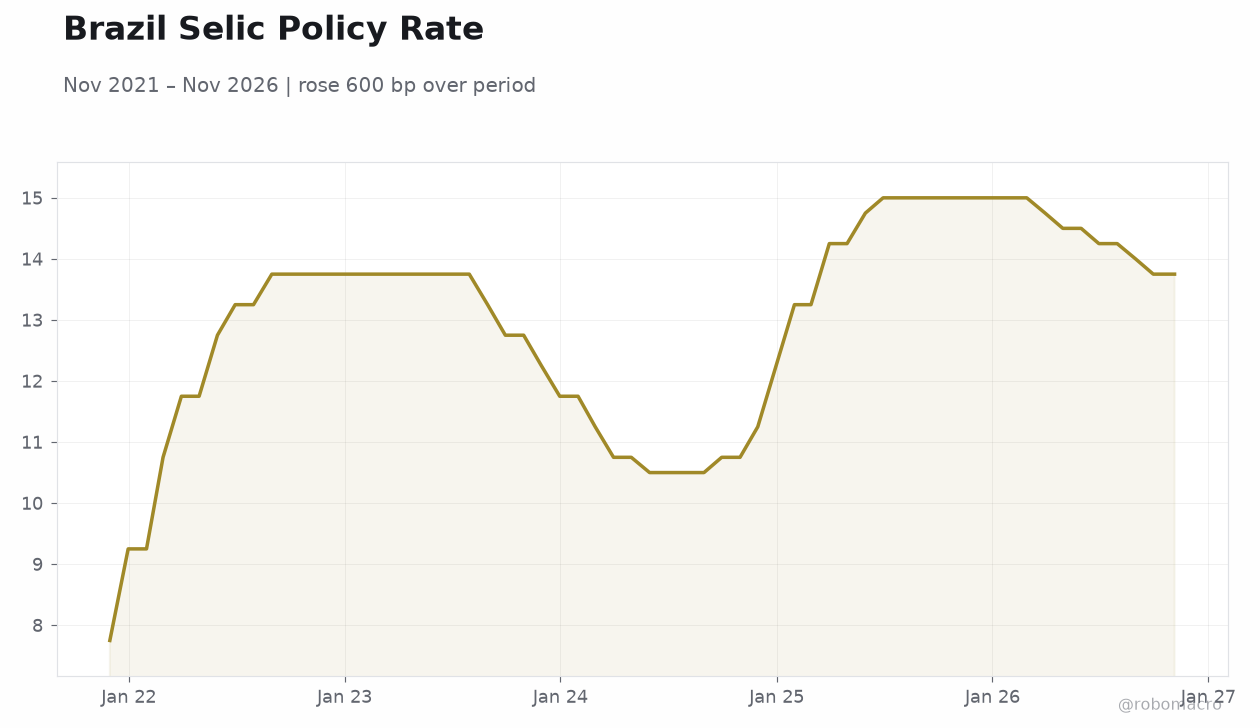 Brazil Selic Policy Rate | Type: macro_line | Selic Rate (%): 13.75 (2026-11-05) | Range: 7.75–15 | Trend(5pt): 7.75,13.75,10.5,15,13.75
Today's Economic Events
| Data | Prior | Cons | Time |
|---|---|---|---|
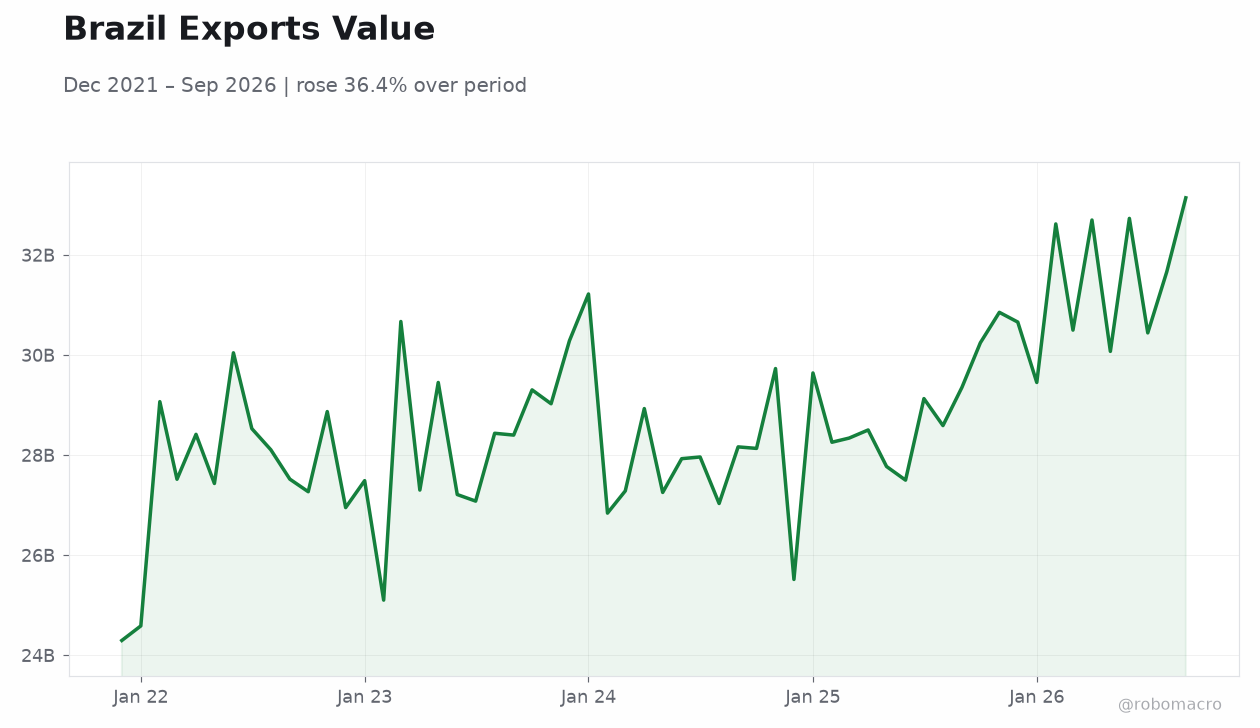
| Trade Balance | 7,740m | 9,000m | 13:00 |
- COPOM held Selic at 13.75% on Nov 4, but the tone shifted decisively dovish as activity data deteriorated sharply
- Industrial production fell 0.8% m/m (vs -0.2% consensus) and Services PMI collapsed to 44.5 from 49.2, signaling broad contraction
- Bond market sold off despite the hold — 10Y yield jumped 23 bp to 15.23% — as fiscal concerns and a hawkish-hold interpretation weighed on duration
Yesterday's Recap
Brazil's COPOM voted to hold the Selic rate at 13.75% on Nov 4, matching consensus, but the accompanying communication acknowledged a "more intense moderation" of the economy. That read was validated by Thursday's prints: industrial production contracted 0.8% m/m versus a -0.2% consensus and -0.6% prior, while the S&P Global Services PMI plunged to 44.5 from 49.2 — a level consistent with outright recession in services. Markets reacted poorly to the combination of sticky inflation (CPI at 4.58% y/y as of September) and deteriorating growth.
The Ibovespa fell 0.82% to 166,192, with Petrobras down 4.13% to 18.80 dragging the index. USD/BRL rose 0.82% to 5.50, reflecting both risk-off sentiment and fiscal anxiety. The fixed-income market bore the brunt: the 10-year government yield rose 23 bp to 15.23% and the 5-year added 19 bp to 15.29%, an unusual move on a hold day that suggests the market read the statement as insufficiently forward-looking on easing.
The Day Ahead
The sole scheduled Brazilian release is the November trade balance at 13:00 ET, with consensus at $9.0 billion versus a prior $7.74 billion — a print in line or above would underscore the commodity-export engine still running even as domestic demand cools. With no other domestic data on the calendar, attention shifts to the COPOM statement's read-through and fiscal headlines, which have been the dominant driver of the real and the curve. Global risk appetite will matter disproportionately given the thin domestic calendar.
Watch whether USD/BRL holds below 5.50 or breaks higher on continued fiscal noise. Bond traders will also parse whether Thursday's yield backup was positioning-driven or a genuine repricing of the terminal rate path.
Other Economic Notes
The divergence between a 13.75% Selic and 4.58% CPI implies a real ex-post rate near 9%, among the highest in the world, yet the curve prices 15%+ nominal yields — a spread that reflects fiscal risk premia rather than monetary tightness. The services PMI at 44.5 is the weakest reading of this cycle and argues that the 13.75% rate is doing its job, but the BCB's inflation-targeting credibility is being tested by a government with loose fiscal instincts. ↓ p.2