Brazil Macro Daily(Beta Mode)
Real Slides as Fiscal Plan Advances
Market Snapshot
| Asset | Level | Change |
|---|---|---|
| Bovespa | 164,090.00 | -0.43% |
| USD/BRL | 5.89 | -0.66% |
| EUR/BRL | 6.44 | -0.29% |
| Vale | 9.37 | -4.39% |
| Petrobras | 15.67 | -0.89% |
| WTI Crude | 81.19 | -1.05% |
| Gold | 3,564.10 | +0.06% |
| Bitcoin | 59,189.81 | -0.93% |
| Brazil 5Y Govt Yield | 15.34% | +15 bp |
| Brazil 10Y Govt Yield | 15.36% | +14 bp |
Prior Economic Events
| Data | Prior | Cons | Actual |
|---|---|---|---|
| BCB Focus Market Readout | - | - | - |
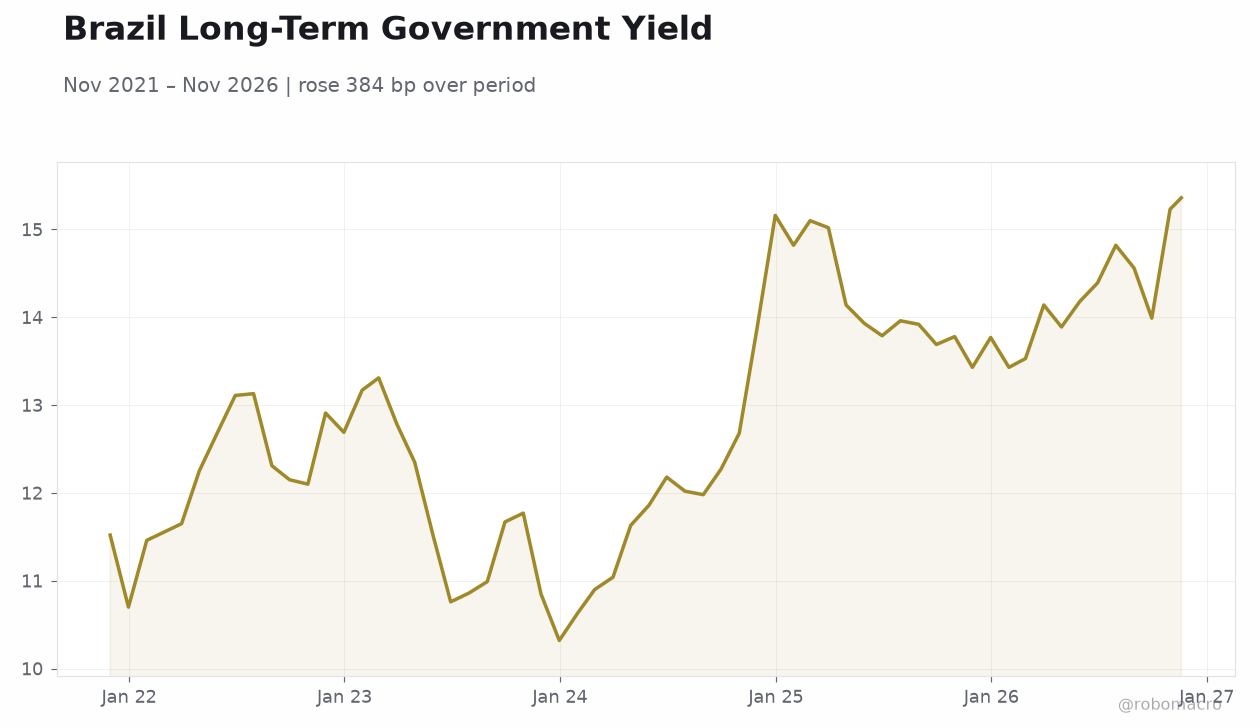 Brazil Long-Term Government Yield | Type: macro_line | 10Y Govt Yield (%): 15.36 (2026-11-19) | Range: 10.32–15.36 | Trend(5pt): 11.52,13.31,11.86,13.92,15.36
Today's Economic Events
| Data | Prior | Cons | Time |
|---|---|---|---|
| Friday (2026-11-27) | |||
| Headline Unemployment Rate | 5.20 | 5.10 | 07:00 |
- Lower house approved Lula's spending curb plan hours after USD/BRL punched through 5.90, closing at 5.89 (-0.66%) as the real stabilized late.
- Petrobras unveiled a US$122bn capex plan for 2027-2031 alongside a R$15.6bn extraordinary shareholder payout and a 42% stake buy in ethanol producer Neomille.
- Brazil 5Y and 10Y government yields jumped 15bp and 14bp respectively to 15.34% and 15.36%, steepening the curve on fiscal and inflation concerns.
Yesterday's Recap
Brazilian assets came under broad pressure Tuesday, with the Bovespa shedding 0.43% to 164,090 and Vale tumbling 4.39% to 9.37 on weaker iron ore sentiment. The real weakened past the closely watched 5.90 threshold intraday before recovering to close at 5.89, down 0.66% on the day. Petrobras slipped 0.89% to 15.67 despite approving a US$122bn investment plan for 2027-2031 and an extraordinary R$15.6bn dividend, with the market digesting heavier capex and a 42% acquisition of ethanol producer Neomille.
The sovereign curve bore the brunt of the risk-off tone, with the 5-year yield rising 15bp to 15.34% and the 10-year adding 14bp to 15.36%. The BCB Focus Market Readout was released with no surprise headline. The lower house's approval of Lula's fiscal plan came only after the real had already breached 5.90, underscoring how thin the market's patience has become on the fiscal front.
The Day Ahead
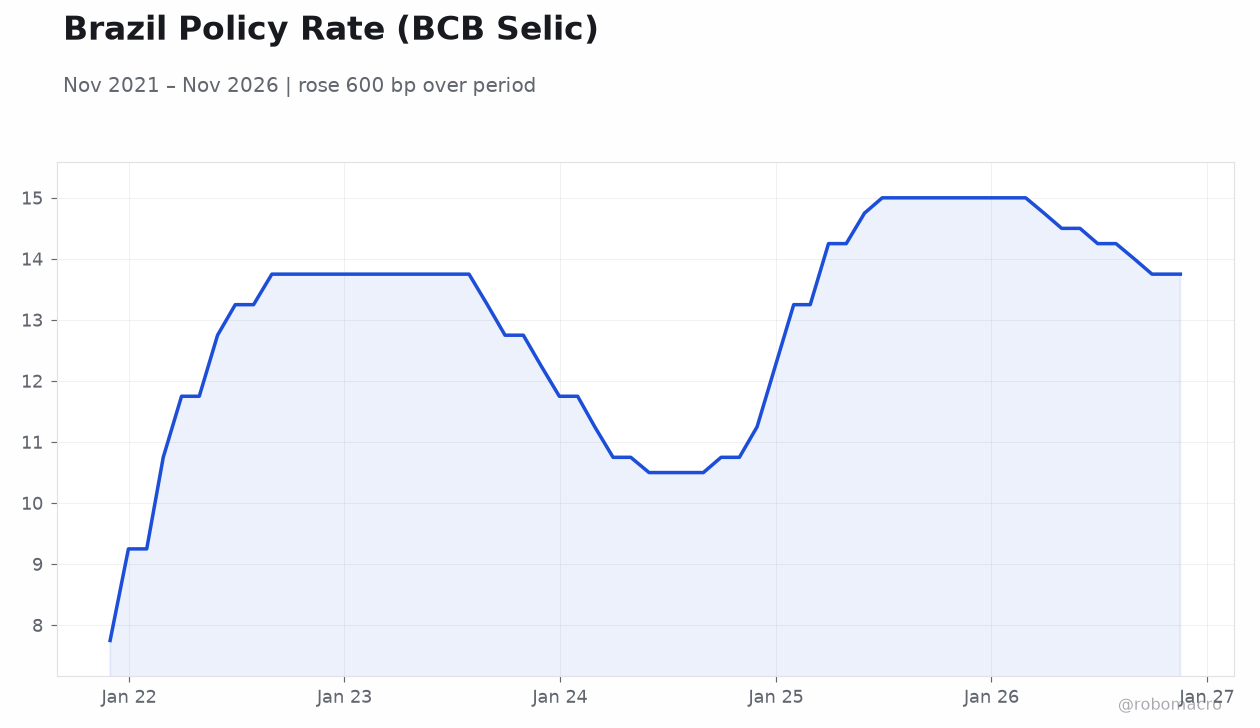
The calendar is light, with no Brazilian releases scheduled for Wednesday. Attention shifts to Friday's headline unemployment rate, where consensus looks for 5.1% versus a prior 5.2%, a print that will inform BCB thinking on labor-market tightness ahead of the December 9 COPOM meeting. With no domestic data to trade on, flows will be driven by fiscal headlines out of Brasília and the follow-through from the lower house vote.
Petrobras' capex plan will likely keep the name in focus as analysts recalibrate free-cash-flow and dividend assumptions. Global risk appetite, particularly the trajectory of US yields and commodity prices, will set the tone for the real and the Bovespa.
Other Economic Notes
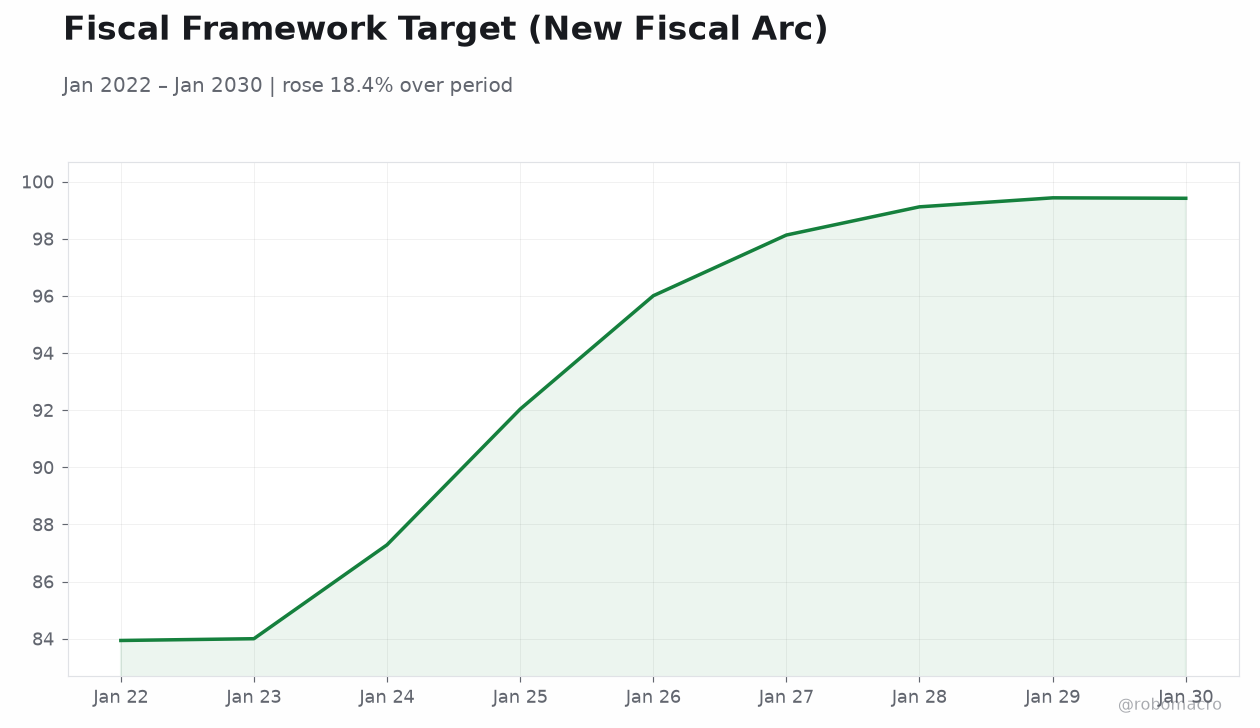
The government cut its 2027 growth forecast while raising the inflation outlook, a combination that complicates the fiscal arithmetic behind the newly approved spending plan. Brasília is now formally targeting a primary surplus of 1.5% of GDP by 2030, an ambitious path that will require sustained revenue performance and spending discipline. ↓ p.2