Canada Macro Daily(Beta Mode)
Loonie Jumps, Yields Climb as BoC Hike Odds Build
Market Snapshot
| Asset | Level | Change |
|---|---|---|
| S&P/TSX | 36,108.00 | +0.50% |
| USD/CAD | 1.40 | -0.43% |
| EUR/CAD | 1.58 | -0.20% |
| WTI Crude | 99.30 | -2.45% |
| Natural Gas | 2.85 | -3.91% |
| Gold | 4,146.20 | +0.09% |
| Brent Crude | 110.17 | +1.27% |
| Bitcoin | 83,414.99 | +0.57% |
| Canada 2Y Govt Yield | 3.33% | +12 bp |
| Canada 10Y Govt Yield | 3.93% | +9 bp |
Prior Economic Events
| Data | Prior | Cons | Actual |
|---|---|---|---|
| No events available | |||
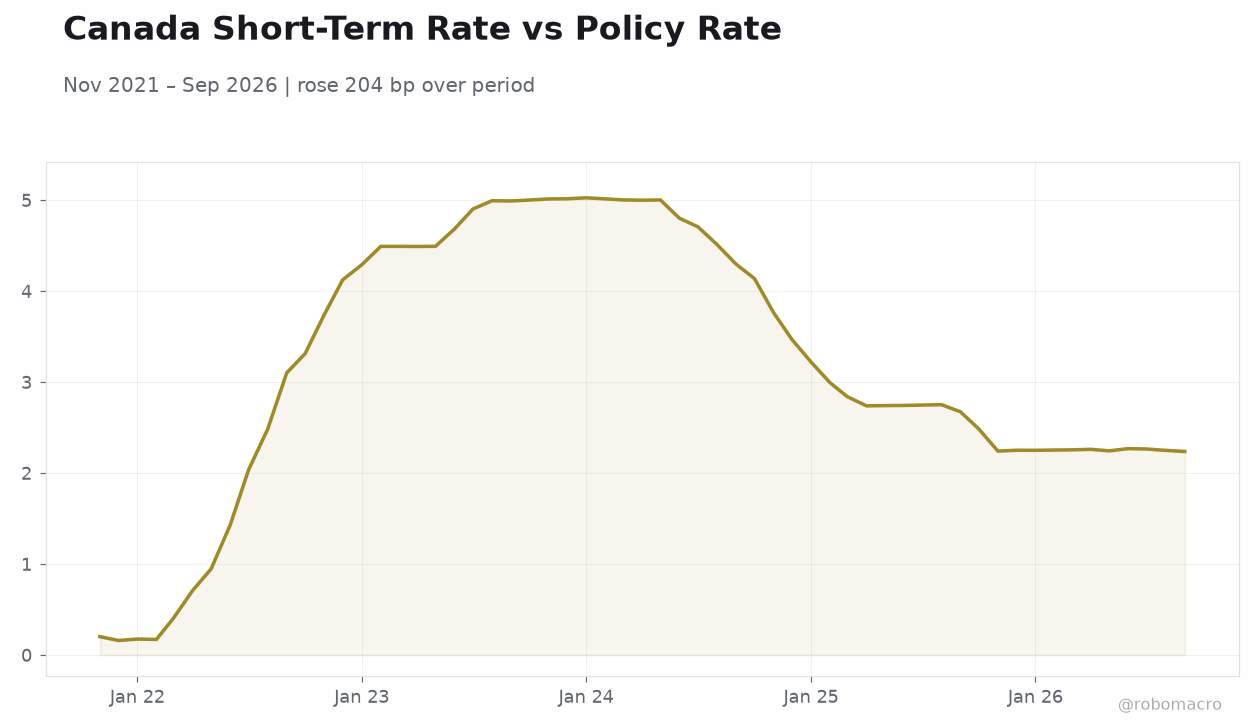 Canada Short-Term Rate vs Policy Rate | Type: macro_line | Short-Term Rate (%): 2.238 (2026-09-01) | Range: 0.1604–5.026 | Trend(6pt): 0.2027,4.29,5.003,2.742,2.265,2.238
Today's Economic Events
| Data | Prior | Cons | Time |
|---|---|---|---|
| No events available | |||
- CAD posts best day in roughly four weeks, USD/CAD sliding 0.43% to 1.40 after Alberta vote; TSX adds 0.50% to 36,108
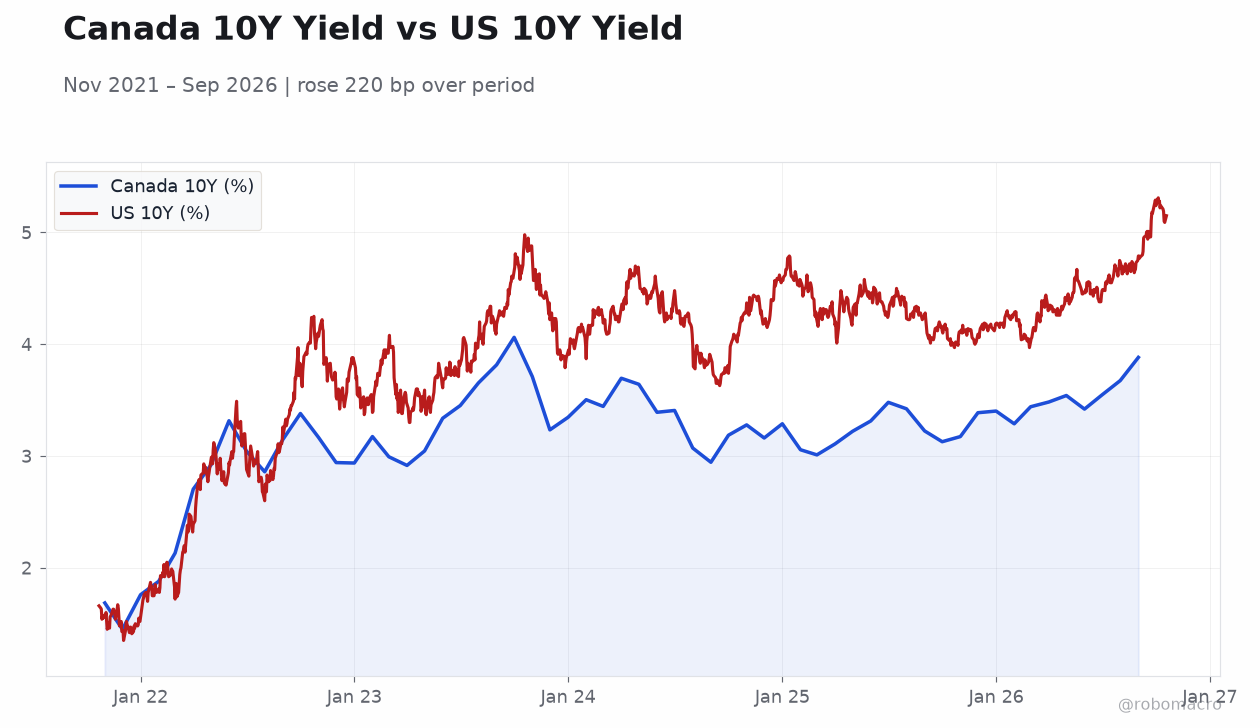
- Canada 2Y yield jumps 12 bp to 3.33%, 10Y up 9 bp to 3.93% as markets price a possible BoC hike next week
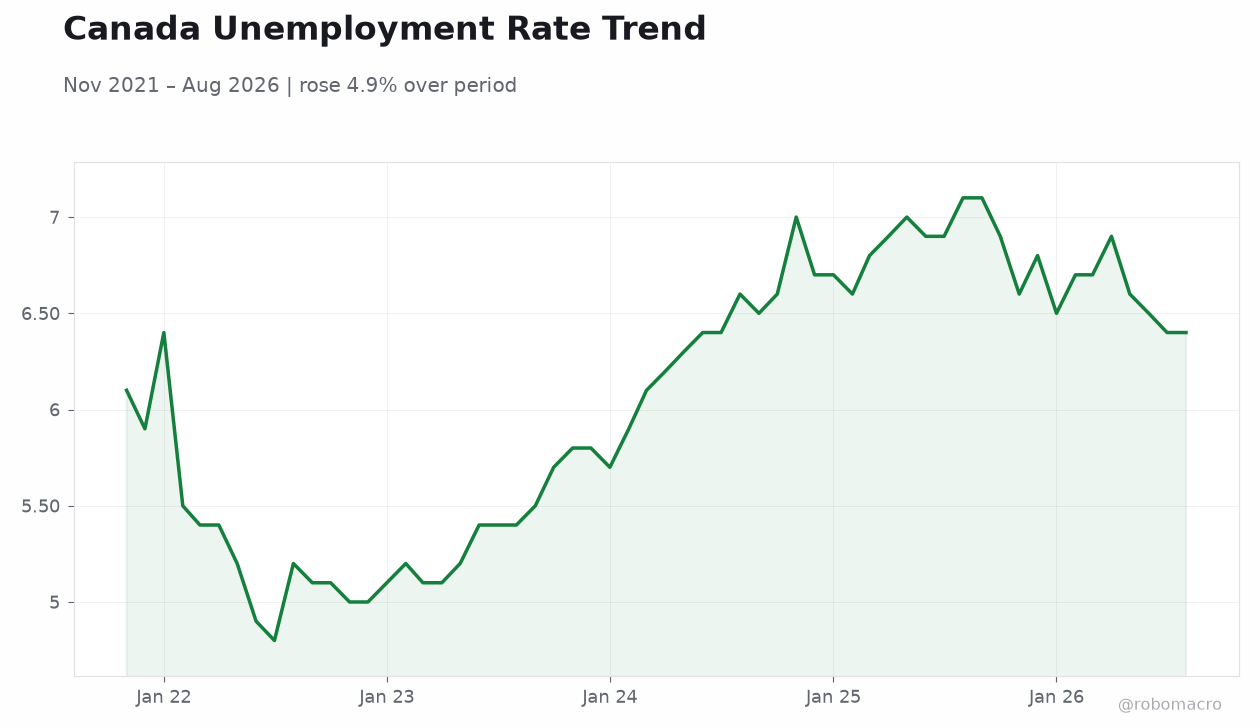
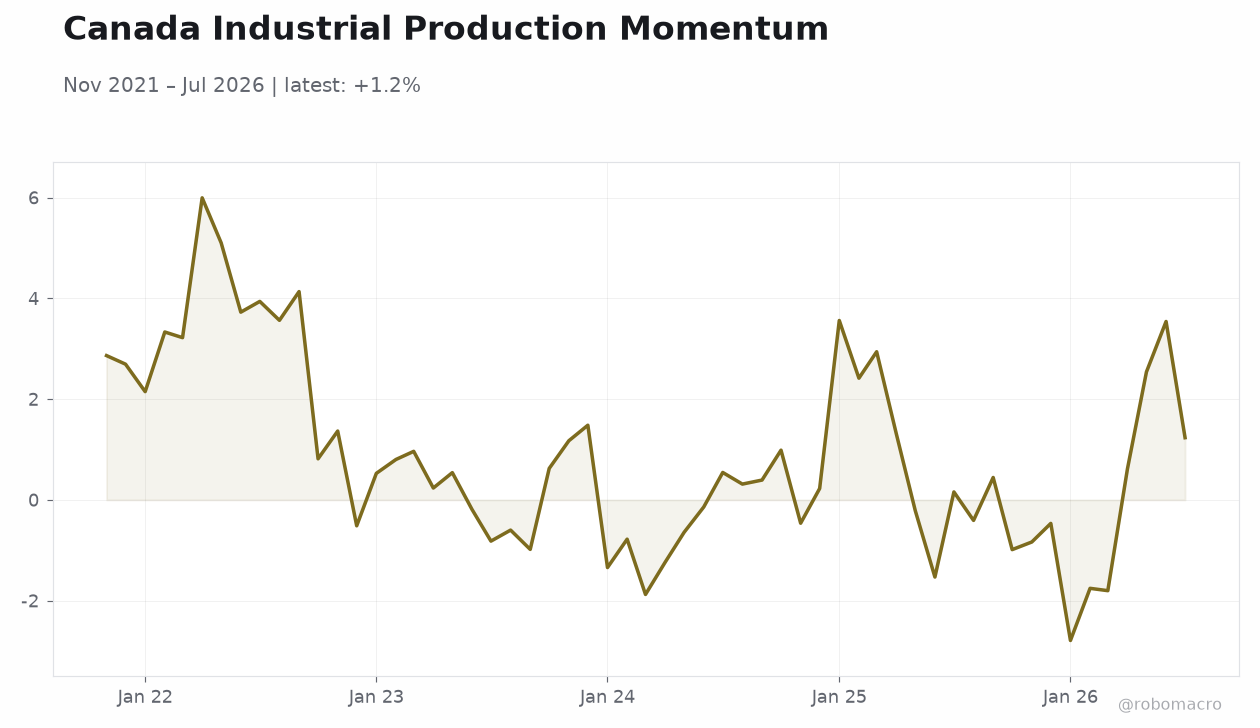
- September CPI at 3.09% YoY keeps inflation above target; PBO projects GDP growth slowing to 0.9% in 2026
Yesterday's Recap
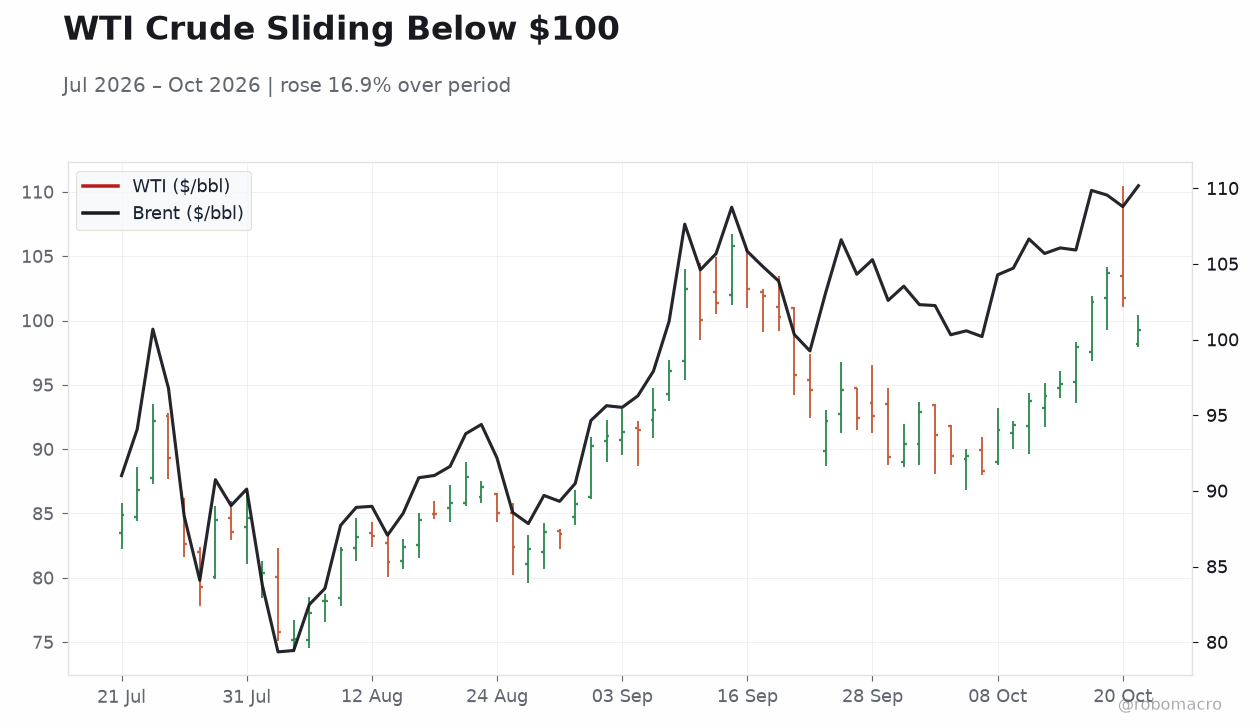
Canadian markets diverged sharply on October 20, with the loonie posting its best single-day gain in roughly four weeks as USD/CAD fell 0.43% to 1.40 and EUR/CAD eased 0.20% to 1.58, a move Bloomberg attributed to the Alberta vote outcome. The S&P/TSX advanced 0.50% to 36,108, though energy lagged badly: WTI plunged 2.45% to $99.30 and natural gas dropped 3.91% to $2.85, while Brent bucked the trend with a 1.27% gain to $110.17 on Hormuz shipping risk. Rates sold off hard, with the Canada 2Y yield surging 12 bp to 3.33% and the 10Y climbing 9 bp to 3.93% — a curve move consistent with markets repricing near-term BoC tightening risk rather than growth optimism.
Gold was essentially flat at $4,146.20 (+0.09%) and Bitcoin edged up 0.57% to $83,415. The combination of a firmer currency, steeper front-end yields and soft energy prices points to a market increasingly anchored on the view that the Bank of Canada may not be done hiking.
The Day Ahead
No tier-one Canadian data releases are scheduled for October 21, leaving markets to trade off positioning and commentary ahead of next week's Bank of Canada decision. Attention will center on CAD crosses and front-end Government of Canada yields, where the 12 bp two-year move signals elevated sensitivity to any hawkish rhetoric. Energy desks will watch WTI's slide below $100 and the Brent-WTI spread, now unusually wide near $11, for signals on Canadian crude differentials and provincial royalties.
With no domestic prints to anchor direction, TSX flows will likely track U.S. equity tone and oil headlines. Traders should also monitor overnight index swap pricing for the October BoC meeting, which has shifted materially in recent sessions.
Other Economic Notes
The Parliamentary Budget Officer projects Canadian GDP growth slowing to 0.9% in 2026, a sobering backdrop against CPI running at 3.09% YoY — a stagflationary combination that complicates the policy path. The PBO also published an assessment note on the economic impact of recent Canada-U.S. trade measures, underscoring how tariff uncertainty is feeding into business investment decisions.
Housing remains the softest transmission channel: CBC reports the market is "on its knees" as hike odds rise, with variable-rate borrowers facing renewed payment pressure. ↓ p.2