| Asset | Level | Change |
|---|---|---|
| S&P/TSX | 35,973.50 | -0.97% |
| USD/CAD | 1.40 | -0.31% |
| EUR/CAD | 1.57 | -0.65% |
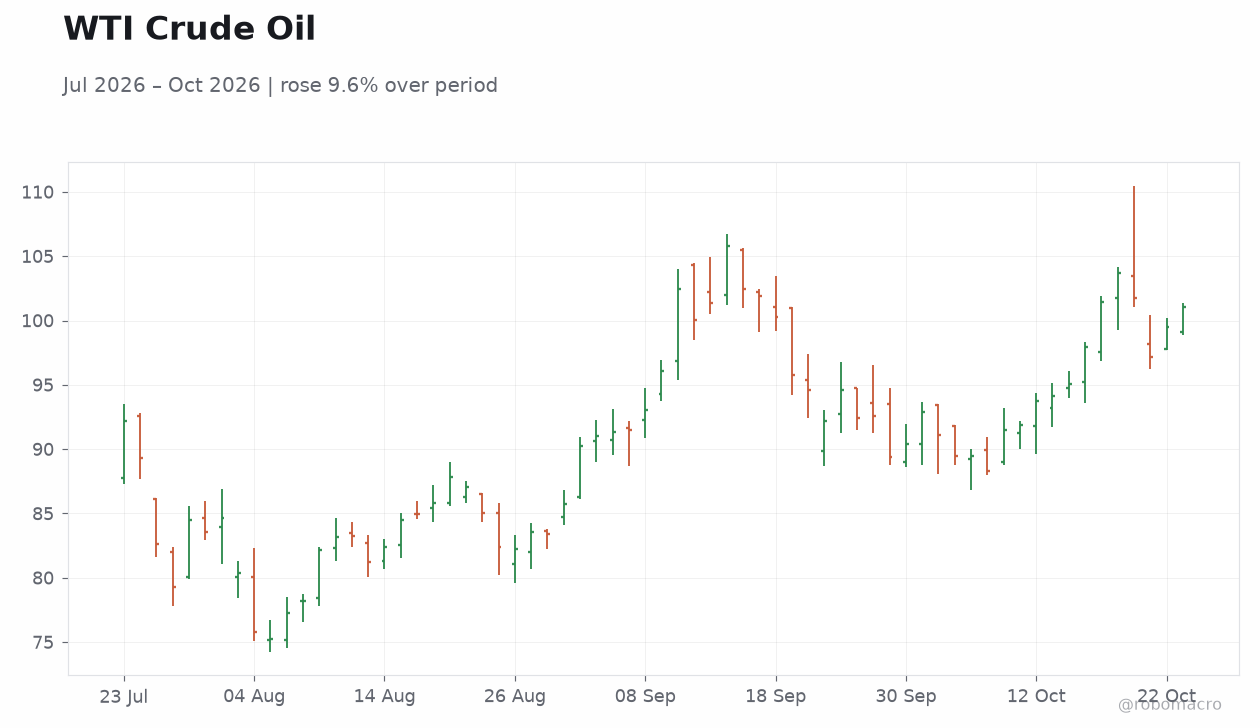
| WTI Crude | 101.05 | +1.59% |
| Natural Gas | 3.12 | +11.44% |
| Gold | 4,043.20 | -0.42% |
| Brent Crude | 110.14 | -2.68% |
| Bitcoin | 81,531.20 | +0.27% |
| Canada 2Y Govt Yield | 3.32% | 0 bp |
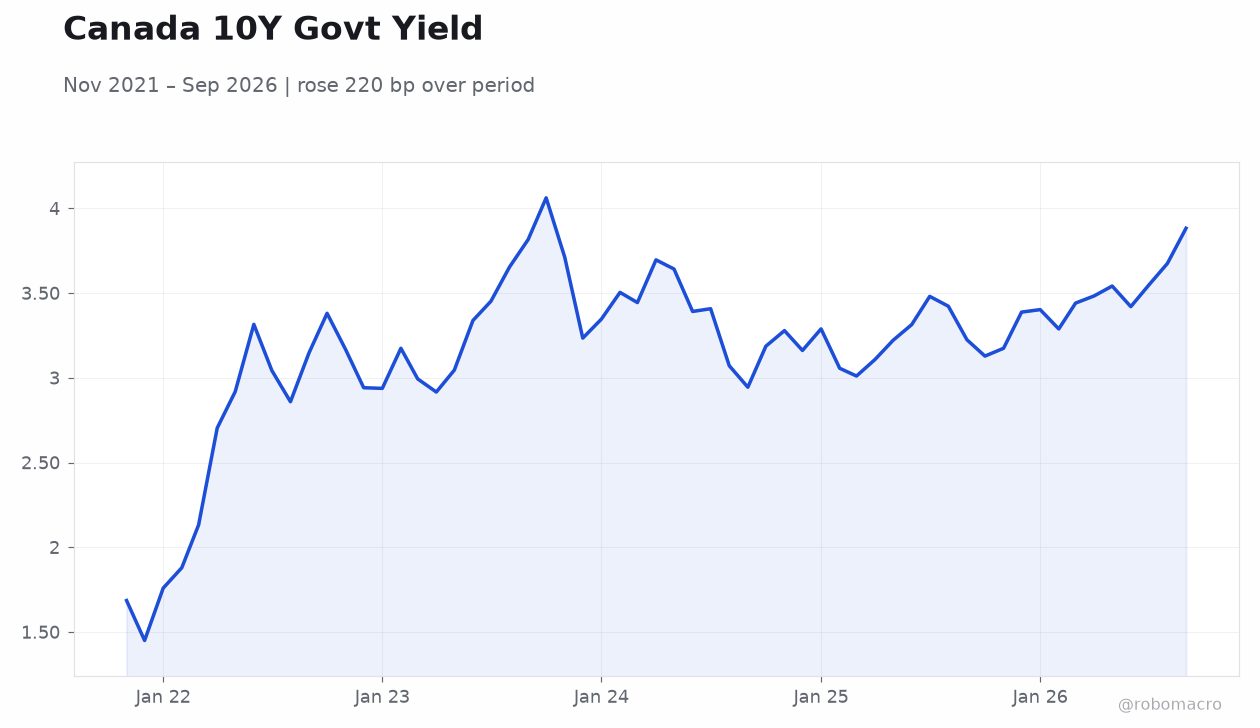
| Canada 10Y Govt Yield | 3.90% | 0 bp |
| Data | Prior | Cons | Actual |
|---|---|---|---|
| No events available | |||
BoC Policy Rate | Type: macro_line | %: 2.238 (2026-09-01) | Range: 0.1604–5.026 | Trend(6pt): 0.2027,4.29,5.003,2.742,2.265,2.238
| Data | Prior | Cons | Time |
|---|---|---|---|
| No events available | |||
Canadian markets absorbed the latest Bank of Canada survey results showing a clear lift in inflation expectations, keeping alive speculation of a first rate increase since 2022 even as the committee voted to hold the policy rate at 2.25%. The S&P/TSX declined 0.97% to close at 35,973.50 amid rotation out of growth names and into energy. USD/CAD eased 0.31% to 1.40 as higher oil prices and domestic rate-hike bets lent support to the loonie.
WTI crude rose 1.59% to 101.05 while natural gas surged 11.44% to 3.12 on supply concerns. Gold slipped 0.42% to 4,043.20 and Bitcoin edged 0.27% higher. Canada 2-year and 10-year government yields were unchanged at 3.32% and 3.90%, indicating limited repricing of the front end.
Broader equity sentiment remained cautious as investors weighed the survey against the BoC’s recent forward guidance that emphasized data dependence. Energy-price strength provided a tailwind for the loonie and fiscal revenues but also risks embedding higher inflation expectations further. Equity-market breadth remains narrow, with limited IPO activity underscoring structural challenges for Canadian capital markets.
With no major Canadian data releases scheduled, attention turns to follow-up commentary from Governing Council members and any updates on quantitative tightening. Markets will monitor oil-price volatility and its direct pass-through to CAD crosses and headline inflation. Positioning for potential BoC tightening is expected to keep USD/CAD sensitive to any hawkish signals.
Global risk appetite, particularly U.S. tech earnings and Middle East developments, will influence flows into Canadian assets. Analysts continue to parse the inflation-expectations survey for clues on whether the next policy move tilts toward a hike or remains on hold.
Bank stocks may benefit from steeper rate-hike odds through wider net-interest margins, though credit-demand sensitivity to higher borrowing costs warrants monitoring.
Subscribe to Canada Macro Daily and get each new issue delivered to your inbox.
Already a member? Visit robomacro.com to log in and manage subscriptions, or use Forgot Password to set a password.
Canada 10Y Govt Yield | Type: macro_line | %: 3.882 (2026-09-01) | Range: 1.45–4.062 | Trend(6pt): 1.686,2.938,3.444,3.221,3.547,3.882
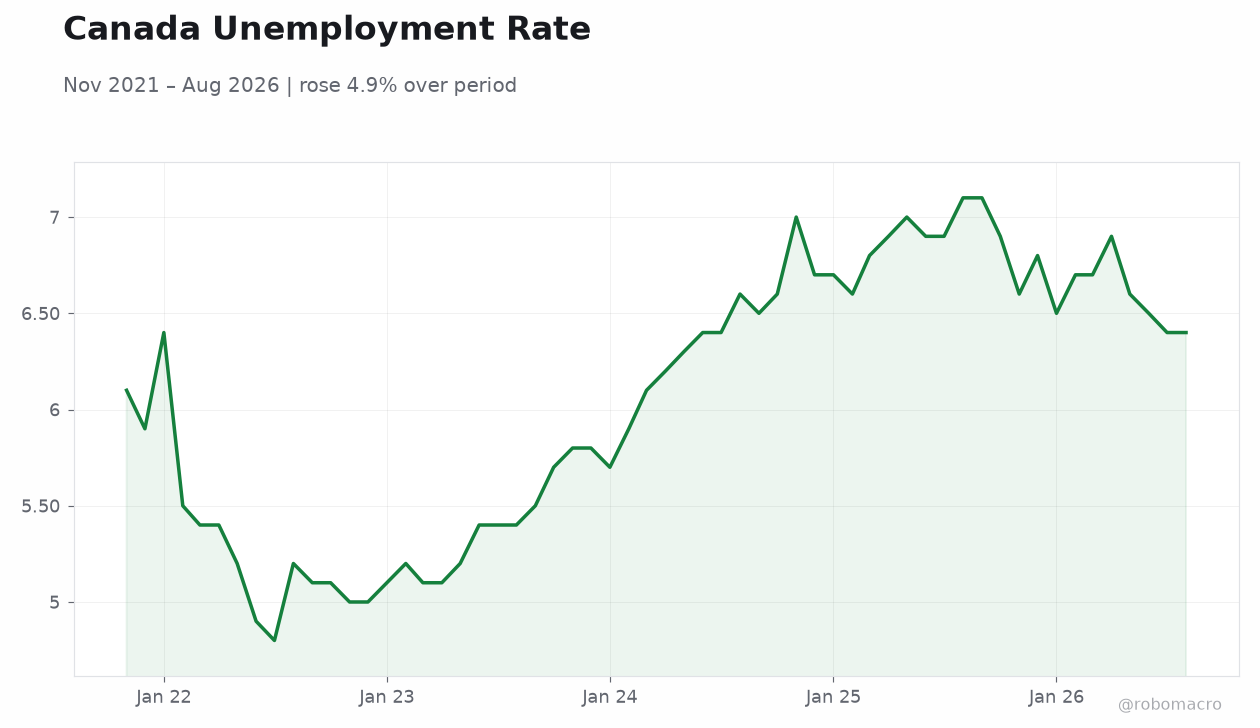
Canada Unemployment Rate | Type: macro_line | %: 6.4 (2026-08-01) | Range: 4.8–7.1 | Trend(5pt): 6.1,5.1,6.1,7,6.4
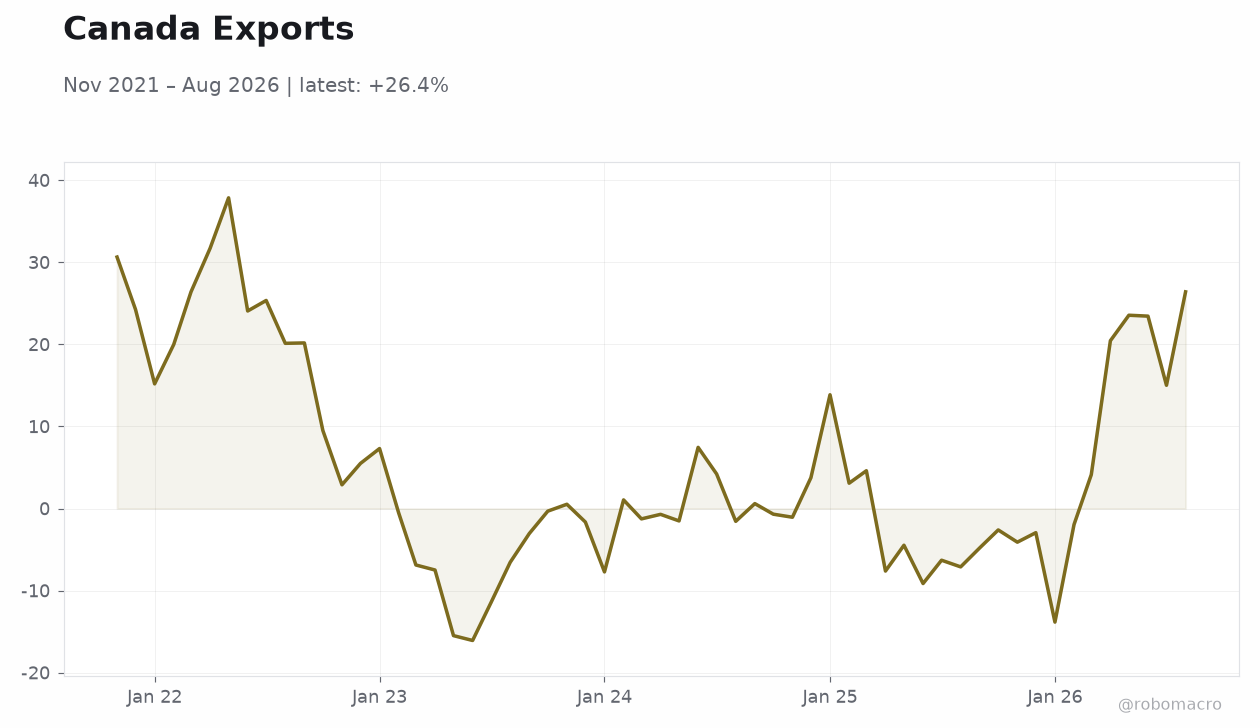
Canada Exports | Type: macro_line | CAD mn: 26.4 (2026-08-01) | Range: -16.08–37.85 | Trend(6pt): 30.64,7.305,-1.263,-4.475,15.01,26.4
WTI Crude Oil | Type: market_hloc | USD/bbl: 101 (2026-10-23) | Range: 75.22–105.8 | Trend(6pt): 92.19,82.4,93.03,90.42,99.47,101
Rising inflation expectations complicate the BoC’s task of balancing growth and price stability at a time when the policy rate sits at 2.25% and CPI prints at 3.00%. Energy-price strength provides a tailwind for the loonie and fiscal revenues but also risks embedding higher inflation expectations further. Equity-market breadth remains narrow, with limited IPO activity underscoring structural challenges for Canadian capital markets.
Bank stocks may benefit from steeper rate-hike odds through wider net-interest margins, though credit-demand sensitivity to higher borrowing costs warrants monitoring.
Global central banks, including the Federal Reserve, are priced for additional 25-basis-point hikes before year-end, supporting a higher-for-longer narrative that spills into Canadian yield curves. Asian emerging-market equities attract inflows on the back of this policy backdrop and gold’s resilience. High crude prices continue to pressure import-dependent currencies such as the Indian rupee, indirectly supporting commodity-linked CAD.
Vietnam’s central bank has issued multiple directives urging lower lending rates, highlighting divergent policy paths across Asia. Middle East risk aversion has lifted safe-haven flows, benefiting gold and pressuring broader risk assets. U.S.
dollar weakness on tech-earnings caution has provided further relief to USD/CAD. These cross-currents reinforce Canada’s role as a net energy exporter within a tightening global monetary environment.
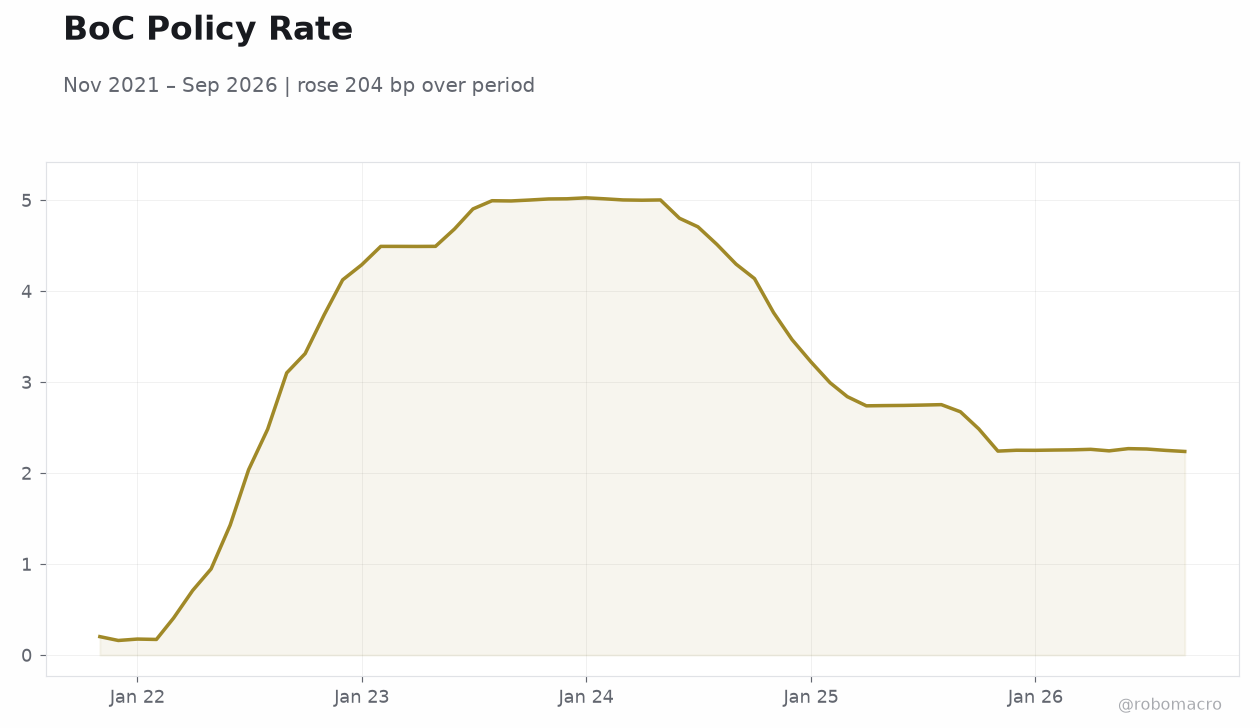
The Bank of Canada’s latest survey release underscores a material rise in inflation expectations, prompting markets to reassess the likelihood of a near-term hike despite the committee’s decision to remain on hold at 2.25%. Recent communications have stressed data dependence and vigilance against second-round effects, language that now appears more relevant given the survey outcome. Quantitative tightening continues at the previously announced pace, draining reserves without immediate adjustment signals.
Forward guidance continues to avoid explicit calendar-based commitments, leaving room for reaction to incoming inflation prints. Market pricing now embeds a higher probability of a first hike before year-end, supported by oil-driven CAD strength and the survey’s implications for wage and price setting. The Governing Council’s emphasis on anchoring expectations will likely feature prominently in upcoming speeches as officials balance growth risks against persistent price pressures.