Canada Macro Daily(Beta Mode)
BoC Weighs Hike Amid Oil-Driven Inflation Rebound
Market Snapshot
| Asset | Level | Change |
|---|---|---|
| S&P/TSX | 35,944.20 | +0.44% |
| USD/CAD | 1.40 | +0.05% |
| EUR/CAD | 1.56 | -0.49% |
| WTI Crude | 101.17 | -0.58% |
| Natural Gas | 3.02 | +16.14% |
| Gold | 4,037.60 | -0.02% |
| Brent Crude | 110.30 | -4.76% |
| Bitcoin | 80,283.29 | +0.35% |
| Canada 2Y Govt Yield | 3.33% | +11 bp |
| Canada 10Y Govt Yield | 3.83% | +5 bp |
Prior Economic Events
| Data | Prior | Cons | Actual |
|---|---|---|---|
| No events available | |||
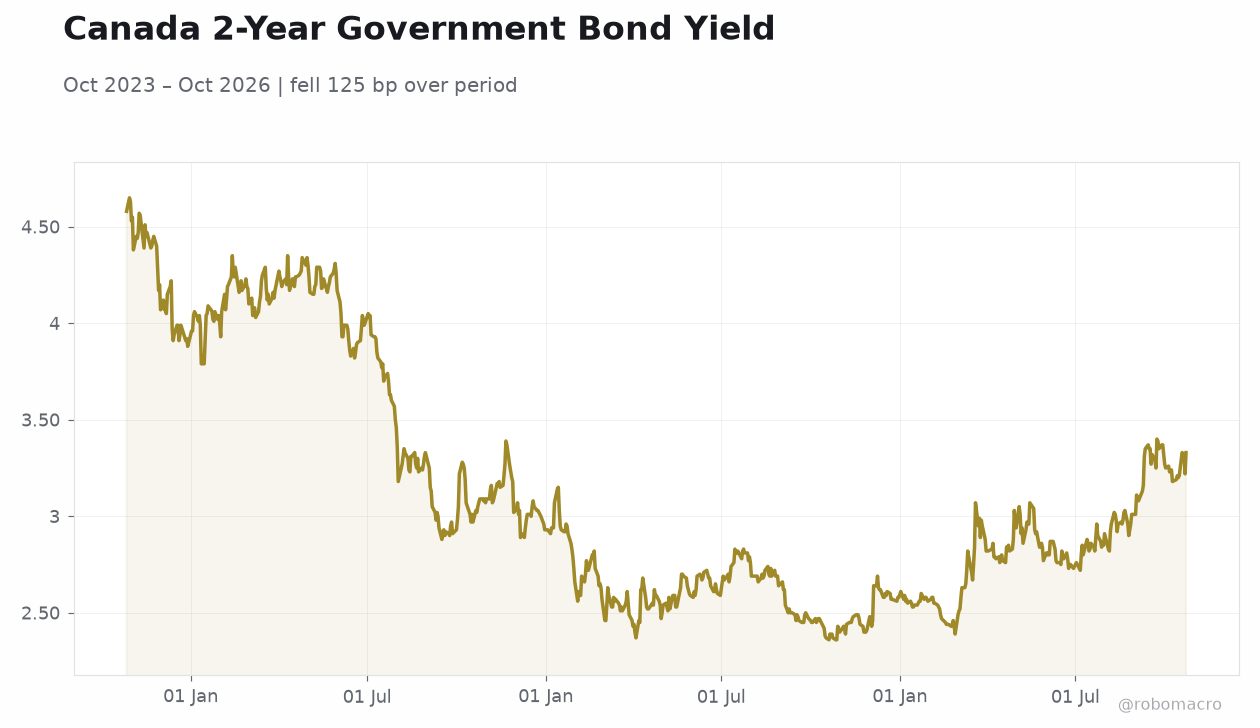 Canada 2-Year Government Bond Yield | Type: macro_line | Canada 2-Year Government Bond Yield: 3.33 (2026-10-23) | Range: 2.36–4.65 | Trend(5pt): 4.58,3.63,2.59,2.57,3.33
Today's Economic Events
| Data | Prior | Cons | Time |
|---|---|---|---|
| Wednesday (2026-10-28) | |||
| BoC Interest Rate Decision | 2.25 | 2.50 | 09:45 |
| BoC Monetary Policy Report | - | - | 09:45 |
| BoC Press Conference | - | - | 10:30 |
| Friday (2026-10-30) | |||
| GDP Month-over-Month | 0 | 0.20 | 08:30 |
| GDP Month-over-Month Prel | - | - | 08:30 |
- Markets price 25 bp BoC hike at tomorrow’s meeting as gasoline prices lift CPI to 3.09%.
- Canada 2-year yield rose 11 bp to 3.33% while TSX gained 0.44% ahead of the decision.
- Natural gas surged 16.14% overnight and USD/CAD held near 1.40 ahead of the decision.
Yesterday's Recap
There were no major Canadian data releases on October 26, and the S&P/TSX rose 0.44% to 35,944.20. In the latest Bank of Canada data (October 23), the 2-year yield climbed 11 bp to 3.33% and the 10-year added 5 bp to 3.83%. USD/CAD was 0.05% higher at 1.40.
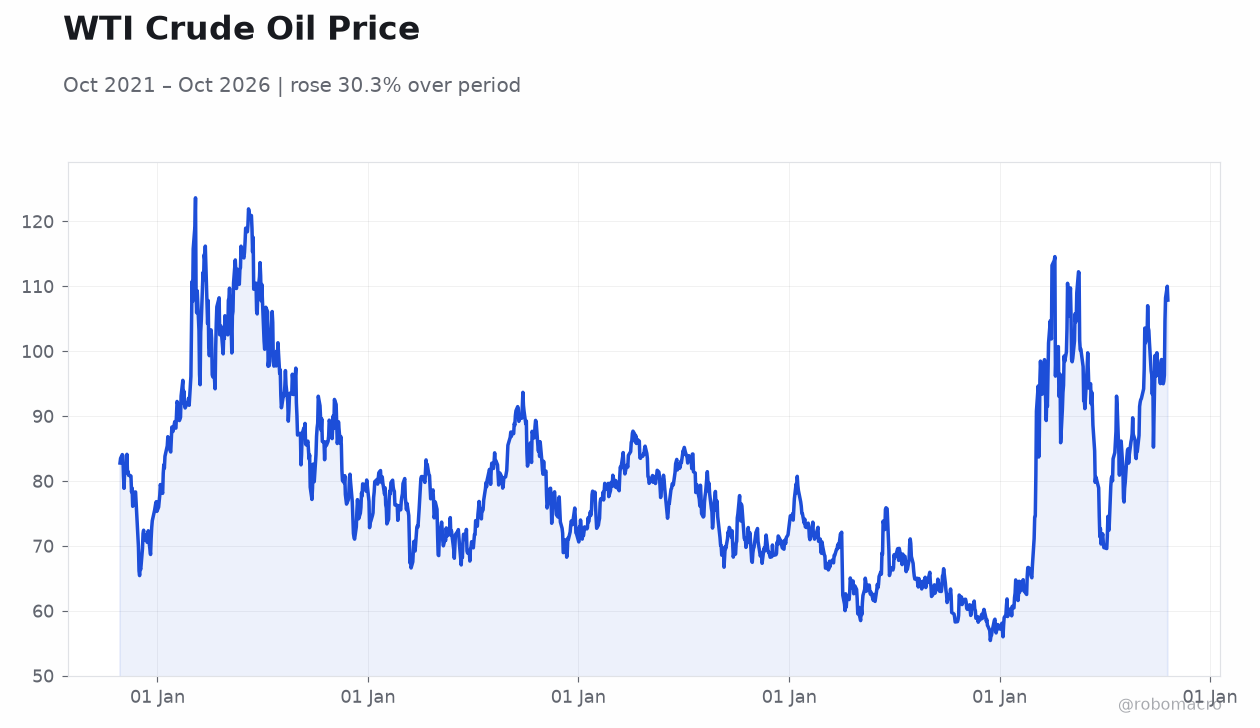
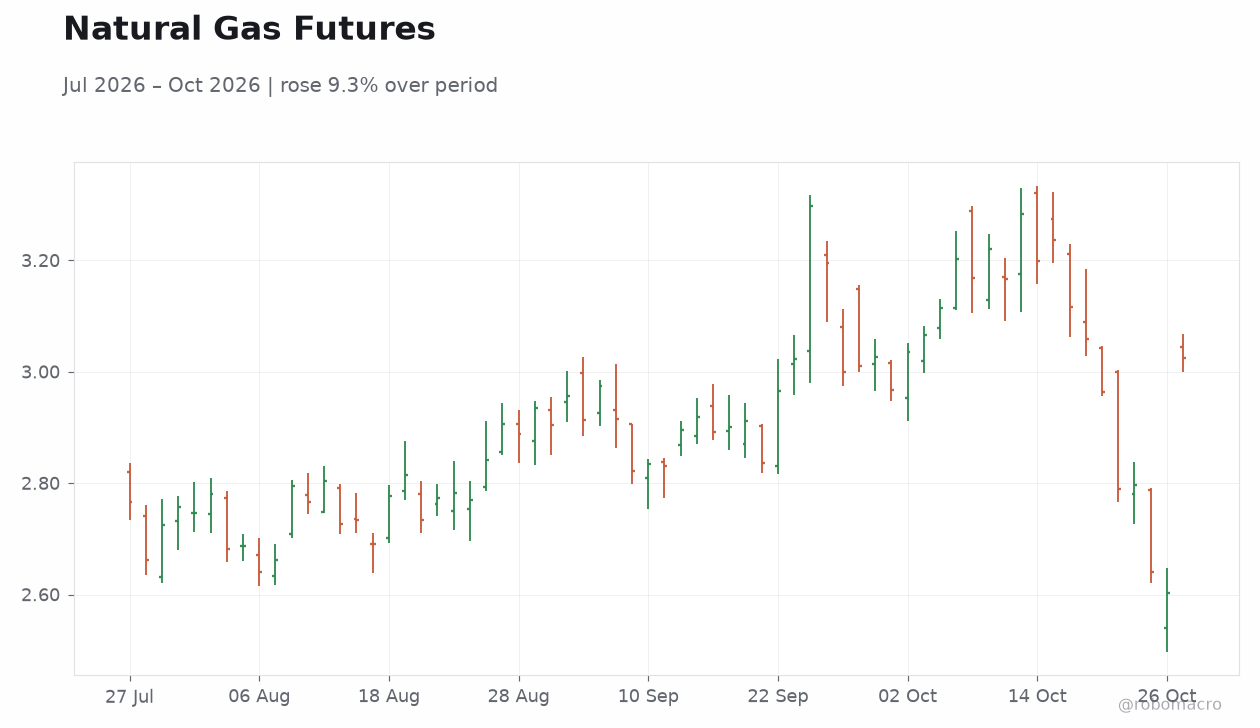
Overnight, WTI was down 0.58% at 101.17 and Brent 4.76% lower at 110.30, while natural gas jumped 16.14% to 3.02. Gold held near 4,037.60 and Bitcoin rose 0.35%.
The Day Ahead
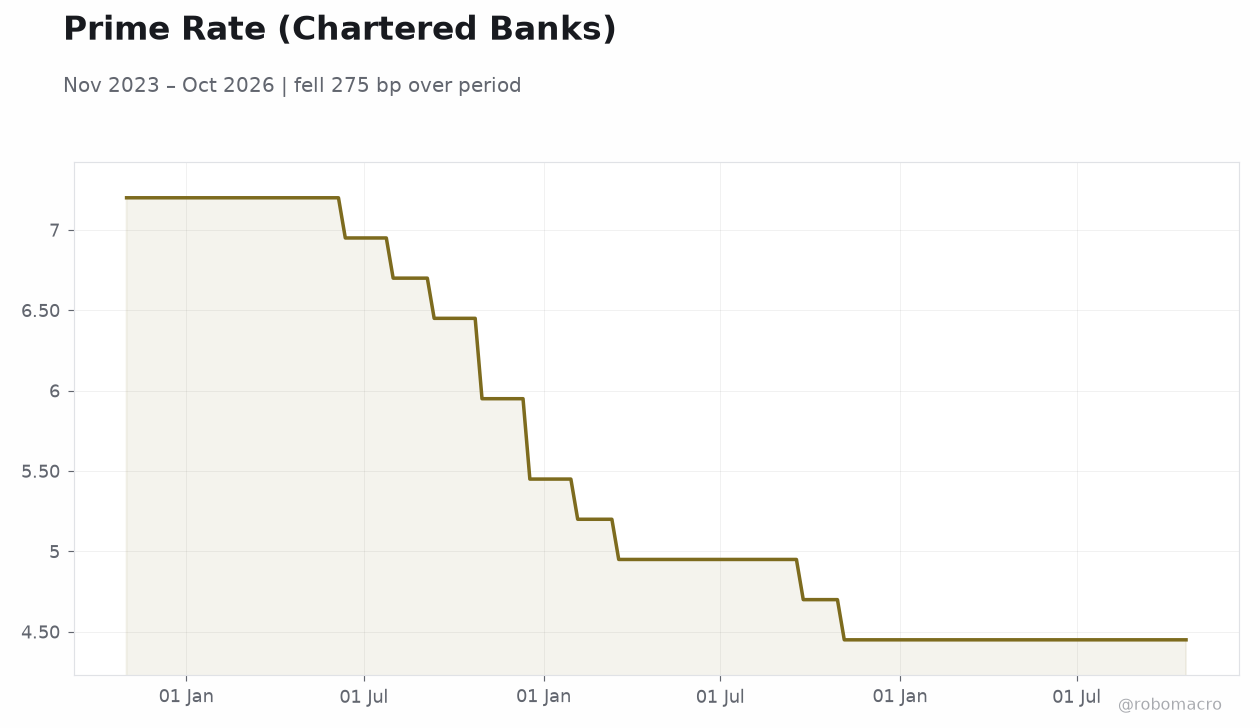
The Bank of Canada announces its rate decision and Monetary Policy Report at 9:45 a.m. ET on October 28, with a press conference at 10:30 a.m. Markets are pricing a high probability of a rise from 2.25% to 2.50%.
On October 30, Statistics Canada releases official August GDP by industry and an advance estimate for September. Its earlier advance estimate pointed to a 0.2% August gain after a flat July; consensus is also 0.2%.
Other Economic Notes
Headline CPI inflation re-accelerated to 3.09% in September from 3.0% in August, led by gasoline prices, which rose 27.8% year over year.
With real GDP essentially flat in July, the fuel-driven rebound complicates the Bank of Canada’s balance between price stability and growth.
Global Macro News
The U.S. Federal Reserve’s FOMC meets October 27–28 and announces its decision at 2:00 p.m. ET on October 28, the same day as the Bank of Canada.
↓ p.2