Canada Macro Daily(Beta Mode)
TSX Slumps as Oil Plunges, Jobs Report Looms
Market Snapshot
| Asset | Level | Change |
|---|---|---|
| S&P/TSX | 35,620.00 | -1.74% |
| USD/CAD | 1.40 | -0.10% |
| EUR/CAD | 1.57 | +0.15% |
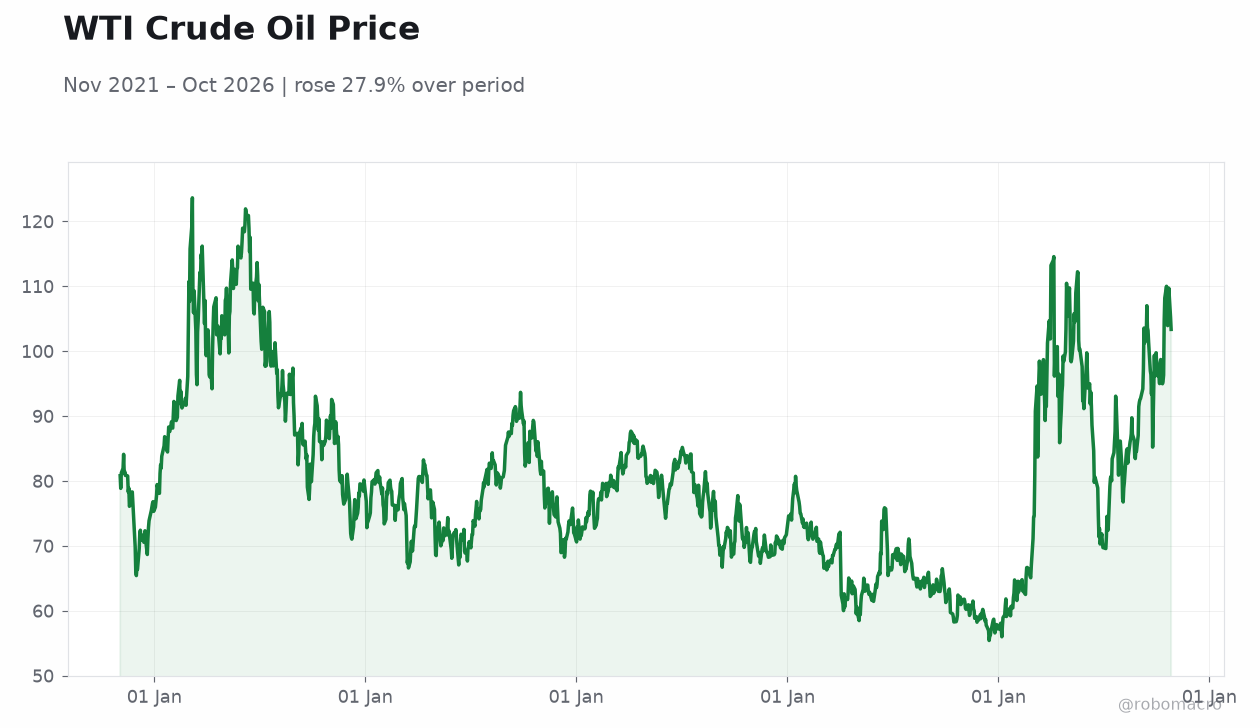
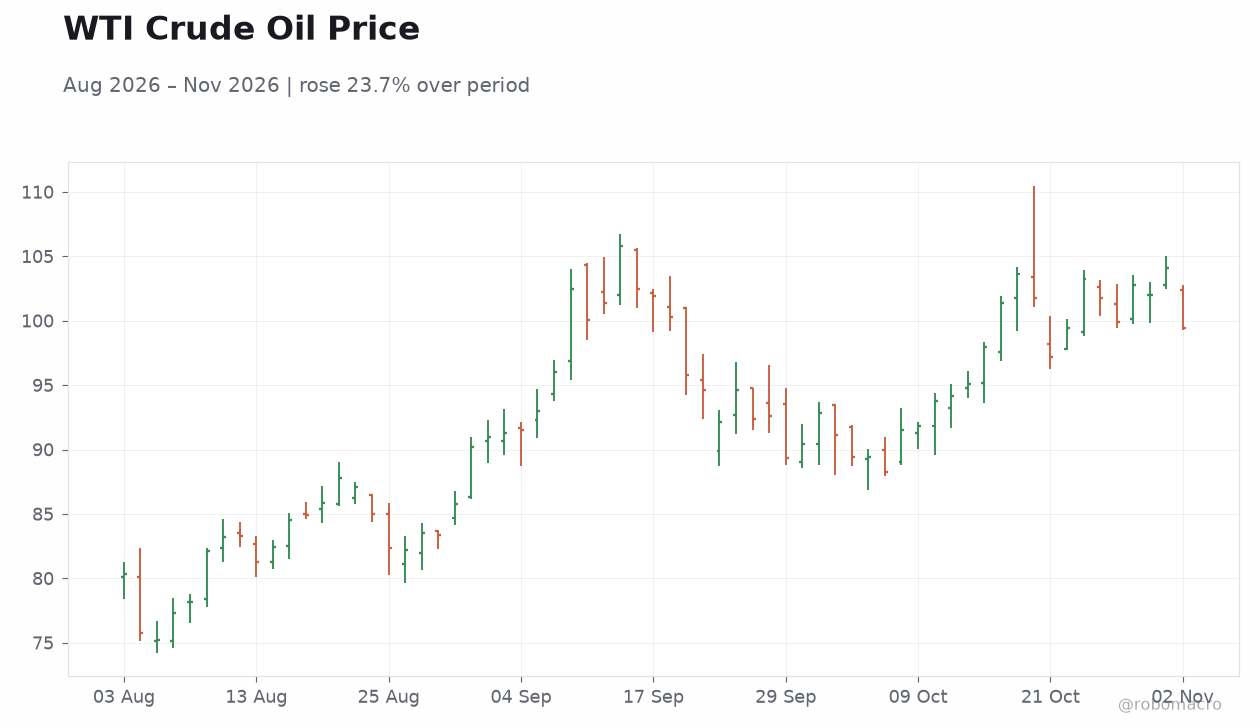
| WTI Crude | 99.34 | -4.59% |
| Natural Gas | 2.93 | +1.04% |
| Gold | 3,913.40 | +0.37% |
| Brent Crude | 108.37 | -7.88% |
| Bitcoin | 77,789.76 | -0.59% |
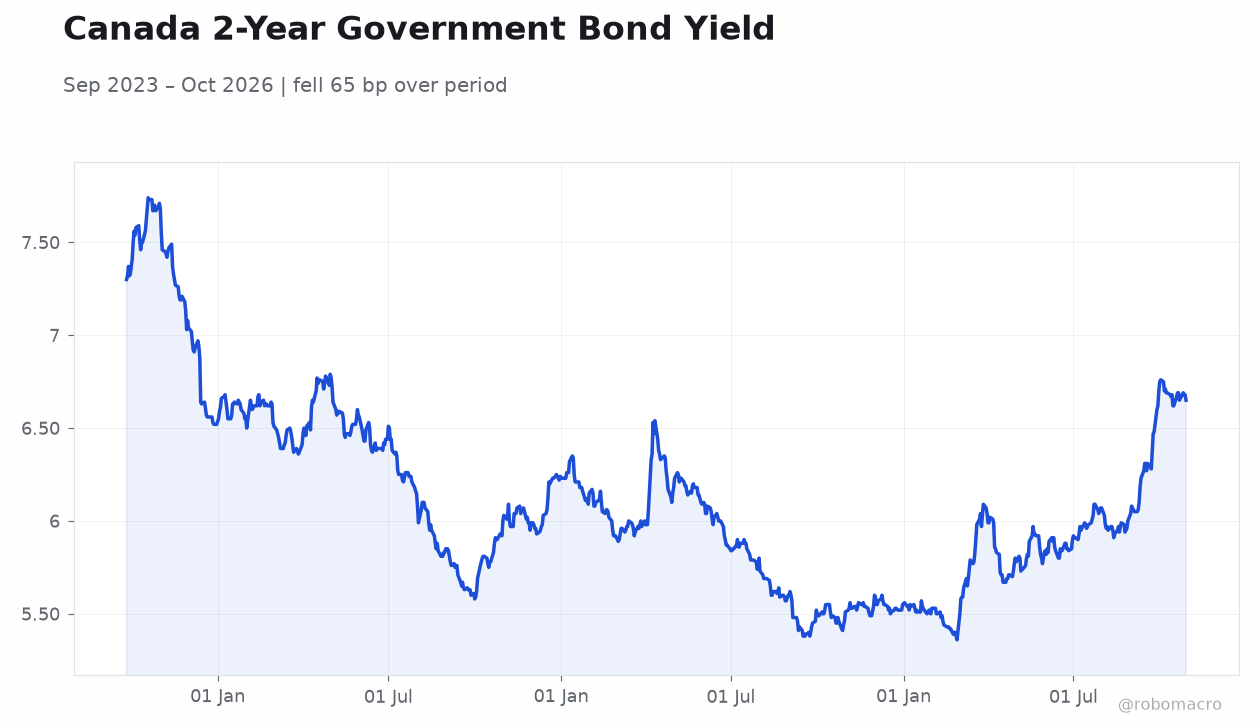
| Canada 2Y Govt Yield | 3.36% | -5 bp |
| Canada 10Y Govt Yield | 3.84% | -3 bp |
Prior Economic Events
| Data | Prior | Cons | Actual |
|---|---|---|---|
| No events available | |||
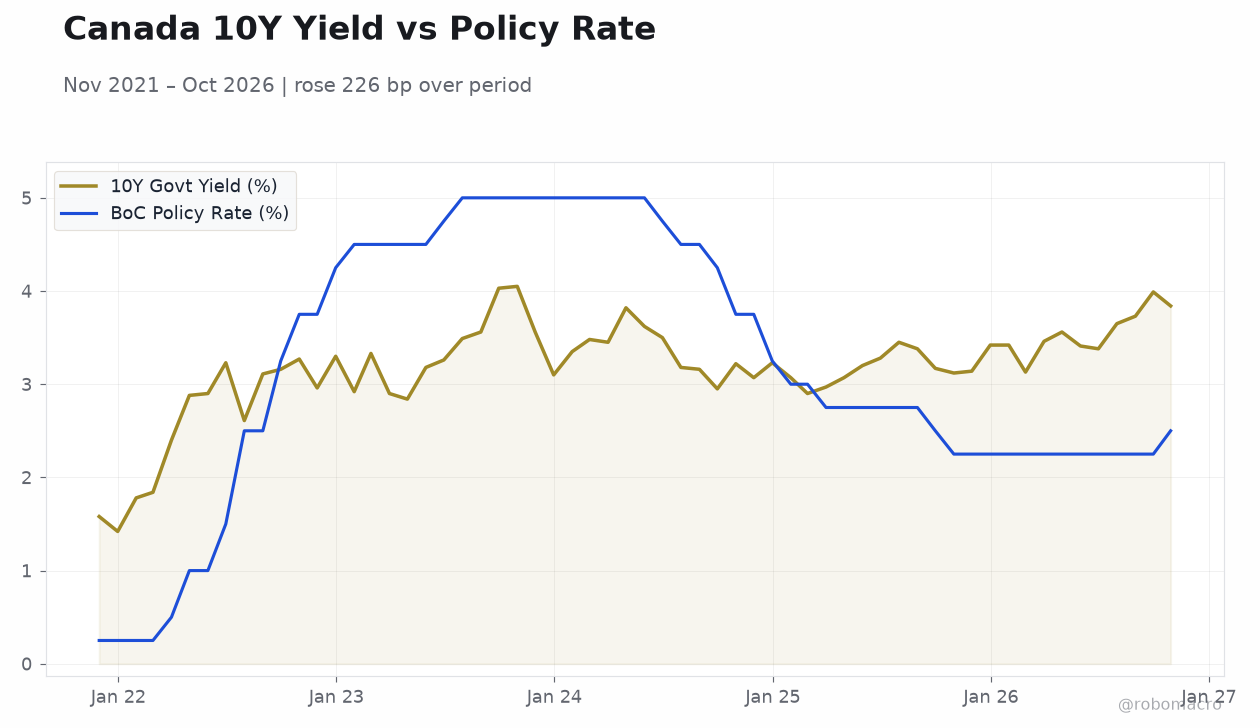 Canada 10Y Yield vs Policy Rate | Type: macro_line | 10Y Govt Yield (%): 3.84 (2026-10-29) | Range: 1.42–4.05 | Trend(5pt): 1.58,3.33,3.62,3.38,3.84 | BoC Policy Rate (%): 2.5 (2026-10-29) | Range: 0.25–5 | Trend(5pt): 0.25,4.5,5,2.75,2.5
Today's Economic Events
| Data | Prior | Cons | Time |
|---|---|---|---|
| S&P Global Manufacturing PMI Index | 51.50 | - | 09:30 |
| Wednesday (2026-11-04) | |||
| Trade Balance | 4,200m | 6,100m | 08:30 |
| Friday (2026-11-06) | |||
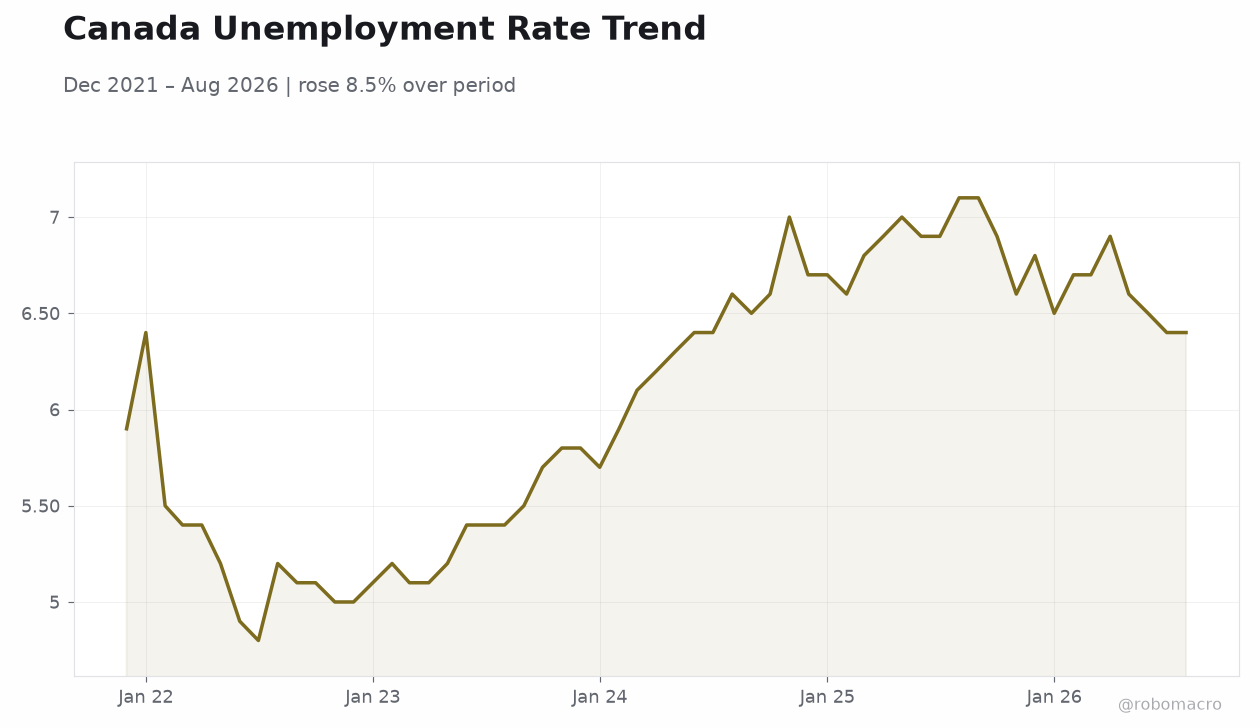
| Headline Unemployment Rate | 6.50 | 6.50 | 08:30 |
| Employment Change | -68,300 | 12,500 | 08:30 |
| Full-Time Employment Change | -35,400 | - | 08:30 |
| Labor Force Participation | 64.80 | - | 08:30 |
| Part-Time Employment Change | -32,900 | - | 08:30 |
| Ivey PMI Seasonally Adjusted | 58.20 | 58 | 10:00 |
- S&P/TSX falls 1.74% as risk-off sentiment and AI spending fears hit tech; WTI down 4.59% to $99.34
- Canada 2Y yield drops 5 bp to 3.36%, 10Y down 3 bp to 3.84% as bond markets rally on growth concerns
- Manufacturing PMI due today; Friday's jobs report critical after prior month's 68,300 decline
Yesterday's Recap
Canadian markets faced broad risk-off pressure with the S&P/TSX declining 1.74%, driven by tech sector weakness tied to AI spending concerns and slowing domestic growth momentum. WTI crude plunged 4.59% to $99.34 while Brent fell even sharper at 7.88% to $108.37, pressuring energy-heavy TSX components. The Canadian dollar held relatively steady, with USD/CAD edging down 0.10% to 1.40 despite the commodity selloff.
Bond markets rallied as investors sought safety, pushing the 2-year Government of Canada yield down 5 bp to 3.36% and the 10-year down 3 bp to 3.84%. Natural gas bucked the trend, gaining 1.04% to $2.93, while gold rose 0.37% to $3,913.40. The session reflected growing skepticism about Canadian growth prospects following recent GDP data showing a slowdown to 1.3% in Q3.
The Day Ahead
Today's sole scheduled release is the S&P Global Manufacturing PMI at 09:30 ET, with the prior reading at 51.5 and no consensus estimate provided. Attention shifts to Wednesday's trade balance data, where consensus expects a $6.1 billion surplus versus the prior $4.2 billion. The week's critical event arrives Friday with the Labour Force Survey, where headline unemployment is expected to hold at 6.5% and employment change consensus sits at +12,500 following last month's -68,300 contraction.
Full-time employment, part-time employment, and labor force participation data will provide granularity on labor market health. The Ivey PMI on Friday at 10:00 ET carries high impact with consensus at 58.0 versus the prior 58.2.
Other Economic Notes
Canada's inflation picture remains concerning with CPI running at 3.09% year-over-year as of September, well above the Bank of Canada's 2% target midpoint. The recent GDP slowdown to 1.3% in Q3 suggests the economy is losing momentum even as price pressures persist, creating a challenging stagflationary backdrop. The Canadian dollar's weakening correlation to oil prices is amplifying bearish bets against the currency, according to recent market commentary.
Canadian oil discounts have widened beyond US$30 amid Gulf Coast pressures, with governments prioritizing trade diversification away from the U.S. amid broader trade tensions. ↓ p.2