Canada Macro Daily(Beta Mode)
BoC Hikes, Jobs Report Looms
Market Snapshot
| Asset | Level | Change |
|---|---|---|
| S&P/TSX | 36,341.40 | +2.28% |
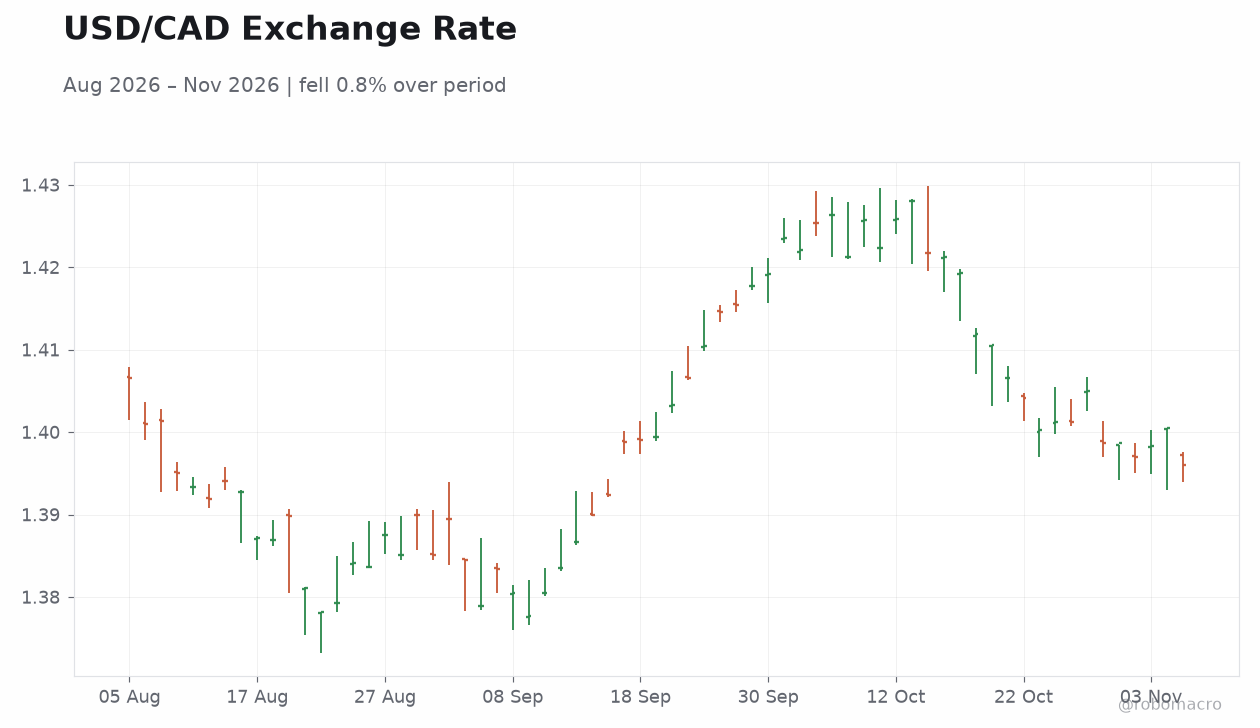
| USD/CAD | 1.40 | -0.35% |
| EUR/CAD | 1.57 | -0.21% |
| WTI Crude | 88.90 | +0.89% |
| Natural Gas | 2.94 | -0.57% |
| Gold | 4,144.40 | +1.75% |
| Brent Crude | 96.15 | +1.62% |
| Bitcoin | 80,247.10 | -0.20% |
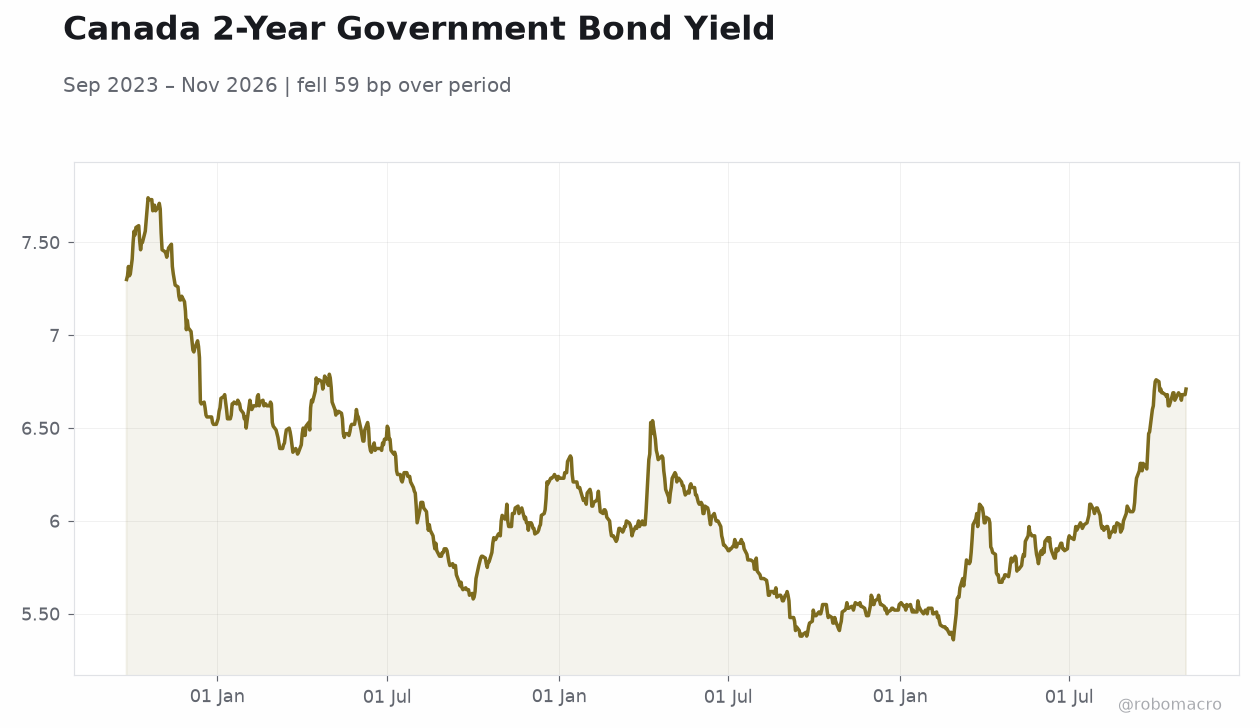
| Canada 2Y Govt Yield | 3.26% | 0 bp |
| Canada 10Y Govt Yield | 3.77% | +3 bp |
Prior Economic Events
| Data | Prior | Cons | Actual |
|---|---|---|---|
| S&P Global Manufacturing PMI Index | 51.50 | - | 49.60 |
| Trade Balance | 4,200m | 4,100m | 5,350m |
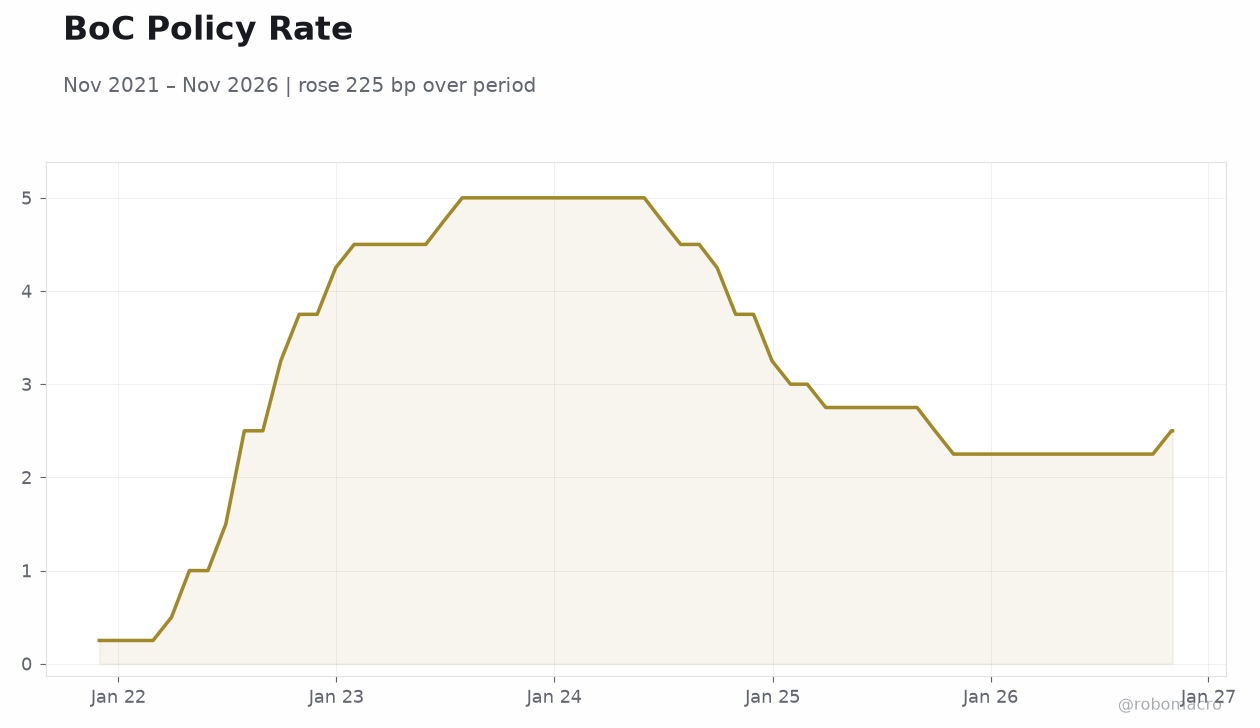 BoC Policy Rate | Type: macro_line | Policy Rate (%): 2.5 (2026-11-02) | Range: 0.25–5 | Trend(5pt): 0.25,4.5,5,2.75,2.5
Today's Economic Events
| Data | Prior | Cons | Time |
|---|---|---|---|
| Friday (2026-11-06) | |||
| Headline Unemployment Rate | 6.50 | 6.50 | 08:30 |
| Employment Change | -68,300 | 13,600 | 08:30 |
| Full-Time Employment Change | -35,400 | - | 08:30 |
| Labor Force Participation | 64.80 | - | 08:30 |
| Part-Time Employment Change | -32,900 | - | 08:30 |
| Ivey PMI Seasonally Adjusted | 58.20 | 58 | 10:00 |
- Bank of Canada raised the overnight rate to 2.50% on October 28, citing a higher inflation outlook, with CPI running at 3.09% YoY.
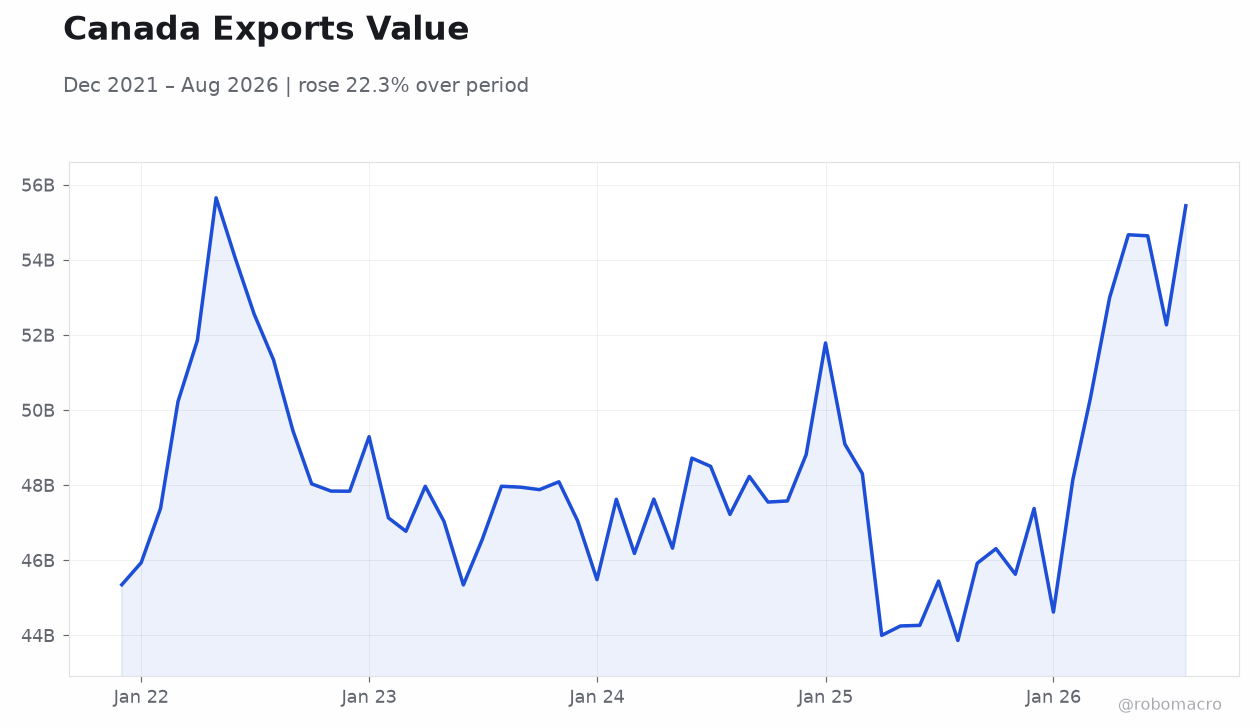
- Canada's trade surplus widened to $5.35B in November 4 data, beating the $4.1B consensus, even as manufacturing PMI slipped to 49.6.
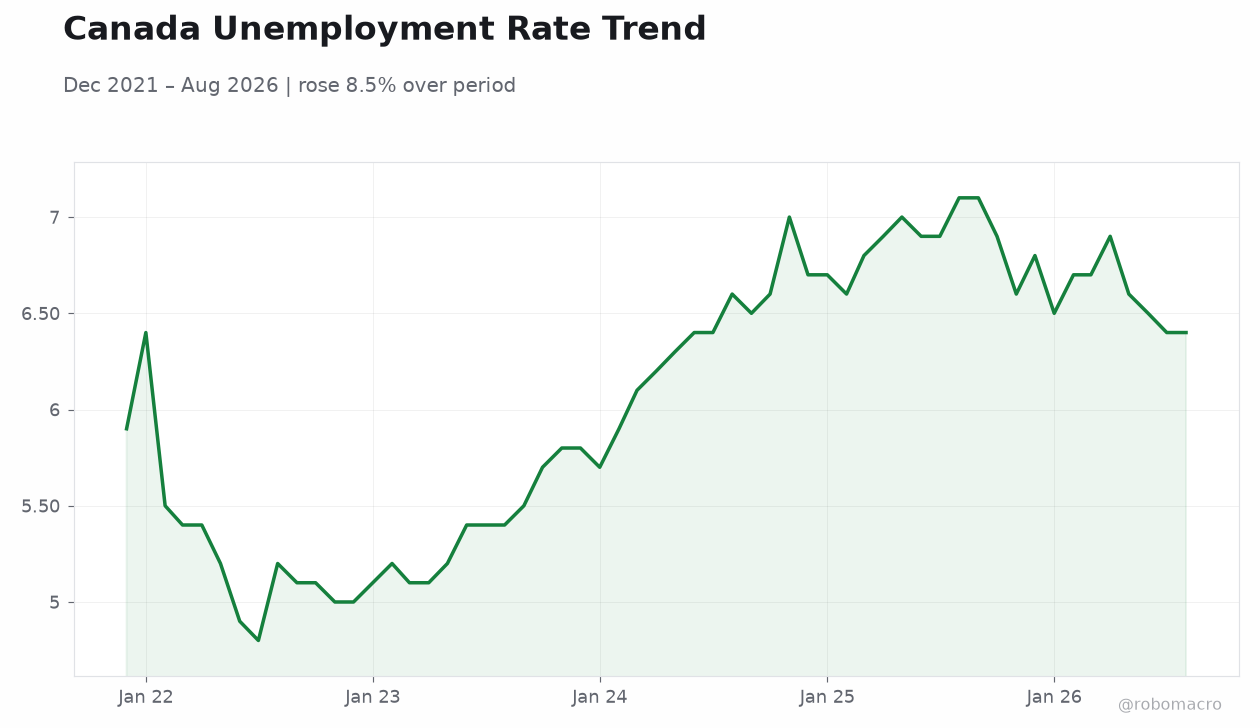
- All eyes on Friday's November 6 labour report: unemployment expected to hold at 6.5% with a modest +13.6K employment rebound after October's -68.3K plunge.
Yesterday's Recap
Canada's trade balance printed a $5.35B surplus on November 4, comfortably above the $4.1B consensus and up from the prior $4.2B, signaling resilient export flows despite new U.S. tariffs. The S&P Global Manufacturing PMI, released November 2, fell to 49.6 from 51.5, slipping into contraction territory and flagging softness in factory activity.
Markets staged a broad risk-on session: the S&P/TSX surged 2.28% to 36,341.40, while USD/CAD fell 0.35% to 1.40 as the loonie strengthened to a seven-week high amid post-U.S. election repositioning. The Canada 10-year yield added 3 bp to 3.77%, while the 2-year held at 3.26%.
WTI crude rose 0.89% to $88.90 and Brent gained 1.62% to $96.15, though oil headlines later flagged a sharp midweek reversal on Iran-war de-escalation signals. Gold jumped 1.75% to $4,144.40, reflecting persistent hedging demand.
The Day Ahead
The calendar is light Thursday, with the week's pivotal event deferred to Friday, November 6. Statistics Canada releases the November labour force survey at 08:30 ET: headline unemployment is consensus at 6.5%, unchanged from the prior reading, while employment change is expected at +13.6K following October's steep -68.3K decline. Full-time and part-time splits will be scrutinized after prior contractions of -35.4K and -32.9K respectively, and labour force participation is watched at 64.8%.
The Ivey PMI seasonally adjusted follows at 10:00 ET, with consensus at 58.0 versus the prior 58.2. With the BoC newly hawkish, a soft jobs print would complicate the December 9 decision; a firm one would reinforce the hike bias.
Other Economic Notes
The BoC's October 28 hike to 2.50% marks a decisive hawkish pivot, and Governor Macklem has pushed back on claims that Carney's fiscal plans impede inflation control. CPI at 3.09% YoY remains above target, with gasoline price rebounds cited as a key driver. The manufacturing PMI's drop to 49.6 underscores tariff-related strain on goods producers, even as the trade surplus widens.
↓ p.2