Canada Macro Daily(Beta Mode)
Jobs Day Looms as Yields Slide
Market Snapshot
| Asset | Level | Change |
|---|---|---|
| S&P/TSX | 35,605.30 | -2.03% |
| USD/CAD | 1.41 | +0.64% |
| EUR/CAD | 1.57 | +0.12% |
| WTI Crude | 90.96 | +0.49% |
| Natural Gas | 3.01 | +1.97% |
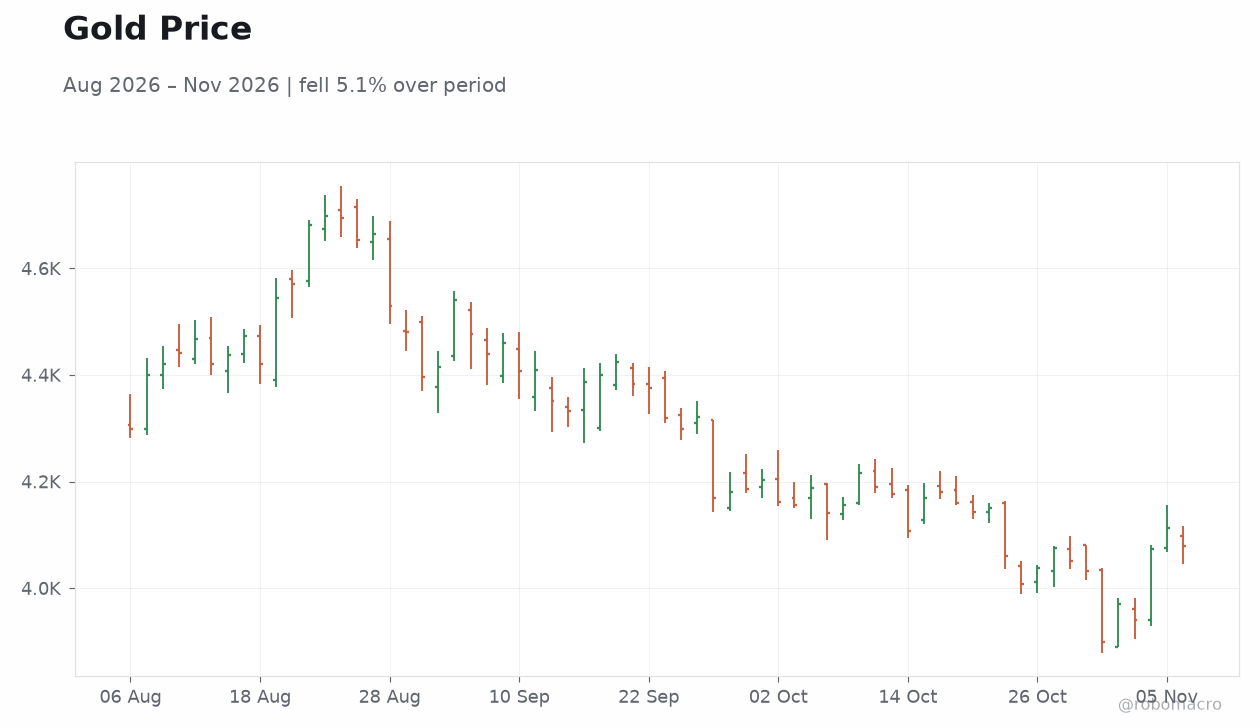
| Gold | 4,079.00 | -0.84% |
| Brent Crude | 98.51 | +0.22% |
| Bitcoin | 76,023.60 | +0.11% |
| Canada 2Y Govt Yield | 3.22% | -4 bp |
| Canada 10Y Govt Yield | 3.70% | -7 bp |
Prior Economic Events
| Data | Prior | Cons | Actual |
|---|---|---|---|
| S&P Global Manufacturing PMI Index | 51.50 | - | 49.60 |
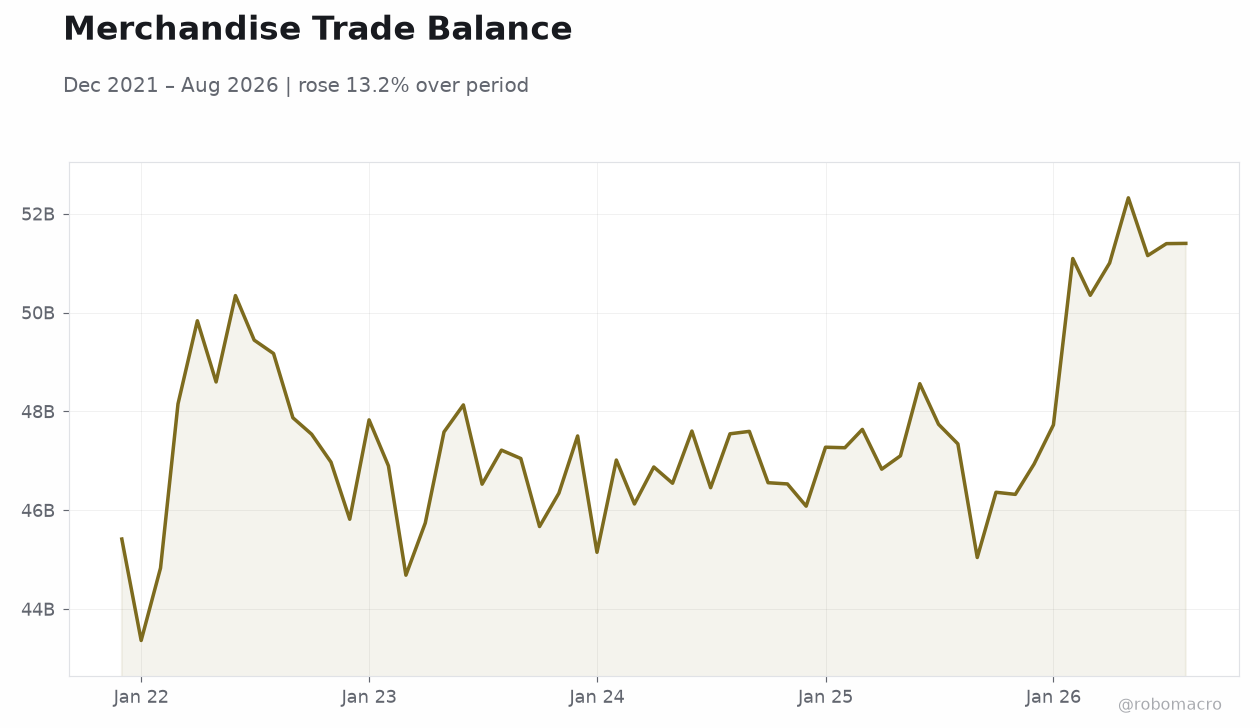
| Trade Balance | 4,950m | 4,100m | 5,350m |
| Trade Balance | 4,950m | 4,100m | 5,350m |
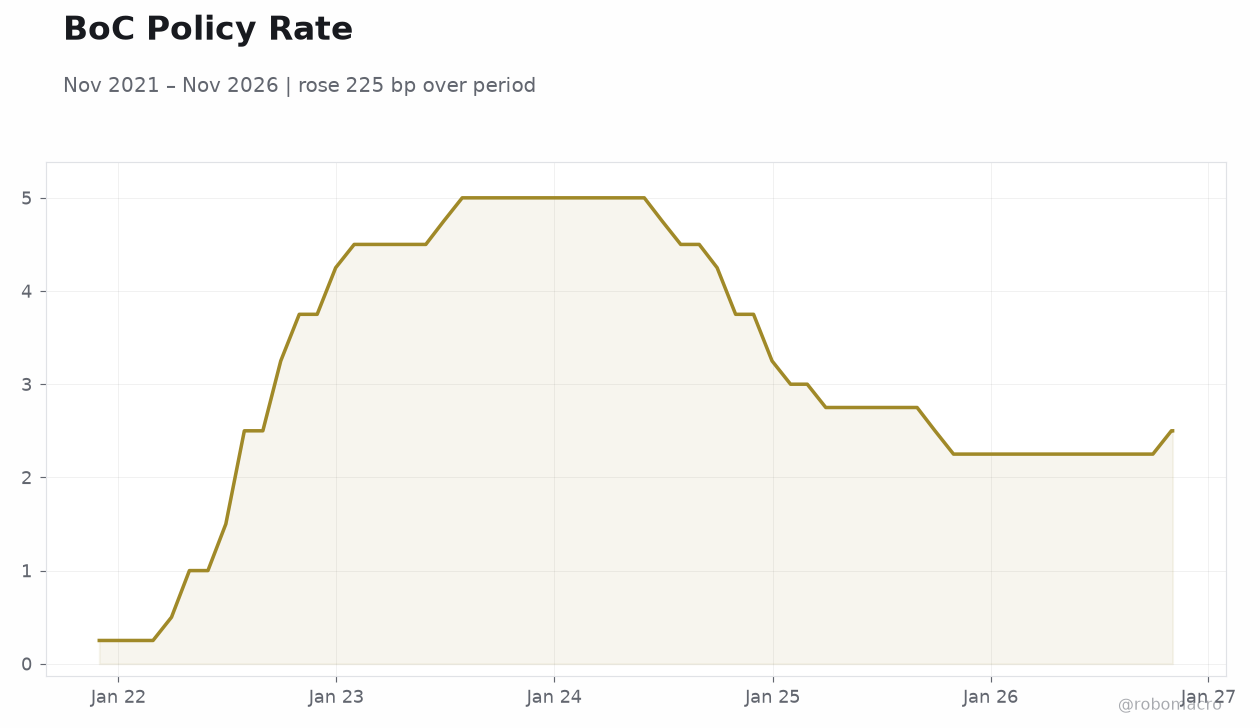 BoC Policy Rate | Type: macro_line | Policy Rate (%): 2.5 (2026-11-02) | Range: 0.25–5 | Trend(5pt): 0.25,4.5,5,2.75,2.5
Today's Economic Events
| Data | Prior | Cons | Time |
|---|---|---|---|
| Headline Unemployment Rate | 6.50 | 6.50 | 08:30 |
| Employment Change | -68,300 | 13,600 | 08:30 |
| Full-Time Employment Change | -35,400 | - | 08:30 |
| Labor Force Participation | 64.80 | - | 08:30 |
| Part-Time Employment Change | -32,900 | - | 08:30 |
| Ivey PMI Seasonally Adjusted | 58.20 | 58 | 10:00 |
- Canada releases the November labour force survey at 08:30 ET; consensus sees unemployment steady at 6.5% and a modest 13.6k employment rebound after October's 68.3k decline.
- Ivey PMI follows at 10:00 ET, with consensus at 58.0 versus 58.2 prior.
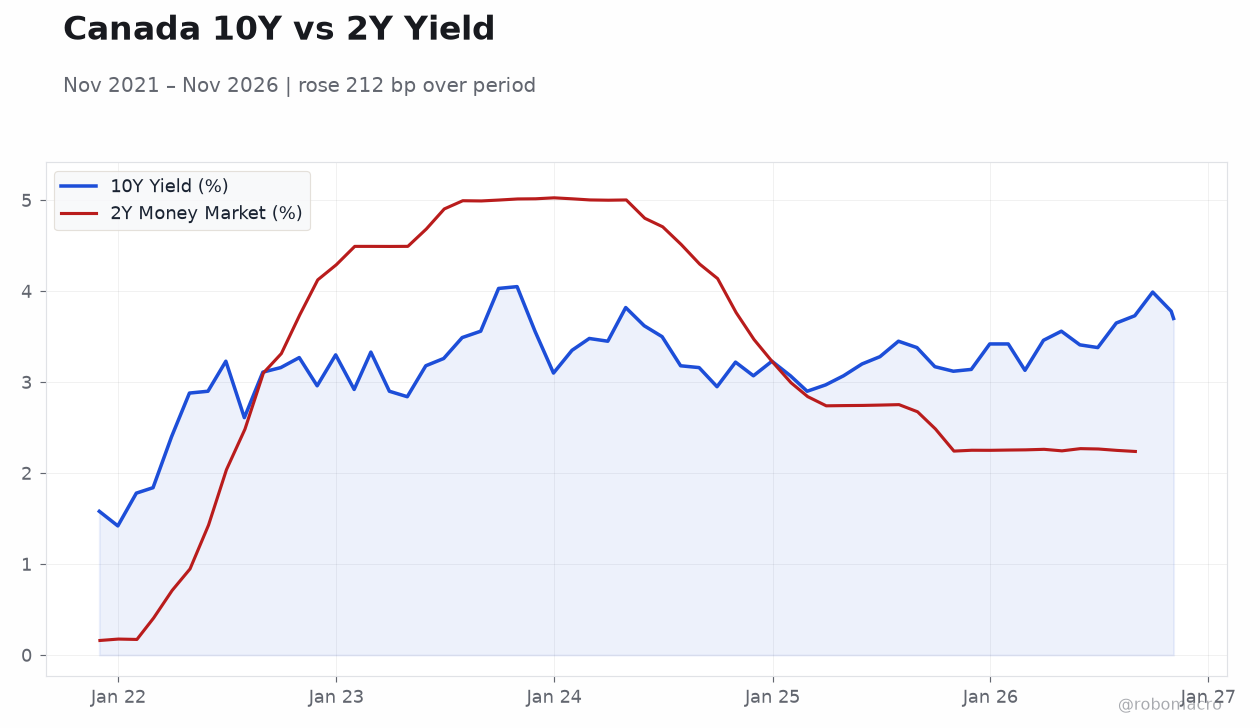
- GoC yields fell yesterday (2Y -4 bp to 3.22%, 10Y -7 bp to 3.70%) while the TSX dropped 2.03% and USD/CAD climbed 0.64% to 1.41.
Yesterday's Recap
Canadian markets were risk-off on November 5, with the S&P/TSX falling 2.03% to 35,605.30 as global growth concerns and easing oil prices weighed on sentiment. The loonie weakened, with USD/CAD rising 0.64% to 1.41 and EUR/CAD up 0.12% to 1.57. Government of Canada bonds rallied: the 2-year yield eased 4 bp to 3.22% and the 10-year fell 7 bp to 3.70%, a curve move consistent with softer growth expectations rather than inflation fears.
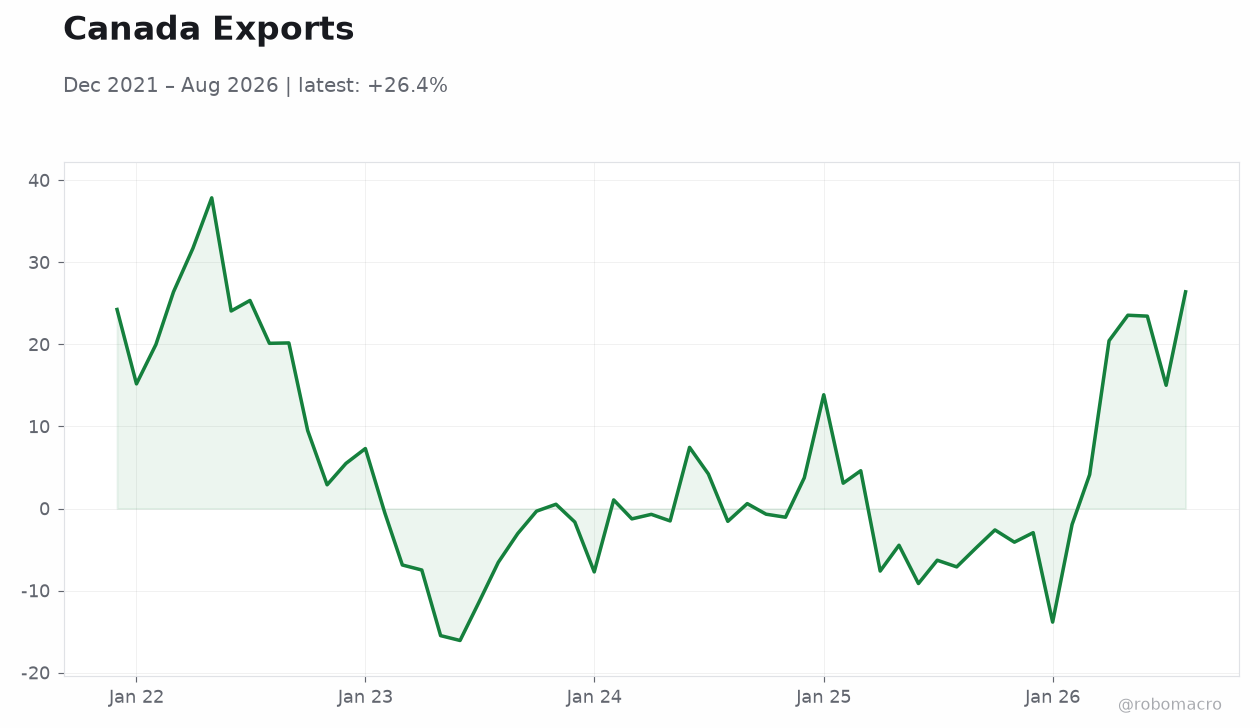
On the data front, Canada's merchandise trade surplus widened to CAD 5.35 billion in the November 4 release, well above the CAD 4.10 billion consensus and the prior CAD 4.95 billion, reflecting strong energy export values. The S&P Global Manufacturing PMI printed at 49.6 on November 2, slipping from 51.5 into contraction territory — a warning that tariff-related demand softness is bleeding into factory activity. Energy was a relative bright spot, with WTI up 0.49% to $90.96 and natural gas up 1.97% to $3.01, while gold fell 0.84% to $4,079.
The Day Ahead
All eyes are on Statistics Canada's November labour force survey at 08:30 ET, the week's highest-impact domestic print. Consensus expects the unemployment rate to hold at 6.5% and employment to rebound by 13.6k after October's steep 68.3k contraction; full-time and part-time splits, plus the participation rate (prior 64.8), will matter for the quality of any headline beat. A soft print would reinforce the bond rally and pressure the loonie toward further weakness, while a strong rebound could steady CAD and steepen the curve.
At 10:00 ET, the seasonally adjusted Ivey PMI is due, with consensus at 58.0 versus 58.2 prior — a read on whether purchasing activity is holding up despite the manufacturing PMI's slide below 50. No major Government of Canada auctions or BoC events are scheduled, leaving data to drive positioning into the weekend.
Other Economic Notes
The divergence between a still-solid trade surplus and a manufacturing PMI in contraction is a key tension for the Canadian outlook, with energy export values propping up nominal trade while tariff uncertainty erodes factory orders. CPI at 3.09% year-over-year remains above target, keeping the BoC cautious even as growth indicators soften. ↓ p.2